
How the Liberated Company Unleashes Your Employees’ Potential

.svg)
A liberated company gives its employees the freedom and the capacity to unleash their full potential, through a flat structure, self-managed teams, roles instead of job titles, trust and psychological safety. The article covers the benefits, the challenges, and the shift many organizations now make from pure liberation to an empowering company built on structure. Group Morneau, with 1500 employees across 22 terminals, is the case in point.
Have you ever wondered if there's a better way to unleash the full potential of your employees, beyond the confines of hierarchical structures? Well, that’s exactly what the liberated company is about! Contrary to traditional companies, liberated companies empower their employees through trust, autonomy, and self-management. This in turn helps improve innovation, agility and employee engagement.
Pioneer companies such as Gore, FAVI, Harley Davidson and Semco have implemented this model before it was actually coined. However, it mostly got popular in the 2010s when Isaac Getz introduced the concept in his book "Freedom."
In this article, we'll explore what a liberated company truly is, the multitude of benefits it brings, and the challenges it poses. More importantly, we'll guide you on how to navigate these waters and advocate for a more engaged workplace.
What Is a Liberated Company?
Definition
Before diving into the benefits of the liberated company, let’s first clarify what exactly we’re talking about. Here’s a definition to help you understand it better:
A liberated company is a company that gives its employees the freedom and the capacity to unleash their full potential. Liberating a company thus means enabling people to be creative, to innovate, to take initiatives and to leverage collective intelligence.
Crucially, the company should always operate with a clear purpose, ensuring that autonomy and effort are directed toward a meaningful, shared organizational mission.
Characteristics
A liberated company is usually characterized by:
- A flat organizational structure, i.e. a structure with few or no levels of middle management, where decision-making is decentralized.
- Self-managed teams: Employees have the autonomy to organize their work, set their own goals, and make decisions relevant to their role.
- Roles over job titles: Instead of rigid job titles, employees assume roles that can evolve based on the team's needs and personal growth aspirations.
- Trust and transparency: A foundational trust in employees' abilities and intentions, coupled with transparent access to information, allows everyone to contribute and make decisions autonomously.
- Psychological safety: Employees feel secure to express ideas, take risks, and voice concerns without fear of reprisal.

An Approach That Challenges Traditional Models
This approach contrasts sharply with the traditional corporate model, which relies heavily on hierarchy, fixed roles, and centralized decision-making. Liberated companies challenge this by demonstrating that when employees are trusted and given freedom, they not only meet but often exceed expectations.
Maybe you’re wondering: is it that bad to have disengaged employees? After all, only 23% of global employees are engaged at work, which means most companies have disengaged employees. Isaac Getz, pioneer of the liberated company, explains in this TEDx video why it’s so important to engage your employees, and how to go about it.
How Does It Unleash Your Employees’ Potential?
The transition to a liberated company isn't just about restructuring your organization. It's about fundamentally changing how employees engage with their work and with each other. This transformative approach can bring many benefits, such as:
- Increased innovation and creativity: Free from the constraints of traditional hierarchies, employees can explore new ideas and approaches, driving innovation.
- Higher employee engagement: Employees that can set their own goals and take initiatives to achieve them are more engaged at work. This is especially important because companies with highly engaged workforces experience 81% less absenteeism, 18% more productivity, and up to 43% less turnover!
- Greater performance: As explained above, engaged and empowered employees are more productive. They thus contribute to the overall performance and profitability of the company.
- Faster decision-making: As employees are able to make decisions relevant to their role, they can respond more quickly to challenges and opportunities.
- Increased ownership: When employees are given trust, they develop a stronger sense of ownership over their work and become accountable for the outcomes of their decisions.
- Sense of purpose: Team members know that their work has a direct impact on the organization’s success, which makes them committed to the company’s purpose.
- Personal development: Employees are motivated to learn and grow, which helps them evolve their skills sets and capabilities.
- Enhanced talent retention: Employees feel like their work is more valued, which helps develop a deeper loyalty to the organization.
- Flexibility: Autonomy over work schedules allows employees to manage their professional and personal lives more effectively, leading to better well-being.
What Are the Challenges That Come with Liberating Your Company?
While the liberated company model offers numerous benefits, it’s also not without its challenges. Here’s a closer look at some of the hurdles organizations may face on their journey towards liberation.
Shifting from a Hierarchical to a Flat Structure
For many organizations, the shift from a traditional hierarchical structure to a flat, more open one can be daunting. Hierarchies are deeply ingrained in the corporate world, and moving away from them requires a significant cultural and operational shift. Employees and managers alike must adapt to new ways of working, which can lead to uncertainty and resistance.
Changing Leadership Mindset
Leaders must embrace a mindset shift from controlling to empowering. This involves trusting employees to make decisions and manage their work, which can be challenging for those accustomed to micromanagement or a command-and-control style of leadership. The success of this transition largely depends on leaders' willingness to let go of control and support their teams.

Involving all Parties in the Transition
For a liberated company model to be successfully implemented, all employees must be on board with the change. This requires clear communication about why you’re making this change, how the transition will occur, and how it’s going to benefit all parties.
Developing Accountability
Developing accountability can sometimes be a challenge, as employees who are accustomed to receiving direct orders may initially struggle with making their own decisions. Cultivating a culture where accountability is seen as empowering rather than burdensome is crucial.
Limiting Stress
While autonomy and self-management can lead to greater job satisfaction, they can also increase stress levels if not managed properly. Employees who take on more responsibility may feel overwhelmed, especially if they lack the support they need to succeed. Ensuring that they have access to resources and support is essential to prevent burnout.

Avoiding Anarchy
Without some form of structure or agreement on values and goals, the risk of anarchy—where everyone does as they please without regard for the organization’s objectives—becomes real. Establishing a clear set of principles and guidelines is thus key to maintaining order and direction.
The Nuanced Reality: From Liberated to Empowering Company
As outlined above, the concept of the liberated company, while powerful, faces many practical challenges, particularly in larger or more complex organizations. The core tension is this: freedom without structure often leads to chaos.
This reality has led many progressive European and global organizations to refine the model, shifting emphasis from pure "liberation" to "empowerment through structure" (often called the empowering company). This evolution recognizes that true autonomy requires clarity and structure, rather than a lack of it. This means that people need to know who decides what, what the rules of engagement are, and where to find the necessary information to act responsibly.
Case in Point: Group Morneau & The Empowering Model
Group Morneau, a leading Canadian logistics provider, is an inspiring example of this evolution. Initially exploring the 'liberated company' philosophy, they realized that true autonomy for their 1500 employees across 22 terminals required a clear framework of responsibility and structure. Scaling a pure "liberated company" model across such a large organization was deemed challenging.
Under the leadership of Vice-President Catherine Morneau, they transitioned to the empowering company model. This shift is based on the core idea of offering employees more decision-making power by ensuring clear roles, processes, and procedures. They realized that more structure was needed, actively mapping processes and creating a clear information library to support employee decision-making, which in turn fosters greater autonomy.
Group Morneau believes that freedom is only truly lived when one also takes responsibility, and the "empowering" addition to the title reflects this balance. The entire shift is described as a human adventure focused on communication, trust, responsibility, and collaboration, encouraging adaptability and personal growth, and embracing "learning to dance with discomfort" that comes with change.
Today, they rely on Talkspirit’s Governance module to collaboratively map all roles and work agreements, transforming their principles into practical, scalable operations that align their organization by design.
Should You Liberate Your Company?
The journey towards responsible autonomy—whether you call it a "liberated company" or an "empowering company"—is not a one-size-fits-all solution. Its success depends heavily on your existing culture, leadership readiness, and the specific context of your organization, as demonstrated by the transition undertaken by Group Morneau.
Before embarking on this transformation, an honest assessment is crucial to determine if your organization is prepared for the necessary cultural and structural shifts. The shift requires a commitment to balancing freedom with a clear framework of responsibility and structure.
Here are a few questions, adapted to reflect this nuance, that can help you determine if adopting a liberated or empowering approach is the right strategic move for your business:
Assessing Your Organizational Readiness
- Do our organizational values genuinely align with the principles of an empowering model (i.e., trust, autonomy, clarity, and transparency)? Do we see structure as a prerequisite for freedom, not a constraint?
- Are your leaders truly ready to embrace a new style of leadership—shifting from controlling to empowering? Are they willing to adopt a supportive role rather than one of command and control?
- How prepared are your employees to take on greater autonomy and responsibility? Do they have the skills and mindset to embrace self-management and the accountability that comes with decision-making power?
- Can you establish and maintain a culture of accountability without reverting to micromanagement? Do we have the tools to create the clear roles, processes, and procedures necessary to support decentralized decisions?
- Are you resilient enough to navigate the inevitable challenges of this transition? Are you prepared to embrace the concept of "learning to dance with discomfort" that accompanies significant organizational change, as emphasized by leaders in the empowering model?
By answering these questions, you can ensure that your move toward greater employee potential is grounded in clarity, responsibility, and intentional design—whether you choose the path of the liberated company or the empowering company model.
How Can You “Liberate” or “Empower” Your Company?
Now that you've assessed your readiness and understood the nuances of the liberated company model versus the empowering company model, what are the next practical steps?
Transitioning to a more self-managed or empowered structure is a systemic evolution, not a mere change in job titles. The foundational step is often to make your operating system visible and to co-create the framework of clarity that allows teams to exercise their freedom effectively.
Here are some best practices to help you get started on your journey toward organizational coherence.
Lay the Foundation with Education and Communication
Begin by educating your leaders and employees about the liberated company. Host workshops, seminars, and discussions to explore the benefits and challenges of this model. Clear and open communication is vital to ensure everyone understands the vision and is aligned with the change process.

Foster a Culture of Trust, Empowerment and Equality
Cultivate an environment where trust and empowerment are the norm, and where ideas can come from anywhere within the organization. Ensure that every team member feels valued and respected, regardless of their position. Encourage leaders to adopt a coaching mindset and to support their teams instead of just directing them.
Redefine Roles and Responsibilities
Move away from traditional job titles to roles that reflect the work being done and the needs of the organization. Use self-management tools like Holaspirit to define these roles and responsibilities, and ensure transparency across the organization. This clarity will help employees become more autonomous at work.
Implement Systems for Accountability
Accountability is a cornerstone of the liberated company model. To develop this accountability, you should set clear expectations, goals, and metrics that everyone can access and understand. This will help employees understand how their work contributes to the organization’s objectives, and thus encourage them to take ownership of their work.
Encourage Autonomy and Initiative
Empower employees to take initiative and make decisions within their roles. This could involve setting their work schedules, launching their own projects, and finding new ways to achieve their objectives. Also make sure that leadership supports these endeavors and helps teams achieve their goals.
Provide Room for Growth
Ensure employees have the resources, training, and support they need to succeed in this new environment and take on new challenges. This includes access to information, tools, and ongoing learning opportunities. Design roles and responsibilities to be flexible, to allow employees to evolve in their careers as they acquire new skills and interests.
Continuously Monitor and Adjust
Adopting a liberated company model is an ongoing process that requires regular reflection and adaptation. Collect feedback from employees at all levels to understand what’s working and what needs improvement. Be prepared to make adjustments to roles, processes, and policies as you learn and evolve.
Leverage Tools like Talkspirit
The liberated company needs a unified Operating System (OS) to function properly. That's what Talkspirit offers: an all-in-one suite, 100% made in Europe, that integrates all the communication, collaboration, and governance tools you need. If you want to develop collective intelligence, gain agility, and transparency, look no further: Talkspirit is the solution for you!
Specifically designed for companies wanting to adopt innovative governance models (like the liberated company), Talkspirit helps you:
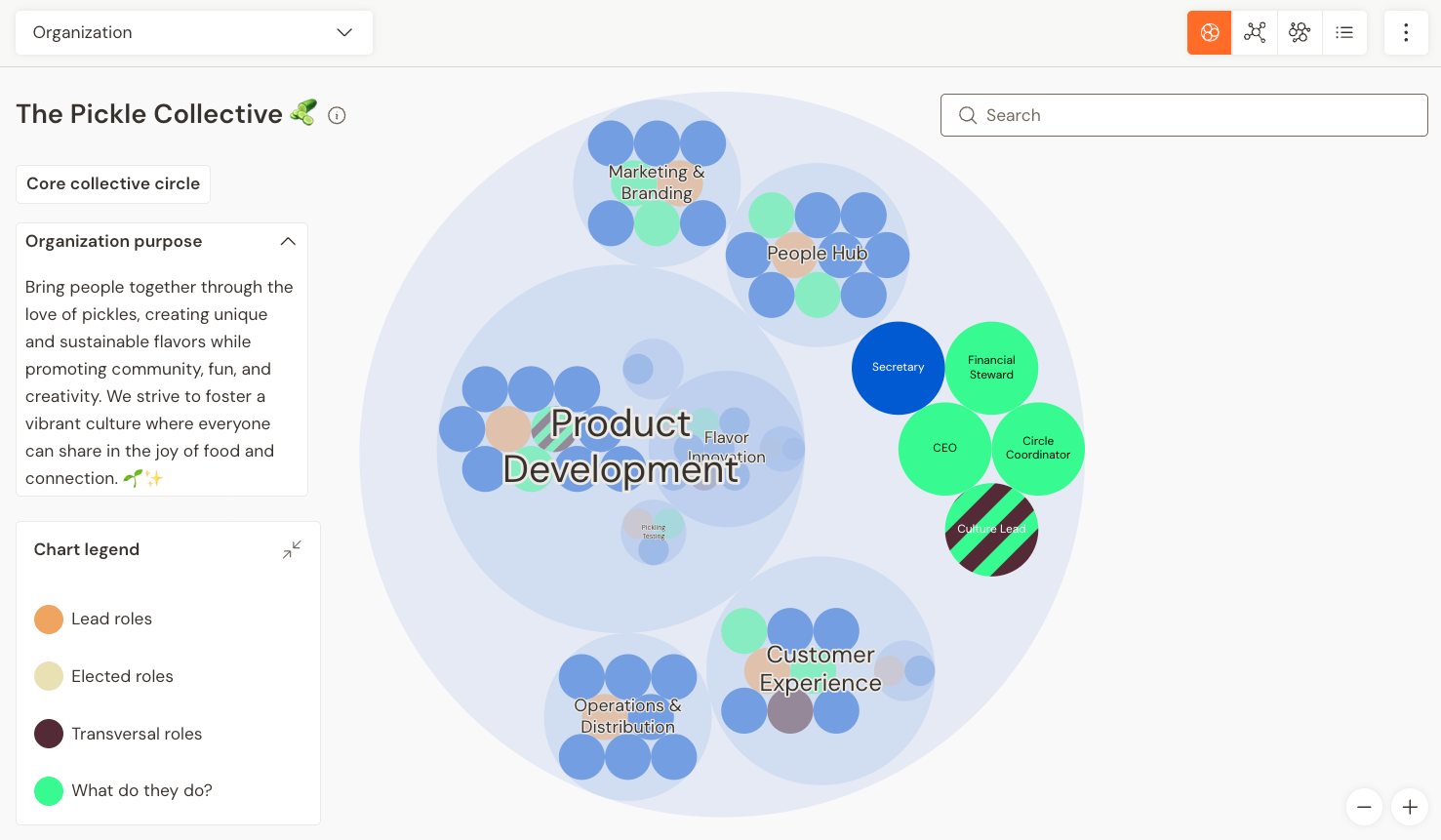
- Clarify roles and responsibilities: Say goodbye to static organization charts. Our Governance module allows you to dynamically map your teams' roles and responsibilities, and clearly visualize who does what in the organization. This makes it easy for everyone to understand their responsibilities and those of their colleagues.
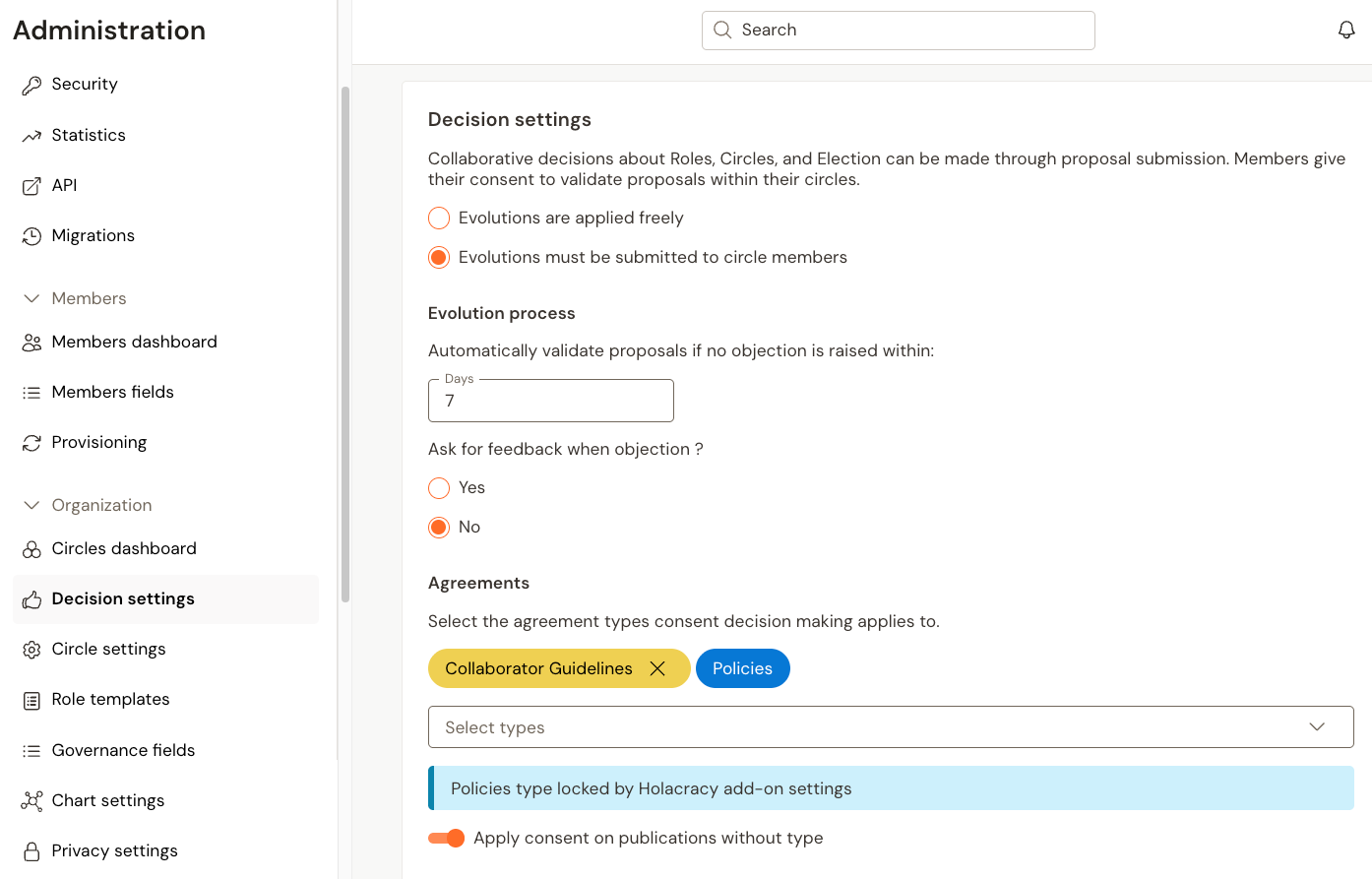
- Simplify decision-making: Our platform supports distributed decision-making processes, based either on consent or consensus. Teams can thus make informed decisions quickly and autonomously, while ensuring everyone is aware of what’s going on.
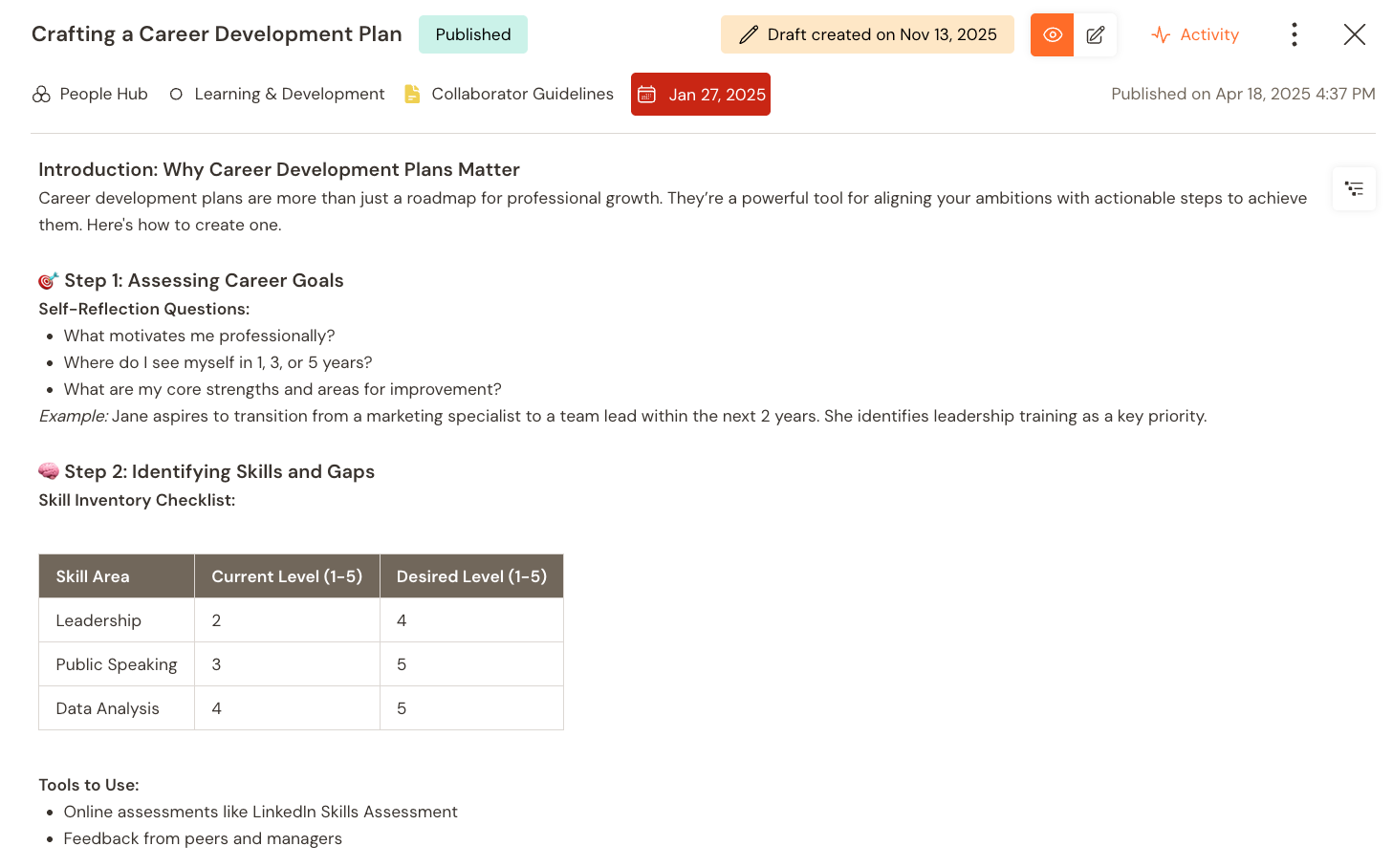
- Facilitate documentation: Create knowledge bases (wikis) that are automatically linked to your roles and projects. Document policies and best practices, and share them with the people who need them to eliminate information silos.
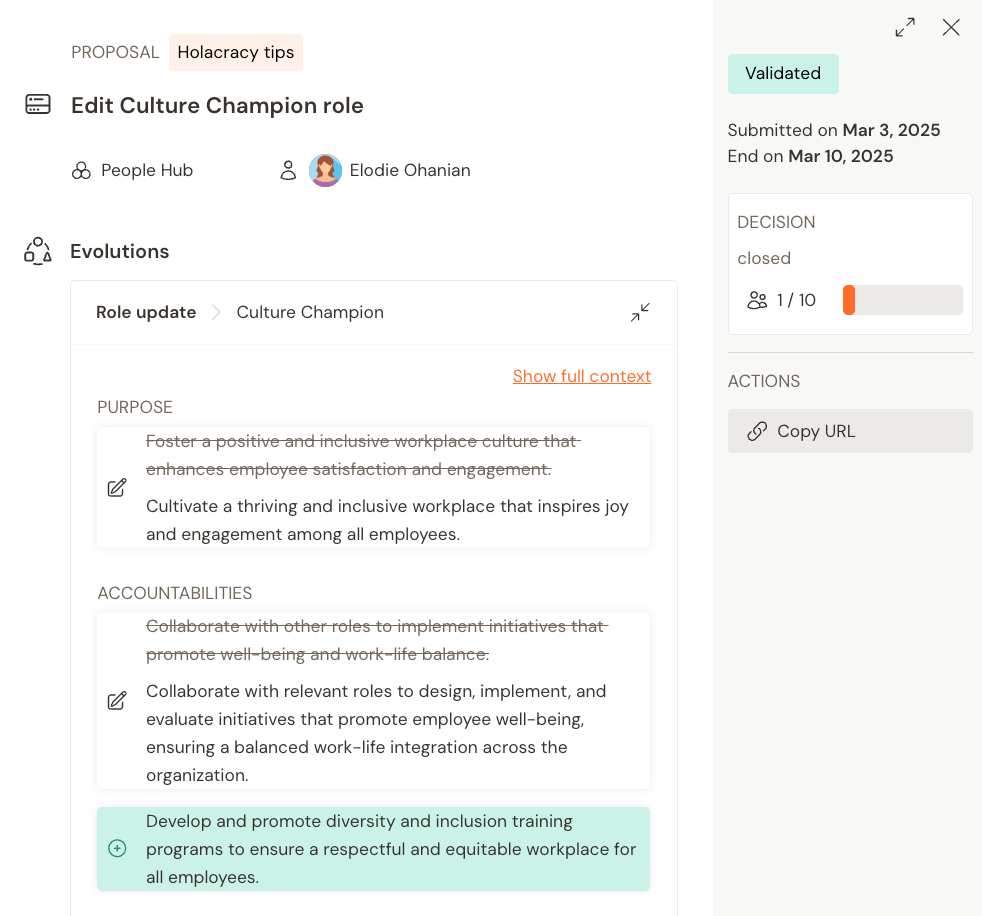
- Evolve your corporate governance: Any member of the organization can propose changes to a role, circle, process, or policy. The people concerned can validate the proposal, and if no one objects, it can be implemented.
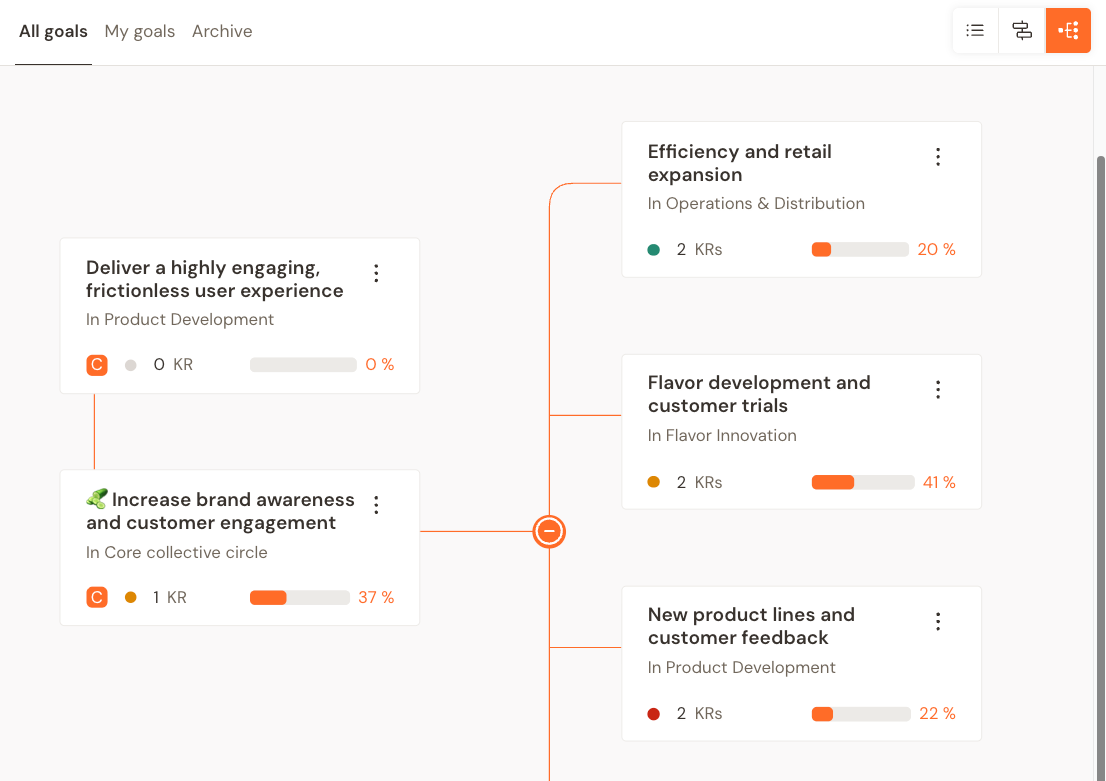
- Create strategic alignment with the OKR method: Track your Objectives and Key Results (OKR) in real-time, and link each OKR directly to the responsible roles and circles. Align individual, team, and organizational goals, and connect them to your purpose to give meaning to everyone's work.
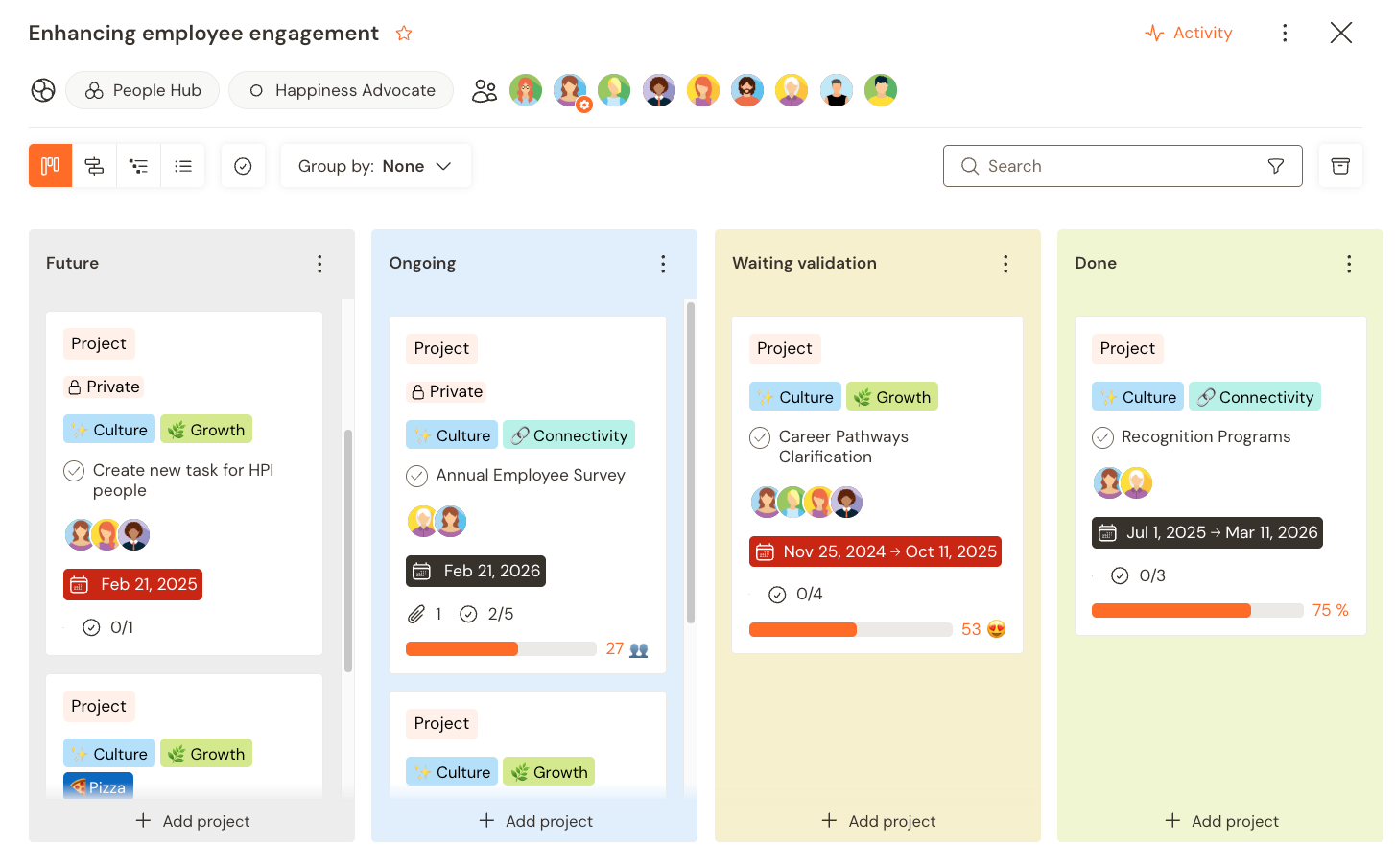
- Streamline collaboration: All teams can organize their tasks and projects using kanban boards, and make them visible to the rest of the organization if they wish to.
Ready to move to the next step? Schedule a demo with our team to find out how we can help you become a liberated company.

To Conclude
The journey towards becoming a liberated company is both challenging and rewarding. On one hand, it can help you gain organizational clarity and strengthen your teams' engagement and alignment. But on the other, it requires a change in culture and mindset, collective involvement, and a true will for transformation—from both management and employees.
Implementing the best practices outlined above is a great way to lay the foundations. However, keep in mind that becoming a liberated company is a continuous process. Good news: you're not on your own. Talkspirit helps you navigate this transition by providing clear role structures, effective decision-making processes, and total organizational transparency. We've got so much more to show you! Book your demo now to discover everything we have to offer.
Of course, the liberated company isn't the only organizational model out there. Many more can help you empower your teams, such as Holacracy, Sociocracy, Teal and Constitutional Management. Want to know more about these models and how they're different from the liberated company? Download our latest white paper packed with expert insights 👇
Access White Paper
In our white paper "The Ultimate Guide to Organizational Models", you'll get: a comprehensive overview of innovative organizational models (like Agile, Teal, Holacracy, the Liberated Company, and more), testimonials from pioneer organizations that have successfully adopted it, best practices for choosing, implementing and measuring the effectiveness of our model, as well as digital tools to facilitate the transition.

FAQ
A liberated company is a company that gives its employees the freedom and the capacity to unleash their full potential, so that people can be creative, innovate, take initiatives and leverage collective intelligence. It should always operate with a clear purpose, so autonomy stays directed toward a shared organizational mission.
Pioneer companies such as Gore, FAVI, Harley Davidson and Semco implemented the model before it was actually coined. It mostly got popular in the 2010s, when Isaac Getz introduced the concept in his book Freedom.
A flat organizational structure with few or no levels of middle management and decentralized decision-making, self-managed teams, roles rather than rigid job titles, trust paired with transparent access to information, and psychological safety.
More innovation, higher engagement, greater performance, faster decision-making, stronger ownership, a sense of purpose, personal development, better talent retention and more flexibility. Companies with highly engaged workforces experience 81% less absenteeism, 18% more productivity, and up to 43% less turnover, while only 23% of global employees are engaged at work.
Shifting from a hierarchical to a flat structure, changing the leadership mindset from controlling to empowering, involving all parties, developing accountability, limiting the stress that extra responsibility can create, and avoiding anarchy. The core tension is that freedom without structure often leads to chaos.
The empowering company shifts the emphasis from pure liberation to empowerment through structure, recognizing that true autonomy requires clarity and structure rather than a lack of it. Group Morneau, a Canadian logistics provider, realized that real autonomy for its 1500 employees across 22 terminals required a clear framework of responsibility, and today relies on Talkspirit's Governance module to map all roles and work agreements.


.webp)