
5 Strategies That Can Help Improve Employee Autonomy at Work

.svg)
- Autonomy at work is not the absence of control: it is a management lever that moves both performance and well-being.
- It sits on three independent dials: what people work on, when and where they work on it, and how they do it.
- Five strategies build it: clear measurable goals, the right tools, a culture of trust, a flexible environment, and regular measurement.
- Whether a strategy works shows up in facts: a task that starts without a green light, an answer found in the tool rather than from the manager.
- Autonomy has limits: with no written decision rule, no case-by-case setting and no reachable manager, it feels like abandonment.
- It never offsets an unmanageable workload, which has to be solved on its own.
We tend to equate autonomy at work with hands off, total lack of control. Yet workplace autonomy doesn’t mean total anarchy! 🫨 Quite the contrary, autonomy is a key management strategy for improving your employees’ performance and well-being.
According to one Gallup survey, employees are 43% less likely to suffer burnout when they can choose which tasks they carry out on their own, as well as when and how much time they devote to them. What’s more, when teams feel confident and empowered, they are also more creative, more committed, and more efficient!
How do you shift from theory to practice? 🤔Autonomy is built with concrete actions and adapted tools, and that’s what we’ll unveil in this article! 👇 Discover five levers to improve autonomy at work and unleash your employees’ full potential.
What does autonomy at work actually mean?
Autonomy at work is the room an employee has to decide three things: what they work on (which tasks, and in what order), when and where they work on it (hours, location, pace), and how they do it (the method, the tools, the people they involve).
Those three dials move independently. A team can have complete freedom over method and none at all over deadlines, and the reverse is just as common. So “more autonomy” says very little until you name the dial you are turning. The five strategies below turn them one at a time.
1st strategy: set clear, measurable goals
Before embarking on an initiative to improve autonomy in your company, it’s important to know where you’re going.
- What’s your goal?
- What do you wish to achieve?
- How do you envision your team working a few years down the road?
The OKR method (Objectives and Key Results) is ideal for setting clear, measurable goals. It enables each objective to be defined at individual, team, and corporate levels, ensuring overall alignment. Employees are fully aware of their individual expectations and how they fit into the company’s overall vision and strategy.
Also read: Example of Company OKRs: How Did They Do It?
When goals are clearly defined and communicated, employees can take more initiative. No more micromanagement and constant reminders! Goal-based and results-oriented management is far more effective in improving autonomy at work. For example, rather than following every stage of a project with a magnifying glass, managers can define clear objectives and let employees choose the best way to achieve them. You focus on results and show that you trust your teams. The clear result is more autonomous, committed, and efficient employees!
2nd strategy: provide access to appropriate tools and resources
Being autonomous also means having the means to be so! If there’s one word to remember, it’s “tools.” Without the right tools, it can be difficult to become truly autonomous at work.
Today’s digital tools offer a multitude of functionalities that facilitate teamwork. The ideal solution? Opt for an all-in-one tool that enables you to collaborate, communicate, document and store information. In concrete terms, this means integrating:
- Chat for instant exchanges.
- A news feed to access key information in real time and avoid blockages.
- A library of shared resources to help you find the answers you need quickly, without having to call on colleagues or managers.
- OKRs (objectives and key results) to set clear, transparent goals, aligning teams around common priorities.
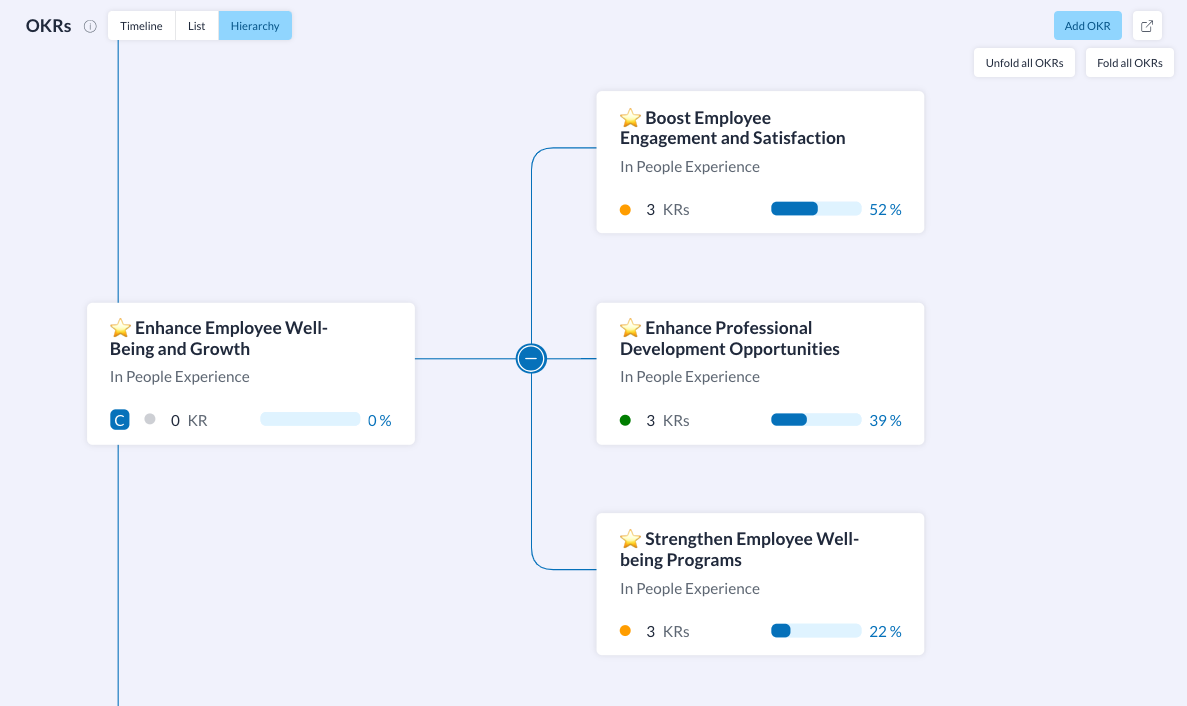
Talkspirit offers all these features, and much more! Curious to see how it works in practice? Book a free demo now and discover how Talkspirit can boost autonomy and collaboration across your teams! 🚀

3rd strategy: create a company culture based on autonomy and trust
For autonomy at work to flourish, you need a solid foundation. That foundation is your company culture!
There are a number of strategies you can implement to create a company culture in which your teams are empowered because trust reigns and every employee feels responsible. Find out what they are! 👇
Encourage transparent communication and collaboration
On the freeway to autonomy, the key is obstacle-free communication! This all depends on your company culture. For fluid, effective communication among teams, you need to break bad habits. This means no more silos and one-way exchanges typical of traditional, pyramid-style structures.
Every team member needs to feel listened to and ready to share their ideas without hesitation. To achieve this, organize collaboration events like inter-team meetings or cross-functional projects (with or without managers). This will foster collective intelligence and team autonomy.
Above all, don’t forget transparency in your daily exchanges! Research shows that 80% of workers want a better understanding of how decisions are made in their organization. Sharing the latest company goals, news, and achievements can help create a climate of trust. With clear, open communication, your teams will be able to make stress-free, autonomous decisions!
Encourage responsibility
To empower your employees, you need to give them the space they need to make decisions. And to accomplish that, you have to trust them!
Trust is at the heart of autonomy; without it, employees risk not being fully committed to their missions. According to O.C. Tanner’s latest survey, around a third of all employees still see traditional management as a need to “command and control.” So, to reverse this trend, it’s essential to let go a little and adopt a management style that encourages initiative and responsibility. This doesn’t mean slipping entirely off the radar, but rather standing by to support, ready to step in when necessary but not on their backs all the time.
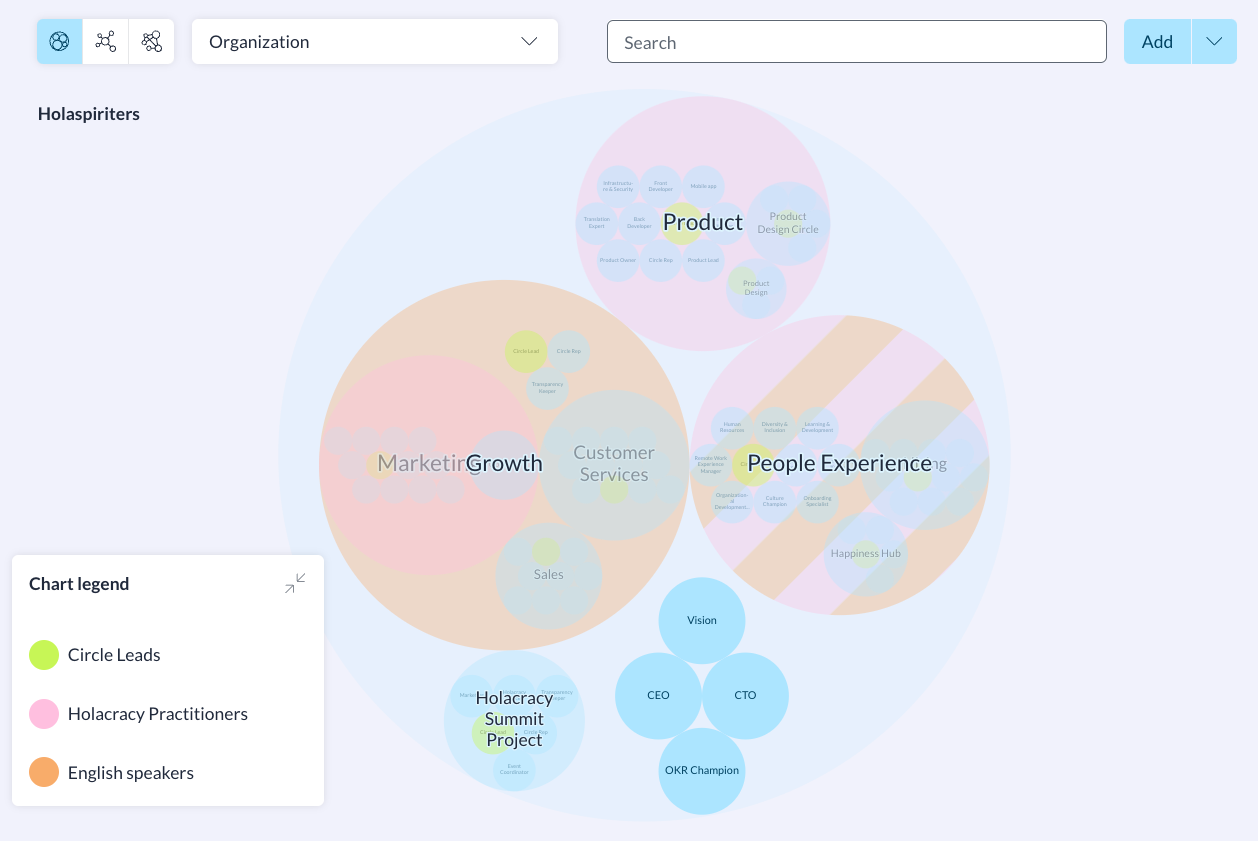
To support this approach, the use of a tool like Holaspirit is particularly beneficial! This software clarifies roles with an organizational chart that shows who does what. This helps your teams stay aware of not only their own roles and responsibilities, but also those of the entire organization.
Promote continual learning
There are many ways to promote continuous improvement: train, self-train, and exchange feedback! Yes, the foremost aim of feedback is to provide tangible, constructive, added value for each employee. Solid coaching and constructive feedback help employees identify their strengths and areas for improvement. This is one of the benefits of continual learning!
Offer your employees routine courses to give them a real boost! This allows them to acquire new skills and gain confidence to take more initiative. When employees feel competent, they don’t hesitate to take on new challenges autonomously. You just hit a double! 👍
4th strategy: create a flexible, fulfilling environment
There’s a close link between autonomy and team well-being. According to APA’s 2024 Work in America survey, one in three workers feel they do not have enough flexibility at work to keep their work life and personal life in balance. Fortunately, there are a number of ways to create a flexible and fulfilling work environment to reinforce autonomy in the workplace!
For example, you can implement hybrid work. Telecommuting and more flexible work hours are powerful levers that allow employees to manage their time according to their individual needs. This shows that you trust them to manage their own responsibilities, thereby fostering a culture of trust, which in turn boosts commitment and motivation.
At the same time, innovative organizational models that promote self-management (like Holacracy, Sociocracy, Teal, etc.) can also help create a more flexible work environment. Contrary to traditional hierarchical models, they offer greater flexibility and autonomy, enabling teams to organize themselves and make decisions more efficiently.
By giving all employees greater autonomy, you can add value to your teams’ work and contribute to their personal development. They can work in conditions that best suit them while working toward that ultimate end goal: performance.
5th strategy: measure autonomy and shift over time
Putting tracking indicators in place is a great way to measure your company’s level of autonomy. You can obtain valuable insights through the following methods:
- Employee surveys. First, ask employees if they feel free to make more decisions on their own in their day-to-day work.
- Performance reviews. Observe to what extent employees manage projects independently. This may indicate to what extent they’re taking initiative with less intervention and supervision.
- Collaboration metrics. Analyze collaboration tools usage with KPIs like the number of contributors to a project or the frequency of exchanges among teams. If a team often collaborates without the help of management, that’s a good sign that it’s autonomous and efficient. The proof is in the stats!
Once you’ve collected this data, take time to analyze it to identify areas for improvement. This will help you adapt all your strategies for greater autonomy.
And don’t forget that expectations and work contexts evolve! So it’s crucial to remain agile and open to change to continue encouraging autonomy at work.
| Strategy | What you put in place | What tells you it works |
|---|---|---|
| StrategySet clear, measurable goals | What you put in placeOKRs defined at three levels: individual, team, company | What tells you it worksA task starts without waiting for a green light |
| StrategyProvide the right tools | What you put in placeOne workspace holding chat, news feed, knowledge base and OKRs | What tells you it worksAnswers come from the tool, not from a message to the manager |
| StrategyBuild a culture of trust | What you put in placeTransparency on information and decisions, written roles, room to fail | What tells you it worksDecisions happen where the information sits |
| StrategyCreate a flexible environment | What you put in placeHybrid work, flexible hours, a flatter organization | What tells you it worksTeams organize among themselves without a manager arbitrating |
| StrategyMeasure and adjust | What you put in placeEmployee surveys, performance reviews, collaboration metrics | What tells you it worksThe level of autonomy is discussed with data, not with impressions |
How far should autonomy go?
Autonomy handed over with nothing built around it produces confusion, not engagement. Told to “figure it out” with no goal, no decision rule and nobody to ask, people spend their time guessing what is expected of them. Three guardrails prevent that.
- Write down what people decide alone. What an employee settles on their own, what gets decided with a colleague, what goes up the chain: the list fits in a few lines, and it beats an unwritten rule everyone reads differently. It is the same exercise as defining roles and responsibilities across the team.
- Set the dial case by case. The useful level of autonomy depends on how experienced the person is and how much rides on the task. Someone new to a critical subject needs a tight frame; the same person six months later does not. One setting applied to the whole team gets both cases wrong.
- Stay reachable. Autonomy is not isolation. A manager who vanishes entirely creates the mirror image of toxic management: nobody to arbitrate, nobody to shield the team, and people who eventually stop asking for anything.
One last point: autonomy does not offset an unmanageable workload. Choosing the order of too many tasks only adds the burden of triage on top. Workload management is a problem to solve on its own.
A final word
Autonomy at work means more than simply delegating tasks: it requires a solid culture based on trust and transparency. To make the difference, make sure that every employee has access to objectives, has the right tools at his or her disposal, and feels valued and listened to. The more your employees feel involved, the more they’ll want to take initiative and become invested in their roles!
Bear in mind that implementing these strategies is a long-term process. It’s essential to listen to your team’s feedback and adjust accordingly. By remaining attentive to everyone’s needs, you’ll create an environment where each employee can flourish independently. So, don’t wait any longer: take action!
If you’d like to find out more about how to build this culture of autonomy, download our white paper on new organizational models. In this guide, you’ll discover 8 alternatives to traditional hierarchy that can help you empower your teams and improve organizational transparency. 👇
Access the white paper
In our white paper “The Ultimate Guide to Organizational Models“, you’ll get: a comprehensive overview of innovative organizational models (like Agile, Teal, Holacracy, Constitutional Management, and more), testimonials from pioneer organizations that have successfully adopted it, best practices for choosing, implementing and measuring the effectiveness of our model, as well as digital tools to facilitate the transition.

FAQ
No. We tend to equate autonomy with a total lack of control, yet workplace autonomy is not anarchy: it is a key management strategy for improving performance and well-being.
A large one. According to a Gallup survey, employees are 43% less likely to suffer burnout when they can choose which tasks they carry out on their own, as well as when and how much time they devote to them.
According to APA's 2024 Work in America survey, one in three workers feel they do not have enough flexibility at work to keep their work life and personal life in balance.
Because without it people hold back. Trust is at the heart of autonomy; without it, employees risk not being fully committed to their missions. And the habit is persistent: according to O.C. Tanner's latest survey, around a third of all employees still see traditional management as a need to command and control.
Through employee surveys (do people feel free to make decisions on their own day to day?), through performance reviews, observing how far employees run projects without supervision, and through the collaboration metrics your tools already record.
Yes, when nothing frames it. With no goal, no written decision rule and nobody to ask, autonomy is experienced as abandonment. Three guardrails are enough: write down what people decide alone and what goes up the chain, set the level against the person’s experience and the stakes of the task, and stay reachable.


.webp)