
Organisations Are Living Systems: A Conversation with María José Figueroa, Founder of COIREA

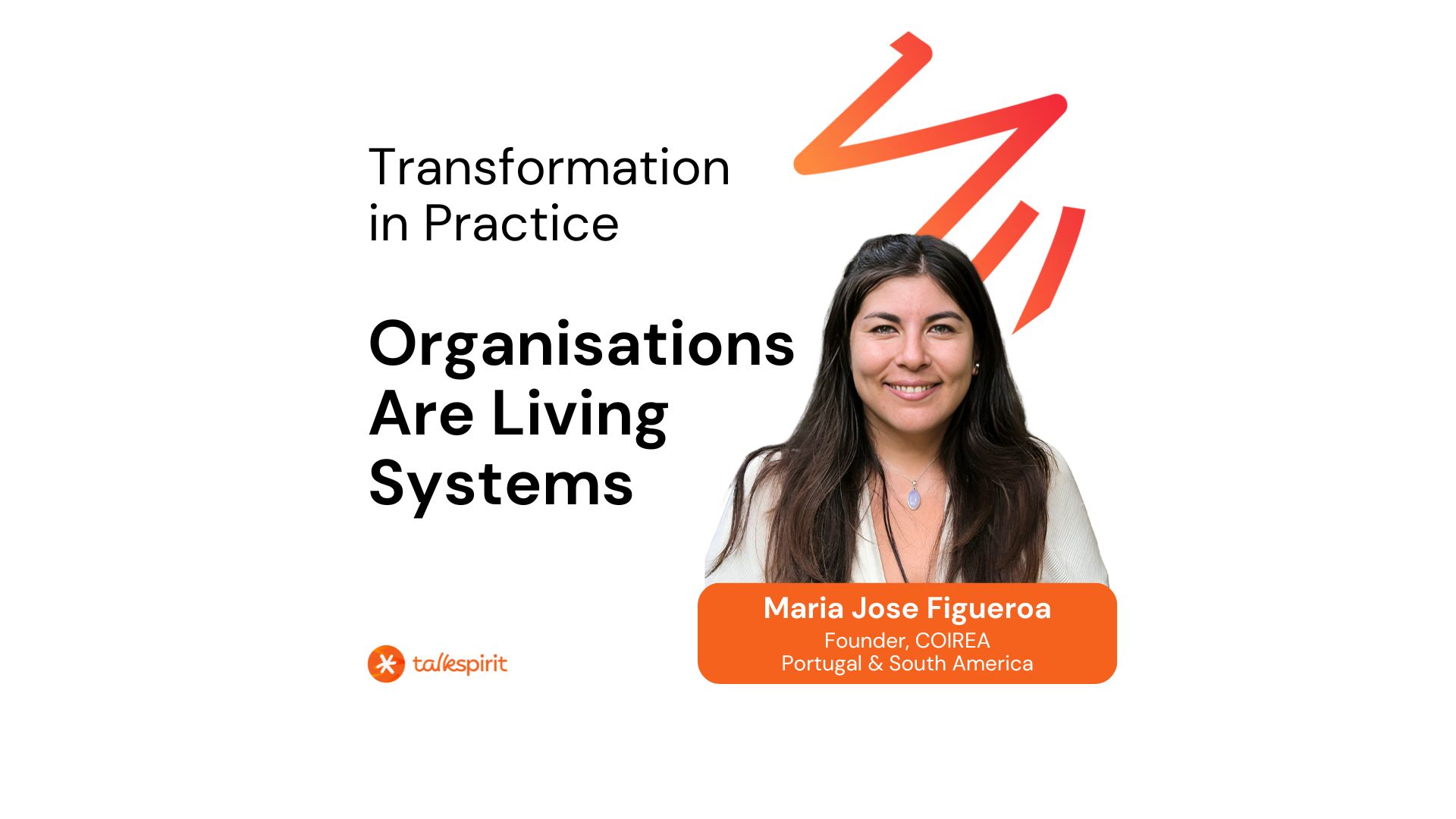
At Talkspirit, we highlight partners who are experimenting with new ways of working. In this interview, María José Figueroa, founder of COIREA, explains how her regenerative consultancy helps organisations restore coherence across purpose, structure, leadership, collaboration, and well-being—so they can function as healthier, more human ecosystems.
Who is María José Figueroa and what is COIREA?
María José: COIREA is a regenerative consultancy that humanises organisations by helping them align purpose, strategy, and well-being. Our work is grounded in the idea that companies are living systems. When their internal structure, leadership, and culture are coherent, they naturally become more innovative, resilient, and human-centred.
At COIREA, we combine business strategy with conscious leadership and organisational well-being frameworks. We begin by diagnosing the health of the organisation across our operating system, which includes five pillars: purpose and culture, leadership, collaboration, well-being, and organisational strategy. Based on this, we co-design a transformation plan that is both data-driven and deeply human.
Beyond our consultancy work with startups and companies, we also run a social-impact arm in Latin America. It’s currently in its MVP stage and called COIREA Raíces Latinas. Its purpose is to strengthen NGOs and community-led initiatives through regenerative leadership and structural design. Our mission is to transform organisations by helping them evolve from efficiency-driven models into regenerative ecosystems.
How did you become interested in organisational operating systems and new governance models?
My curiosity began when I realised how interconnected everything is inside an organisation.
You cannot work on one part of the system in isolation. You can train leaders, for instance, but if the structure is not coherent, or if there is no clear purpose or direction, the system remains fragmented.
Before founding COIREA, I led organisations myself and implemented an operating system. That experience shaped my understanding of how different aspects of an organisation must interconnect. That’s why I describe organisations as living systems: nothing works well if it’s separated from the whole.
What do you see as the main challenges organisations face today?
If I had to put it into one word, it would be fragmentation.
Fragmentation between purpose and execution.
Fragmentation between team leaders and employees.
Fragmentation between strategy and well-being.
When one part of the system is out of sync, the entire system suffers. That is why we created our operating system—to restore coherence across all these dimensions.
We like to look at the big picture. Each organisation is unique, so we take the time to analyze what is happening across the whole system, and then focus on a transformation tailored to their reality.
How do you support organisations through transformation?
We always begin with the diagnostic phase. The first touchpoint is a free health scanner that we offer on our website. It’s made up of 50 questions. It's quite intense, as some people say, but I truly believe you need that level of depth to understand what is going on in an organisation. Making it shorter would mean missing essential signals. If a company wants to start a real transformation journey with COIREA, then answering 50 questions should be considered a priority.
After this first assessment, we hold a consultation call where we review the results and begin exploring what lies beneath the surface. Then we move into the transformation phase. We offer a 90-day program in three versions: one focused on leadership, one on collaboration, and one on purpose and structural direction.
When that first transformation cycle is complete, we reconnect. We look again beneath the surface: What has shifted? What patterns are emerging? At that point, we are in a much better position to redesign the organisation with coherence in mind.
I always tell potential clients that COIREA is not a one-time “fix.” I like to work with organisations long-term because my vision is real transformation, not doing one workshop and then everything goes back to the way it was a month later. I want to help redesign organisations from the inside out.
What mindset shifts are most necessary to enable this kind of transformation?
The biggest mindset shift is moving from managing numbers to cultivating human systems.
For decades, organisations have been wired around performance metrics, KPIs, revenue, efficiency. I have been there too. It matters, but it is incomplete. When the focus is only on numbers, people become resources to optimise instead of human beings to empower.
Regeneration happens when people come before performance. That’s when performance actually scales, not the other way around, as most companies still assume.
What role does technology play in anchoring new behaviours and supporting regenerative organisations?
Technology plays an essential enabling role, but it should not be the leading force.
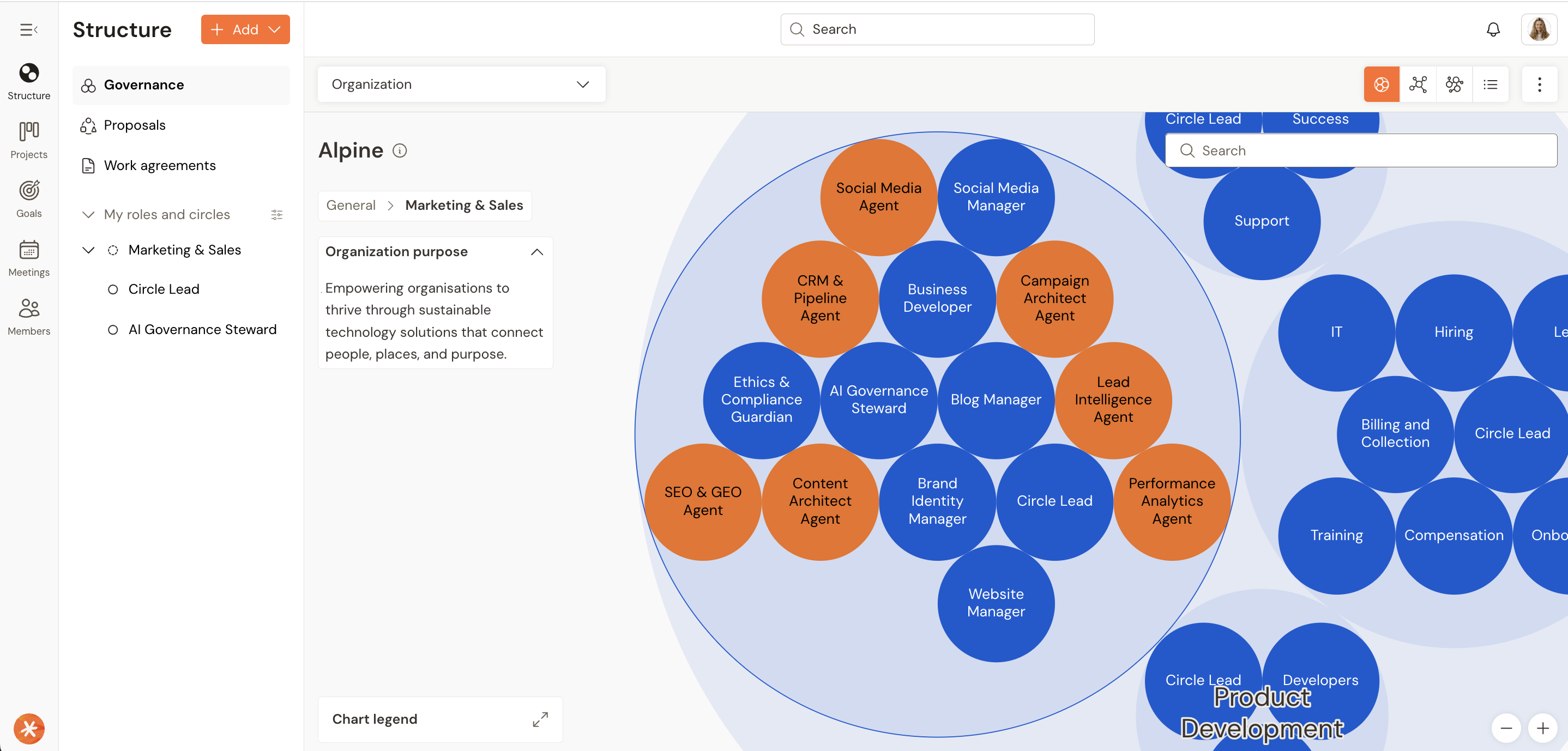
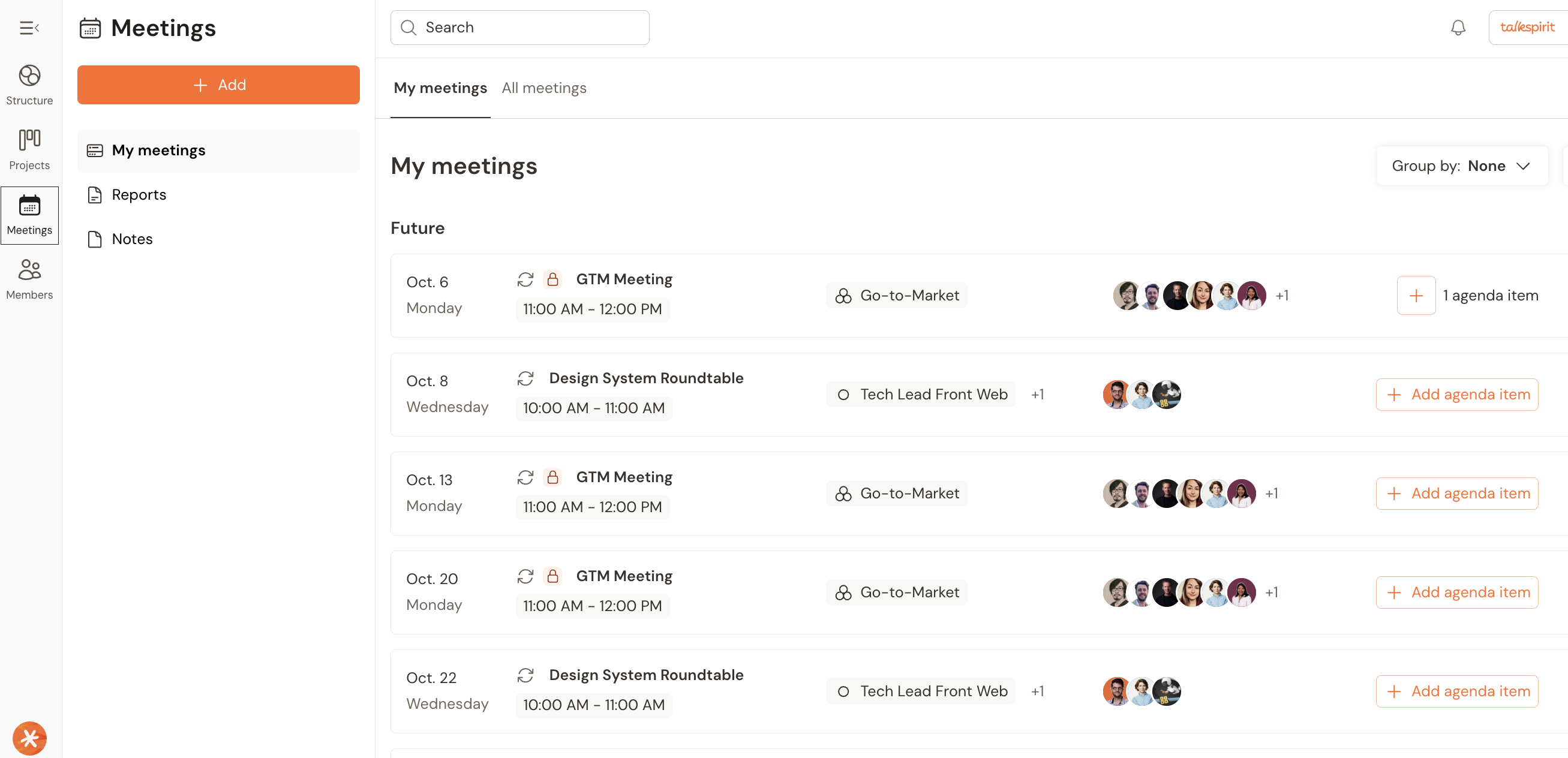
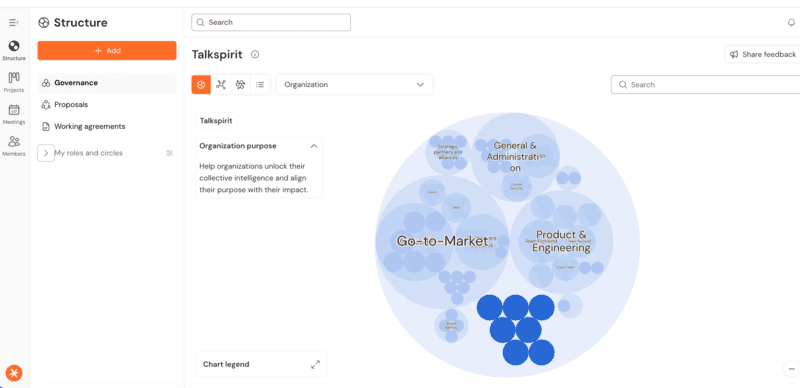
It provides the infrastructure that keeps new ways of working alive and measurable on a day-to-day basis. That’s why I’m excited about our partnership with Talkspirit. COIREA does the mapping, the redesign, the workshops. But daily workflow and collaboration need a tool that supports and anchors the transformation.
Organisations today, especially remote ones, need technology that centralises organisational intelligence, fosters human connection, and automates routine tasks. Without the right tool, new behaviours struggle to take root. Technology should help humans thrive, not replace or overwhelm them.
Can you share a story or moment that brought this work to life?
I have many stories, but one that stays with me happened a few months ago after a public workshop for founders and team leaders. At the end, a founder came to me and said that everything I had described—lack of collaboration, misaligned leadership, unclear purpose—was exactly what they were experiencing. He told me: “I don’t know where to start. My team has been asking for this.”
What I saw in him was a founder who cared. And that reminded me why I am on this path. It can be difficult to be a pioneer in this field. Sometimes it feels like we are ahead of the curve. But that moment reassured me, because a founder who cares is all you need to begin transforming an organisation. I believe more and more founders will begin to care in this way.
Another story that marked me was from early in my career. When I moved from Chile to Portugal, I worked in an organisation where I was the only immigrant and didn’t yet speak the language. I felt completely disconnected from the team. After a year, my manager fired me and said, “I don’t understand why you always close your laptop at 6 p.m.” He was not asking himself why I didn’t want to be there, why I was isolated, why I felt so disconnected. For a long time, I thought it was my fault. That experience is one of the reasons I do this work.
We must stop normalising incoherence in workplaces: stress, burnout, misalignment, exclusion. These patterns create deep wounds, and we often hide them or blame ourselves.
I want to help organisations see and transform these dynamics.
What advice would you give leaders who want to evolve their organisation?
Slow down. Listen to the system.
When there is fragmentation or chaos, people often respond by speeding up: launching new initiatives, restructuring teams, adding tools, pursuing new revenue streams. But real evolution starts by listening. The system speaks through patterns, behaviours, and silences.
Join meetings not to lead, but to observe. Who talks the most? Who never speaks? Where are the bottlenecks? What is not being said? There are more answers in silence than you can find in a spreadsheet.
Sometimes transformation starts with something as simple as mapping roles or sitting quietly and paying attention.
What questions are you still exploring?
The big one for me right now is: how do we measure coherence?
We know how to measure performance and engagement. But we don’t yet know how to measure alignment, trust, inner well-being... at least not in ways that organisations take seriously.
At COIREA, we are exploring how to make the invisible visible, how to build ways of measuring coherence that combine human data, business intelligence, and AI insight.
More broadly, we keep asking: how can we design organisations that are truly alive, where people can thrive, and where that thriving becomes something we can actually see and measure?
Any final message for founders and team leaders?
We need to stop normalising burnout, disengagement, and disconnection. Everyone has a story of incoherence at work. It is time to invest more in people.
We are wrapping up 2025, budgets are closing, but 2026 is a new page. My invitation is simple: plant a seed. Start something small next year and watch how it evolves.
And yes, we are expanding our social-impact work in Latin America. I’m very excited about this next chapter.



Révélez le potentiel de votre organisation.
Nous sommes là pour répondre à toutes vos questions et vous accompagner dans vos projets.










.jpg)













.jpg)



.jpg)
.jpg)




.jpg)
.jpg)


.jpg)

.jpg)


.jpg)


.jpg)


.jpg)


.jpg)
