

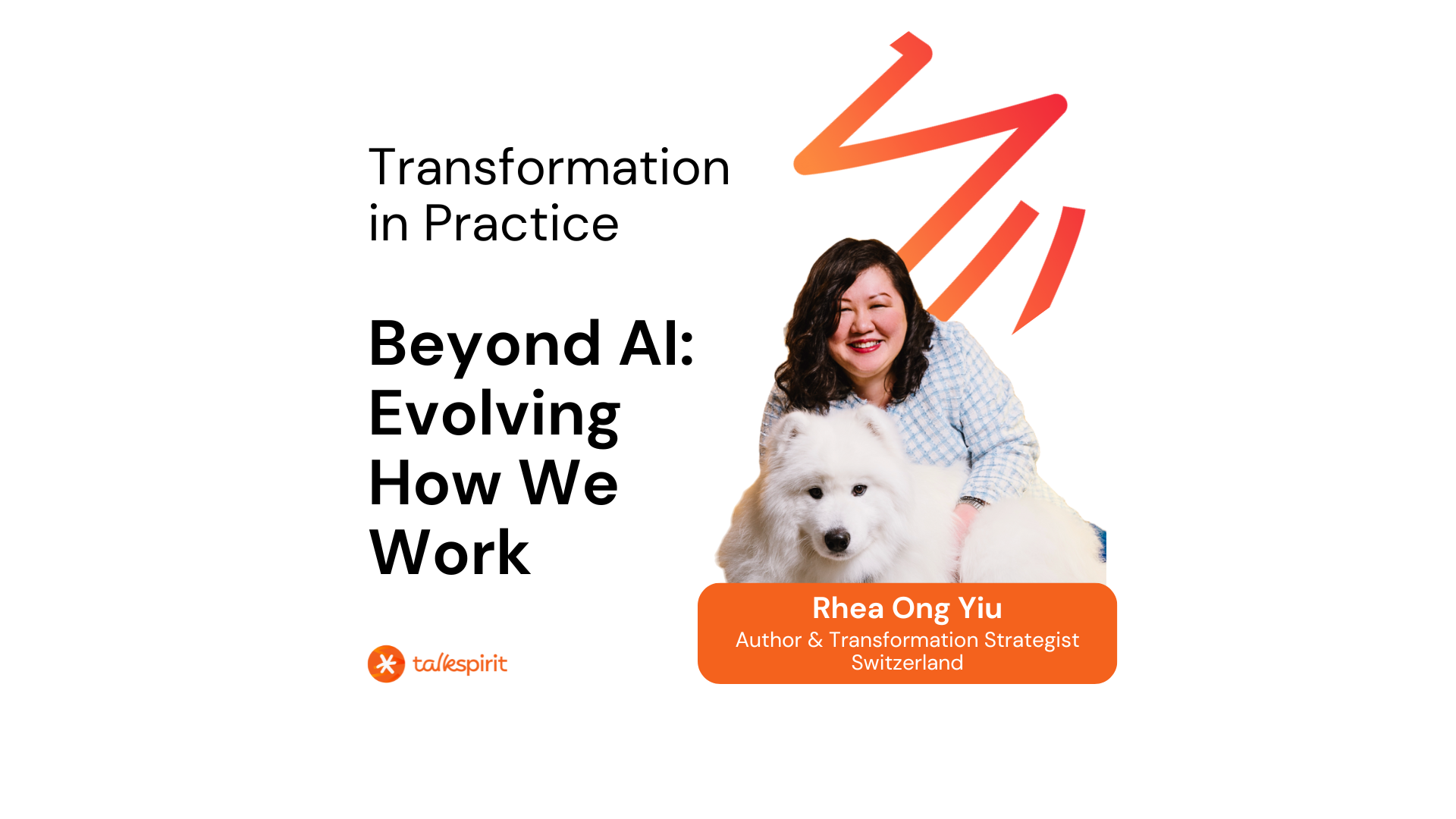
For this episode of Transformation in Practice, we spoke with Rhea Ong Yiu, transformation strategist, author, and former Director of Enterprise Transformation at EY Switzerland. In this conversation, Rhea explores the organisational shifts required in an era shaped by AI, the need for clearer human and machine roles, and why generosity and relational trust are becoming strategic assets for organisations.
Hello Rhea, could you introduce yourself and tell us a little about who you are?
I was born and raised in the Philippines and moved to the Netherlands in 2009. I spent ten years there before moving to Switzerland, where I now live in the hills of Basel with my dog. Something I love is transforming simple daily routines, like dog walks, into meaningful moments of reflection for current and future leaders.
Could you tell us about your work as a transformation strategist? What does it entail?
Transformation work is a big school. You collaborate across functions and divisions in large and small organisations.
You examine how roles are governed, who has decision rights, and how this affects the organisation’s ability to adapt.
Most organisations were shaped in a meritocracy era. Today, they must shift towards models that better match the realities of our time. With AI transforming workplaces at speed, we need to rethink how decisions are made, how people show up for their roles, and how they serve customers.
What do you see as the main challenges organisations are facing today?
There is a lot of fear about AI taking away jobs. But AI has already been replacing tasks for months. The current challenge is different. It is about coexistence. How do humans and AI work together? How do we ensure that human agency stays front and centre? That is where I see the most urgent work ahead.
How do you help organisations navigate transformation?
There are several layers. The first is role clarity.
Humans need clarity in their roles. AI tools need clarity in theirs. Organisations need transparency and alignment across both. This helps break silos and accelerates decision making.
The second is understanding rhythms and rituals.
Organisations move through phases. Discovery. Experimentation. Launch. Learning. Many get stuck because the rules do not evolve as these phases evolve. With AI, we can design better listening across the entire cycle. We can detect signals from customers, from the market, and from emerging patterns that humans would miss.
When you talk about levels of listening, what do you mean?
As your product or idea moves through phases, the rules must shift. But in most organisations, the rules stay fixed. AI can help us listen differently through these transitions. It identifies customer demands, helps us iterate more intelligently, and speeds up the feedback loop.
This is the listening I mean. The intentional design of how AI and people respond to market signals and future trends.
How did you discover new governance models and alternative ways of working? What attracted you to them?
It started with frustration. I was leading Agile and digital transformation and felt like I was hitting a wall every time I proposed new practices. When I discovered the work of Frederic Laloux, it was mind blowing. He spoke about wholeness and self management in ways that created the right conditions for agility to truly succeed.
Co-founding Teal Around the World expanded my understanding even more. I learned from organisations around the globe that were experimenting with different ways of operating. Later, I joined a self managing organisation in Life Sciences, where candour and nonviolent communication were practised daily. That experience shifted everything.
It showed me what it looks like when a system evolves constantly around the needs of employees and customers.
These practices may look small, but they can fundamentally change how people work and communicate.
When you work on organisational transformation, what are the biggest mindset shifts that leaders need?
The first is openness to change. Without it, everything is harder.
The second is an evolutionary mindset. The willingness to make small changes continuously, not just big transformations every few years. I once worked with a leader who always said, “Take the decision now and apologise later.” That mindset encouraged experimentation, and I believe many organisations could benefit from it.
The third is generosity. Not just personally, but as a business practice. At Beyond Connections, generosity is a core value. Approaching others relationally rather than transactionally builds trust. It changes how people communicate, collaborate, and co-elevate each other..
You mentioned moving from transactional to relational ways of working. How does that happen in practice?
I love an analogy from Ronen, the CEO of Beyond Connections. He speaks about breadsticks and truffles.
Breadsticks are small acts of generosity. Sharing an article. Thinking of someone. Offering help without expecting anything in return. These small acts strengthen relationships and show that people feel seen.
Truffles are significant requests or offers. You give or ask for them sparingly and with intention. You do not start with truffles. You build the relationship first through breadsticks.
This mindset is essential in networked organisations, where people move across teams and rely on trust and social capital to collaborate.
What role does technology play in anchoring new behaviours and structures?
Technology creates decision intelligence. When data is no longer siloed, transparency increases. Leaders gain confidence because they can rely on shared information rather than fragmented sources.
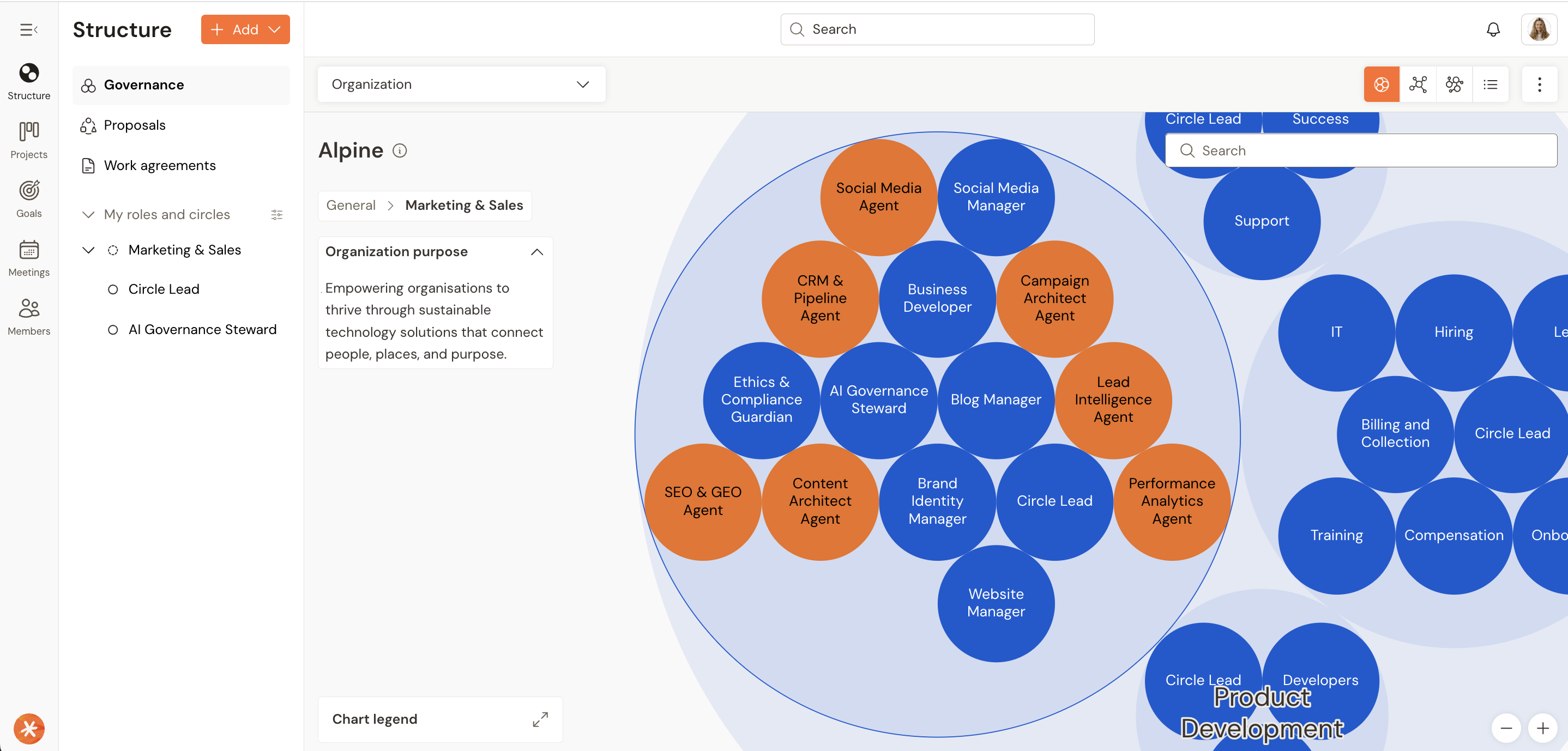
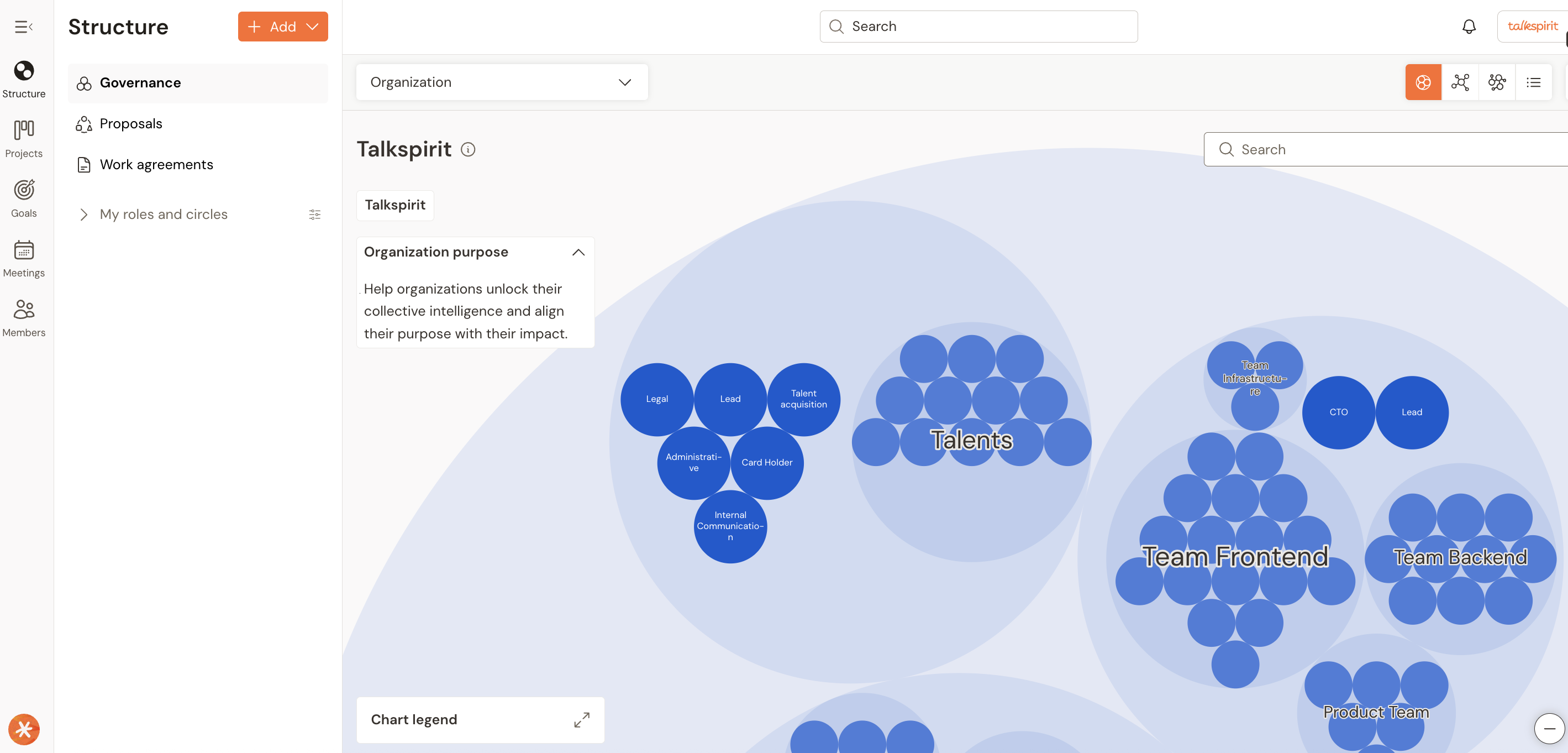
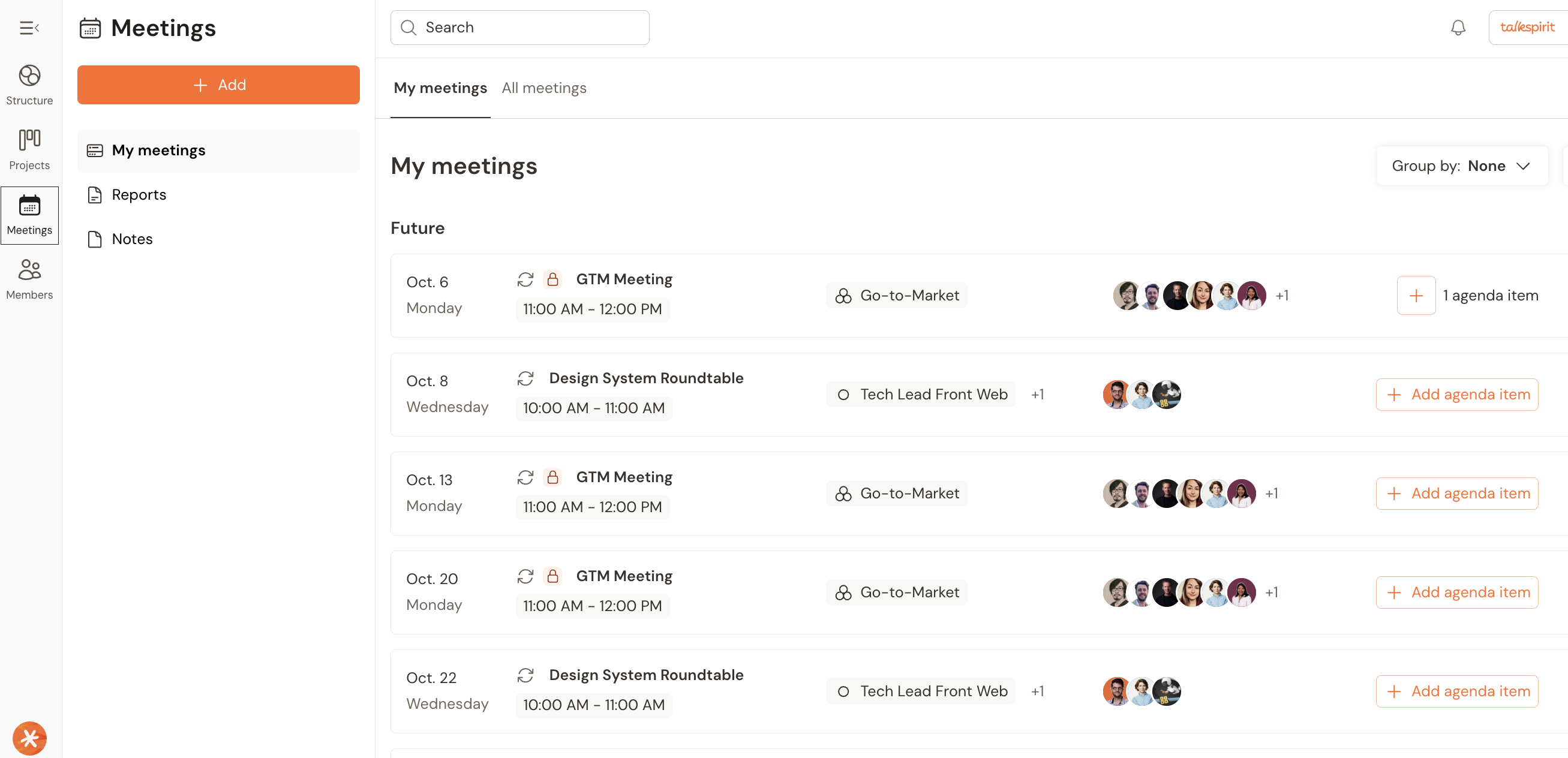
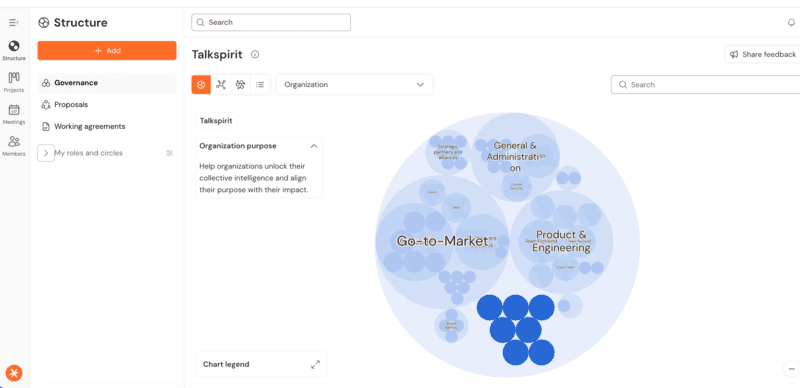
Technology also supports role based systems. I have been a long time user of Holaspirit. In role based organisations, roles evolve continuously. Without technology, tracking these changes is almost impossible.
You need systems that maintain audit trails, governance actions, and workflow evolution. Otherwise, transformations remain stuck on documents or whiteboards and never become reality.
Could you share a concrete story or moment when transformation truly became real?
One story stays with me. We were working with a production line and exploring predictive analytics. The people on the shop floor feared that technology would take their jobs. Virtual meetings were tense, with a lot of resistance.
As a final attempt, we decided to spend a day with them. We joined them for lunch and asked sincere questions. Being together in person changed everything.
They told us, “We cannot talk to each other because we are in the cockpit all day.” This sparked an idea. What if we simply took them out of the cockpit?
We transferred the cockpit data to a tablet so they could walk around while managing the line. Suddenly they were talking, having coffee, exchanging ideas. With this, we were able to increase engagement, buy-in and evolve the innovation pipeline coming from the operators themselves! Within a month we rolled it out in one plant and then replicated it in 60 plants around the world.
This simple change increased the quality of life of the operators, strengthened collaboration and shifted the dialogue to what’s the problem, to what’s possible. That’s how you drive innovation and transformation with people at the center!
What questions are you still exploring?
The future of AI is a big one. No one has the full expertise. We are all figuring it out. I wonder about the impact AI will have on organisations and on our society as a whole.
I have explored governance models where machines and humans collaborate. Robotics allowed for clear reporting lines. AI is different. It needs a new form of governance.
Who is accountable when AI participates in decisions? How do we design collaboration between humans and intelligent systems?
I also question whether the motivations behind the AI race are healthy. How do we build a future where humans and AI can coexist and co-elevate? This remains open.
Any final message for leaders?
This is a fascinating inflection point. Everything is moving fast and information is more transparent than ever. Use your human agency. Tap into your strengths. Do not collapse into fear. There is so much that AI cannot replicate. Lead from confidence and guide the way forward.



Révélez le potentiel de votre organisation.
Nous sommes là pour répondre à toutes vos questions et vous accompagner dans vos projets.










.jpg)












.jpg)




.jpg)
.jpg)




.jpg)
.jpg)


.jpg)

.jpg)

.jpg)


.jpg)


.jpg)


.jpg)
