


What if you were told that your success, and that of your organization, is determined not by raw talent, but by a simple belief system?
As Stanford psychologist Carol Dweck asserts in her book Mindset, “the view you adopt for yourself profoundly affects the way you lead your life. It can determine whether you become the person you want to be and whether you accomplish the things you value.”
Indeed, fundamental qualities like intelligence, talent, and abilities are not fixed traits, but can be developed through dedication and effort. This belief system is what Carol Dweck calls a “growth mindset”.
Fostering this growth mindset is key for building an organizational culture that values resilience, adaptability, innovation and purpose. But how do you move from belief to practice? In this article, we will explore:
- what is a growth mindset, and how it differs from a fixed mindset
- why you need it in your organization
- how to develop a growth mindset culture using Carol Dweck’s insights
- how an integrated operating system can support organizational growth
Understanding the Growth Mindset
The term growth mindset was initially developed by Carol Dweck, who dedicated her career to researching how our perspective impacts success. Psychologist Mary Murphy then continued this research by examining the links between mindset and organizational culture in her book Cultures of Growth.
The foundational theory is that success is not dictated by innate talent or intelligence but rather by having the proper frame of mind and the desire to improve.
People with a growth mindset believe that skills development comes through learning, hard work, and resilience. They are not people who give up easily. On the contrary, they are willing to step outside their comfort zone to take on new challenges, and view failures as learning opportunities.
Fixed Mindset vs. Growth Mindset
To embed a growth mindset in the workplace, we must understand the dualities that shape organizational behavior:
- Fixed mindset (talent is static): Individuals with a fixed view believe their fundamental capabilities are set in stone. They avoid failure, fear criticism, and see effort as pointless if the outcome isn't immediate success. In business, this often leads to an authoritarian leadership style and an organization that is slow to adapt or improve, putting it at risk of losing market share.
- Growth mindset (potential is limitless): This perspective prioritizes potential in people rather than just their existing skills. Employees view challenges as learning opportunities and embrace difficult tasks outside their comfort zone. They are inspired to help others grow and develop a lifelong love of learning.
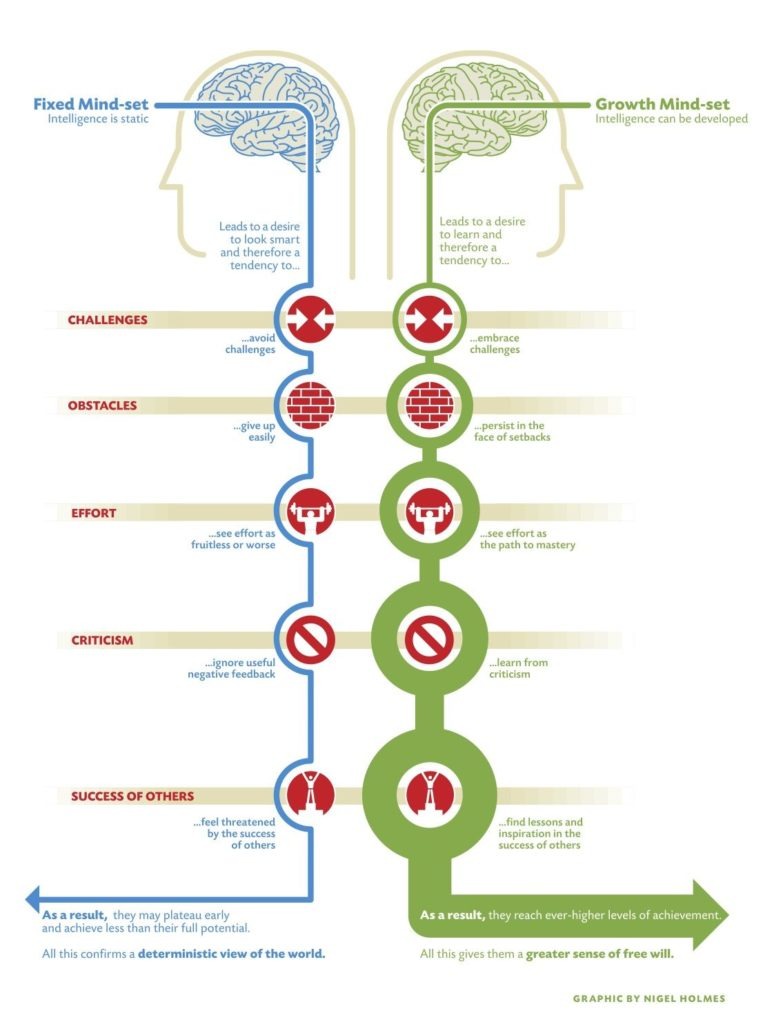
As Dweck states in her seminal work Mindset:
"In the fixed mindset, everything is about the outcome. If you fail—or if you’re not the best—it’s all been wasted. The growth mindset allows people to value what they’re doing regardless of the outcome. [...] It is based on the belief that your basic qualities are things you can cultivate through your efforts, your strategies, and help from others.
Want to better understand the difference between the fixed and growth mindset? Go watch Carol Dweck’s TED Talk on “the power of yet”.
Why a Culture of Growth is a Strategic Imperative
Why is investing in a growth mindset culture a top-tier strategic priority for purpose-driven organizations? Here are the key benefits you can expect from changing your mindset.
Improved Performance and Resilience
A culture focused on potential over performance generates tangible results:
- Financial impact: A staggering 80% of executives agree that an employee's growth mindset directly contributes to revenue growth.
- Adaptability: According to a World Economic Forum study, 67% of employers identify resilience, flexibility, and agility as key skills for the future workforce. Developing a growth mindset helps promote those skills and create a flexible organization capable of continuous evolution.
Innovation and Psychological Safety
A growth orientation is the precondition for true innovation, allowing teams to treat risk as a necessary path toward mastery:
- Blameless culture: When employees feel confident in asking for help or raising concerns without fear of repercussion, they are operating in a psychologically safe environment. This is fundamental to a growth mindset, which views mistakes and failures as perfect opportunities to learn.
- Empowerment: The right to make mistakes encourages staff to think outside the box and push the envelope. For instance, highly agile, self-managed organizations understand that operational clarity—enabled by codifying dynamic roles and authorities—is essential to providing the safety net needed for people to take informed risks.

Engagement and Trust
When leaders champion the belief that employees can grow, it builds trust and drives engagement:
- Increased trust: Executives polled by the TalentLMS study found that a growth mindset increases trust between leaders and employees and causes a jump in employee engagement.
- Attracting talent: A workplace that actively fosters professional development and a healthy culture is essential for attracting talent.
Best Practices for Anchoring the Growth Mindset in Your Organization
The crucial step in the journey of how to develop a growth mindset is transitioning from aspirational belief to structured practice. This requires leaders to deliberately design an operational environment where learning is safer and easier than remaining static.
Lever 1: Dweck’s Process for Cultural Change
Organizational change, like individual change, is a process that begins with heightened awareness. To effectively shift the collective mindset, Dweck outlines four critical steps that leaders must facilitate within their teams. This is a deliberate methodology for inviting organizational evolution, not imposing it:
- Recognize the mindset: Help teams acknowledge that everyone operates with both mindsets and learn to recognize what triggers the fixed mindset voice (e.g., failures, criticism, deadlines, disagreements).
- Name your fixed-mindset persona: Encourage employees to come to understand what happens when their fixed-mindset "persona" is triggered. They should name this persona, identify what it makes them think, feel, and do, and how it affects those around them.
- Talk back and choose the growth path: The goal is to gradually learn to remain in a growth mindset place despite the triggers, as they educate their fixed-mindset persona and invite it to join the growth journey.
- Set Growth Goals (learn and help learn): Once the persona is "tamed," the journey requires setting concrete goals for growth. This moves the mindset into actionable planning by requiring teams to ask specific, daily questions:
- Planning the action: As you think of opportunities, teams must form a concrete plan and ask: When, where, and how will I embark on my plan?
- Sustaining the effort: When encountering the inevitable obstacles and setbacks, teams must form a new plan and ask themselves: When, where, and how will I act on my new plan?
- Maintaining momentum: After success, the process demands reflection to ensure the mindset endures: What do I have to do to maintain and continue the growth?
The goal is to cultivate a sustained practice, not just a fleeting aspiration. The focus shifts to how to maintain and continue the growth journey.
Lever 2: Blameless Leadership and Continuous Learning
To sustain the growth mindset, leaders must actively de-risk failure and model the desired behavior.
Turn Mistakes into Learning Opportunities
Some managers tend to blame their team for the slightest mistake. The problem with this approach is that employees no longer dare to take initiative for fear of being criticized if their efforts are not as successful as expected.
To avoid this, you need to establish a culture that embraces the right to make mistakes. Show your teams that making mistakes is a positive thing, allowing them to learn lessons for future actions. In the event of a mistake or failure, the focus should immediately be on understanding the system or process that failed, not on the person who caused it. In this way, you help create an environment where employees feel safe to take risks.
Be careful, however, to match your words with your actions. According to the TalentLMS study, 96% of leaders believe they have a growth mindset, a statement with which less than half of employees (45%) agree. This significant gap between intentions and employee perceptions highlights the urgent need to bring visibility to your initiatives.
To visibly embed the growth mindset into your culture, you can set up retrospectives, i.e., meetings that allow you to reflect on the lessons you want to learn from a given project, whether it ended in failure or success. This is an effective way to identify:
- what went well (successes),
- what did not go as planned (difficulties and mistakes),
- the reasons why the team encountered these problems,
- areas for improvement for the next project.
Develop Continuous Learning Pathways
Continuous learning must be embedded in daily workflow in order to develop a growth mindset.
- Formal investment: Invest in learning initiatives by dedicating a specific fund to sponsor workshops, short courses, or conference attendance. Giving employees a choice in the topic helps align their career goals with the organization's needs.
- Learning time: Dedicate explicit time and resources (e.g., reserving a few hours weekly or monthly) for teams to document lessons learned, update best practices, or engage in focused training, ensuring learning is treated as a priority, not an afterthought.
- Informal peer learning: Encourage internal knowledge sharing, for example by pairing employees with different skills in mini-mentorship programs, by creating knowledge management processes, and by hiring dedicated resources (e.g., a knowledge manager)
- Strategic hiring: Move beyond hiring solely for existing skills; prioritize candidates who demonstrate a concerted effort to learn, turn challenges into opportunities, and commit to continuous improvement (i.e., hire for potential).
Codify Feedback into SMART Goals
Developing a strong feedback culture requires deliberate structure to ensure growth, not simply criticism.
- Cultivate a Feedback Culture: This involves providing constructive feedback that helps employees grow rather than negative feedback that stunts innovation. The focus should always be on the process, the effort, and the strategy, not innate ability or talent.
- Establish multi-directional channels: Encourage feedback not just from managers to employees (top-down), but also peer-to-peer and from employees upward, allowing continuous review of systems and leadership.
- Decouple feedback from review: Separate performance discussions (focused on past outcomes) from coaching conversations (focused on future growth and learning), making feedback safer to receive and utilize.
- Create SMART goals (Specific, Measurable, Achievable, Relevant, Time-bound) to put feedback into action: This gives employees a clear, tangible target to work toward, demonstrating they have embraced the feedback and are actively engaged in developing a growth mindset.
Lever 3: Tooling the Change – The Role of the Integrated OS
A fragmented tool stack generates constant friction, making continuous learning and evolution slow. Every time an employee switches apps—from chat to project management to governance documentation—they lose momentum and organizational context.
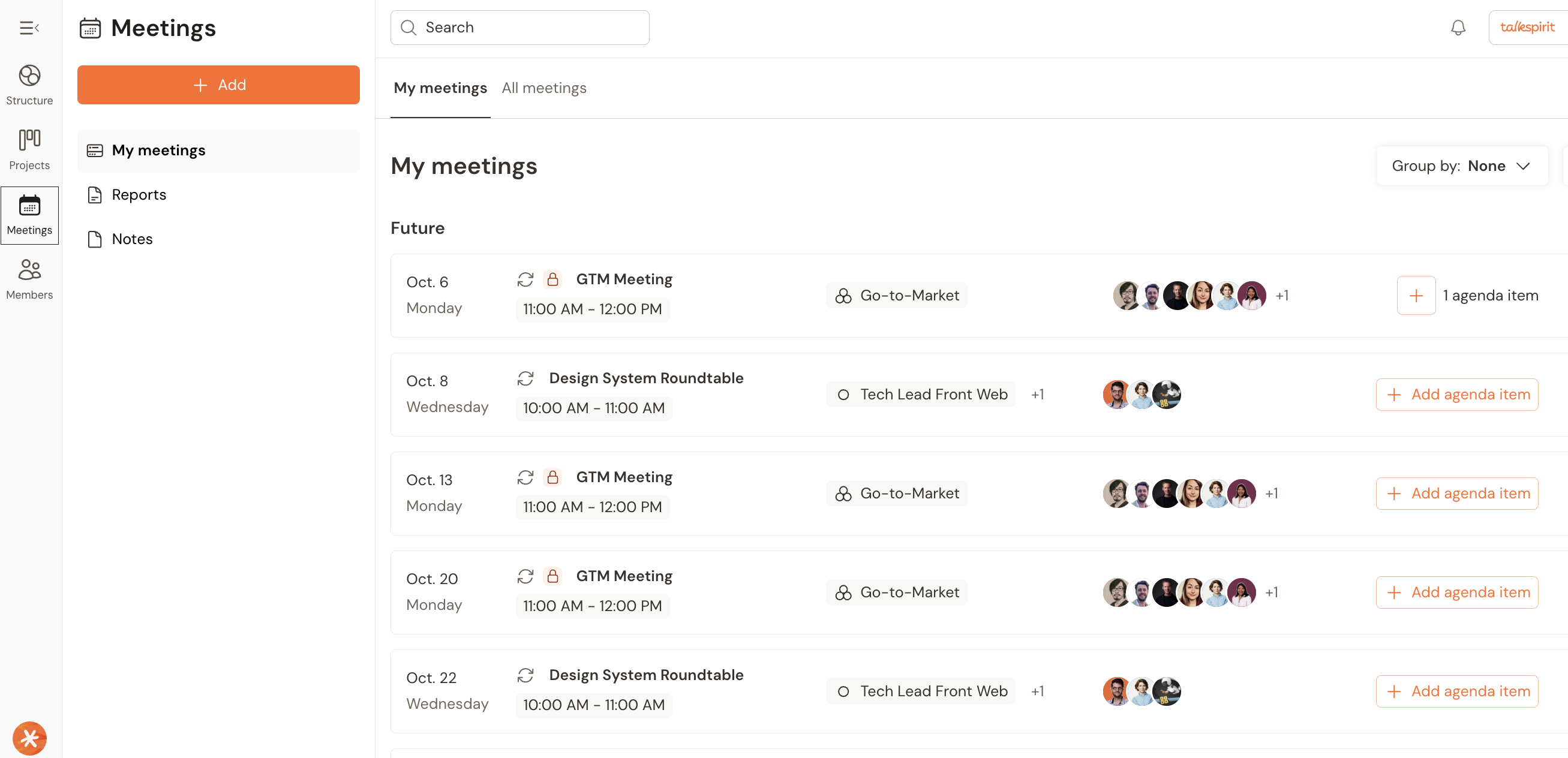
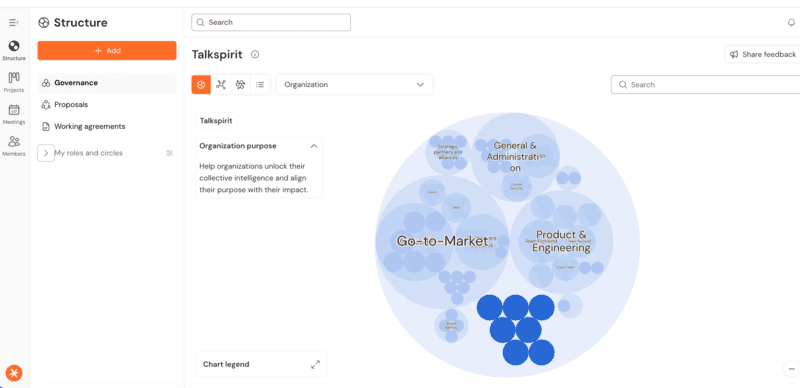
So if you want to develop a growth mindset in the workplace, you need an integrated solution that eliminates this friction and makes coherence visible. This is exactly what Talkspirit offers: a European operating system (OS) that integrates all core functions needed to promote growth at every level of the organization. This in turn helps promote:
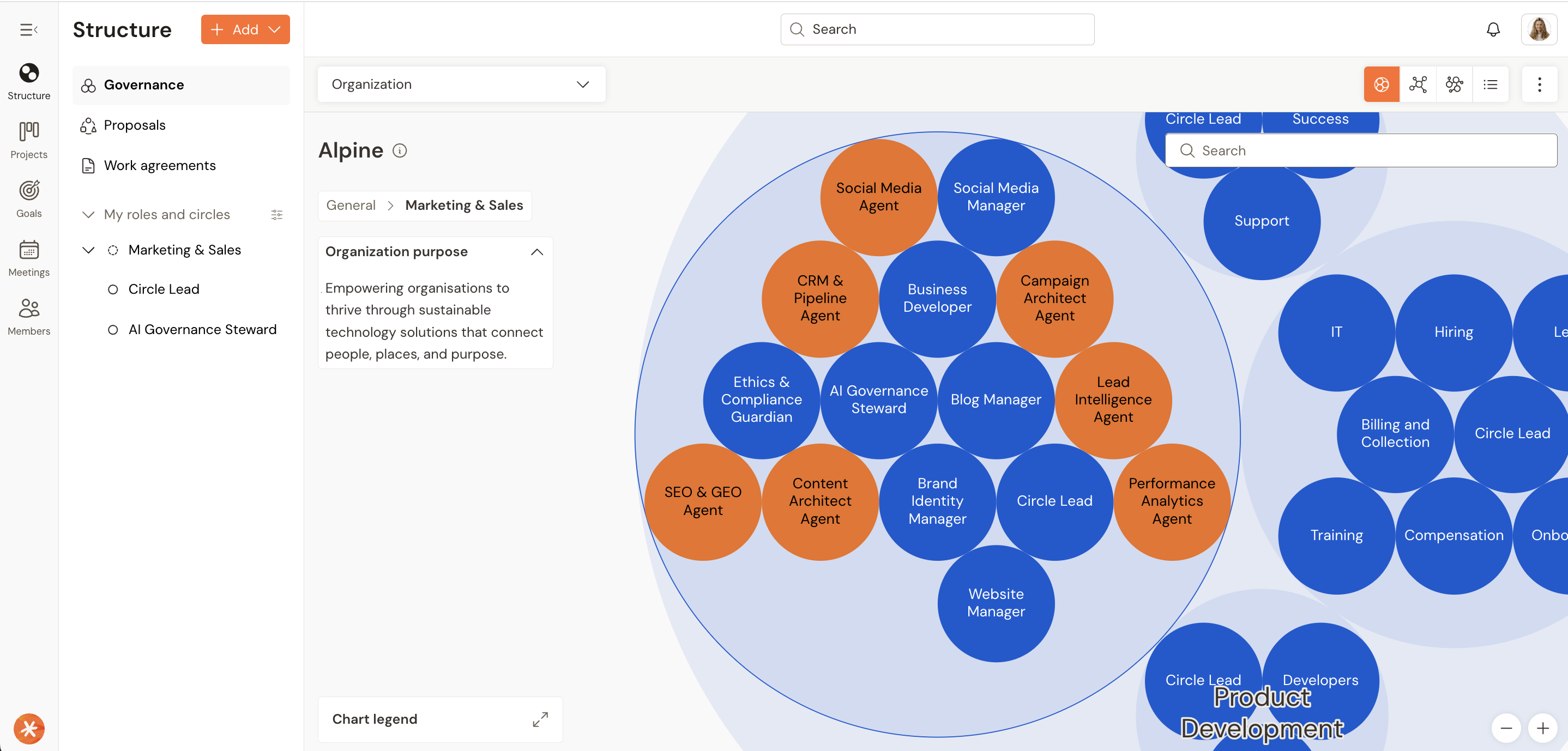
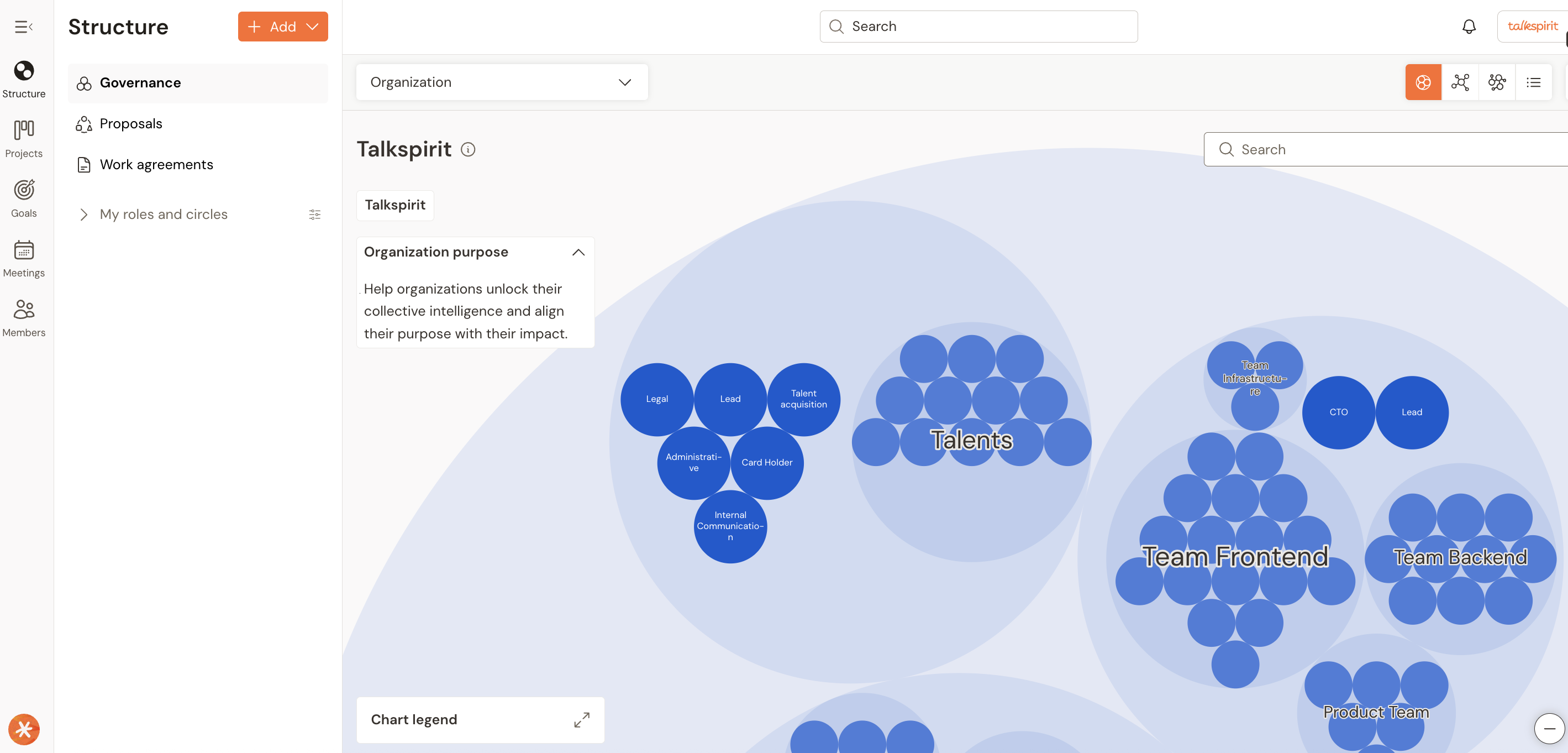
- Clarity and safety: The platform helps codify dynamic roles, circles, and accountabilities, ensuring clarity on who owns what. This structural coherence provides the safety net needed for teams to take informed risks.
- Alignment: Leaders can link strategic objectives and key results (OKRs) directly to the specific roles and projects responsible for achieving them. This ensures that effort is never wasted, making progress traceable and purposeful.
- Transparency and feedback: Dedicated internal group discussions, newsfeeds, and documentation libraries facilitate open, clear feedback loops, ensuring every lesson learned is quickly circulated across the team.
- Sovereignty and trust: Talkspirit provides a sovereign operating system that guarantees data hosting exclusively in Europe, aligning platform ethics with a high-trust, growth culture.
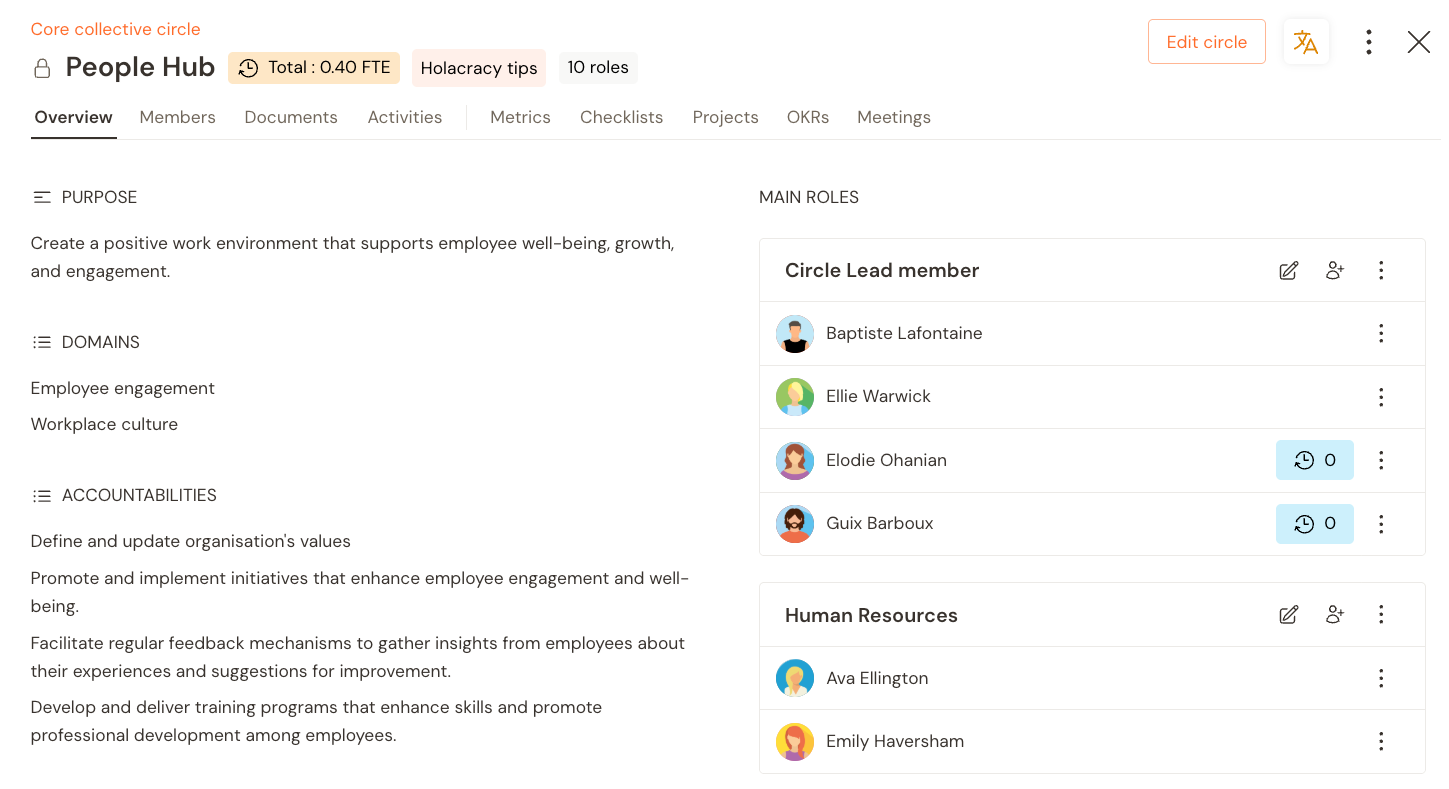
By leveraging an integrated platform, organizations stop relying on motivational speeches and start building operational integrity, turning the growth mindset into a live, observable, and evolvable system.
Want to know more about Talkspirit? Schedule a demo with our sales team!

Conclusion
The ultimate lesson on how to develop a growth mindset, according to Carol Dweck, is that personal and organizational transformation is possible through sustained effort and the courage to engage with challenges. It’s the conscious choice to operate in the realm of becoming rather than being.
A growth mindset culture is the result of codifying this choice into your organizational design. It is the shift from chaotic effort to alignment by design—where communication, collaboration, and governance are unified to make purpose visible in every daily action.
This is why self-managed organizations succeed: they hardwire the growth mindset into their official operating system by distributing authority and making learning mandatory. Talkspirit supports this transformation by providing the digital infrastructure that enables you to evolve your operating system with coherence, clarity, and trust.
To help you translate these principles into a functioning structure, we’ve documented the journey of organizations leading this change. Download our exclusive resource to see how 3 self-managed organizations have operationalized the growth mindset using Talkspirit 👇
Access White Paper
In the “The Self-Management Blueprint for European Pioneers”, you’ll discover how leading European organizations have successfully used self-management frameworks and integrated tools like Talkspirit to move beyond rigid hierarchies, foster continuous learning, and anchor a true culture of growth and autonomy.



Révélez le potentiel de votre organisation.
Nous sommes là pour répondre à toutes vos questions et vous accompagner dans vos projets.














.jpg)












.jpg)




.jpg)
.jpg)




.jpg)
.jpg)


.jpg)

.jpg)


.jpg)


.jpg)


.jpg)


.jpg)
