3 Sustainability Trends To Watch In 2026

.svg)
- Three trends shape sustainability in 2026: the circular economy model, increased transparency and reporting, and the transition to renewable energy.
- The frame changed in March 2026: the Omnibus I directive limits CSRD reporting to companies with more than 1,000 employees and more than 450 million euros in net turnover, taking around 80 percent of companies out of the original scope.
- Falling out of scope is not a free pass: large customers keep asking suppliers for sustainability data, now capped at the voluntary VSME standard.
- Sustainability still sells and still recruits: 78 percent of consumers say a sustainable lifestyle matters to them (NielsenIQ), and 72 percent of Gen Z workers weigh an employer’s environmental record (Deloitte, 2024).
- To get started: run an impact audit, set goals with your teams, and pick tools that make information accessible.
2026 is in full swing. And with every new year comes a new set of trends, and that includes sustainability trends.
Understanding what’s trending in sustainability can help you ensure that your organization is staying current with sustainability best practices, and that your business, your customers, and the environment are reaping the rewards.
But what, exactly, are this year’s trends? And how can you embrace, and implement, these trends in your business?
One thing worth setting straight first: the sustainability trends spotted in 2025, the circular economy, transparency and reporting, and renewable energy, have not been replaced in a year. They have settled in. What has changed is the European regulatory frame, where the Omnibus I directive redrew the scope of the CSRD in March 2026. More on that below.
Why Is Embracing Sustainability So Important In 2026?
Sustainability is about creating a world that works better for everyone, protecting our environment, building strong communities, and making sure people can prosper, both now and in the future. It's recognizing that a healthy planet, thriving communities, and economic success all go hand in hand.
But sustainability doesn’t just positively impact the planet (and the people living on it); it can also impact your business. “The pursuit of sustainability helps create clear value for businesses,” says Gilbert Michaud, PhD, a professor at the School of Environmental Sustainability at Loyola University Chicago with experience researching sustainable business practices.
Embracing sustainability trends offers a variety of benefits to your business, including:
Cost Savings
Sustainable practices can generate serious cost savings for your business, even if they seem pricier up front.
“To illustrate, energy efficiency retrofits, such as installing LED lighting, help reduce energy consumption and, in turn, utility bills,” says Michaud.
“Initial investments in sustainable technology and processes may be high, but they lead to long-term savings,” says Sam Scoten, co-founder and CEO at CheckSammy. The company is an industry leader in eco-friendly technologies and energy solutions that works with organizations worldwide to reduce waste and create sustainable systems to lower carbon footprints.
Impact, Consumer Sentiment, and Brand Reputation
Arguably the biggest benefit of investing in sustainability is the impact.
When you invest in sustainable practices, for example, practices that support the environment or help your community thrive, you create an impact that goes beyond the products or services your business offers. You get to be a part of making the world a better place, and create a lasting legacy for how your business is both viewed and remembered.
Sustainability can also help you stand out in a world where sustainability is becoming increasingly important. For example, a recent survey from NielsenIQ found that 78 percent of consumers say that a sustainable lifestyle is important to them, and many are prioritizing sustainability when making purchasing decisions. That same survey found that 30 percent of respondents are more likely to purchase sustainable products, while a 2024 PwC survey found that consumers are willing to spend nearly 10 percent more for sustainable produced or sourced goods.
In other words, customers want to buy sustainable products and work with companies that embrace sustainability (as do vendors and partners), and doing so can give you a competitive edge.
“Consumers, especially younger ones, continue to prioritize sustainable business brands, so such efforts can offer companies a competitive market advantage,” says Michaud.
Plus, “nonprofits and businesses embracing these trends can strengthen their brand image and community trust,” says Scoten.
Talent Attraction
An organization is only as strong as its employees. And if you want to attract top talent in today’s market, particularly Millennial and Gen Z workers, sustainability is important.
For example, according to Deloitte’s 2024 Gen Z and Millennial Survey, when considering a potential employer, 72 percent of Gen Zs and 71 percent of Millennials say that environmental credentials and policies are important. A quarter of those workers have already conducted research on the company’s sustainability practices and environmental impact before accepting a job offer, and another third reported planning to do so in the future.
So, embracing sustainability and creating a purpose-driven work environment can help you attract top talent, and it can also help you retain it.
“Many studies have also found that employees feel more satisfied working for a business that is pursuing sustainability,” says Michaud.
For example, one study highlighted by Stanton Chase found that about 74 percent of employees find their jobs more fulfilling when they feel they’re making a positive impact on environmental and social environmental issues.
Clearly, embracing sustainability is important. But what does that look like in 2026?
Let’s take a look at 3 sustainability trends to watch in 2026:
What Are the Sustainability Trends to Watch in 2026?
Circular Economy Model
One major trend is the circular economy model.
“We’re seeing businesses increasingly develop products and processes that allow them to reuse and refurbish materials, diverging from the linear economy model,” says Michaud.
There is currently a “shift from a linear ‘take-make-dispose’ model to circular practices, emphasizing reuse, recycling, and resource recovery,” Scoten agrees.
A circular economy model offers significant environmental benefits over linear models.
“Circular economy practices reduce resource depletion and pollution, aligning with global climate action targets,” says Scoten.
For businesses that want to move away from a linear economy model, “strategic plans that embrace recycling and reuse will help build a circular economy mindset,” says Michaud.
“Businesses will need to redesign processes to align with circular economy principles, such as rethinking supply chains and product lifecycles,” says Scoten.
Also read: Regenerative Business: the Trend Taking Companies by Storm
Increased transparency and reporting
Another one of the big sustainability trends in 2026 is transparency.
“We’re also seeing increased efforts toward a unified and transparent reporting process for sustainability efforts, often demanded by governments, investors, and strategic partners,” says Michaud.
The new fact of 2026 is the scope of the CSRD. The European Omnibus I directive, in force since 18 March 2026, raises the reporting thresholds: only companies with more than 1,000 employees and more than 450 million euros in net turnover remain in scope. Around 80 percent of the companies the original CSRD covered now fall outside it. Member states have until 19 March 2027 to transpose the new thresholds, and the first financial year covered is the one starting on or after 1 January 2027, reported in 2028 (Accountancy Europe breakdown).
Leaving the scope is not leaving the subject. The same text caps what large companies may ask of their value chain: a company in scope may no longer require a supplier with fewer than 1,000 employees to provide more than the voluntary VSME standard sets out. Mid-sized companies across the Benelux will keep receiving data requests from their large customers, but within a bounded frame. For many organisations, reporting stops being a legal obligation and goes back to being what it was: a commercial and brand decision.
| What Omnibus I sets | The detail |
|---|---|
| What Omnibus I setsScope threshold | The detailMore than 1,000 employees and more than 450 million euros in net turnover, both at once |
| What Omnibus I setsEntry into force | The detail18 March 2026 |
| What Omnibus I setsTransposition by member states | The detail19 March 2027 at the latest |
| What Omnibus I setsFirst financial year covered | The detailFinancial years starting on or after 1 January 2027, reported in 2028 |
| What Omnibus I setsCompanies leaving the scope | The detailAround 80 percent of those the original CSRD covered |
| What Omnibus I setsValue chain cap | The detailCompanies in scope may not request more from a supplier with fewer than 1,000 employees than the voluntary VSME standard provides |
This trend is, in many ways, being driven by new technology that makes transparency more accessible.
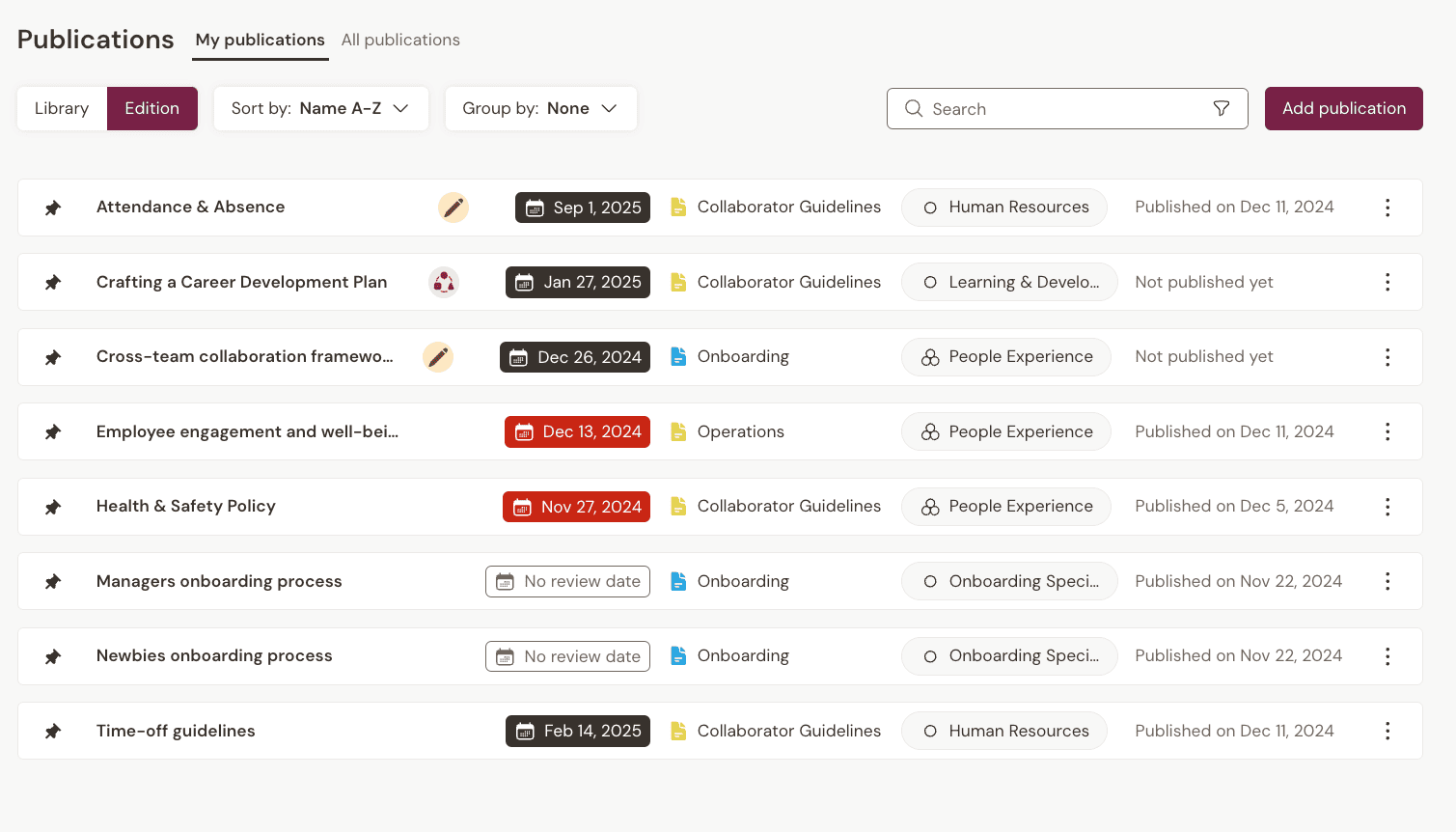
For example, Talkspirit helps increase transparency across your organization with features like:
- An AI-based organizational chart that helps clarify roles and responsibilities
- A robust library to help document processes and policies, and make that documentation more readily available
- Meetings with ready-to-use templates and meeting minutes
- A news feed which helps you share the right information with the right people at the right time

“Transparency, a longtime buzzword in ESG, is now more attainable thanks to technologies like blockchain and AI,” says Jen Boulden, speaker, sustainability expert, and founder of The Anavo Group, one of the first successful sustainable-business consulting firms in the country. “These tools enable precise traceability of supply chain materials, ensuring companies can verify ethical sourcing.”
Expect to see “the integration of AI and IoT for waste tracking, resource optimization, and transparency in sustainability reporting,” says Scoten.
And as technology continues to evolve, it will just become more integrated into sustainability practices, and the demand for transparency will continue to trend through 2026 (and beyond).
“As AI becomes more prevalent, businesses will continue to employ this tool to reduce waste, increase efficiency, track emissions, predict equipment failures, enhance supply chain logistics, and many others,” says Michaud.
“Businesses that fail to embrace transparency risk losing consumer trust or facing regulatory penalties, especially in an era where dishonesty is easier than ever to uncover,” says Boulden.
Also read: What Does a Transparent Company Actually Look Like?
Transition to renewable energy
Another big sustainability trend for the coming year is more and more businesses transitioning to renewable energy.
As Michaud puts it, “the energy transition to renewables also continues to accelerate, and businesses are now major players in terms of purchasing clean energy (e.g., solar and wind) instead of fossil fuels.”
As such, expect to see “accelerated efforts to meet carbon neutrality by adopting renewable energy, optimizing operations, and leveraging carbon offset programs,” says Scoten.
How to embrace sustainability in 2026
Ready to embrace these sustainability trends in your organization? Here are some best practices to help you get started:
Conduct a sustainability audit
You can’t make your organization more sustainable in the future if you’re not clear on where you are in the present. As such, “conducting a company-wide impact analysis, such as an energy audit, and then developing sustainability goals with employees and other stakeholders in mind, is a good place to start,” says Michaud.
Goals only count once they are measurable. Our guide Creating OKRs Aligned with Your ESG Goals walks through the method step by step.
Get your team involved
As mentioned, employees care about your sustainability efforts. So, get them involved! “Provide training on sustainability practices and foster a culture of eco-consciousness within the organization,” says Scoten.
For example, you might host an all-hands meeting outlining your 2026 sustainability objectives, and highlighting opportunities for your team to get involved.
Leverage technology
One of the biggest sustainability trends of the year is how technology is going to impact sustainability efforts. So, if you want to prioritize sustainability in 2026, leveraging that technology is a must.
One caveat: AI carries a footprint of its own, which is the subject of How Can You Promote Sustainable AI in the Workplace? That aside, “invest in AI-driven analytics and IoT solutions to optimize waste streams, reduce emissions, and enhance operational efficiency,” says Scoten, as well as solutions like Talkspirit that help purpose-driven companies improve transparency and ignite the potential of their teams.
Wrapping up
Want to learn more about the tools needed to embrace sustainability and build a more mission-driven organization in 2026 (and beyond)? Make sure to download our white paper about the must-have software tools for next-generation businesses!
Access the White Paper
In our white paper “What Software Tools Are a Must-Have for the Next-Generation Enterprise?,” you’ll discover: how tools shape organizations and their culture, what collaborative and governance tools next-generation companies are using, and what the latest adoption trends for enterprise software platforms.

FAQ
The first is the circular economy model, a move away from linear take-make-dispose toward reuse, recycling and resource recovery. The other two are increased transparency and reporting on sustainability efforts, and the transition of businesses to renewable energy.
They often cost more up front but pay off over time. Michaud gives energy efficiency retrofits as an example: installing LED lighting reduces energy consumption and, in turn, utility bills. Scoten adds that initial investments in sustainable technology and processes may be high but lead to long-term savings.
A recent NielsenIQ survey found that 78 percent of consumers say a sustainable lifestyle is important to them, and 30 percent of respondents are more likely to purchase sustainable products. A 2024 PwC survey found consumers are willing to spend nearly 10 percent more for sustainably produced or sourced goods.
According to Deloitte's 2024 Gen Z and Millennial Survey, 72 percent of Gen Zs and 71 percent of Millennials say environmental credentials and policies are important when considering an employer. A quarter had already researched a company's sustainability practices before accepting a job offer, and another third planned to do so.
Only if it exceeds both 1,000 employees and 450 million euros in net turnover. The Omnibus I directive, in force since 18 March 2026, raised the sustainability reporting thresholds and took around 80 percent of companies out of the original scope. Member states have until 19 March 2027 to transpose it, and the first financial year covered is the one starting on or after 1 January 2027, reported in 2028. Companies outside the scope still receive data requests from their large customers, but those customers may not ask a supplier with fewer than 1,000 employees for more than the voluntary VSME standard.
Michaud advises conducting a company-wide impact analysis, such as an energy audit, then developing sustainability goals with employees and other stakeholders in mind. Scoten adds training on sustainability practices and investment in AI-driven analytics and IoT solutions.