[Asana 2021 Report] Why 'Work About Work' Is Killing Productivity

.svg)
In 2021, French workers reportedly spend 66% of their working time on "work about work", that is, on time-consuming, low-value activities (such as unnecessary meetings, tracking work, or constantly switching between apps).
The cost? Staggering. Every day, "work about work" prevents teams from focusing on meaningful work and reduces productivity. Because of this, employees increasingly struggle to meet deadlines — even when they work more hours.
This is the conclusion of Asana's Anatomy of Work 2021 report , which studied over 13,000 knowledge workers (consultants, engineers, project managers, teachers, architects, etc.) worldwide, including 2,000+ in France. The report analyzes the impact of "work about work" on productivity and employee morale
, and offers keys to better organizing work in a constantly evolving world.
Here is a summary of the report's key figures."Work about work": the enemy of
productivityAmong all countries surveyed, France has the workers who spend the most time on "work about work"
- . Once coordination tasks are done, employees have only:
- 21% of their time for skilled work — what they were actually hired to do —
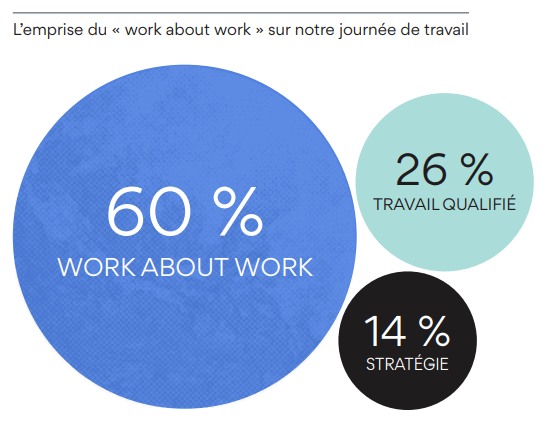
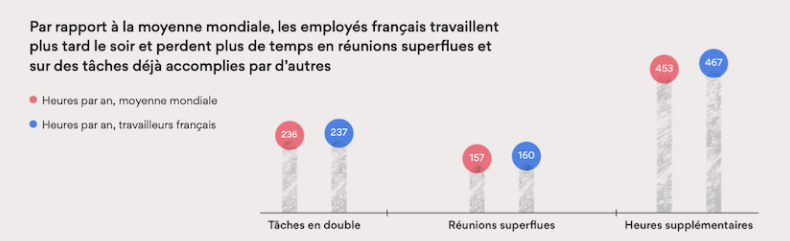
and 13% for planning and strategic thinking.This inefficiency often forces employees to work overtime. In fact, 87% of respondents say they work two extra hours per day to compensate — even when working remotely
. Remotely, informal office conversations have often been replaced by unnecessary video meetings
featuresRead also:
Webinar Recap: "Ending Meeting Overload (and Video Call Fatigue)!"
"Too Many Apps Kill Productivity"Despite all these video calls
, teams are increasingly struggling to understand their roles and responsibilities clearly. In 2020, 5 hours a dayFrench workers spend nearly 5 hours a day that will boost the efficiency of
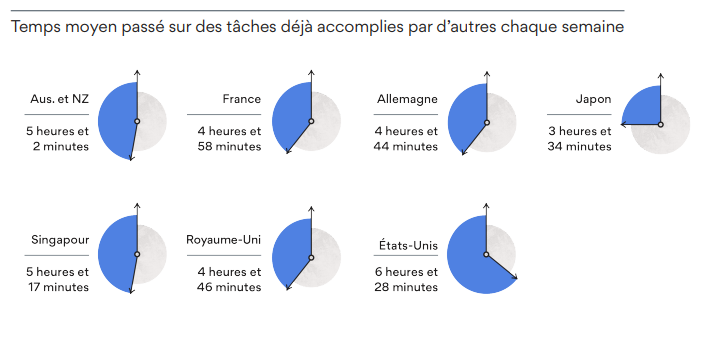
on tasks already completed by someone else.And contributing to this, the explosion in the number of professional apps used by teams has not helped. In fact, they multiply the number of channels through which employees communicate, scattering — and sometimes drowning — important information. By creating "cognitive silos," these apps can give a
fragmented view of activity or projects, leading employees to duplicate work already completed elsewhere — without knowing it.According to the report, the average employee uses 10 apps 25 times a day (14 apps 31 times a day for senior leaders). Because of this constant switching, important messages and tasks are more easily missed, and prioritization becomes harder. As a result, approximately
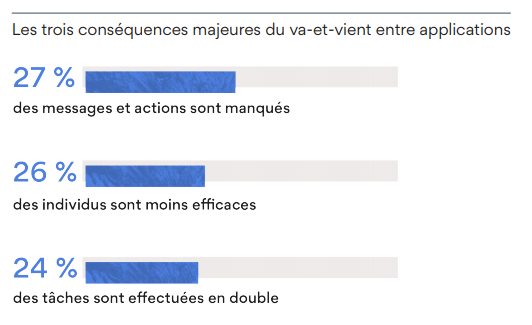
one-third of French employees report missing deadlines every week.To prevent this productivity and organizational loss caused by too many apps, the report recommends companies adopt a platform purpose-built for collaboration and
work management, to which all their apps can be connected. According to an IDC survey, using at least three integrations
could save teams approximately 30 hoursSocial Isolation, Overwork: The Risks of Hybrid Work
Watch Out for BurnoutSocial Isolation, Overwork: The Risks of Hybrid Work70% of French employees say they experienced a
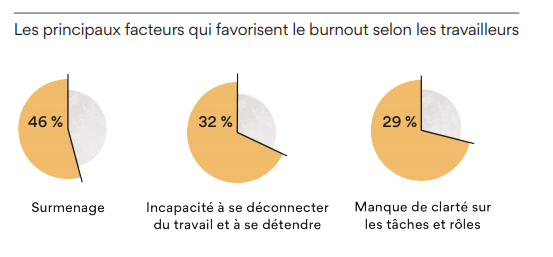
Read also: Social Isolation, Overwork: The Risks of Hybrid WorkAnd this burnout can be very costly for companies. Beyond reduced motivation and productivity, absenteeism and healthcare costs for overworked employees can quickly add up. INRS estimates that
work-related stress costs France between €2 and €3 billion (in sick leave, absenteeism, medication, etc.). To prevent employees from reaching a breaking point, it is important to
features by proactively encouraging dialogue, supporting those who need it, and celebrating successes better.
Read also:
How Work Is Evolving: What Role for Quality of Work Life?The Importance of Flexibility Improving
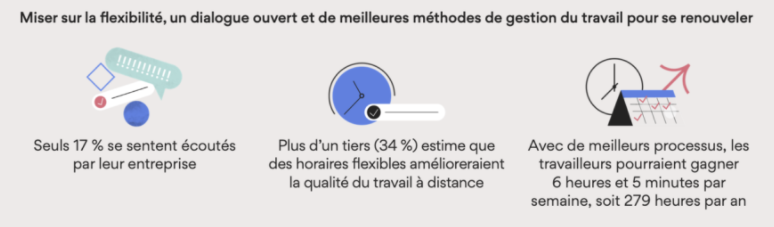
work schedule flexibility can also contribute to this well-being. Nearly three-quarters of French employees see flexibility as key to their resilience in the year ahead. It can reduce stress, improve focus, and help employees achieve a better work-life balance.With better processes, particularly clearer role definitions, each employee could
free up more than 6 hours per week for other, more useful and often more fulfilling tasks.Other measures can also
- improve productivity
- for employees, including:
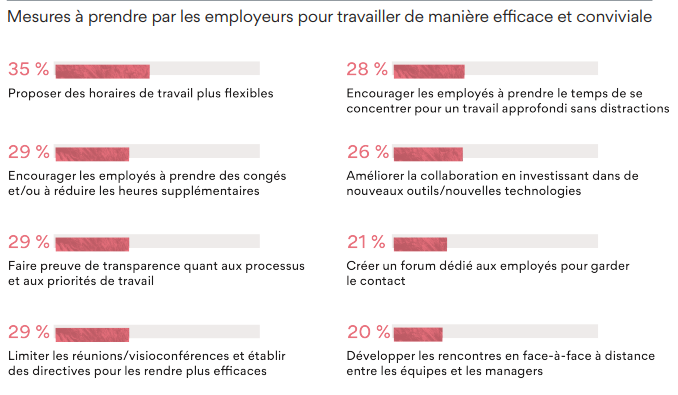
- reducing the number of meetings,setting up "deep work" blocks free from distractions,or implementing
features that are modern and purpose-built for teamwork.
Read also:
Comparison of the Best Collaborative Tools
- Resolutions for 2021According to the report, three main motivational levers will drive employees to give their best in 2021:doing
- enjoyable and motivating work ;the
- added value of their work for the company; that will boost the efficiency of
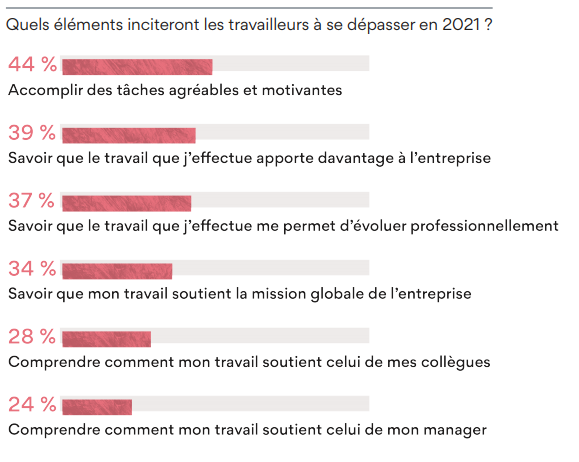
grow professionally.In short, employees need to work on tasks that are meaningful and allow them to
thrive professionally
featuresTo achieve this, they will need to develop their digital and technology skills, and also improve their confidence and leadership.
Read also: Human Resources: Gartner's Top 5 Priorities for 2021To support these ambitions in 2021, the top priority of the companies surveyed is to invest in technologies that will boost the efficiency of
teamwork
.
*
* *"Work about work" is not just a productivity problem. It can also sow confusion and disorder, and even lead to burnout. To gain agility, it is essential to reduce time spent on these tasks — for example, by implementing a platform that centralizes and organizes information.To learn more about the best software to improve productivity in your organization, check out our comparison guide covering their pros and cons, pricing,
features, integrations, and more.
Read also: Boosting Productivity by Centralizing Communications: CNPF's StoryLooking to implement a tool to make your teams more efficient? Check out our
for employees:
Author: Emmanuelle Abensur