
Every departure takes a piece of the memory with it
Knowledge remains carried by a few people. When they leave, the organization loses part of its experience.
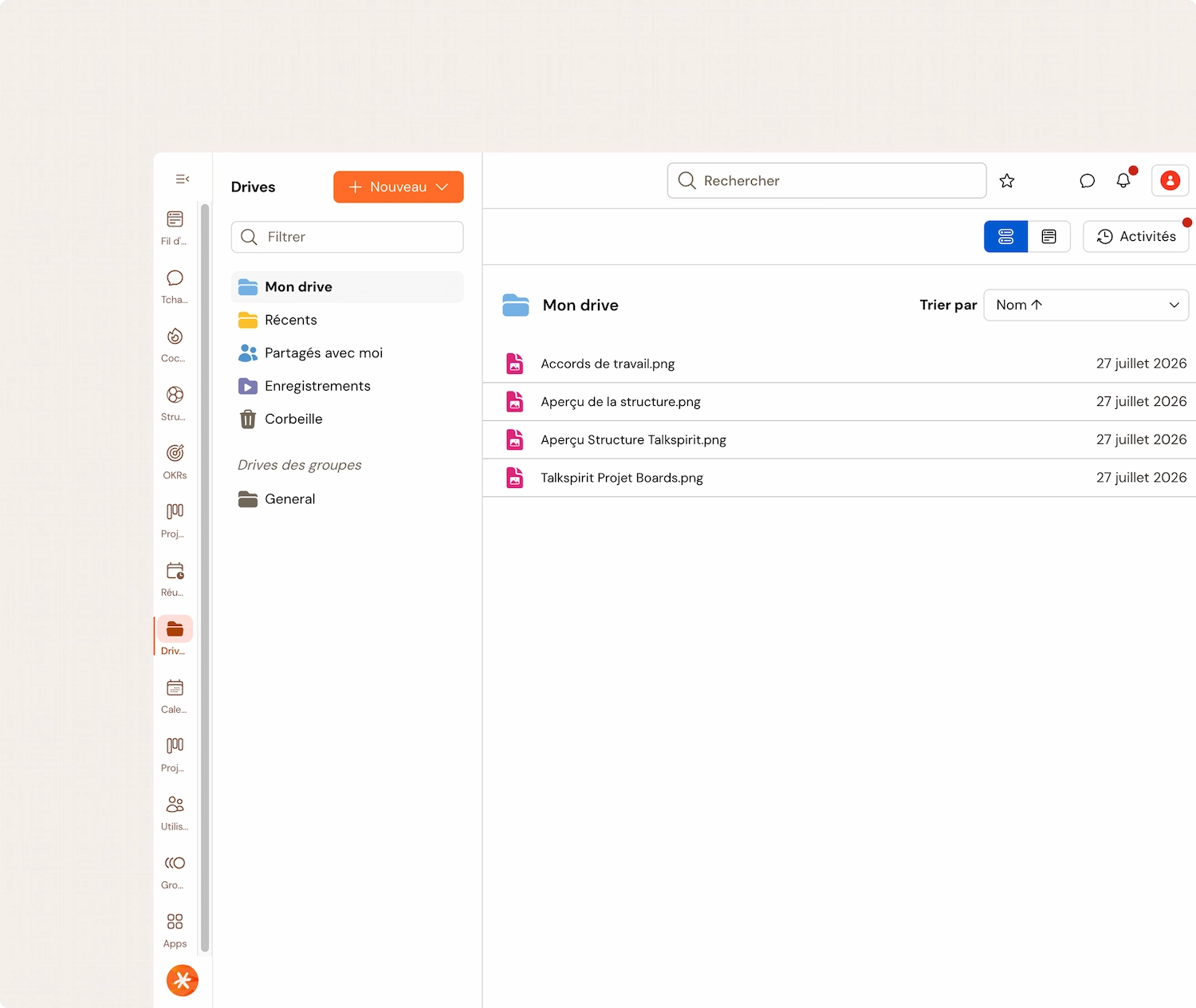
Drives, knowledge bases, and documents remain attached to the teams, roles, and projects that keep them active. Knowledge becomes a collective asset rather than a collection of scattered files.
The reality
Documents live in personal folders, procedures live in experts' heads, and decisions live in forgotten message threads. Every departure erases a part of this collective memory.
Knowledge remains carried by a few people. When they leave, the organization loses part of its experience.

Onboarding time is spent hunting for existing information rather than creating value.

The answers exist, but no one knows where to find them. The same questions keep coming up over and over again.
Joint business development, shared leads, and co-hosted events: we grow together over the long term.
What is clear moves forward
Three effects your teams will notice within the first few weeks.
In practice
Knowledge management is more than just another shared folder. Every document becomes part of the collective memory and remains connected to the teams that keep it alive.

A procedure, note, or template is created directly within the team that uses it. It is immediately linked to the relevant roles, projects, and responsibilities.

Documents are enriched by decisions, feedback, and new practices. Versions stay in one place, without multiplying copies.

When a person leaves their position, documents, procedures, and their context remain accessible. Knowledge belongs to the organization, not to those who hold it.
Same teams, same strategy. What changes: an organization that finally capitalizes on what it learns.
New employees become autonomous faster
Knowledge, procedures, and documents are already there, linked to their team and role.
Knowledge, procedures, and documents are already there, linked to their team and role.
Knowledge stays within the organization
Departures no longer cause procedures, decisions, or best practices to vanish.
Departures no longer cause procedures, decisions, or best practices to vanish.
A single shared memory
Drive, knowledge base, and documents are centralized and linked to the context where they are used.
Drive, knowledge base, and documents are centralized and linked to the context where they are used.
Sovereign data
Your documents and organizational memory remain hosted in Europe, under your control.
Your documents and organizational memory remain hosted in Europe, under your control.

"Talkspirit played a key role in clarifying roles, responsibilities, and cross-team collaboration within our hierarchical organisation. The tool also transformed our meetings: better structured, roles clearly defined, more effective decisions." — Markus Mantsch, Process and Compliance Manager, Big Blue Marble
What is clear moves forward



Everything in one system
Knowledge no longer lives in folders or in the heads of a few people. It becomes a shared resource, linked to the teams, projects, and decisions that bring it to life.

Work relies on a single shared memory. Every project immediately finds the procedures, documents, and decisions it needs.

Exchanges enrich knowledge. Discussions, announcements, and decisions no longer disappear into messages: they remain linked to their context.

Every piece of knowledge has an owner. Documents, procedures, and knowledge bases remain attached to the roles that maintain them, even when personnel changes.
No. A DMS stores files. Here, every document belongs to a team and a role, and is linked to projects, decisions, and procedures. Knowledge remains alive, contextualized, and instantly retrievable.
Answers no longer stay trapped in emails, chats, or a few people's memories. They are documented once, linked to the relevant teams, and retrievable exactly when the work requires them.
It stays within the organization. Procedures, documents, and decisions are tied to the role, not the person. Whoever takes over the responsibility immediately finds all the necessary context.

What is clear moves forward
In 30 minutes, we connect your team to their drive, knowledge base, and documents. You will see knowledge remain when people move on, and new hires become autonomous in days.