
When everyone knows their role, responsibilities, and decision-making scope, teams move forward with more confidence, less need for coordination, and greater autonomy. The structure ceases to be just an organisational chart: it becomes a living system that evolves with your organisation.
The situation
When no one knows who decides, everyone slows down.
Most organisations know where they want to go. What they need is a system that makes responsibilities explicit, aligns decisions, and keeps execution on track every day.
01
Decisions slow down
When no one knows who has the final say, everyone waits or decides anyway.
02
Managers become bottlenecks
Without clear responsibilities, teams escalate decisions that could be made locally.
03
Clarity fades with growth
As organisations evolve, implicit roles create grey areas and confusion.
Clear responsibilities.
A more fluid organisation.
Three effects you will notice within the first few weeks.
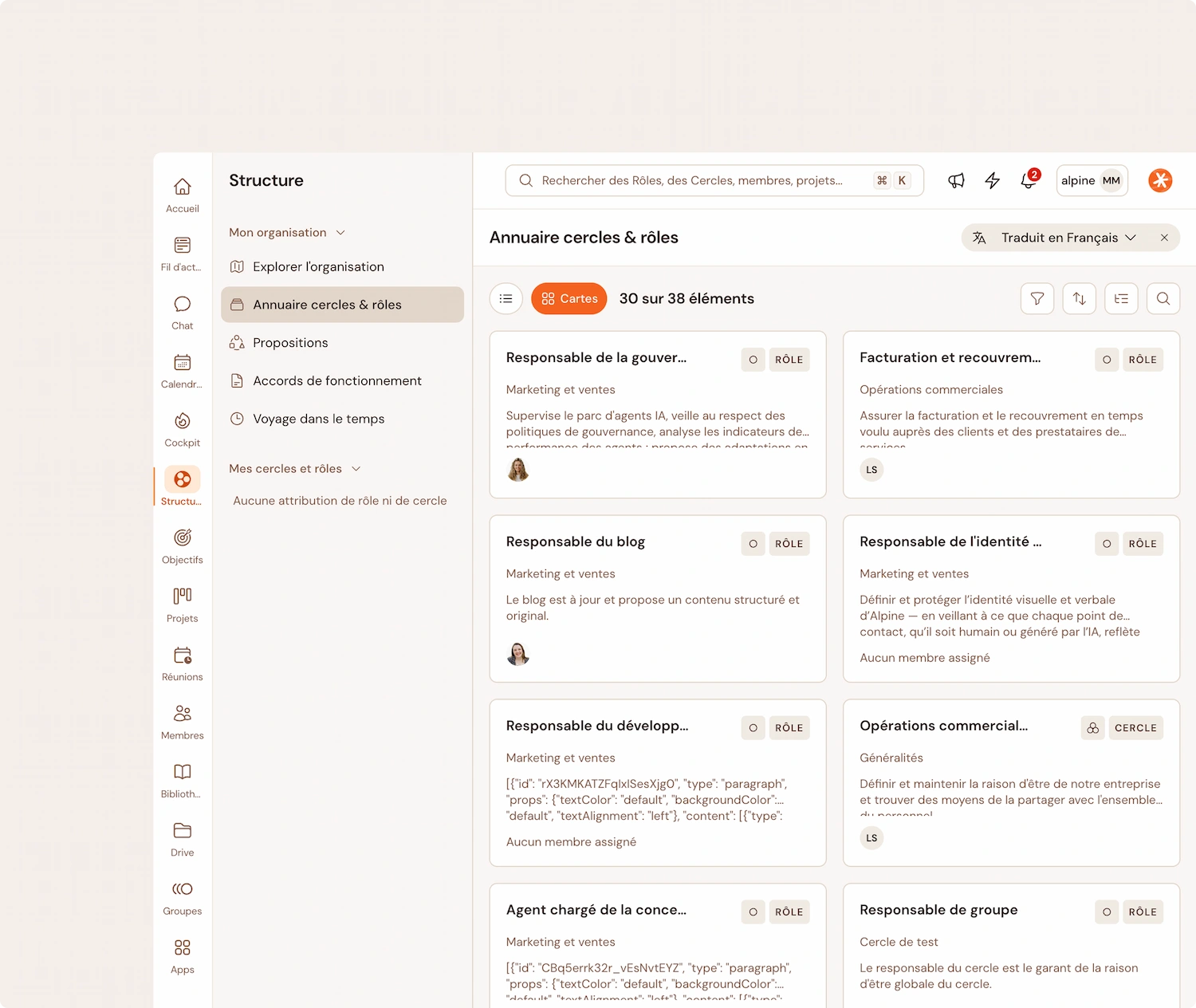
Each role knows what it is responsible for
Responsibilities are documented, visible, and attached to the role rather than the person.
Decisions no longer search for their owner
Every topic naturally finds the person or role authorised to handle it.
The organisation remains clear over time
Even as it evolves, everyone understands who does what, who decides, and why.

A role is not a job description.
It is an anchor point for the entire organisation.
Once responsibilities are defined, every module of the platform relies on the same structure.
When clarity is established, results follow.
Organisations that make responsibilities explicit gain speed, autonomy, and adaptability.
Less time spent figuring out who decides.
Teams spend less time figuring out who makes decisions and more time moving forward.
Onboarding speed increases.
New hires understand their roles and scope of action more quickly.
Decisions are made at the right level.
Teams stop systematically escalating issues up the hierarchy.
Roles evolve without creating confusion.
Teams stop slowing down operations.
A hierarchy, more transparent and more agile
"Talkspirit played a key role in clarifying roles, responsibilities, and cross-team collaboration within our hierarchical organisation. The tool also transformed our meetings: better structured, roles clearly defined, more effective decisions." — Markus Mantsch, Process and Compliance Manager, Big Blue Marble
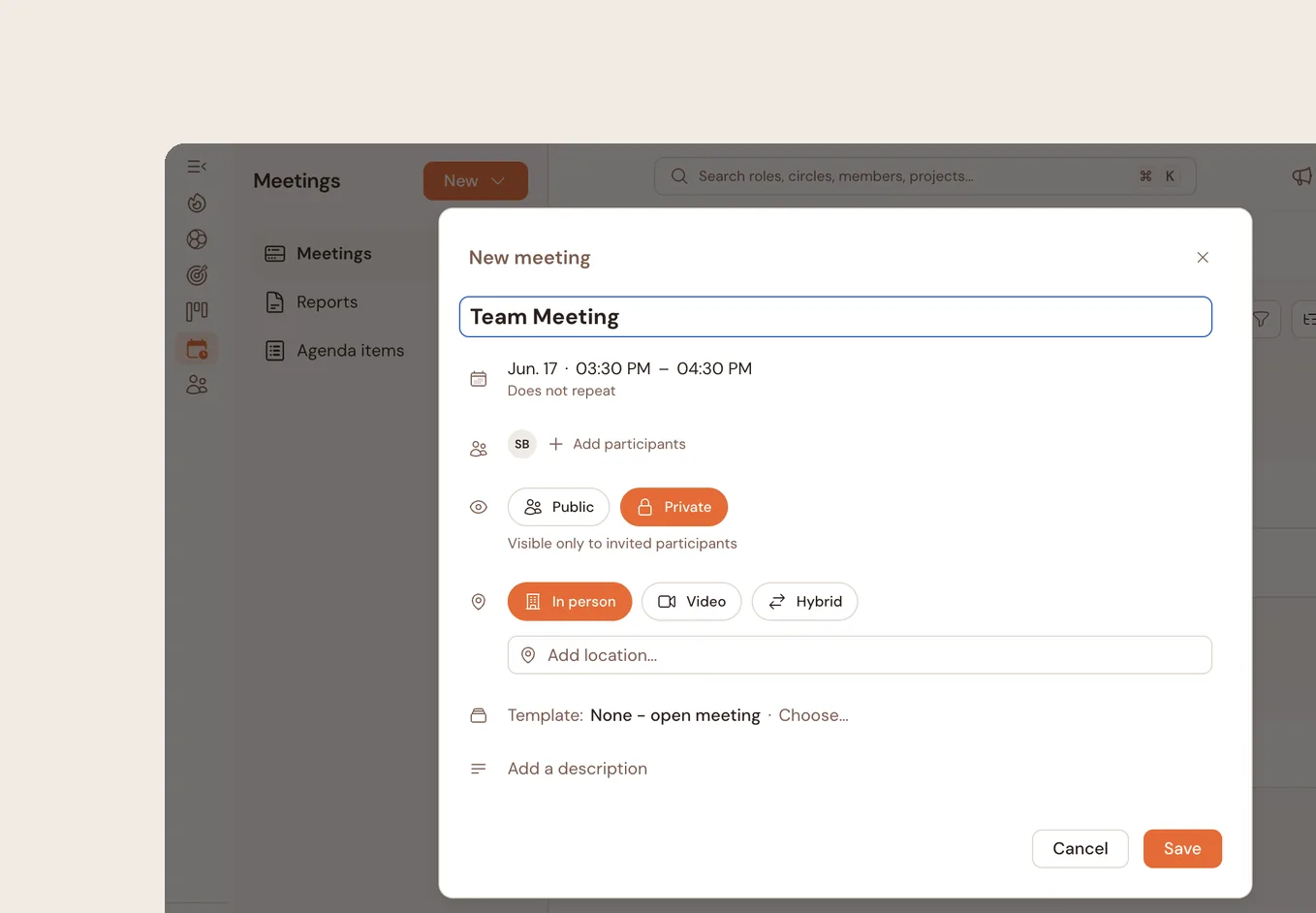
Meeting management
Meetings that lead to decisions, without dragging on.
Strategic alignment and OKRs
Clear goals, aligned with the teams responsible for them.
Project and task management
Projects and tasks organised around actual work.
Frequently asked questions.
No. Talkspirit adapts to your operating model, whether it is hierarchical, matrix, agile, or inspired by distributed governance. You define the level of structure that suits your organisation.
An organisational chart shows reporting lines. A role structure makes responsibilities, areas of authority, and decision-making visible, so everyone knows who does what and who decides what.
Yes. Many organisations start with one team or department before gradually scaling their model to the entire organisation.
Roles, teams, and responsibilities can evolve continuously. Changes are visible, documented, and shared without needing to rebuild the entire organisation.
Yes. In just a few clicks, anyone can identify the relevant role, its responsibilities, its team, and the person holding it.
Roles serve as the foundation for the entire platform. They provide context for projects, meetings, goals, documents, and communications, ensuring that every piece of information is linked to the right team and the right responsibilities.
By understanding roles, responsibilities, and teams, AI can provide more relevant answers, direct users to the right people, and produce better-contextualised information.
Because an organisation is constantly evolving. In Talkspirit, roles are dynamic: they remain connected to decisions, projects, meetings, and daily exchanges, rather than quickly becoming obsolete.

What is clear moves forward
In a 30-minute personalised demo, discover how clear roles accelerate decision-making, streamline collaboration, and make information more relevant.
.webp)