
Accelerate your impact with meetings that decide.
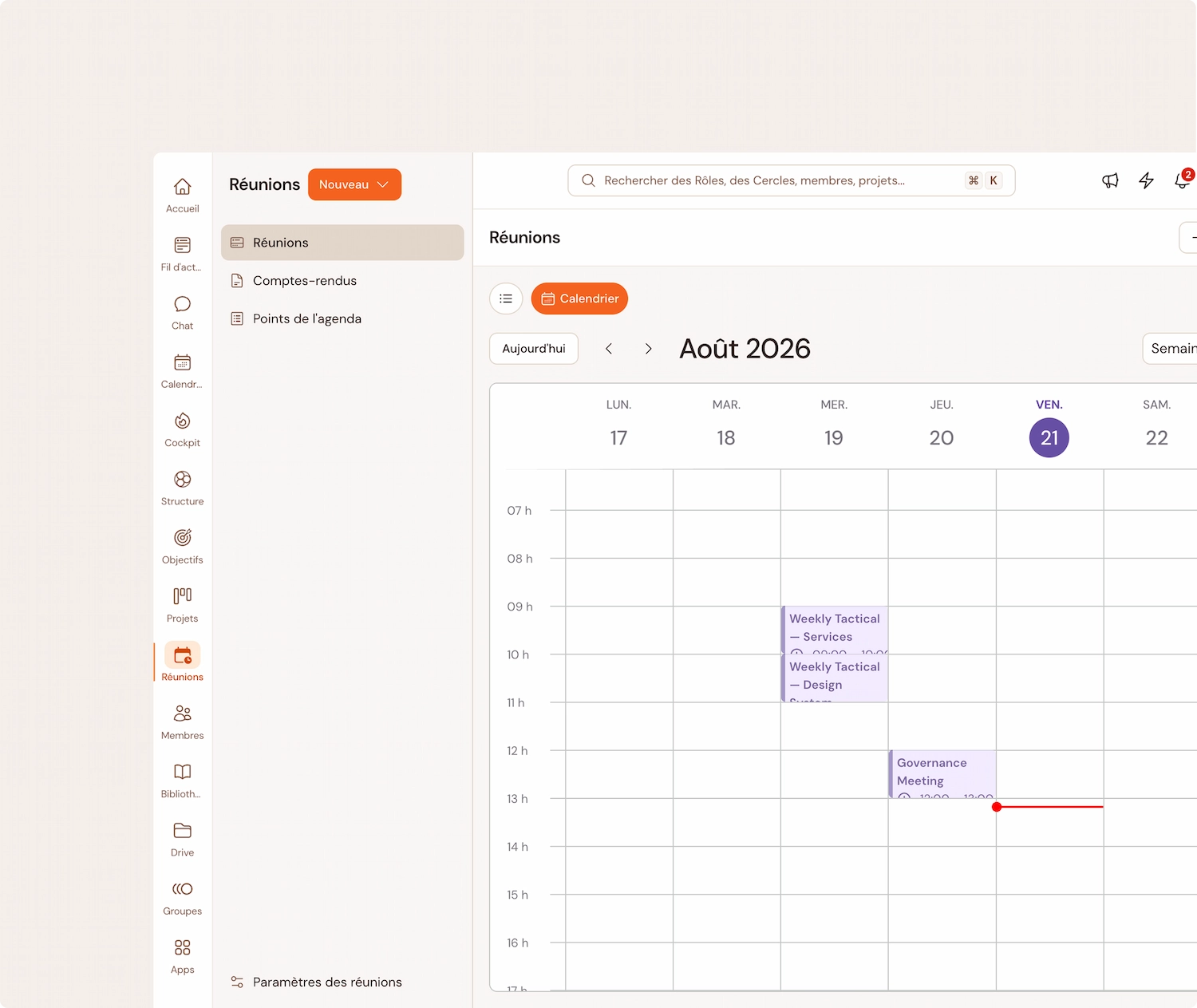
The observation
Meetings don't lack time. They lack decisions.
Most meetings end with good intentions. What organisations need is a system that captures decisions, assigns responsibility, and keeps execution aligned long after the meeting ends.
01
The same topics keep coming back
Without clear decisions and follow-up, the same discussions happen at every meeting.
02
Real issues are left outside the room
Day-to-day tensions are not addressed in meetings. They accumulate until they become roadblocks.
03
Decisions are escalated unnecessarily
Without a clear process, issues that could be handled by teams end up at the executive committee level.
Meetings that produce decisions, not minutes.
Three visible changes within the first few weeks.
Every meeting produces decisions
The agenda is built from topics raised by the team. Every point addressed leads to a clearly assigned decision, action, or change. The meeting minutes write themselves.
Tensions are addressed as they happen
Every challenge becomes a concrete topic to address, rather than a source of mounting frustration. Teams resolve issues as they arise.
Sixty minutes is enough
When everyone knows their role, decisions are made at the right level, and the agenda reflects the team's real needs, meetings become more efficient. The time saved goes back into the work.
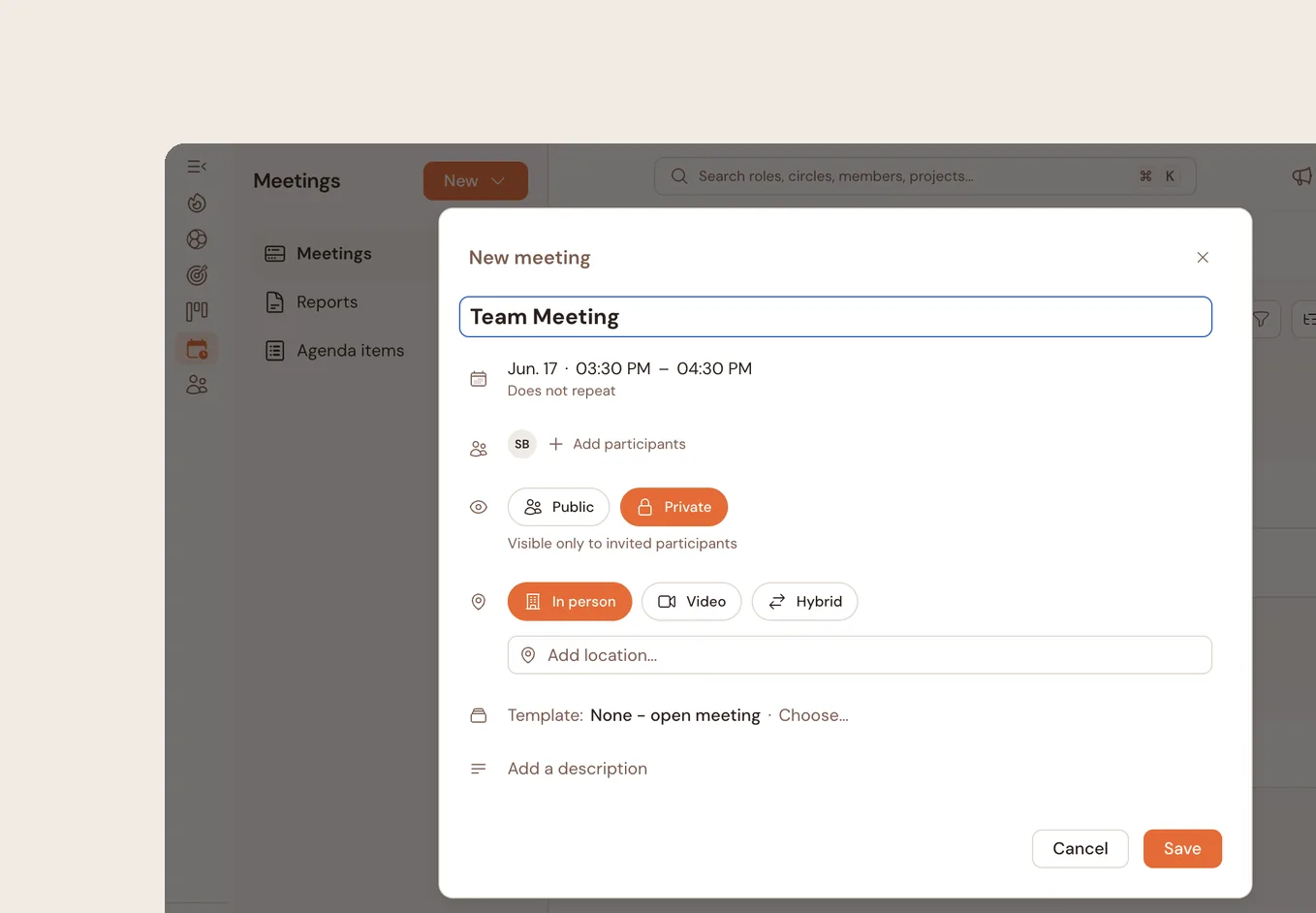
A tension enters. A decision exits.
You open the team meeting
Each tension becomes a resolved point
Decisions are tracked and linked to roles
A few months later, the results are clear.
Same teams, same strategy. What changes is how you make decisions, collaborate, and move forward.
Reduced time spent in alignment meetings.
Teams spend less time aligning and more time taking action.
Teams spend less time aligning and more time taking action.
Tensions are handled by the team.
Issues are resolved as they arise, before they become blockers.
Issues are resolved as they arise, before they become blockers.
Every decision is documented and easy to find.
Decisions are linked to their context.
Decisions are linked to their context.
Teams make more decisions at the right level.
Collaborate without constant arbitration.
Collaborate without constant arbitration.
Transformations that inspire

A hierarchy, more transparent and more agile
"Talkspirit played a key role in clarifying roles, responsibilities, and cross-team collaboration within our hierarchical organisation. The tool also transformed our meetings: better structured, roles clearly defined, more effective decisions." — Markus Mantsch, Process and Compliance Manager, Big Blue Marble


A clear structure. Meetings that bring it to life.
Roles define responsibilities. Meetings allow you to evolve them, make decisions, and turn them into concrete actions.
.svg)
Governance and role clarity
Roles define who decides. Meetings put those decisions into motion.

Strategic alignment and OKRs
Decisions made in meetings become goals driven by the right teams.

Internal communication
Decisions no longer stay in the meeting room. They are shared with the right people, at the right time.
We showed the auditors what we were already doing every day in Talkspirit. Living governance wasn't a side project: it was built into the way we work.


Thanks to the organisational map built in Talkspirit, everyone knows who does what and what their responsibilities are. This transparency helps each person better understand the direction the company is taking, and lets us align our efforts to fulfil our purpose.

Talkspirit played a key role in clarifying roles, responsibilities and cross-team collaboration within our hierarchical organisation. [...] The tool has also transformed the way we run our meetings. In the past, our meetings were often unproductive. Today, they are better structured, roles are clearly defined and decision-making is far more efficient.

Having a strong intention to change wasn't enough. We needed a tool capable of supporting the practical workings of this new organisational approach.

Organisational clarity and agility allow everyone to fully apply their skills and reach their full potential. It gives people wings. And every organisation needs that.
Adopting Holacracy has helped us gain autonomy and clarity. Employees know what's expected of them, so they can make decisions without constantly seeking everyone's approval. [...] The result: our trust index now stands at 89 out of 100!
In the past, we would have managed with emails, but the documents would have ended up scattered all over the place. With Talkspirit, we share files directly in an organised, structured and centralised way. The latest updates are gathered in a single place, so we can discuss them in real time and act as quickly as possible.
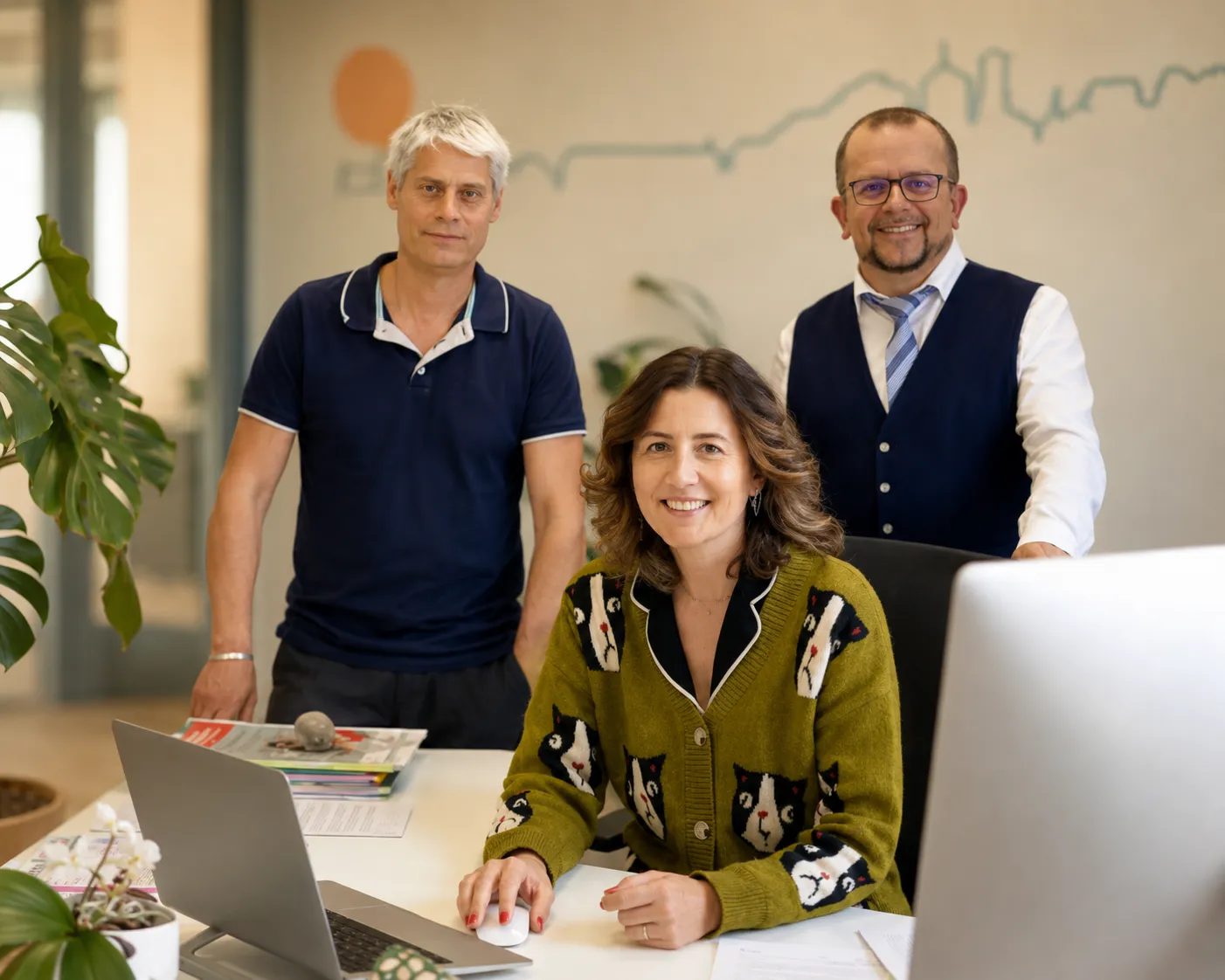
Talkspirit brings us closer to our teams, fuels collective intelligence and makes day-to-day information sharing far smoother.

Pooling our strengths makes each of us stronger. Within our network of SMEs, Talkspirit is an essential driver of transformation and agility.
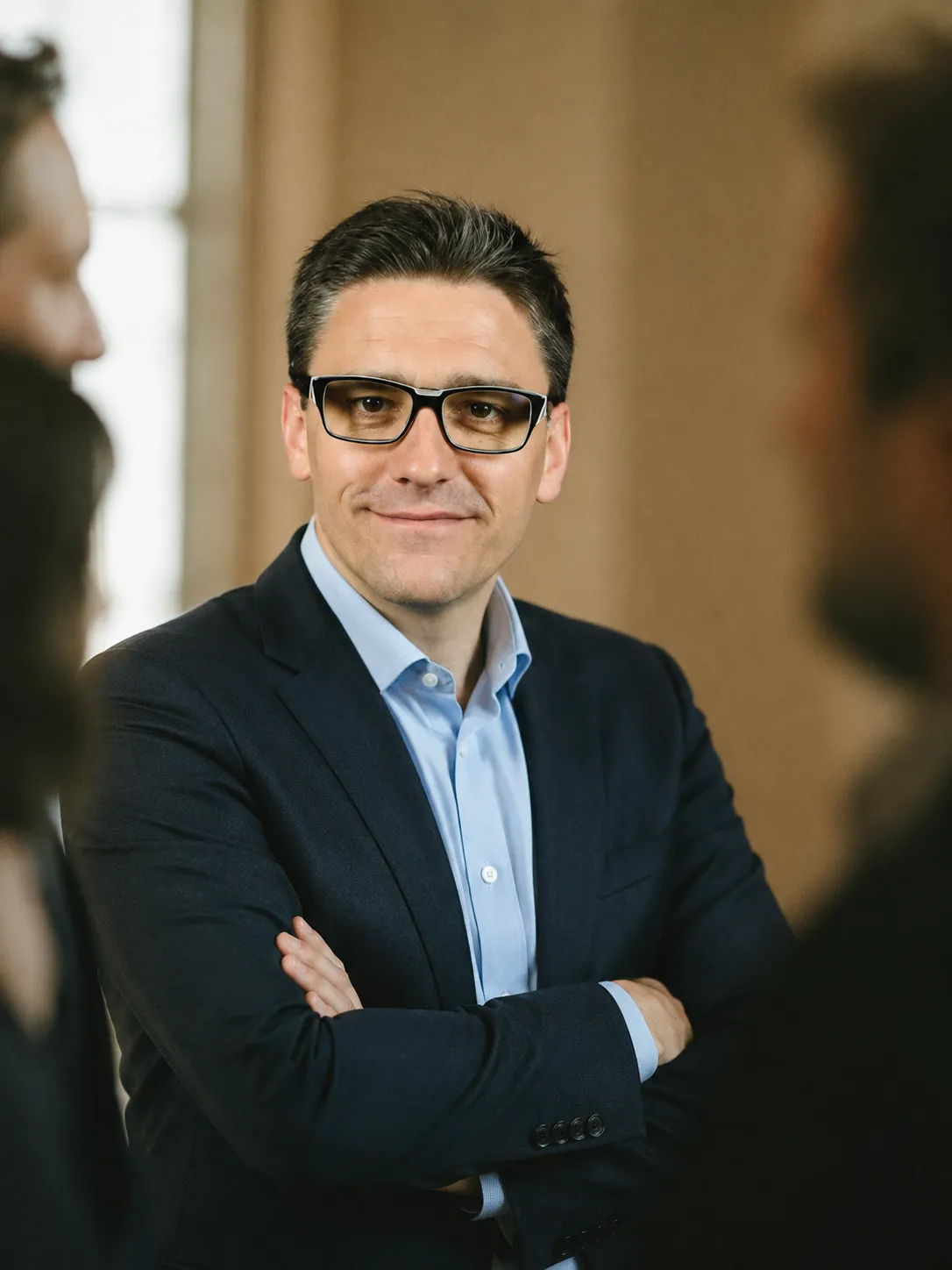
Talkspirit allows every employee to fully unlock their talents. If someone has skills in several areas, they can take on different roles without being boxed into a single job description. This flexibility in roles also strengthens our agility — an essential asset in today's VUCA world (Volatile, Uncertain, Complex, Ambiguous).
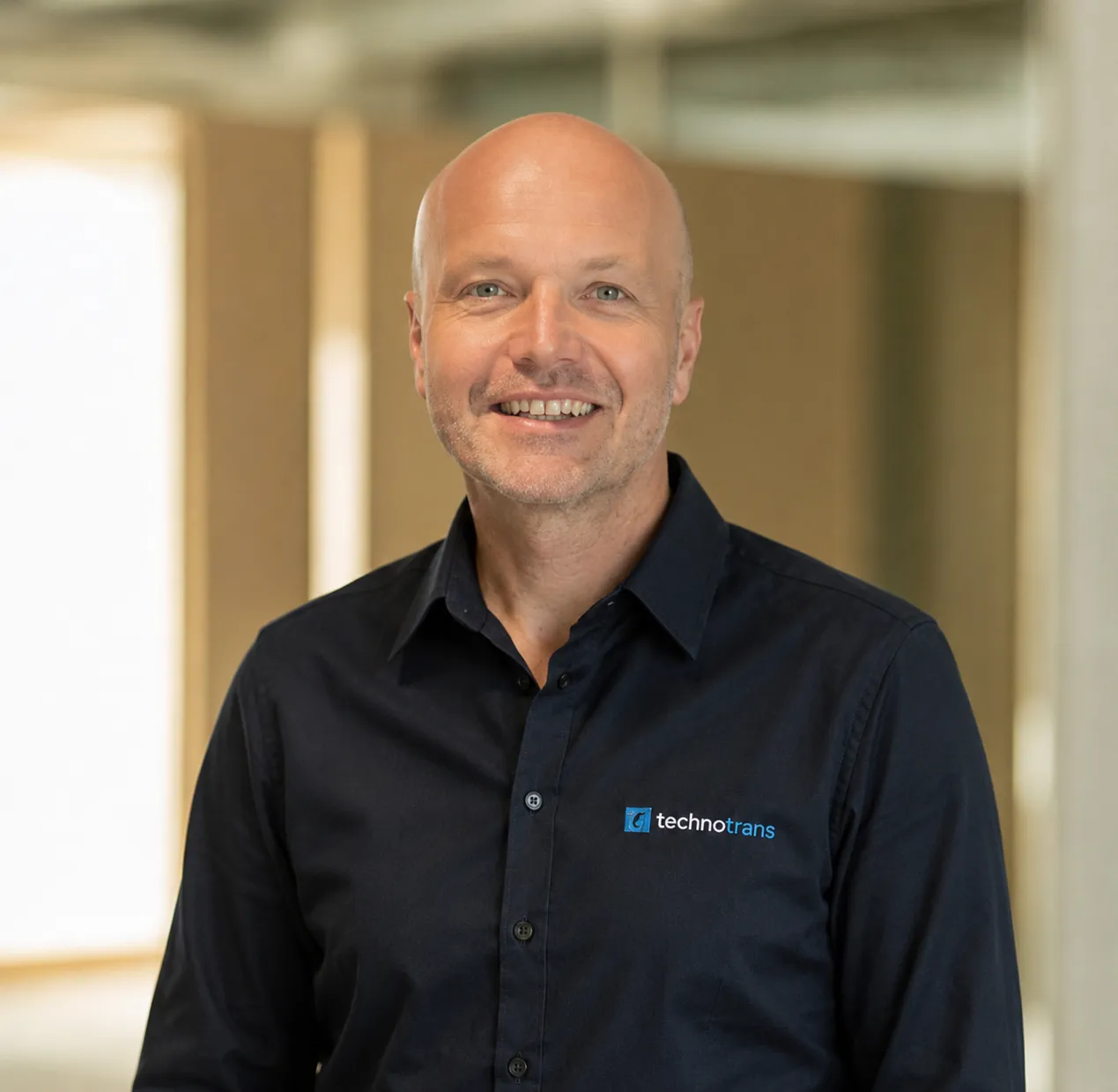
Frequently asked questions.

What is clear moves forward
See one of your meetings transformed into decisions.
In 30 minutes, we will use one of your team meetings as an example to show you how to turn every topic into a decision, every decision into an action, and every action into a follow-up. You will discover how much time this practice can give back to your teams.