
Types of Internal Communication: Which One Should You Use?

.svg)
- Four types of internal communication coexist at work, top-down, bottom-up, horizontal and diagonal, for only three directions of travel.
- Top-down carries strategic decisions and critical information. On its own it opens a gap: only 12% of employees in France consider their company fully transparent.
- Bottom-up brings feedback, suggestions and concerns back up. It requires a psychologically safe environment, without which nobody speaks up.
- Horizontal, also called lateral, connects peers at the same level. A McKinsey study linked these tool-supported exchanges to a 20 to 25% rise in employee productivity.
- Diagonal cuts across levels and departments to unblock a project. Its main risk is role confusion, which has to be framed before it is encouraged.
- A summary table at the end of the article gives, for each type, its direction of flow, its typical context and its main risk.
Choosing the right type of internal communication can feel like a real puzzle. 🧩 Who should you communicate with? Which channel should you use? In what context? These are the classic questions when you’re after effective internal communication in the workplace!
But why does it matter so much? Simply because internal communication is a cornerstone on which an organization’s success rests! Strong internal comms reduce misunderstandings, boost cross-team collaboration, and increase productivity and performance!
In this article, we’ll explore the different types of internal communication and their ideal use cases. Whether you’re a manager, HR lead, or executive, discover how to optimize your internal communications to meet your organization’s needs. Let’s dive in! 👇
One marker before the details: vertical communication covers top-down and bottom-up, the two directions that follow the reporting line. Horizontal communication connects people at the same level. Diagonal communication cuts across both levels and departments. Four types, then, but three directions of travel.
Top-Down Communication
Picture a slope with a ball of information rolling down it. 🌋 That’s essentially top-down communication! It belongs to the vertical communication family. It’s the type of internal communication that enables leaders and managers to pass on directives and important information to employees.
Examples and Applications
Top-down internal communication shows up in many forms! But you first need to know how to recognize this type of internal communication and understand when to use it.
Take this example: announcing the company’s goals for the year ahead. In this case, the CEO organizes a meeting to share this information directly with the teams. They can do this through the enterprise social network, via a dedicated post inviting employees to this important meeting. That’s a textbook example of top-down communication!
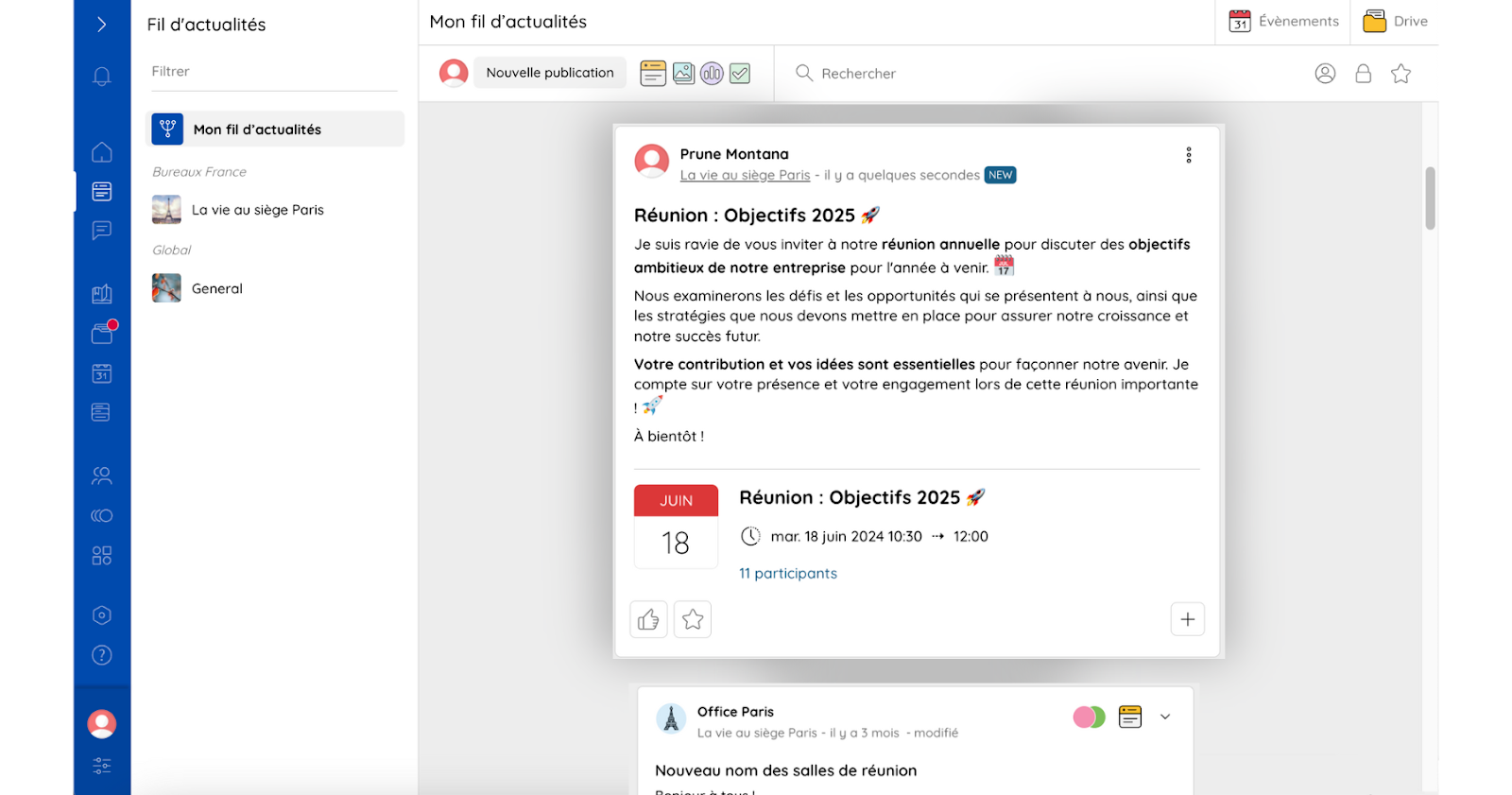
Top-down communication is ideal for conveying strategic decisions, policy changes or critical information quickly and effectively across the entire organization. It minimizes misunderstandings and ensures consistency in the message leadership wants to deliver! 👍
Advantages and Disadvantages
The advantages of top-down communication are clear: clarity of information and speed of delivery! But it has its downsides too…
This type of internal communication can also create a gap between leadership and employees. A gap that, from the employees’ side, can hinder feedback sharing or transparency… Currently, only 12% of employees in France consider their company fully transparent. As a result, this limits interaction… And that’s not what you want!
Therefore, this type of internal communication should be used sparingly to keep an open dialogue between employees and leadership.
Bottom-Up Communication
Bottom-up communication… 🧗 Picture it? It’s the type of internal communication where employees bring information, suggestions, and concerns to leadership. It also belongs to the vertical communication family. It’s the opposite of top-down communication, where directives and information flow from the top down.
Examples and Applications
Bottom-up communication is increasingly visible in modern, tool-equipped companies! Why? Because they’ve recognized one of its key benefits: it boosts performance across the organization!
It applies in a variety of contexts, such as:
- group meetings with managers,
- feedback sessions,
- opinion surveys.
Well-equipped companies can more easily foster this type of communication. For example, with a tool like Holaspirit, it’s easier for an employee to be confident their issue will be addressed in a meeting, since it’s added directly to the agenda.
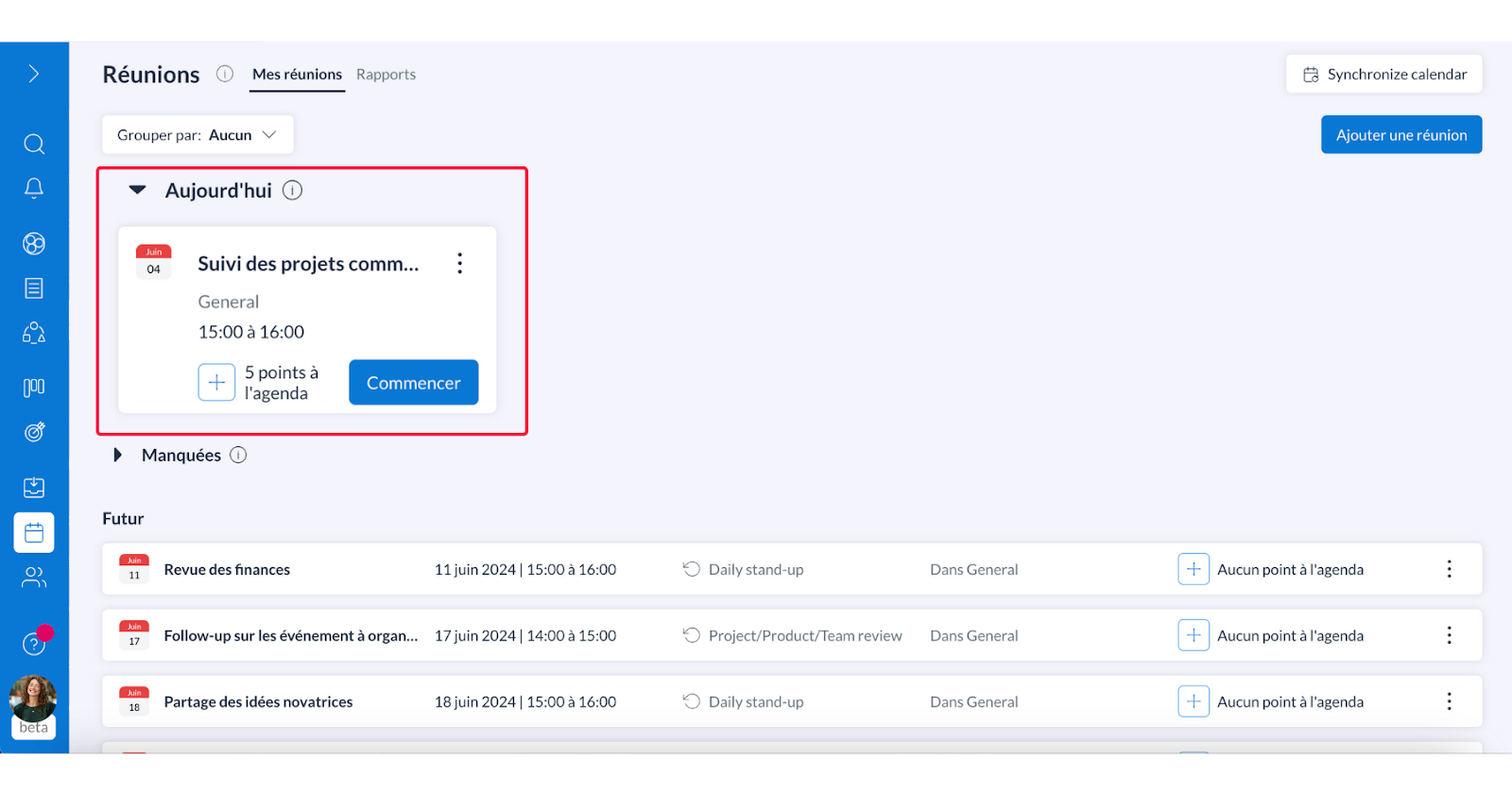
Advantages and Disadvantages
The strength of bottom-up communication is that it gives employees a voice 🎤, and fosters open, inclusive, and transparent dialogue within the organization.
However, it can sometimes be perceived as slow or inefficient, and employees may find it hard to speak up freely out of fear of retaliation. To overcome these barriers, it’s essential to build a psychologically safe environment where employees feel comfortable speaking up.
Horizontal Communication
Horizontal communication, also called lateral communication, refers to exchanges between employees at the same hierarchical level. Think of it as colleagues chatting around the coffee machine, but in a professional setting. It’s characterized by direct exchanges between team members or across different teams, without going through a strict hierarchy.

Picture yourself in an open-plan office where everyone talks freely, shares ideas, and collaborates without barriers. That’s exactly what horizontal communication represents! It’s a type of internal communication that promotes transparency, direct interaction, and collective decision-making at the same hierarchical level.
Read also: The Workplace as a Driver of Productivity and Employee Engagement
Examples and Applications
You’ll find horizontal communication in the following contexts:
- cross-functional meetings, where managers from different teams meet to discuss ongoing projects and align strategies,
- collaborative workshops or cross-team working groups,
- brainstorming sessions among employees from different teams at the same hierarchical level, etc.
There’s also another beneficial approach: adopting a collaborative platform, like Talkspirit. This type of tool is genuinely valuable for optimizing horizontal communication! It lets teams discuss in real time, share documents, and solve problems together without going through the chain of command. In fact, a McKinsey study found that employee productivity can increase by 20 to 25% in organizations using these social technologies.
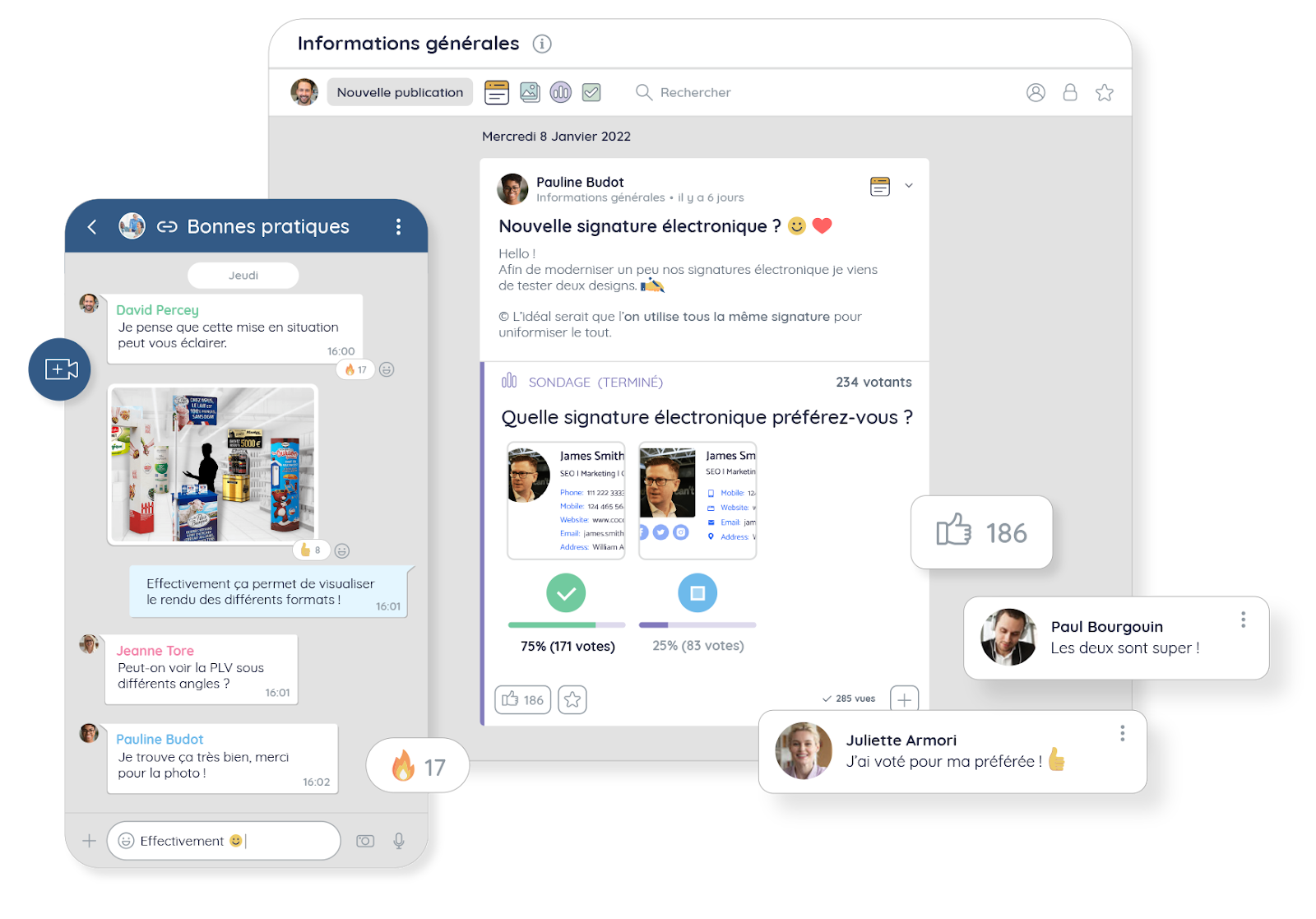
Advantages and Disadvantages
The advantages of horizontal communication are numerous:
- it encourages collaboration across teams,
- it drives innovation through collective intelligence,
- it strengthens sense of belonging and breaks down silos,
- and it boosts employee engagement and autonomy at work.
On the engagement front, significant costs can hit your organization hard. In 2023, disengagement cost €13,250 per employee per year according to IBET. That’s why this type of internal communication can effectively help you avoid these financial losses and improve overall productivity across your organization.
That said, horizontal communication has its drawbacks too… It can sometimes create a lack of clarity around responsibilities and a dilution of authority. To bring structure to horizontal communication, simply choose your communication channels for your teams wisely and create a charter with usage best practices. For example, you could ask teams to:
- prefer the enterprise social network over email for internal exchanges,
- keep informal conversations in private chats,
- and share project updates in group chats.
Teams just need to follow these guidelines! 🤷♂️
Diagonal Communication
Diagonal communication works a bit like passing the ball during a football match. ⚽️ In a professional context, diagonal communication happens when information flows between employees at different hierarchical levels or across departments.
Unlike other communication types, diagonal communication breaks down organizational silos, cuts across hierarchical levels and bridges the gap between teams.
Read also: [CIO] The Urgency of Breaking Down Organizational Silos: Summary of the Dynatrace Study
Examples and Applications
Diagonal communication is primarily used to solve specific problems or to manage cross-functional projects.
Take a first example. Imagine a complex project requiring collaboration between the marketing and technical teams. Rather than going through traditional vertical communication channels, a project manager can contact a developer directly to get fast, accurate information.
Here’s a second example. When implementing a new internal policy, an HR manager might consult directly with employees from various departments to gather diverse opinions and suggestions.
Does that ring a bell? That’s diagonal communication in action!
Advantages and Disadvantages
On the positive side, diagonal communication promotes agility, fast decision-making, and effective problem-solving.
However, it can sometimes lead to role confusion, or hierarchical tensions. It’s therefore important that each employee’s scope of authority and action is clearly defined.
Diagonal communication is a bit like navigating uncharted waters. 🌊 It can be risky, but with good coordination, it can also lead to great outcomes!
| Type of communication | Direction of flow | Typical context | Main risk |
|---|---|---|---|
| Type of communicationTop-down | Direction of flowFrom leadership to teams | Typical contextAnnouncing goals, policy changes, critical information that has to travel fast | Main riskA gap between leadership and teams, a one-way dialogue |
| Type of communicationBottom-up | Direction of flowFrom teams to leadership | Typical contextFeedback sessions, opinion surveys, group meetings with managers | Main riskSeen as slow, self-censorship out of fear of retaliation |
| Type of communicationHorizontal | Direction of flowBetween peers at the same level | Typical contextCollaborative workshops, brainstorming, cross-functional meetings | Main riskBlurred responsibilities, a dilution of authority |
| Type of communicationDiagonal | Direction of flowAcross hierarchical levels and departments | Typical contextCross-functional projects, solving a specific problem between two functions | Main riskRole confusion, hierarchical tensions |
In Conclusion
You now know the different types of internal communication, their advantages and disadvantages, and the right moments to use them. Step one: done! ✅
The next step is to understand the importance of using the right tools for effective communication. Social technologies like internal social networks, or collaborative platforms, can facilitate and improve communication across your organization. Just make sure to choose tools suited to your team’s needs and budget!
The channel matters as much as the type: email, an intranet and a collaborative platform do not carry the same messages, nor the same direction of flow. We compare them in Email, Intranet, or Collaborative Platform: What’s the Difference?
To go further in your quest for optimal internal communication, here’s a little bonus! 🎁 We’ve compiled a practical guide featuring 10 examples of initiatives from our clients to improve internal communication. You can download it right below! 👇
Access the Practical Guide
In our practical guide "10 Client Initiatives to Improve Internal communication", you’ll discover best practices to improve your internal communication, examples of initiatives from our clients across all industries, along with concrete tips and tools to energize your internal comms.
FAQ
A form of vertical communication in which leaders and managers pass directives and important information down to employees. It suits strategic decisions, policy changes and critical information that has to reach the whole organization quickly.
It can open a gap between leadership and employees, hinder feedback sharing and limit interaction. Today, only 12% of employees in France consider their company fully transparent. This type of communication should therefore be used sparingly, to keep the dialogue open.
The opposite of top-down: employees bring information, suggestions and concerns up to leadership, through group meetings with managers, feedback sessions or opinion surveys. With a tool like Holaspirit, an employee can be confident their issue will be addressed, since it goes straight onto the meeting agenda.
It covers direct exchanges between employees at the same hierarchical level: cross-functional meetings, collaborative workshops, brainstorming sessions. A McKinsey study found that employee productivity can increase by 20 to 25% in organizations using these social technologies.
Vertical communication follows the reporting line, downwards (top-down) or upwards (bottom-up). Horizontal communication, also called lateral, connects peers at the same level without going through the hierarchy. The first carries decisions and escalations, the second carries day-to-day coordination.
It happens when information flows between employees at different hierarchical levels or across departments, for instance a project manager contacting a developer directly. It supports agility and fast problem-solving, but can lead to role confusion if each person’s scope of authority is not clearly defined.