
6 Best Practices to Develop Collective Intelligence in the Workplace

.svg)
- Align your teams’ objectives with the company’s using the OKR method, so everyone sees how their work feeds overall performance.
- Build a climate of psychological safety: a feedback culture, the right to make mistakes, and authentic, transparent communication.
- Centralise communications, documents, knowledge, and projects on a single collaborative platform, so information circulates instead of being hunted down.
- Clarify who formalises practices, where processes are centralised, and which information belongs in which groups.
- Empower teams by defining roles, responsibilities, and accountabilities, and by giving everyone the right to propose changes.
- Train managers in the skills collective intelligence rests on: emotional intelligence, teaching, trust, and kindness.
“None of us knows everything that all of us know, together”, Euripides once said. This quote, still relevant today, clearly shows how important it is to develop collective intelligence in the workplace. Indeed, if you combine the sum of the knowledge and skills of every member of a team, you can achieve far more than if everyone thinks on their own.
Nurturing this collective intelligence helps boost creativity, innovation, critical thinking, and employee engagement. All of these benefits make it possible to make better decisions, and thus to improve company performance.
So how do you develop this collective intelligence? Which tools and best practices should you rely on? And how do you get employees involved in the process? We'll tell you everything!
1. Set shared objectives
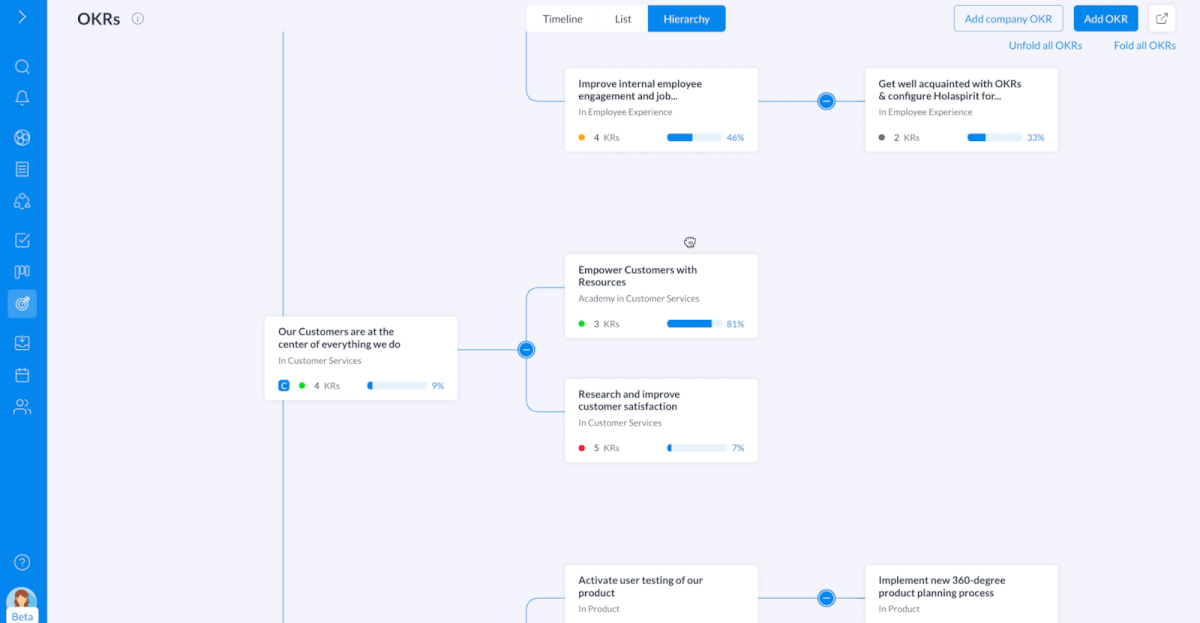
To develop collective intelligence, you first need to align your teams' objectives with those of your company. That's exactly what the method OKR (Objectives and Key Results) advocates, which involves:
- setting ambitious (yet realistic) objectives that are measurable and time-bound,
- then measuring how well those objectives are met through key results.
These objectives can be set at the company level, the team level, but also at the level of employees themselves. Thanks to these OKRs, everyone knows where they're headed and how their work contributes to the company's overall performance. It's therefore an essential foundation for encouraging collaborative work and bringing collective intelligence to life.
To set your objectives with this method, we recommend first drafting your company's OKRs, then breaking them down within each team. You can then record these objectives in a dedicated tool such as Talkspirit, so that everyone can track objectives and results in real time.

2. Create a climate of psychological safety
Have you heard of psychological safety at work? This term refers to an employee's ability to share their opinion freely and take risks, without fearing possible repercussions afterward.
Fostering psychological safety therefore means creating a climate of trust where everyone can speak up and take initiative with peace of mind, knowing they have the right to make mistakes. And the more employees feel confident, the more openly they can exchange ideas and share them. This in turn helps develop collective intelligence within teams.
Here are a few tips to promote psychological safety at work:
- Build a feedback culture so that everyone can get constructive input on their work, while also improving recognition at work.
- Organize team-building events regularly (offsites, afterworks, etc.) to strengthen bonds between teams and create a pleasant working atmosphere.
- Communicate authentically and transparently, and encourage employees to do the same.
- Help employees understand that they have the right to make mistakes, and that failures are also a way to learn and improve.

3. Set up a collaborative platform
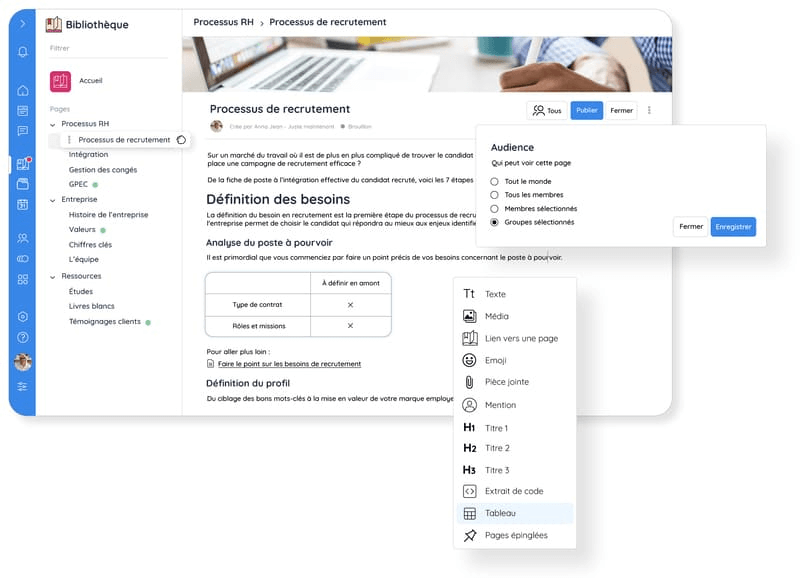
If you want to develop collective intelligence, you also need to equip your teams well. Setting up an all-in-one collaborative platform can be a great way to make life easier, since you'll be able to centralize on it:
- all of your communications,
- your information, documents, and business apps,
- your organization's static knowledge (for example, your onboarding processes, your HR policies, your marketing content),
- your meetings and events,
- and your team projects.
With a solution like this, there's no more spending hours searching for information! Your employees can focus on their core work and devote time to sharing knowledge.
Read also: How to choose your collaborative platform?
That's exactly what the Talkspirit collaborative platform lets you do, thanks to features such as document storage, the content library, projects, groups, the directory, the newsfeed, and the welcome portal.
4. Bring transparency
Of course, deploying the right tool isn't enough on its own to develop collective intelligence. It's also important to bring transparency to everyone's responsibilities and to the processes to follow in order to share information optimally. In particular, the key is to clarify:
- who is responsible for formalizing the practices in place within each team,
- where processes and policies should be centralized (in particular, in which tool), and how,
- who ensures the consistency of these policies and processes across the different teams,
- which information should be shared in which groups (or channels), and with whom.
The goal isn't to set strict rules, but rather to give teams a framework so they feel free to share their knowledge without being afraid of doing things wrong.
Read also: 7 initiatives to improve information sharing in the workplace
5. Empower your teams
To develop collective intelligence within your organization, all of your employees need to be involved in the process. Because collective intelligence is created together!
Here are, in our view, the key success factors to empower your teams:
- Clearly define everyone's roles, responsibilities, and accountabilities.
- Emphasize that everyone can make decisions autonomously on any matter related to their role (consulting other team members if needed).
- Give employees the opportunity to suggest new ideas to improve existing processes, for example by setting up an idea box on your collaborative platform, or by making a governance proposal in your self-management tool.
- Trust your teams, and learn to let go in order to foster autonomy.
Defining roles and responsibilities can be done, in particular, in the Talkspirit org chart, which lets you see at a glance who does what in the organization.
%2520(1).png)
6. Train your managers
The final pillar for developing collective intelligence? Your managers, of course! For your strategy to work, it's important that they lead by example. It's not the most straightforward stance to adopt, and it often requires support.
Indeed, managers need to develop several soft skills to foster collective intelligence within their team, in particular:
- emotional intelligence, that is, the ability to understand others' emotions and manage their own effectively, in order to adapt their management to any situation,
- the ability to teach and explain,
- the ability to trust their teams,
- kindness and empathy,
- and the ability to motivate employees.
By developing these skills and applying the best practices mentioned above themselves, managers will be able to facilitate knowledge sharing and stimulate collective intelligence.
Read also: Collective Intelligence at Work with Anne Chabert, idehō
In conclusion
Collective intelligence is a real asset for organizations that know how to develop it. To get there, you first need to set clear objectives, bring transparency, and establish a climate of psychological safety within your organization. Several tools can help you do this, in particular Talkspirit, which makes it easier to put agile ways of working and governance in place.
With these tools and best practices, you have all the keys to develop collective intelligence and improve your teams' productivity.
Perhaps you're also looking for other levers to boost your company's performance. If so, this methodology sheet may come in handy 👇
Access the Methodology Sheet
In our methodology sheet “10 tips to increase your teams' productivity,” you'll discover all our best practices to save your employees time, help them manage their time, prioritize their important tasks, and measure their performance.
FAQ
It aligns team objectives with company objectives. The method involves setting ambitious yet realistic objectives that are measurable and time-bound, then measuring how well they are met through key results. Objectives can be set at company, team, and individual level, so everyone knows where they are headed and how their work contributes.
It is an employee’s ability to share their opinion freely and take risks without fearing repercussions. The more employees feel confident, the more openly they exchange and share their ideas, which is what makes collective intelligence possible.
Build a feedback culture, run team-building events such as offsites and afterworks on a regular basis, communicate authentically and transparently, and make it clear that employees have the right to make mistakes and learn from them.
All of your communications, your information, documents and business apps, your organisation’s static knowledge such as onboarding processes, HR policies and marketing content, your meetings and events, and your team projects.
Define everyone’s roles, responsibilities and accountabilities clearly, state that each person can decide autonomously on matters related to their role, open a way to suggest new ideas through an idea box or a governance proposal, and learn to let go.
Emotional intelligence, that is the ability to understand others’ emotions and manage their own, along with the ability to teach and explain, to trust their teams, to show kindness and empathy, and to motivate employees.


Explore similar articles

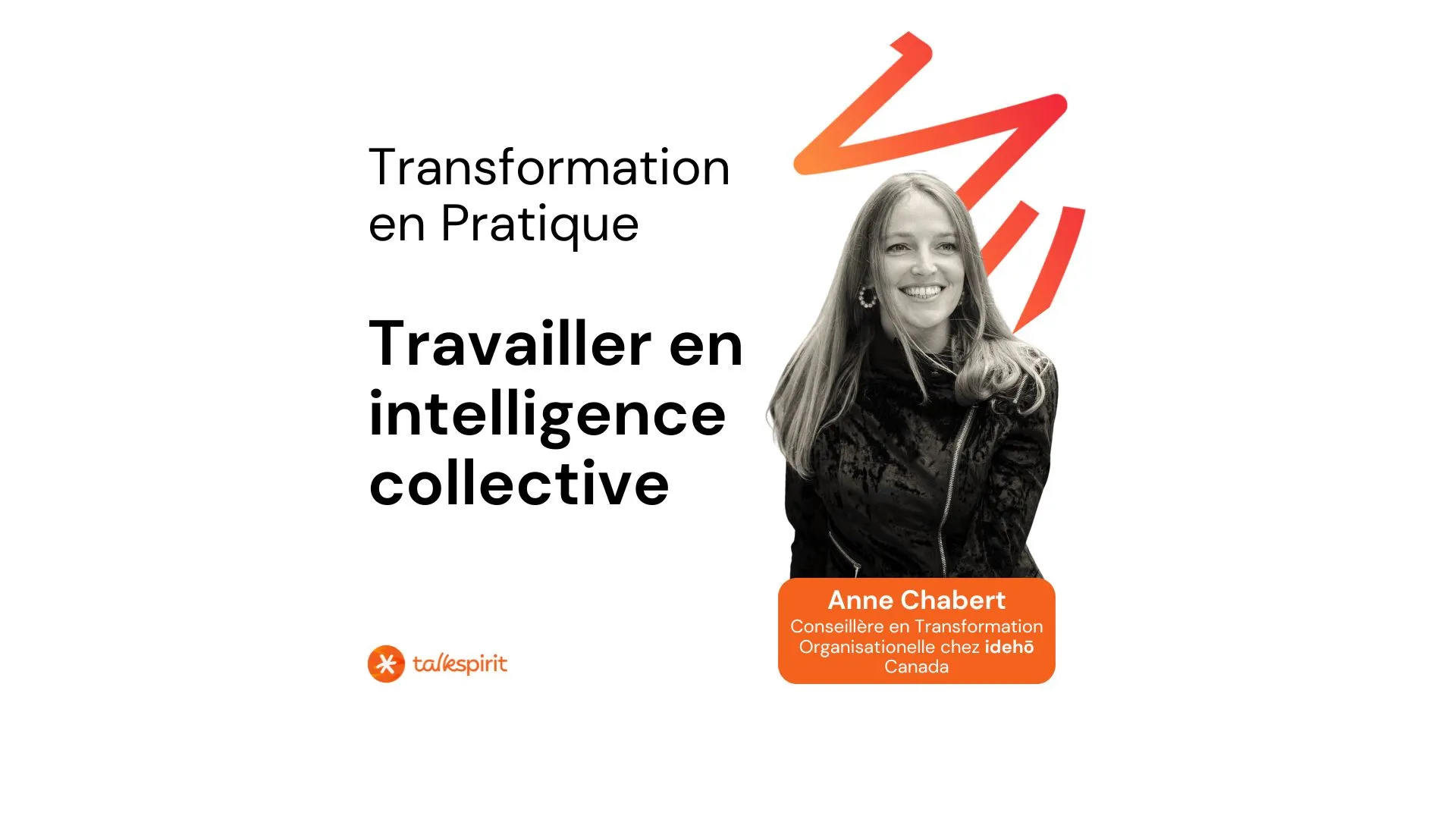
Collective Intelligence at Work with Anne Chabert, idehō, Canada
In this interview, Anne Chabert, co-founder of idehō, shares her vision of a transformation grounded in organisational clarity, trust and shared accountability. She explains how clarity — far from being rigid — allows teams to find their bearings, collaborate meaningfully and strengthen their collective intelligence.