[Webinar] How to Reduce Information Overload in the Workplace

.svg)
Spread the love
As digitalisation accelerates across industries, we are increasingly exposed to the risk of information overload at work. This phenomenon, also known as infobesity, refers to the excess of information we receive from all sides (in meetings, on our work tools, by email, etc.) that we are unable to process.
This information overload can affect well-being, engagement and productivity of employees alike, which ultimately impacts overall business performance. So, how do you identify information overload? What are the best practices for reducing information overload in the workplace? And how can you drive change using concrete data?
These are the questions that Philippe Pinault, CEO of Talkspirit, and Arnaud Rayrole, CEO of Lecko, answered during our webinar on 21 September. Here is a summary of their presentations.
PS: click the banner below to access the replay 👇
 end HubSpot Call-to-Action Code
 What Causes Information Overload at Work?
To avoid information overload, you first need to identify what generates it at work! For Philippe Pinault and Arnaud Rayrole, 5 key factors come into play:
- The proliferation of collaborative tools, amplified by the Covid crisis. Between 2019 and 2021, their usage rose by 44%, according to a Gartner study. As a result, employees now juggle a multitude of tools (on average, 10 applications 25 times a day!¹), each generating a stream of information and notifications.
- The poor use of these tools, for example due to:
- a lack of training and support for teams,
- poor notification management,
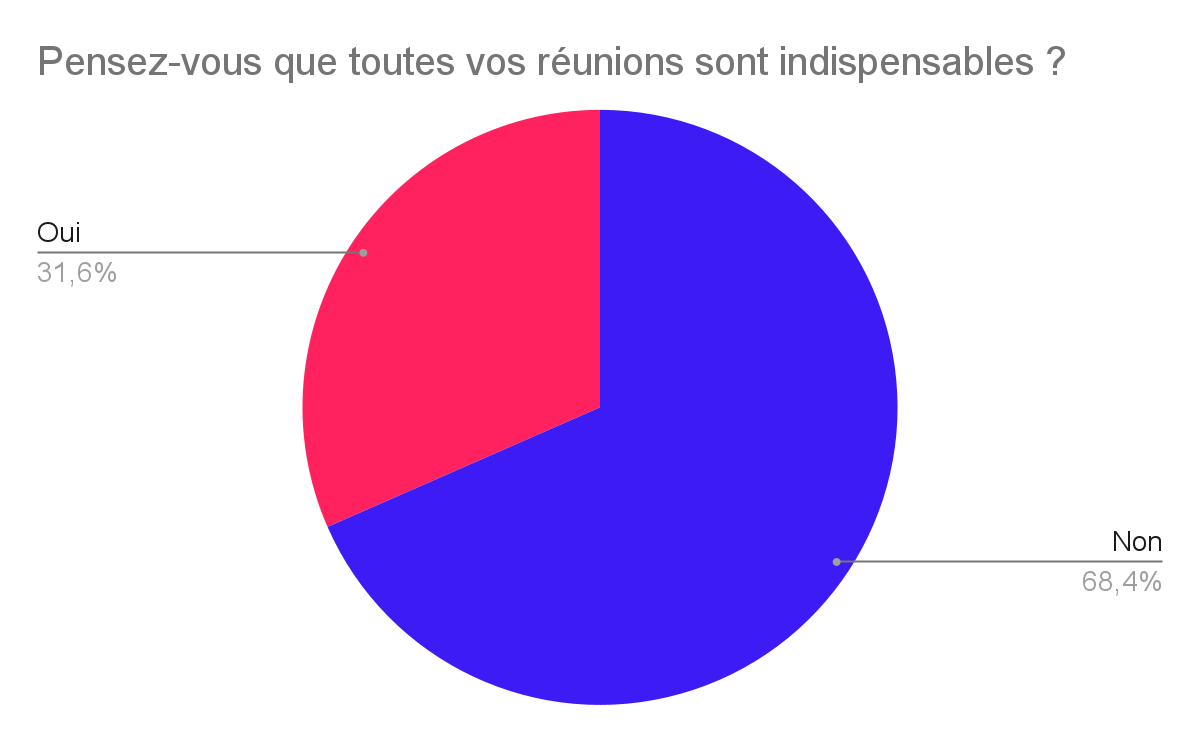
- too many or overly long meetings (according to a Lecko study, 58% of employees believe more than half of their meetings could be shortened or avoided),
- or a lack of managerial role-modelling.
- The FOMO syndrome (fear of missing out): out of fear of missing something important, employees develop a habit of constantly checking what they receive. As soon as a notification appears, they cannot resist clicking on it — creating a constant mental load day after day.
- The rebound effect: the better our digital tools become, the more frequently we use them — which ends up undermining their benefits. For example, the rise of video conferencing and shared calendars has increased the number of meetings we attend, producing the opposite of the intended effect: saving time.
- The slow drift: alongside the rebound effect, sources of information overload have also grown gradually. Like the proverbial frog in slowly heating water, we never felt the danger coming — which explains the heavy information overload we face today.
Read also: [OICN Study] Information Overload: What Is the Impact of Our Collaborative Practices?
What Are the Consequences for Organisations?
Information overload also has consequences for employees and the organisation. These include:
- A loss of time and productivity, linked in particular to:
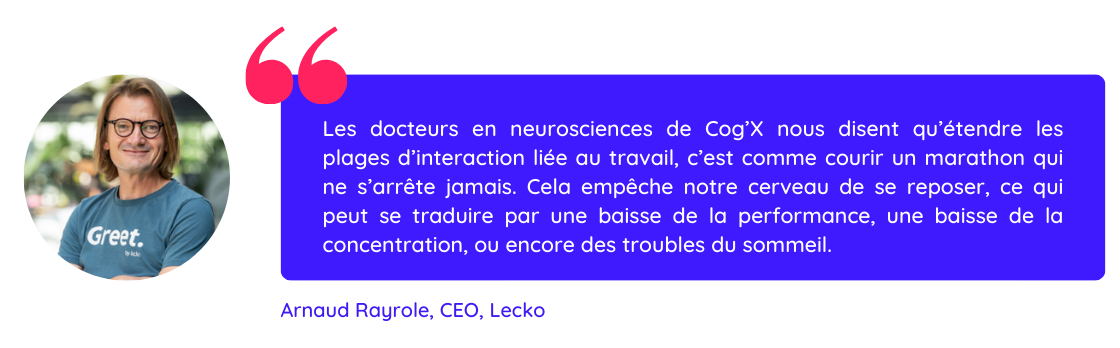
- Cognitive fatigue caused by excessive cognitive stimulation and reduced recovery time. This fatigue can lead to lower performance, health issues and even burnout.
- An environmental impact: on average, our digital usage is estimated to increase CO2 emissions by 30%²!
7 Best Practices to Reduce Information Overload
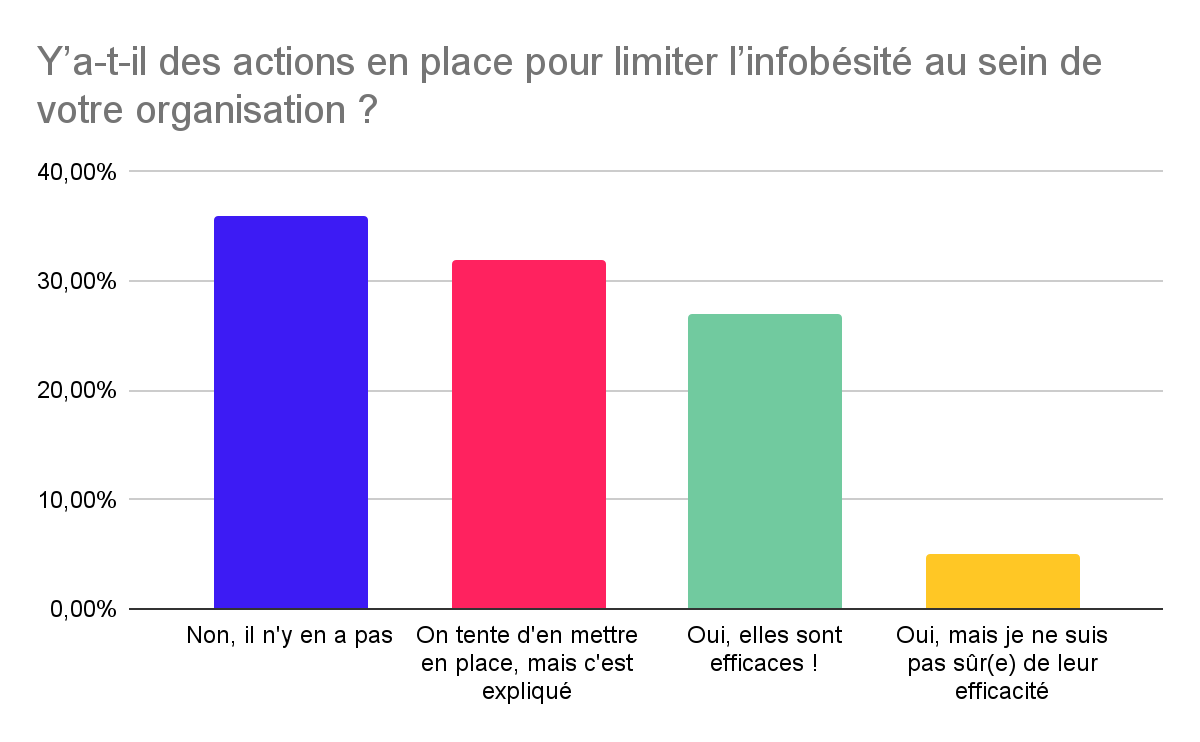
Some organisations try to tackle information overload by launching targeted initiatives. However, a third of webinar participants reported that implementing these is often challenging. So how do you put an end to information overload? Here are the best practices shared by our CEO Philippe Pinault.
1. Rationalise your applications
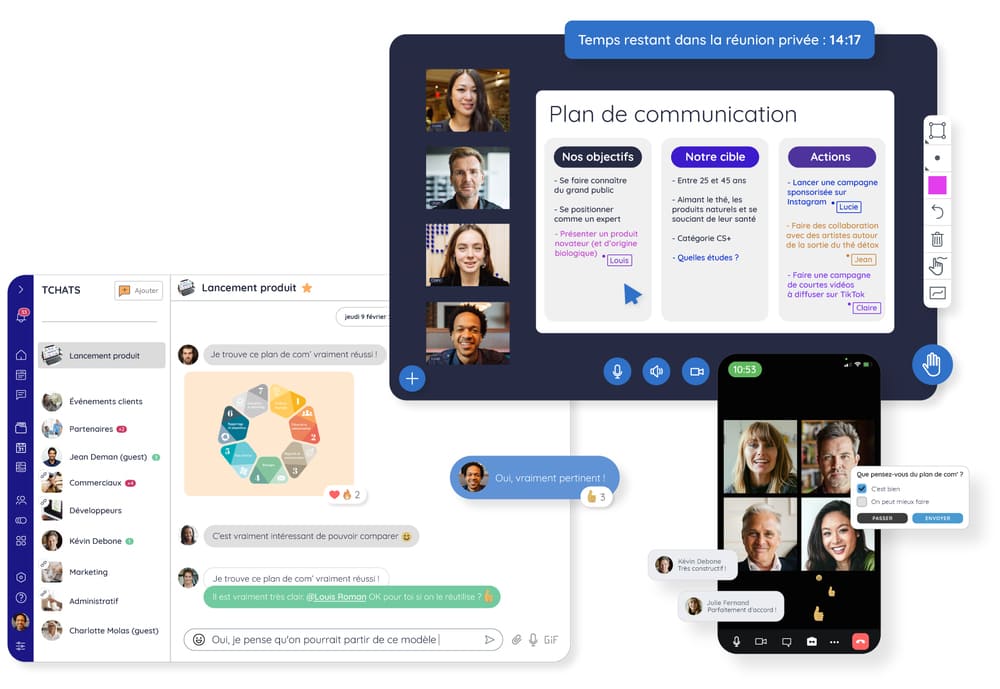
“To reduce information overload, the first step is to rationalise the number of tools we use on a daily basis. This starts with implementing a digital workplace — such as Talkspirit — which centralises your information and documents”, explains Philippe Pinault.
100% French, the Talkspirit platform includes a wide range of features to facilitate team communication and collaboration, both synchronously and asynchronously. You will find: chat, video conferencing, a welcome portal, a news feed, a storage space, a projects module, a productivity suite, a shared calendar, and much more!
2. Establish an information governance framework
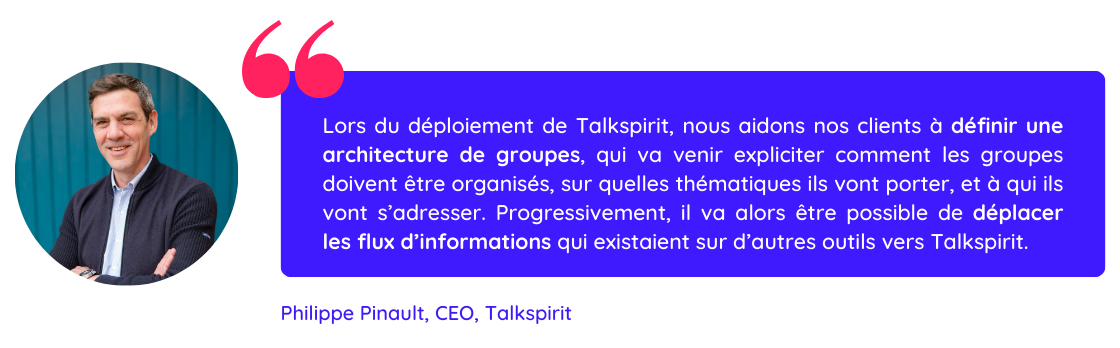
The second best practice is to establish a governance framework for information — in other words, to clarify:
- the role of each of your tools,
- what challenges they address,
- how they should be used,
- and how newly deployed tools can complement or replace existing ones.
To define this governance framework on your digital workplace, we recommend thinking through the groups you want to create on your digital workplace, as well as clarifying what they will be used for and who will manage them.
3. Organise information more effectively
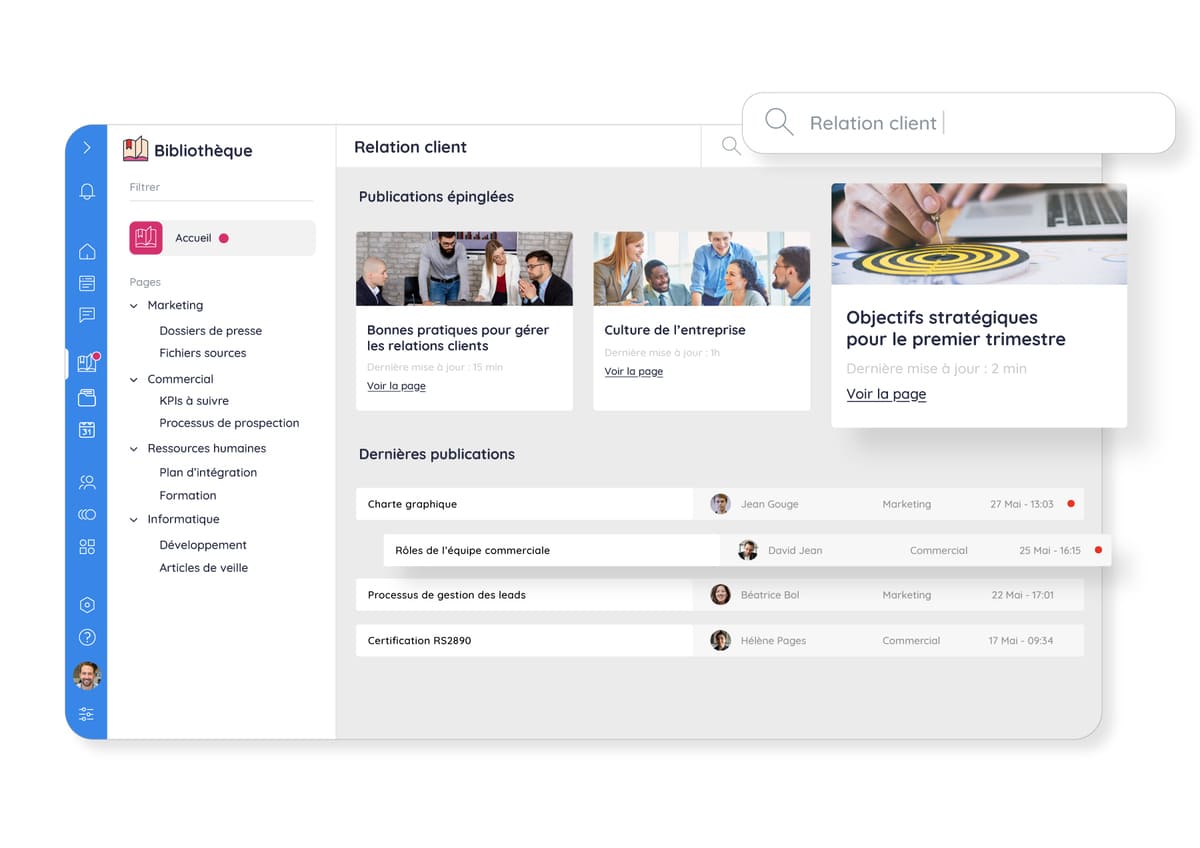
Once your groups are set up, the next step is to define clearly how information should be shared and categorised within those groups, and who should have access to it.
On Talkspirit, you can for example categorise your posts using labels, organise your documents in folders on your shared drive, and capture your knowledge in the library of content. With a simple keyword search, you can find any piece of information with ease.
4. Respect the right to disconnect
Respecting the right to disconnect (that is, the employee's right to disconnect from work tools outside working hours) is also essential for reducing information overload at work.

To uphold it, we recommend establishing communication rules on your digital workplace. This will clarify which time slots are appropriate for sending messages and holding meetings, and when it is better to hold off.
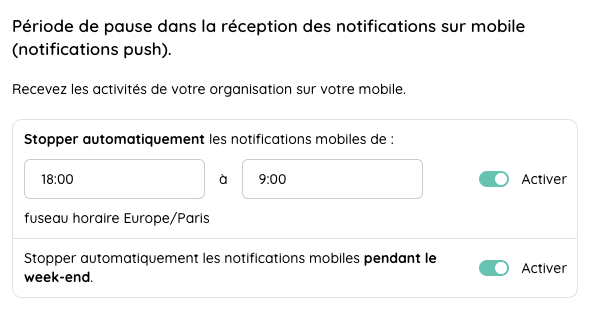
Finally, ask your teams to configure their notifications on their work tools. On Talkspirit, for example, you can set disconnect windows to stop notifications during specific time slots. You can also activate "do not disturb" mode to silence all notifications and focus better on your work.
5. Improve email practices
As we have seen, the volume of daily emails can be hard to manage and is a source of information overload. To counter this, you need to develop better email habits. This involves in particular:
- replacing internal emails with more appropriate alternatives (chat messages, posts, video calls, etc.), so that email remains solely an external communication tool,
- limiting the number of recipients, CC recipients and attachments,
- being clear and concise (goodbye to emails that take an hour to read!).
Read also: How Agence Bergamote Cut Emails by 95% and Boosted Productivity with Talkspirit
6. Improve meeting practices
Meetings can also generate information overload, especially when they pile up! The goal, as with emails, is to share best practices for improving meeting effectiveness, for example:
- Limit the number of participants.
- Favour asynchronous exchanges wherever possible.
- Set an agenda in advance, to clarify the topics to cover and what is expected of each participant.
- Share the minutes of each meeting as a post, so those who were absent can stay informed.

7. Educate and train
Finally, the most important thing is to raise employee awareness about the challenges of information overload and explain how to optimise their information flows on your digital workplace. This can be covered during training sessions on the tool, as well as through sharing best practices. To make this easier, you can rely on ambassadors !
Your digital workplace can also serve as a training resource. On Talkspirit, for example, you can create peer support groups to discuss these topics, and use the drive and library to centralise your training resources.
How to Drive Change Using Data
Data: a Key Lever for Transformation
To drive change, you can also rely on concrete data! That is the conviction of Arnaud Rayrole, CEO of Lecko, who believes data plays a key role in organisations' internal transformation.
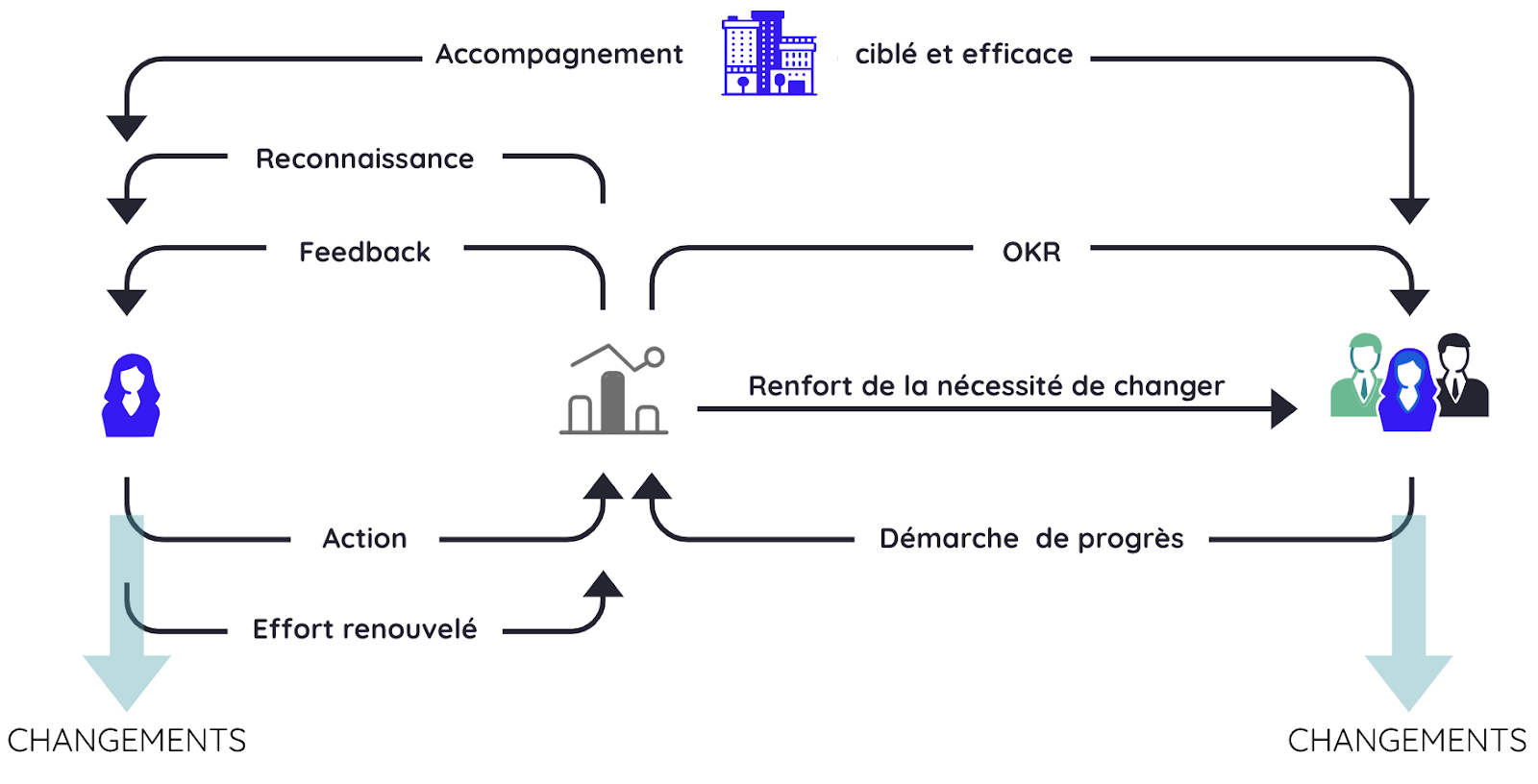
This data will in particular help to:
- Make employees’ efforts visible in their efforts to reduce information overload.
- Provide recognition and reward employees who play their part, for example through gamification.
- Mobilise teams and align them around the need for change.
- Implement a continuous improvement approach, for example by defining and tracking OKRs (Objective and Key Results). To reduce information overload, you can set key results to achieve (for example, reducing email volume or the number of meetings).
- Increase the impact of support teams and managers.
Simplified Reporting with the Greet App
To measure this data, Lecko developed the Greet app. Its goal? To mobilise employees to develop sustainable digital practices. That means practices that are more environmentally responsible, more respectful of employee well-being, and more efficient.
On Greet, you can measure:
- information overload linked to meetings and emails,
- the carbon footprint generated by our digital usage,
- and the impact of awareness-raising initiatives.
Each employee can thus act at their own level and contribute to the collective effort!
*
* *
To conclude
The message is clear: reducing information overload requires the whole organisation to be on board. This can be achieved by implementing a digital workplace, through change management and awareness-raising, and by leveraging data. Finally, remember that change is a continuous process and can take time. Be patient, and don't hesitate to refine your strategy based on the qualitative and quantitative data you collect.
Want to explore best practices for reducing information overload and driving change in more depth? Watch the replay of our webinar 👇
¹ “The Anatomy of Work” study by Asana (2021)
² State of the Art of Internal Organisational Transformation, Lecko (2023)