.webp)
[Webinar] Quiet Quitting: How to Engage Your Frontline Employees

.svg)
37 % of French employees are engaged in quiet quitting, according to a recent Ifop study. In other words, they are doing the bare minimum at work to free up time for personal activities. This phenomenon, also known as quiet quitting, affects both office workers and frontline employees.
What is the business impact of quiet quitting? How can HR teams respond? And what best practices can they put in place to re-engage their frontline workforce?
Two experts answered these questions at our Tuesday 12 December webinar:
- Juliette Laoul, Chief HR Officer at Talkspirit
- Aline Bigot, Account Executive at Zest
Below is a summary of their discussion (PS: click the banner below to watch the replay 😉).
 end HubSpot Call-to-Action Code
 Understanding quiet quitting
Where does quiet quitting come from?
For Aline Bigot, quiet quitting reflects a fundamental shift in our relationship with work. “In the 1990s, 60 % of French people said their job was central to their lives. By 2021, only 24 % said the same.”
Employees today want more free time and a healthier work-life balance. This is illustrated by the Talent Trends 2023 study, which shows that 8 out of 10 French workers prefer to prioritise their well-being at work over career success.
“Disengagement at work was amplified by the Covid-19 crisis. Evidence of this: since that period, 34 % of frontline employees feel less motivated at work.”
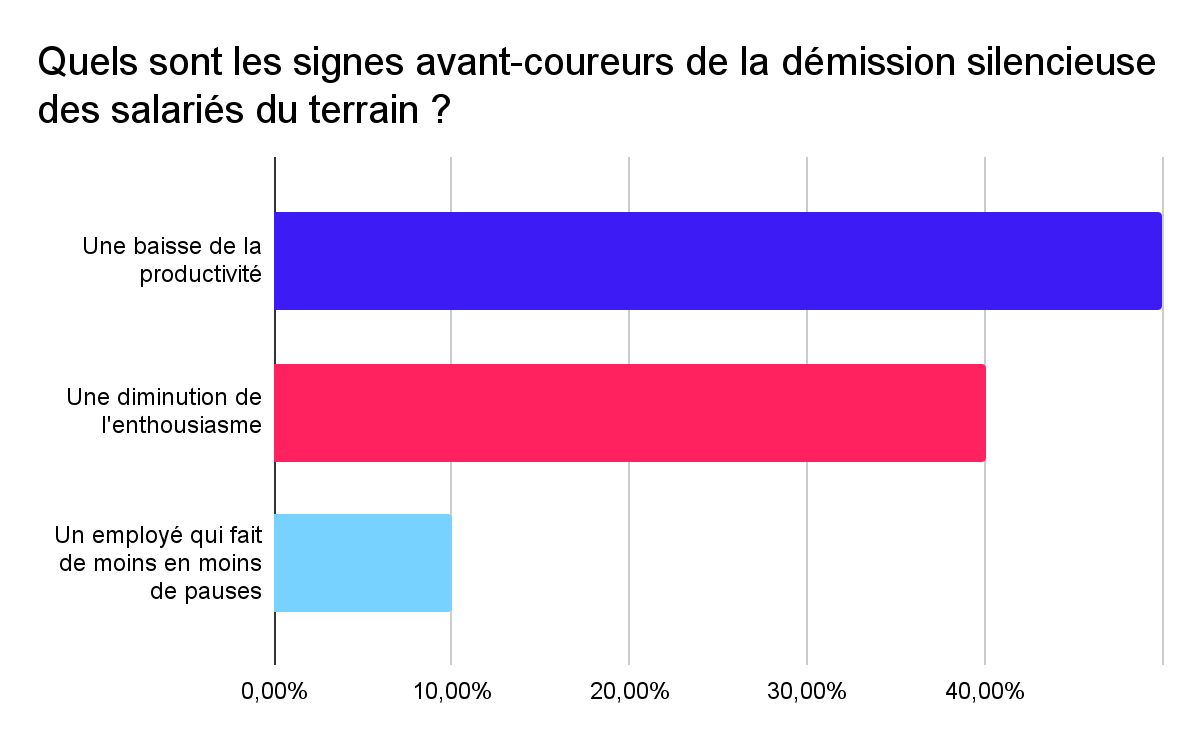
Several warning signs help identify this drop in motivation: rising absenteeism, a lack of initiative, and of course a general loss of enthusiasm.
Why are frontline employees particularly affected?
Several factors can explain quiet quitting among frontline workers, including:
- A loss of meaning at work.
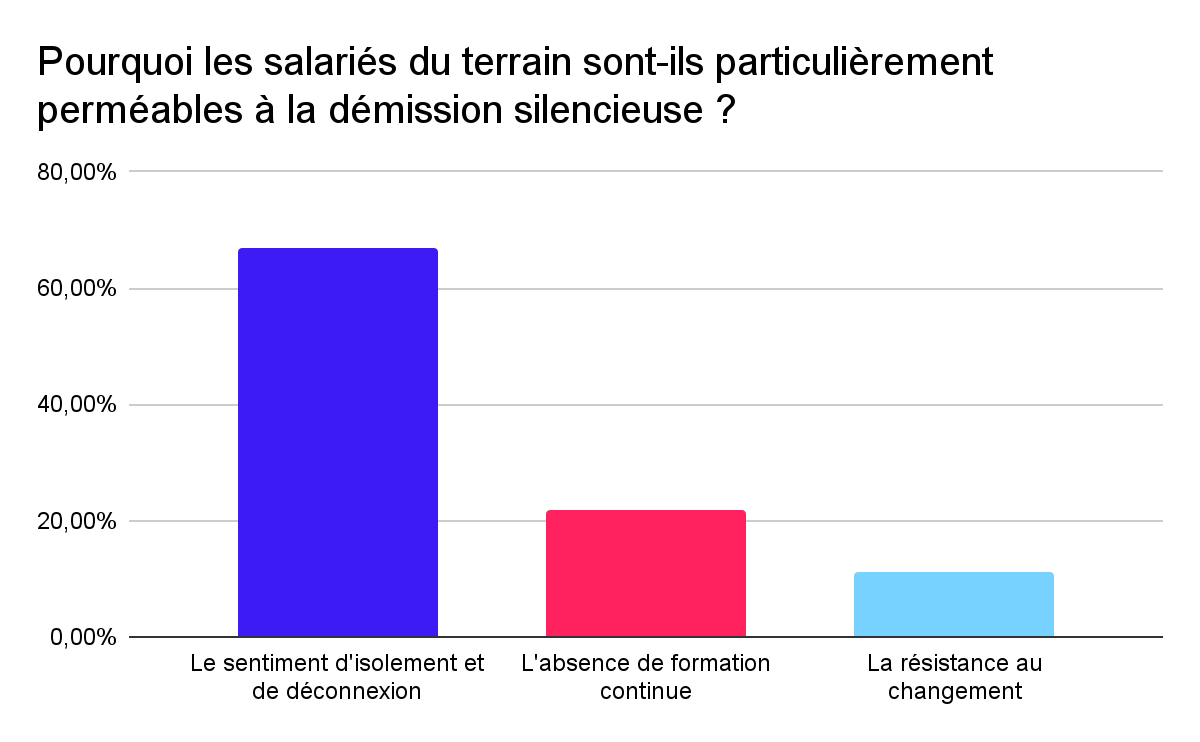
- A sense of isolation and disconnection, which can be amplified by poor communication from management.
- A high-performance culture that demands employees always do “more”, sometimes at the cost of their physical and mental health.
- A lack of training and tools for frontline managers. “High-performing frontline employees are often promoted into management roles without necessarily having the aptitude or specific skills required. Without adequate training and tools, this can reduce team engagement,” explains Aline Bigot.
- A difficulty seeing a future within the organisation. This can stem from a lack of ongoing training and/or limited visibility into career progression opportunities.
What is the business impact?
Quiet quitting can have a serious impact on the business. Disengaged employees mean a drop in productivity. In 2020, the IBET (workplace well-being index) put the cost of a disengaged employee at €14,310 per year. Webinar participants agreed: 93 % believe quiet quitting has a negative impact on business performance.
Often a sign of internal dysfunction, quiet quitting is also an opportunity for organisations to reassess their HR practices. As Aline Bigot points out, “disengaged employees are not necessarily people who don’t want to work. They can also be whistleblowers, flagging real problems in the workplace.”
Preventing quiet quitting
To re-engage frontline employees, HR teams and managers can implement a number of best practices. Here are five presented by our Chief HR Officer Juliette Laoul.
1. Understand what motivates your frontline employees
Before putting in place a dedicated HR strategy, start by identifying the drivers of motivation for your frontline workforce. Some employees are more motivated by compensation, while others place greater importance on their job title. “To truly understand these needs, you must conduct regular one-to-one interviews with your employees,” says Juliette Laoul. “Motivations can shift over time, so you also need to be flexible when the situation calls for it.”
Tools like Zest can help you kick off this process and improve employee engagement. This is exactly what the fashion retailer Celio did, using Zest to:
- Modernise its management rituals by helping frontline managers better understand their teams’ needs (in terms of training, mobility, salary, etc.).
- Implement a social barometer to measure engagement and quality of working life for employees.
2. Recognise, reward, and offer
Recognising and rewarding individual contributions can also help you engage your frontline teams. After all: “why go the extra mile if it goes unnoticed?”
To build a culture of recognition at work, you can:
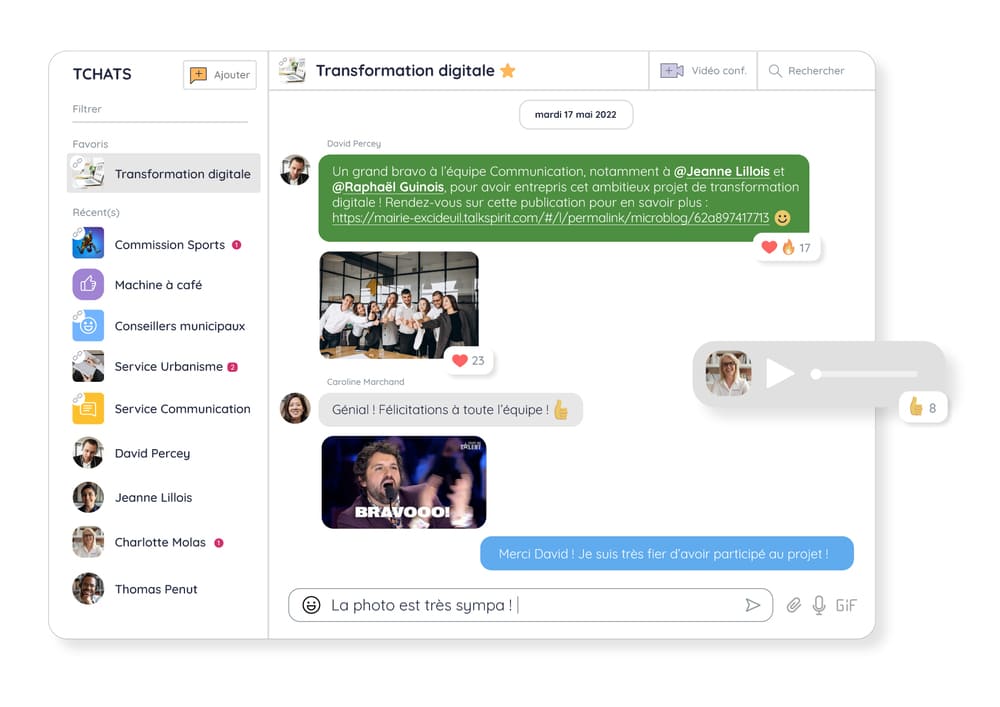
- highlight individual achievements on your enterprise social network (this is something you can do on Talkspirit!);
- “offer additional employee benefits that go beyond meal vouchers and health insurance”;
- “introduce initiatives to support work-life balance” (for example, a four-day working week);
- “create personalised career paths”.
All of this contributes to giving work meaning for employees and nurturing their sense of belonging to the organisation.
3. Embrace positive leadership
“Managers play a key role in engaging frontline employees. That is why it is essential to train them to lead by example”, says Juliette Laoul. To prevent quiet quitting, managers must:
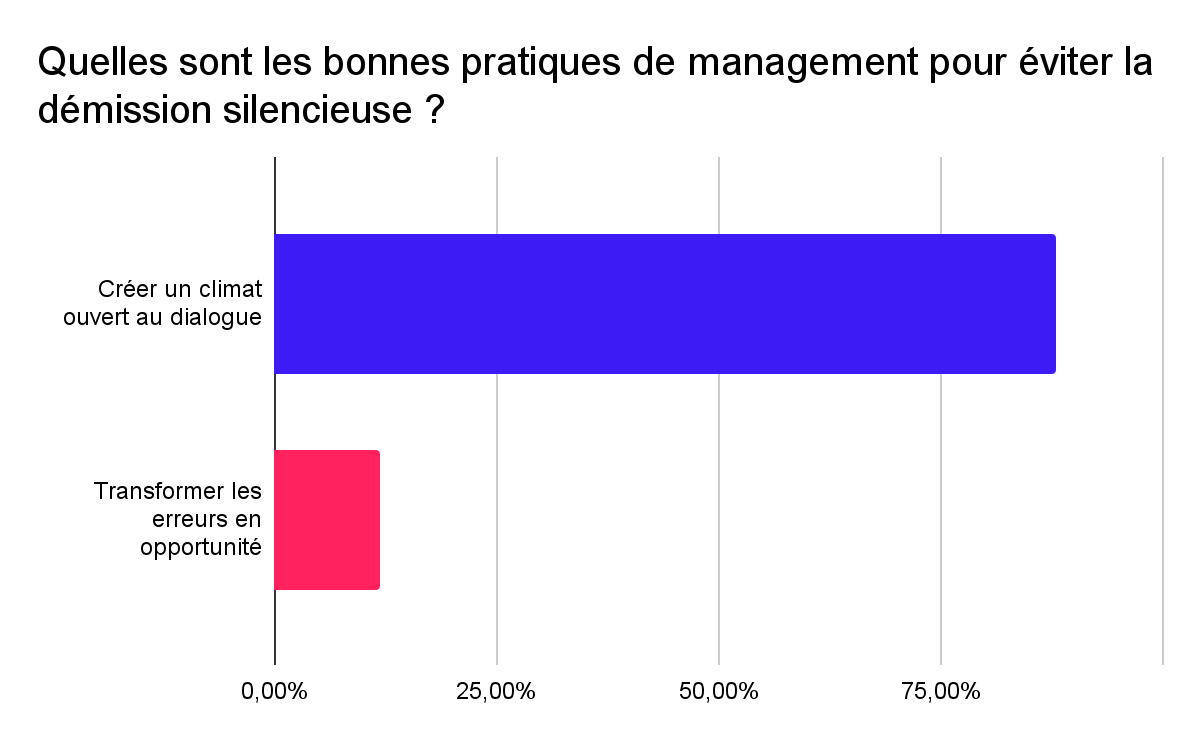
- build a climate of trust that fosters open dialogue and mutual support,
- “handle conflicts constructively”,
- “prioritise and delegate tasks effectively” based on the team’s skills and goals,
- “turn mistakes into learning opportunities”.
Read also: Hybrid Work: Management Best Practices
4. Communicate
To prevent your frontline employees from disengaging, they need access to the same information as the rest of the organisation. This means deploying an internal communications tool they can connect to easily.
Available on PC, tablet and mobile, the Talkspirit platform makes it easy to share information with all your employees via chat, posts, content pages, and a welcome portal. Everyone can react to communications via likes and comments, and even share their views through polls.
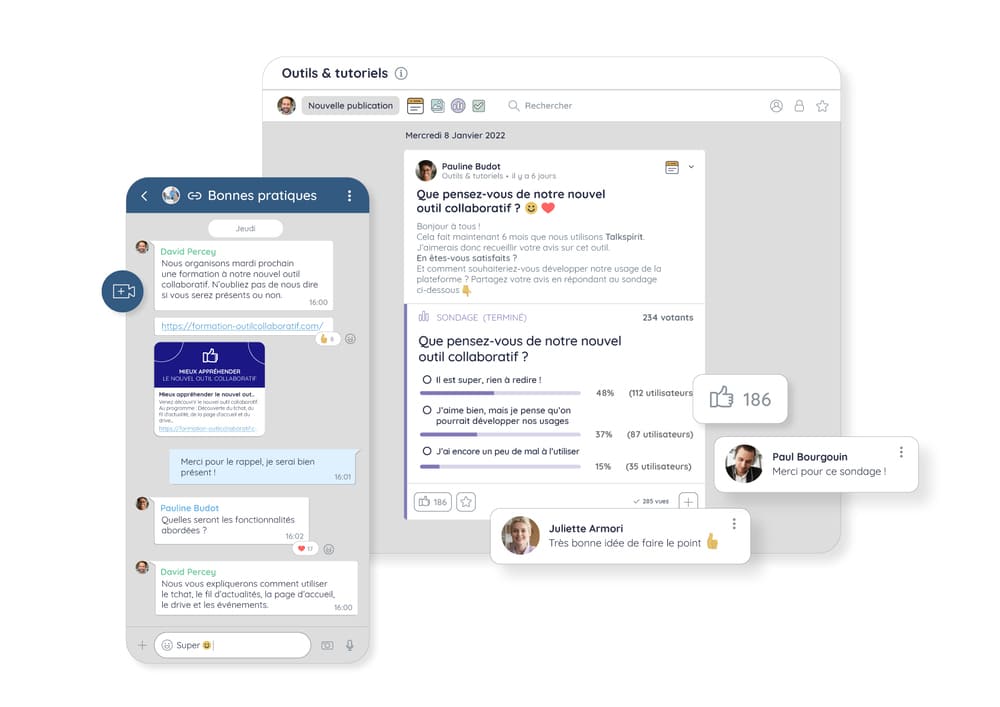
“Rolling out such a solution is a great way to establish open, regular communication with your frontline employees,” says Juliette Laoul. For it to be effective, however, you cannot limit yourself to top-down communication. Employees must also be able to surface their needs and share their feedback.
Read also: Webinar recap: “Why and how to build a feedback culture?”
5. Build a culture of transparency
89 % of webinar participants believe a strong company culture is essential to engage and retain frontline talent on the ground. At Talkspirit, we firmly believe that a strong company culture starts with transparency.
To foster this transparency, organisations should:
- “give everyone access to the information they need to do their job”;
- “evolve reporting and governance”;
- “acknowledge that not everything can be shared, and distinguish between what should be public and what should remain confidential”;
- “communicate with tact, so that transparency does more good than harm.”
Conclusion
Quiet quitting is not insurmountable — far from it. By clearly identifying the drivers of motivation for your employees, you can put the right actions in place to address it. To engage your frontline workforce, you will need to focus on listening, recognition, supportive management, internal communication and transparency. And don’t forget to equip your HR teams and managers with the right tools — such as Talkspirit or Zest.
Want to discover more best practices for engaging your frontline employees? Watch the webinar replay 👇