The winning strategy for attracting and retaining talent

.svg)
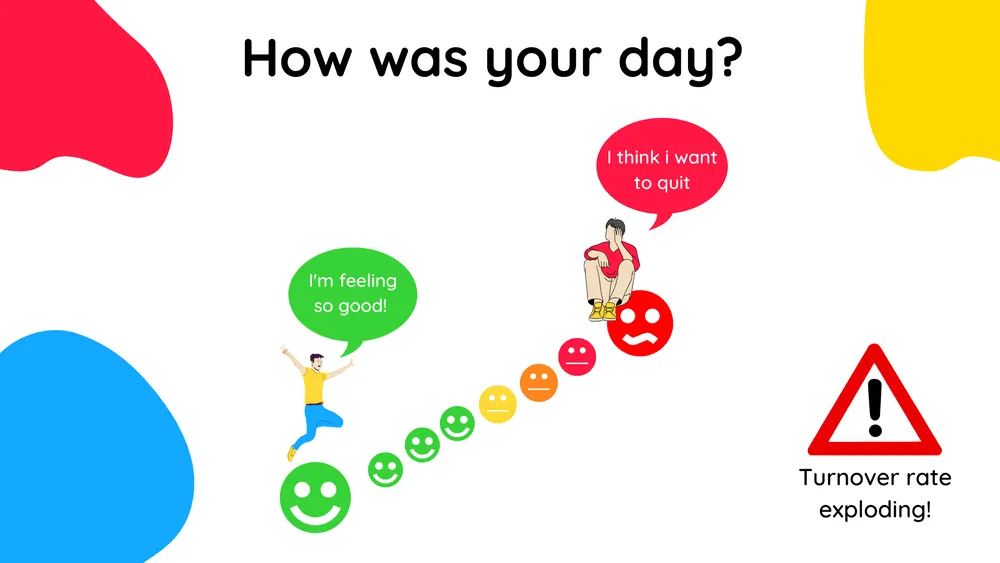
- Only 20% of employees worldwide were engaged at work in 2025, the lowest level since 2020 (Gallup, 2026): attracting people is no longer enough, you have to keep them.
- An employee’s departure costs between 6 and 9 months’ salary (SHRM, 2017), more than a retention plan would.
- On attraction: a readable package (published salary range), a written employee value proposition, an employer brand that shows the culture, and a recruitment process that answers everyone.
- On retention: professional development, information transparency, and recognition.
- 26% of job seekers declined an offer in 2024 because of poor communication or unclear expectations (CareerPlug, 2025).
- Only one in three US workers received recognition in the past seven days (Gallup), and those who feel unrecognized are twice as likely to quit.
Only 20% of employees worldwide were engaged at work in 2025, the lowest level since 2020 (Gallup, State of the Global Workplace 2026). Low engagement costs the world economy an estimated $10 trillion in lost productivity, or 9% of global GDP. Behind those numbers sit very concrete expectations: better pay, more development opportunities, and above all improved well-being at work. Each one is a lever for attracting and retaining top talent.
When you consider that an employee’s departure can cost a company between 6 and 9 months’ salary (SHRM, 2017), the math is clear. Over time, it’s cheaper to invest in retention than to keep replacing the people who leave. In the age of quiet quitting, though, that’s no easy task.
To keep attracting, engaging, and retaining talent, HR teams have no choice but to keep adjusting their HR strategy. Which topics should be prioritized in 2026? And how can you make sure your strategy meets the expectations of candidates and employees alike? Here are our practical tips, lever by lever. 👇
Contents
- Why invest in talent attraction and retention?
- What’s the best strategy for attracting talent?
- What’s the best strategy for retaining talent?
Why invest in talent attraction and retention?
“To attract and retain talent, you don’t need to be a strategist. Just offer an attractive package, and it’s in the bag.” While this statement may have been true some fifteen years ago, today it’s far from it! This is demonstrated by a FlexJob study, which states that 63% of candidates prefer to benefit from a better work-life balance rather than a better salary.
Clearly, salary isn’t everything! Several other criteria come into play when choosing between staying on board or jumping ship:
- Well-being at work, including work-life balance
- Job security (as well as any room for potential promotions)
- Interest in missions and the meaning given to work
- Level of responsibility, autonomy, and trust granted
- Work atmosphere and relations with colleagues
- Flexible working conditions (for example, the possibility of teleworking)
- Organizational culture and management styles
- Development opportunities
- Commitments to CSR (Corporate Social Responsibility)
Let’s look at how to attract and retain talent using these different levers. 😉
What’s the best strategy for attracting talent?
Offer competitive packages
Even if salary and benefits aren’t everything, they shouldn’t be neglected! According to a study by Glassdoor, remuneration remains the number one criterion when choosing a new job. If you want to attract the best talent, you’ll need to offer an attractive package.
This package can be specified directly on the job listing and specify:
- The fixed salary range for the position. The more competitive it is, the more likely you are to attract top talent. Careful, though: you want to maintain a certain degree of consistency with salaries on the market and within the company.
- Any variable pay (things like bonuses, profit-sharing, incentives, and stock options)
- Your remote work policy
- Benefits, for example:
- health insurance options (including premiums, deductibles, copays)
- paid maternity or paternity leave
- contribution to childcare costs
- matching contributions to a 401k or other retirement savings plan
- paid vacation and sick leave
- free access to sporting and/or cultural activities
- business telephone, company car, etc.
Put your employee value proposition in writing
The employee value proposition (EVP) answers the question every candidate is really asking: what does this company offer in exchange for the work? It bundles into a single promise what gets weighed on five fronts:
- Pay and benefits, fixed, variable, and everything around them.
- The work itself: the scope of the role, the autonomy and responsibility that come with it.
- Development: training, internal mobility, and where the job leads next.
- The working environment: flexibility, remote work, how time is organized.
- Culture and commitments: management styles, governance, diversity, CSR.
Without a written EVP, the message shifts with every job ad, and the employer brand ends up promising what the company does not deliver. To build one, talk to the people hired in the past year and to those who have stayed for a decade, reread your exit interviews, then keep three to five promises you can prove. Publish them on your careers page and in your job ads, and check every year that they still hold. A promise contradicted in the first weeks speeds up the exit instead of preventing it. It is the foundation of a talent management strategy that lasts.
Bolster your employer brand
To attract talent, you also need to make yourself visible to candidates. This is where employer branding comes into play: the term refers to the brand image projected by the company, both internally and externally. When well thought-out, this showcase can help increase the number of applications you receive.
To enhance your attractiveness, we recommend highlighting your corporate culture and values, as well as your commitments to issues such as the environment, diversity, and inclusion. This can be integrated into the description of your job offers, on your career site, on job boards, or even on your social networks!
Also read: 10 Ways To Enhance Your Diversity Recruiting Strategy
If you have the resources, don’t hesitate to offer a variety of formats, including videos, carousels, quizzes and so on. This will help you stand out from the crowd and leave a lasting impression on potential candidates.
Create an efficient recruitment and integration process
Recruitment and integration are also key levers for attracting talent. However, it has to be said that the practices in place are not always up to scratch.
A poor candidate experience has a price. A lack of communication or unclear job expectations led 26% of job seekers to decline an offer in 2024, and 36% turned one down after a negative interview (CareerPlug, 2025 Candidate Experience Report). Many then tell that story online, on sites like Glassdoor, which puts off the next candidates too.
To create a positive candidate experience, it’s important to set up an effective recruitment and integration process. This includes:
- The creation of clear, detailed job offers that correspond to the needs expressed internally.
- An automated recruitment process using ATS (applicant tracking software), which enables all applications to be processed quickly and ensures that no-one is left without a response.
- Interviews with the right people who ask the right questions, not too many, and not too few. It’s best to have a maximum of 3 interviews per job (and not double that number!)
- A comprehensive onboarding program to help employees understand their role within the company, get to know their colleagues better, and develop the skills they need to successfully complete their assignments.
What’s the best strategy for retaining talent?
Invest in professional development
Of course, training doesn’t end with onboarding. It continues throughout the employee’s development within the company. It’s often said that an employee who’s stopped learning is one who’s on the way out. And with good reason.
According to a study by the Pew Research Center, 63% of American employees who quit during the Great Resignation did so because of a lack of career development. Investing in professional development is therefore a good way of attracting and retaining talent!
Depending on the resources you have in-house, you can offer training run by internal or external facilitators, either as e-learning modules people follow at their own pace or as live sessions that leave room for questions. The hard part is knowing what to train for: skills mapping shows the gap between the skills you have and the ones the organization will need.
To encourage ongoing training, you can also create rituals. At Talkspirit, we organize a weekly “Growth Academy,” where sales, marketing, and customer support teams share best practices and feedback. The theme changes with each session, allowing different employees to have their say. For example, we’ve covered topics such as social selling, customer onboarding, and the use of artificial intelligence.
Improve transparency to develop autonomy
On average, employees spend 20% of their working time looking for information! The reason: the multiplication of our applications and sources of information, which tends to scatter our data in multiple places. This can lead to information overload, lower productivity, and even higher turnover!
To continue attracting and retaining talent, everyone needs to have access to the same level of information. Regardless of hierarchical level. The more transparent you can make this, the easier it will be for your employees to find the information they need, and the more autonomous they’ll be able to work! Ultimately, that boosts employee engagement and improves talent retention.
Two key tools can help you develop this transparency:
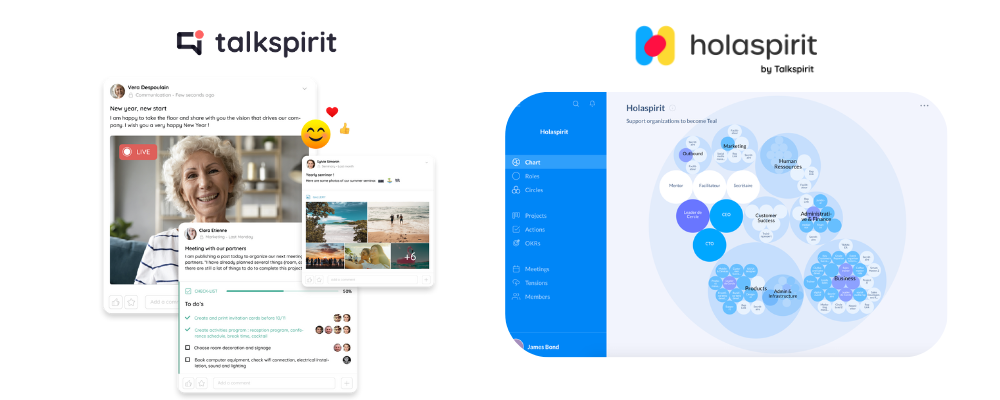
- Talkspirit: the ideal platform for centralizing all the information and knowledge you share internally. A Swiss Army knife that boasts its own news feed organized by theme group, a customizable home portal, a drive, and a content library.
- Holaspirit: this self-management solution helps you map out your organization’s roles and processes, providing greater clarity on who does what. Thanks to this increased transparency, teams can gain in autonomy, agility, and performance!
Discover Holaspirit
Bring recognition
Last but not least: recognition. According to Gallup, only one in three US workers strongly agree they received recognition or praise for good work in the past seven days. And employees who do not feel adequately recognized are twice as likely to say they will quit within the year. It remains one of the cheapest retention levers there is.
Creating a culture of recognition at work can have many beneficial effects for your employees. For example, it can help to give meaning to their work, increase their motivation and performance, and thus build loyalty.
Here are some ideas for developing recognition:
- Highlight your teams’ successful projects on your enterprise social network‘s home portal and/or news feed.
- Create a prize to reward the best employee of the month (and really reward them!)
- Set up a discussion group where everyone can congratulate, thank, or reward employees or teams for their efforts.
- Explain to employees individually how their work contributes to the company’s overall performance.
- Give bonuses and/or gifts to the most committed and best-performing employees
| Lever | What it serves | First concrete step |
|---|---|---|
| LeverPay and package | What it servesAttraction | First concrete stepPublish the fixed salary range in the job ad |
| LeverEmployee value proposition | What it servesAttraction and retention | First concrete stepWrite down three to five promises the company can prove |
| LeverEmployer brand | What it servesAttraction | First concrete stepShow the culture, values, and commitments on the careers page |
| LeverRecruitment and onboarding | What it servesAttraction and retention | First concrete stepAnswer every application, keep to three interviews at most |
| LeverProfessional development | What it servesRetention | First concrete stepMap the skills you have, then set up a regular learning ritual |
| LeverInformation transparency | What it servesRetention | First concrete stepCentralize information on a single platform everyone can reach |
| LeverRecognition | What it servesRetention | First concrete stepHighlight team wins every week, naming the people behind them |
A final word
Attracting and retaining talent means pulling several levers at once: the employee value proposition, the employer brand, recruitment, onboarding, training, pay, recognition, and transparency. None of them makes up for the absence of the others, and it is their consistency that counts, from the first look at a job ad to the third year in the company.
There are, of course, plenty of other levers and best practices for improving retention: we have gathered 52 of them in this article. To go further, here is our white paper: 👇
FAQ
Because replacing people costs more than keeping them: an employee’s departure represents between 6 and 9 months’ salary (SHRM, 2017). And the pool is strained: only 20% of employees worldwide were engaged at work in 2025, the lowest level since 2020 (Gallup, State of the Global Workplace 2026).
No. A FlexJobs study states that 63% of candidates would rather have a better work-life balance than better pay. Compensation still matters, though: according to a Glassdoor study, it remains the number one criterion when choosing a new job. Necessary, but not sufficient.
It is the written promise of what the company offers in exchange for the work: pay and benefits, the scope of the role and the autonomy that comes with it, development and internal mobility, the working environment, culture and commitments. A useful EVP holds three to five promises the company can prove, published on the careers page and in job ads.
By answering everyone, quickly and clearly. A lack of communication or unclear job expectations led 26% of job seekers to decline an offer in 2024, and 36% turned one down after a negative interview (CareerPlug, 2025 Candidate Experience Report). Precise job ads, an ATS that leaves no application unanswered, and three interviews at most fix most of it.
Yes. According to the Pew Research Center, 63% of US employees who quit during the Great Resignation cited no opportunities for advancement. Skills mapping, a training plan, and visible internal mobility are the three most direct answers.
It lowers the intention to leave. According to Gallup, only one in three US workers strongly agree they received recognition or praise for good work in the past seven days, and employees who do not feel adequately recognized are twice as likely to say they will quit within the year. A weekly ritual, naming people publicly, costs little and can start immediately.