8 Best Practices to Manage a Project Effectively

.svg)
- A project runs through five phases: framing, planning, execution, tracking and closing. The eight practices in this article each belong to one of them.
- It starts with identifying the stakeholders, then a kickoff meeting that settles needs, goals, roles and deadlines.
- The project brief and the schedule turn the need into tasks, milestones and a budget, with interdependent tasks spotted from the outset.
- Information stays in one place, on a drive with access rights set up, rather than scattered across a multitude of tools.
- Tracking happens at a rhythm agreed in advance, daily, weekly or monthly, and is paired with precise feedback, both given and asked for.
- The closing meeting takes stock with the Keep/Drop/Start method, extended if needed by the starfish method.
Managing a project from start to finish is no walk in the park… You have to be able to meet the goals you’ve set while keeping every stakeholder satisfied, all within budget and on time. While this work often falls to a project manager, in reality any manager may be called on to handle all or part of a project.
Whether you’re in charge of human resources, internal communication, IT systems, or the sales team, project management is likely part of your everyday routine. To help you get a better handle on this responsibility, we’ve put together 8 best practices to help you manage a project effectively. And to do it with kindness and care 😉
1. Identify the project stakeholders
The first step to managing a project effectively is, first and foremost… to identify the project stakeholders! In other words: the people who will need to be involved in the project, as well as those who will be most affected by it.
These might be leadership, team leads, certain end users, or even people outside the organization (for example, your suppliers, partners, or clients).
Each stakeholder will have a key role to play and will need to be consulted, or at least kept informed, throughout the project. So it’s important to identify these people clearly from the outset, in order to gather their needs and make sure the project meets their expectations.
This will also be the moment to appoint the person or team who will see the project through, and to make sure the stakes are clearly understood.
2. Hold a kickoff meeting
The kickoff meeting is the essential step for launching a project and defining:
- the stakeholders’ needs,
- the goals and expected outcomes,
- any deliverables to produce,
- the key milestones of the project,
- how roles are distributed,
- and the deadlines.
The meeting agenda should be prepared in advance by the project lead(s). But that’s not all… To be effective, it’s also important to invite the right people, that is, those who will be most involved throughout the project. There’s no point inviting 20 people to your meeting; that would be counterproductive!
 end HubSpot Call-to-Action Code
 Also remember to appoint someone to take notes during the meeting and to send out a summary to all participants. For this, go for a co-editable document that everyone can contribute to, which you can share on your collaboration platform.
Read also: How to make your remote meetings more effective?
3. Draw up a project brief
Following the kickoff meeting, it can be worthwhile to write a project brief that will serve as a reference for all the project stakeholders. It’s of course not mandatory, but it can prove very useful for certain complex and/or technical projects (for example, redesigning a website or rolling out a new collaboration tool).
This brief should include, in particular:
- the why of the project (that is, the reason this project is necessary),
- the stakeholders involved,
- the detailed definition of needs, including functional and/or non-functional specifications (depending on the type of project),
- the project goals (qualitative and quantitative),
- the resources and budget that will be allocated,
- the deadlines to meet.
With this document, you can make sure the project scope is clearly understood, and that all your stakeholders are on the same page.
4. Build a schedule
Once your project brief is done, you now need to build a detailed project schedule. This is a great way to clarify who needs to do what and when in order to finish the project on time.
To create this timeline, you’ll need to:
- list out all the tasks to be completed in full,
- create milestones (that is, the project’s key stages)
- organize them over time,
- set their duration,
- identify whether certain tasks are interdependent (that is, whether they depend on another task to be started or completed),
- and assign tasks to the right people.
For this step, your best bet is to rely on a spreadsheet or a project management software, where you can track task progress.
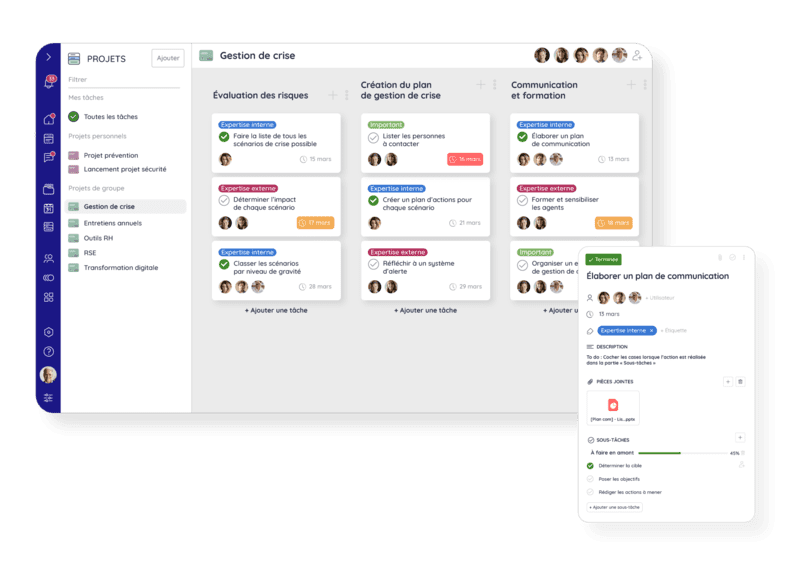
If your project isn’t very complex, you can for example use Talkspirit’s Projects module. Ideal for managing a project effectively, this module lets you create project boards, add tasks as cards, and assign them to your team members. A list view of all your tasks also lets you sort them by priority or topic, depending on your preferences.
Request a demo of the Projects module
5. Organize information
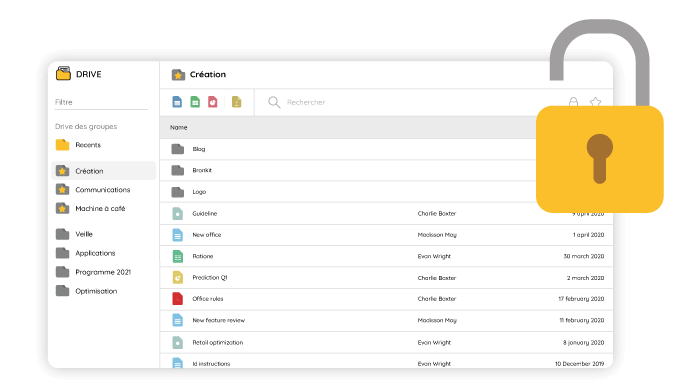
To keep exchanges flowing between your stakeholders, it’s also essential to centralize information on a secure drive. Of course, that doesn’t mean leaving this storage space wide open. Quite the opposite! So take the time to set up everyone’s access rights, to ensure the confidentiality of the information shared.
Other tools can also come in handy to manage your project effectively. These include instant messaging, video conferencing software, or a shared calendar. That said, be sure to keep the tools you use to a minimum, to avoid information scattering across a multitude of channels.
If you want to make life easier for yourself, you can also opt for an all-in-one tool that brings all these features together. PS: check out our ranking of the 13 best collaboration platforms here to find one that meets your needs.
Whatever tools you choose, the key is to spell out:
- what to document (for example, the difficulty level of tasks, unexpected delays or cost overruns, the people involved and the quality of their work, etc.)
- where to find and share project-specific information (meeting minutes, deliverables, the project brief, etc.)
- who should have access to this information,
- how to keep stakeholders informed of the project’s progress (via a meeting, a chat message, a post in a group, a comment on your project management solution, etc.).
6. Track progress regularly
Managing a project effectively also means tracking tasks on a regular basis. The goal: to make sure the project is running according to the schedule and resources defined, and that the KPIs (Key Performance Indicators) are being met.
Depending on the type of project and the working method chosen, this tracking can be daily, weekly, or monthly. It can happen in real time during dedicated progress meetings, but also asynchronously on your collaboration tools.
Our advice: try to mix meetings and online exchanges, while staying flexible. Indeed, some issues are sometimes better addressed in conversation, while others can stay in writing without any problem. So it’s up to you to decide based on everyone’s needs, but also to ask yourself the right questions during your check-ins, for example:
- Is the project moving forward as agreed? If not, what are the blockers?
- Is the budget being respected? If not, why?
- Are the resources and time allocated to the project sufficient? If not, what additional resources are needed?
- Are the goals you set being met?
Based on everyone’s feedback, you can get an overall view of the project’s progress, as well as the actions to put in place to resolve the issues identified.
7. Give and ask for feedback
Throughout your project, your teams need to receive feedback, to make sure the work delivered meets the requirements set. This feedback should be as constructive as possible, both so it’s clearly understood and the person can move forward quickly, and to avoid ruffling your team members’ feathers.
So steer clear of “It’s ugly!”, “It doesn’t work!” or “It looks dated”, which are counterproductive, and go instead for precise, structured, and illustrated feedback (with images or specific examples).
For example, if you feel the illustration sent by your designer lacks energy, say instead: “I think the characters could be brought out more, and the colors could be brighter. That would give the illustration more energy.” It has the merit of being clear, without offending the person 🙂.
And this constructive feedback, don’t hesitate to ask your teams for it too. Who knows, they might have some great ideas to share with you!
Read also: Webinar recap: “Why and how to build a feedback culture”
8. Hold a closing meeting
Hooray, your project is complete! It’s now time to hold a closing meeting to take stock. This end-of-project discussion is very important, as it will give you an overview of the results achieved, as well as the teams’ feedback on the project.
It will be the chance to analyze the project’s wins, to thank and congratulate the teams, but also to identify areas for improvement for next time.
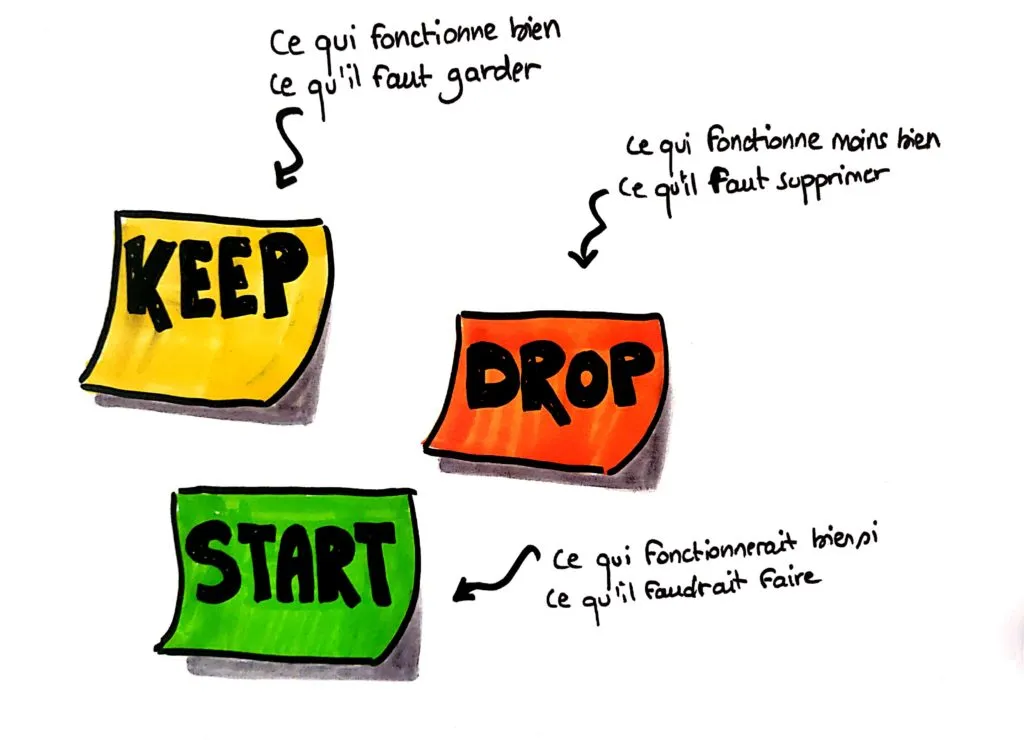
A widely used format for these meetings is the Keep/Drop/Start method, which consists of identifying:
- what to keep (Keep),
- what to stop doing (Drop),
- and what to start doing (Start).
You can also go further by drawing on elements of the starfish method (no, it’s not about floating on your back in the pool 😉). On top of the Keep/Drop/Start format, this method seeks to identify what should be done more of (More of) and less of (Less of) to optimize the added value of each action.
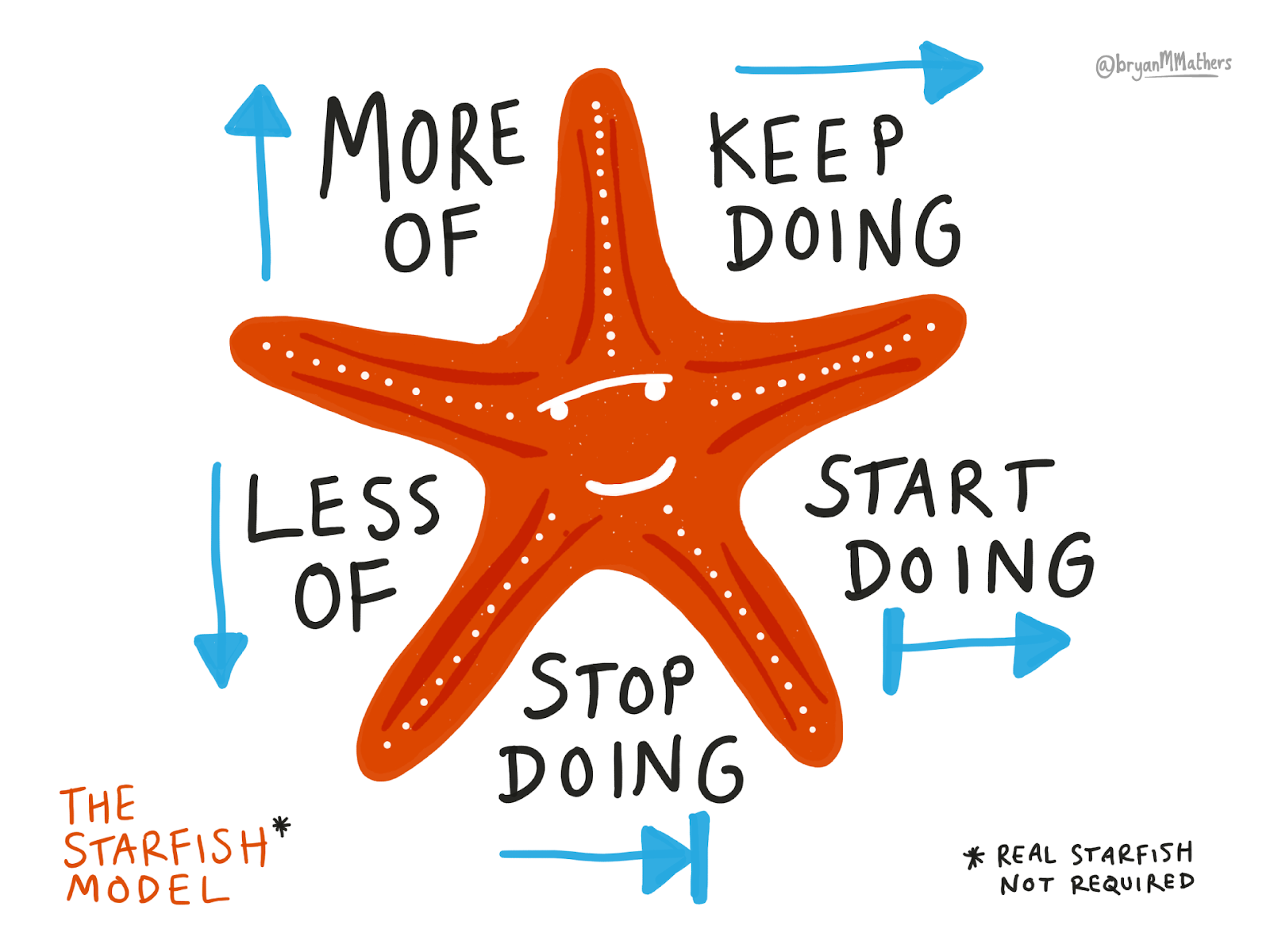
By combining these two methods, you’ll have everything you need to manage your next projects even more effectively!
The five project phases, and the practices that go with them
The eight practices above do not all happen at the same moment. They fall into the five phases that almost every project goes through, whatever its size. This reading is most useful mid-course: it shows at a glance what was skipped.
| Phase | What is at stake | Practices involved |
|---|---|---|
| Phase1. Framing | What is at stakeUnderstand the need, size up what is at stake, appoint whoever leads | Practices involvedPractices 1 and 2: identify the stakeholders, hold the kickoff meeting |
| Phase2. Planning | What is at stakeTurn the need into tasks, milestones and a budget | Practices involvedPractices 3 and 4: write the project brief, build the schedule |
| Phase3. Execution | What is at stakeProduce the deliverables and keep information in one place | Practices involvedPractice 5: organize information |
| Phase4. Tracking and steering | What is at stakeCompare real progress with the schedule, decide, correct | Practices involvedPractices 6 and 7: track progress regularly, give and ask for feedback |
| Phase5. Closing | What is at stakeDeliver, measure the results, capture what is worth reusing | Practices involvedPractice 8: hold a closing meeting |
On a short project, these five phases can fit inside the same week, but none of them disappears. The one most often skipped is the closing phase, even though it is the one that makes the next project easier.
Read also: Why effective communication is essential for project management success
Choosing the method that fits the project
A project whose outcome is known up front is not run the same way as one that takes shape as you go. So the method is chosen before the schedule, not after.
- Waterfall: the phases follow one another in order, and each one ends before the next begins. It suits projects whose scope and constraints are set from the start, an office move or a compliance deadline for instance.
- Agile, including Scrum: work moves forward in short iterations, and the scope is adjusted at the end of each one based on what was delivered. It suits projects whose requirements become clearer along the way. Its pros and cons are detailed here.
- Kanban: no iterations, but a continuous flow of tasks laid out on a board, with a cap on how many can be in progress at once. Useful for a team handling incoming requests rather than a project with an end date.
- A hybrid setup: framing and budget in waterfall, delivery in iterations. This is the most common case in organizations that have to hold an announced date while letting the content evolve.
Whichever method you pick, two things stay the same: stakeholders should be able to see where the project stands without asking, and information should live in one place.
Read also: Using OKR for project management: do’s and don’ts
*
* *
In conclusion
Project management is an art. Whatever type of project you’re called on to manage, it’s essential to plan your actions, set precise deadlines, communicate regularly with your team members, and track everyone’s actions throughout the project. That’s the secret recipe for managing a project effectively, and making sure your stakeholders are satisfied with the result.
Beyond these steps, it’s also important to coach your employees to help them boost their productivity, and complete their tasks within the allotted time. In this practical guide, discover our 10 best practices to boost your teams’ performance 👇
Get the Methodology Sheet
In our methodology sheet “10 tips to boost your teams’ productivity”, you’ll discover: all our best practices to save your employees time, help them manage their time, prioritize their important tasks, and measure their performance.
FAQ
With identifying the stakeholders: the people who will need to be involved and those who will be most affected, whether that is leadership, team leads, end users or people outside the organization such as suppliers, partners or clients. It is also the moment to appoint the person or team who will see the project through.
Five: framing (understand the need and appoint whoever leads), planning (turn the need into tasks, milestones and a budget), execution (produce the deliverables), tracking and steering (compare real progress with the schedule and correct), and closing (deliver, measure the results and capture what is worth reusing). On a short project they can fit inside the same week, but none of them disappears.
The stakeholders’ needs, the goals and expected outcomes, any deliverables to produce, the key milestones, how roles are distributed and the deadlines. The agenda is prepared in advance by the project lead, and it is better to invite only the people most involved.
The why of the project, the stakeholders involved, a detailed definition of needs with the functional or non-functional specifications, the qualitative and quantitative goals, the resources and budget allocated, and the deadlines to meet. It is not mandatory, but it is useful on complex or technical projects.
List every task to be completed, create milestones, organize them over time, set their duration, identify the interdependent tasks and assign each one to the right person. Tracking then happens on a spreadsheet or in a project management tool.
Waterfall when the scope and constraints are set from the start, agile or Scrum when requirements become clearer along the way, Kanban for a team handling a continuous flow of requests rather than a project with an end date, and a hybrid setup, framing in waterfall and delivery in iterations, when a date has to be held while the content evolves.