
7 Best Practices for Leveraging Emotional Intelligence as a Leadership Tool

.svg)
- Emotional intelligence is a leader’s ability to understand and manage their own emotions and those of the people around them.
- Daniel Goleman’s model splits it into four components: self-awareness, self-management, social awareness and relationship management.
- A review of 104 peer-reviewed studies published between 1998 and 2022 concludes that emotionally intelligent leaders improve both behaviours and business results in their teams.
- Seven practices build it: getting the right tools, assessing your current level, committing to lifelong learning, staying self-aware, showing resilience, improving teamwork and building empathy.
- A summary table puts the four components side by side: what each covers, what its absence looks like, and one practice for each.
- The one figure the article carries is about resilience: 86% of resilient employees report feeling highly motivated.
Team output, cultural impact, and strategy are all shaped by leaders. It’s important for business leaders to have organizational and decision-making skills, but one of the most critical attributes for successful leadership is emotional intelligence (EI).
Emotional intelligence helps navigate complex human emotions, build strong relationships, manage conflict, and improve communication. It also inspires teams to achieve their goals. Therefore, it’s a skill that managers should focus on developing more.
Let’s explore the main components of emotional intelligence, and discover seven best practices you can use for leveraging emotional intelligence as a leadership tool.
What is emotional intelligence?
Emotional intelligence is a leader’s ability to understand and manage their own and others’ emotions. It’s the ability to deal with stress without impacting the environment, to uplift and inspire, to communicate effectively, and to grow relationships that are genuine and trustworthy.
Emotional intelligence entered management thinking through psychologist Daniel Goleman, whose Harvard Business Review article What Makes a Leader? argued that it counts for more in a leader than IQ or technical skill. The four components below follow the four-domain version of his model.
There are four main components of emotional intelligence for effective leadership:
Self-awareness
A vital component of emotional intelligence is self-awareness. This is the stage where leaders become aware of their feelings and how they might influence their actions and ideas. Leaders who possess self-awareness can overcome management issues because they are entirely mindful of their strengths and limitations. It enables them to address unforeseen circumstances with confidence and humility, which is crucial for successful leadership.
Self-management
Leaders can manage impulsive emotions and actions in this situation. They are able to control their feelings healthily. They’ll be the ones to take the initiative to keep their commitments and adjust as appropriate. A self-managed leader will persevere through difficulties and stay on course. Their team finds comfort in the fact that they will handle difficult situations in a calm and controlled manner.
Social awareness
Here is where a leader shows that they have empathy and can relate to the feelings, needs, and worries of others. They can quickly understand what is happening in a team dynamic and can detect emotional cues, allowing them to react appropriately. When leaders are socially aware, they will have a working environment that has the trust and respect of the team.
Also read: Why and how can you become a benevolent leader?
Relationship management
This is often a mixture of all the other elements. It’s about the leader’s ability to:
- Build strong relationships.
- Inspire and influence others.
- Communicate clearly.
- Work well in a team.
- Manage conflict.
Leaders with high emotional intelligence will use these four skills to improve their interactions. They will create a space that respects and values people. It will foster an emotional climate that boosts innovation and productivity.
Why is emotional intelligence important in leadership?

Effective leaders use emotional intelligence to make sound decisions, connect with their staff, and create a great work atmosphere. Leaders establish the tone of a company; therefore, their level of emotional intelligence should be as important as technical ability.
Emotional intelligence enables leaders to create a positive work culture that fosters higher engagement and drives productivity. It also helps them navigate challenges more effectively, ensuring smoother collaboration and problem-solving within the workplace.
Finally, it also helps leaders foster growth by equipping them to nurture employee development and better understand their abilities and strengths. This kind of insight is invaluable when creating business capability maps and determining where to direct future investment.
The research says the same thing. A review of 104 peer-reviewed studies published between 1998 and 2022 concludes that emotionally intelligent leaders improve both behaviours and business results in their teams. The reverse is just as visible: a manager who cannot read or regulate emotions leaves the team to absorb them, which is one of the ingredients of toxic management.
What are the best practices for leveraging emotional intelligence as a leadership tool?
Emotional intelligence for effective leadership is an ongoing process that can be honed with practice and intention. Here are some best practices to help strengthen emotional intelligence and enable leaders to lead with insight, empathy, and genuine connection:
Leverage the right tools
First, you need to make sure your leaders have the right tools in hand. For example, tools like Talkspirit can help you foster emotional intelligence by promoting:
- Better communication: Leaders can actively listen, understand their teams’ emotions and answer empathically wherever they are, using chat and video conferencing features.
- Transparency: They can map roles and responsibilities using an org chart to help employees visualize who does what, bringing clarity and alignment within the team.
- Collaboration across teams: Facilitating open discussions, feedback, and best practice exchanges on the platform encourages peer-to-peer support and helps leaders build stronger relationships with their teams.
- Employee empowerment: Leaders can empower their teams by distributing decision-making authority and implementing a governance model that promotes self-management, autonomy and trust.
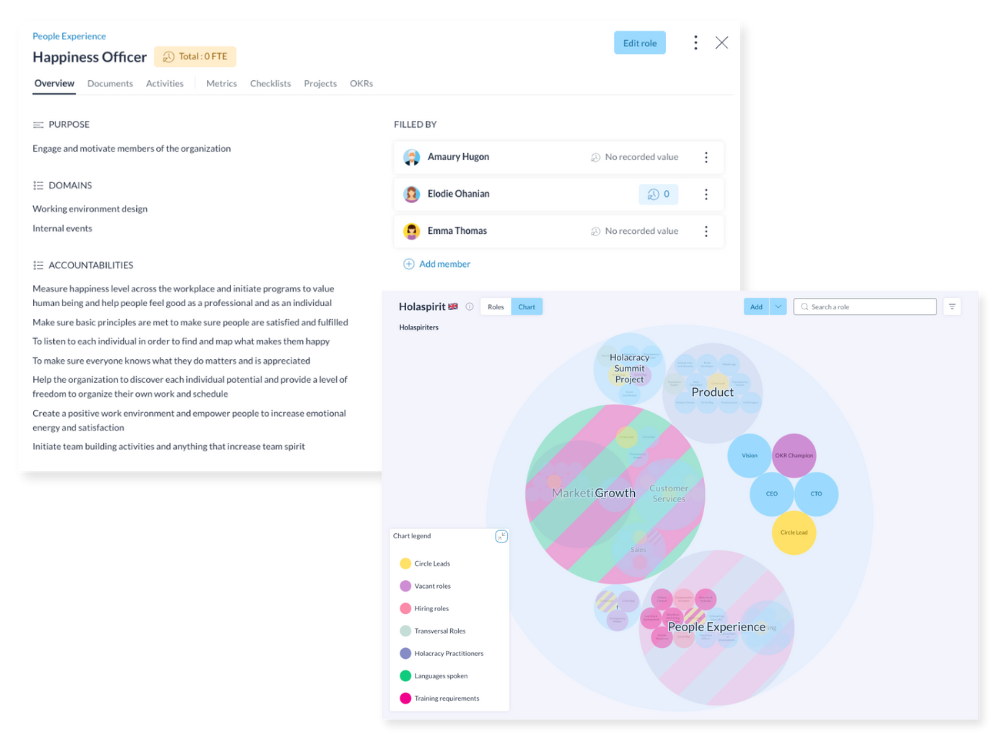
Want to know more about Talkspirit and how it can help you leverage emotional intelligence as a leadership tool? Schedule a demo with our team 👇
Use practical steps to enhance emotional intelligence
The first step to making sure you are using emotional intelligence is to find out where you are currently with your skill level:
- Self-assessment: Start by completing an emotional intelligence assessment, such as this one from Psychology Today. This can give you a baseline of a leader’s current emotional intelligence, and help you create a plan for development.
- Active listening: Practice active listening, where full concentration, responses, understanding, and remembering what has been said are essential. This can help to open up new windows when it comes to looking at the feelings of others.
- Feedback: Collect feedback on your leadership style from peers, subordinates, and superiors.
Be prepared for lifelong learning

An important part of leadership is the willingness to commit to lifelong learning, also referred to as the growth mindset. Emotional intelligence is a skill that can be learned over time. Proactively engaging with your employer and practicing emotional intelligence will enable you to expand your expertise. Lifelong learning remains one of the core skills required by companies worldwide, so attending seminars, workshops, or courses on emotional intelligence is essential. By committing to continuous learning in this field, you can bring new insights and strategies to your leadership approach.
Be self-aware
Leaders need to be aware of their weaknesses and strengths. This will lead to them being able to regulate their emotions in challenging situations. Being self-aware as a leader is important because it’s their role to guide a team. Self-awareness will not only help with individual and organizational growth but also help with decision-making.
Show resilience
Resilience is crucial for developing emotional intelligence and effective leadership. It opens you up to innovation and new possibilities in the workplace. Resilient leaders are comfortable taking some risks and view failures as opportunities for growth. This mindset can boost motivation, as 86% of resilient employees report feeling highly motivated.
Leaders must develop resilience to bounce back from setbacks, adapt to change, and steer the organization toward sustainable success, especially during business process transformation. When challenges arise, they must remain composed and reflect on it.
So if you make mistakes, ask yourself:
- What if I tried this instead?
- How can I improve?
- What led to the error?
- Can I ask for feedback?
Improve teamwork skills

Leaders need to hone their social and teamwork skills. They should build rapport-growing techniques, improve workplace communication, and master conflict resolution. These skills, along with emotional intelligence, will make them successful leaders. By listening and understanding others’ emotions, leaders can provide a stable and productive team.
Positive outcomes usually come to teams that perform well and demonstrate gratitude on a regular basis. A Harvard Business Review study found that high-performing teams receive more praise from colleagues (72%) and managers (79%). An appreciative culture creates a happier workplace, which raises team morale and productivity. When workers feel valued and encouraged, they are more likely to go above and beyond to achieve their goals.
Also read: How Can We Overcome Lack of Recognition at Work?
Build empathy skills
Empathy skills are essential for emotional intelligence. They are the backbone of understanding and connecting with others. Here are some tips for polishing your empathy skills:
- Really listen to what others say, and look for non-verbal cues to deepen understanding.
- Look at things from their perspective, consider why they might feel that way.
- Take an interest in other people’s experiences.
- Network with people from varied backgrounds to develop a wider perspective, a habit that sits at the heart of inclusive leadership.
- Question and address your own biases and assumptions.
By practicing empathy, you can create a more supportive, collaborative, and understanding work environment.
| Component | What it covers | What it looks like when it is missing | One practice to build it |
|---|---|---|---|
| ComponentSelf-awareness | What it coversRecognising your own emotions and how they shape your decisions. | What it looks like when it is missingReacting the same way to the same trigger, every time, without seeing the pattern. | One practice to build itAsk three colleagues for feedback on your leadership style. |
| ComponentSelf-management | What it coversHolding impulses in check and staying steady under pressure. | What it looks like when it is missingStress spilling onto the team, commitments dropped as soon as things get hard. | One practice to build itName the emotion to yourself before answering, then answer. |
| ComponentSocial awareness | What it coversReading the emotions, needs and worries of the people around you. | What it looks like when it is missingOnly noticing that someone had checked out on the day they resign. | One practice to build itListen to the whole answer before preparing your own. |
| ComponentRelationship management | What it coversBuilding trust, influencing, communicating clearly and handling conflict. | What it looks like when it is missingDisagreements left to settle by themselves, or shut down too fast. | One practice to build itDeal with a disagreement in the week it appears, not at the annual review. |
Conclusion
Emotional intelligence is a tool that needs to be leveraged by all leaders. It’s more than understanding your own emotions; it also involves understanding those around you. This awareness helps leaders create an environment of psychological safety, where employees feel secure to express ideas, take risks, and learn from mistakes without fear of judgment. By fostering trust and openness, emotionally intelligent leaders empower teams to collaborate more freely and innovate with confidence.
Want to know how psychological safety can transform your organization? Download our white paper on this topic 👇
Access White Paper
In our white paper “How to Develop Psychological Safety in the Workplace”, you’ll discover: methods and tools for measuring your team’s level of psychological safety, an example of a participative workshop to involve your employees in the company’s strategy, as well as a testimonial from a company that has implemented this methodology.
FAQ
It is a leader's ability to understand and manage their own emotions and those of others: dealing with stress without spilling it onto the environment, uplifting and inspiring people, communicating effectively, and growing genuine, trustworthy relationships.
Self-awareness, self-management, social awareness and relationship management. Relationship management is largely a mixture of the other three: building strong relationships, inspiring others, communicating clearly, working in a team and managing conflict.
Because a self-aware leader knows their own strengths and limitations, which lets them work through management issues and face unforeseen situations with confidence and humility.
Leaders set the tone of a company, and they use emotional intelligence to make sound decisions, connect with their staff and build a good work atmosphere. Their level of emotional intelligence should therefore count as much as their technical ability.
Start by finding out where your skill level currently stands. An emotional intelligence assessment gives a baseline for a leader, which is what a development plan is then built on.
Resilience opens leaders up to innovation and new possibilities at work. Resilient leaders take some risks and treat failures as opportunities for growth, a mindset that boosts motivation.