
[Webinar] Make Your Teams a Driver of Organizational Performance

.svg)
As Steve Jobs once said, "the best things that happen in the business world are not the result of one man’s work. It’s the work of an entire team.” And for good reason: when teams know how to work well together, they can become a key lever for organizational performance.
But how do you build teams capable of collaborating effectively? What tools and best practices can help you boost and track their performance? These are the questions that three experts debated during our roundtable on Tuesday, November 28:
- Philippe Pinault, Co-founder and CEO of Talkspirit
- Guillaume Tastet, Co-founder and CEO of OpenDecide
- Luc Bretones, Founder and CEO of NextGen
Here is a summary of their discussion.

How to Build a High-Performing Team?
To build teams capable of boosting organizational performance, several factors need to be considered:
- Diversity of profiles. For Luc Bretones, it’s important to “build a team that is not an army of clones. If you hire employees with the same personalities, the same degrees and the same experiences, it will be difficult to have high-performing teams.” This is scientifically proven too: “mixed teams perform better”, adds Guillaume Tastet.

- Sharing a vision, shared values and common goals. Build diverse teams, but make sure they are aligned around the same values and objectives.
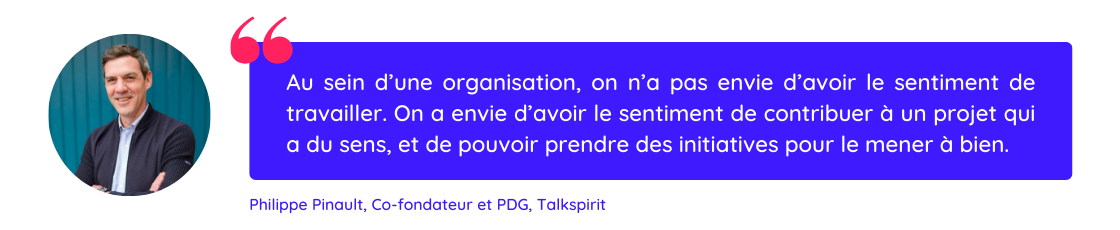
- Transparency around roles and responsibilities. “Bringing clarity to roles and the missions to be carried out connects team projects to company objectives. Each person can then understand how they contribute to achieving company goals, which helps give meaning to their work”, explains Philippe Pinault.
“Across the 2,000 teams using our platform, we have found that the highest-performing ones are those that have most clearly defined their ways of working”, continues Guillaume Tastet. “To develop organizational performance, you need to define why you are together, where you are going together, and what each person’s role is.”
Best Practices to Improve Team Performance
Of course, building a great team is not enough to improve organizational performance. You also need to support it so it can perform at its best. This means giving it the keys to communicate and collaborate effectively. But there’s more!
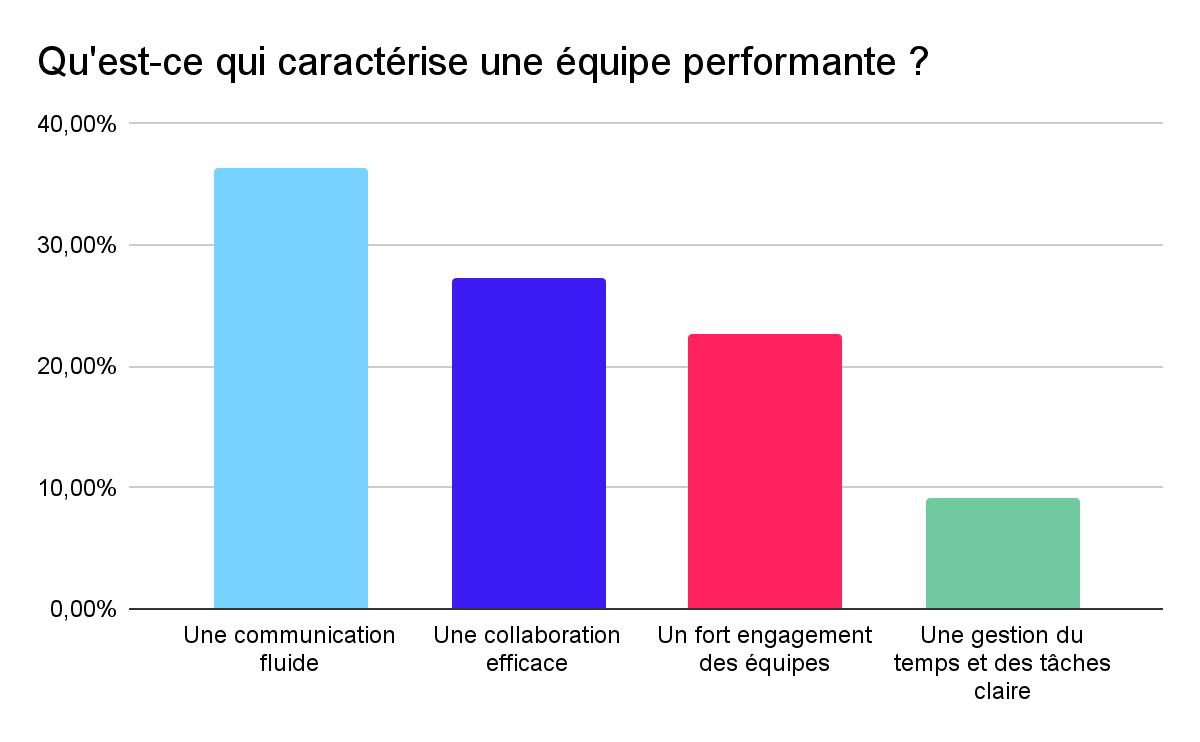
According to our speakers, there are 5 key levers for improving team productivity:
- Identify pain points and sources of frustration (for example, lack of autonomy, lack of resources, etc.)
- Implement initiatives to reduce these frustrations and improve employee well-being (on average, happy employees are 31% more productive!)
- Foster team cohesion to encourage collaboration, mutual support and feedback sharing. “The more we succeed in strengthening the collective, the fewer frustrations there will be within the team”, says Guillaume Tastet
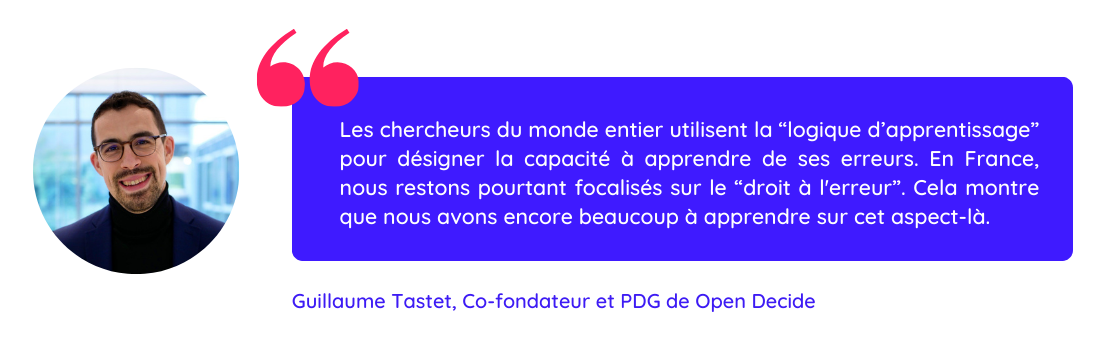
- Promote psychological safety and encourage the right to make mistakes, so employees can speak up freely and take initiative.
- Build trust and interdependence within teams, and foster humility. “What distinguishes a high-performing team from a less effective one is interdependence — the ability of team members to support each other and trust one another”, says Luc Bretones.

What Is the Role of Digital Tools?
Digital tools also play a key role in organizational performance, as they help to:
- streamline communication and collaboration;
- ensure team alignment (i.e., making sure everyone shares the same vision and is aligned on the actions to take);
- create shared rituals;
- obtain a diagnostic of how teams function;
- and support the evolution of work practices.
“However, pay attention to the vision conveyed by tool designers”, warns Guillaume Tastet. “When we use a tool, it changes the way we think. We need to be aware of this to avoid choosing tools that foster an organizational culture based on control, fear or information silos.”
Unsurprisingly, 75% of webinar participants say they use a digital tool to improve their teams’ productivity. These can include:
- all-in-one collaborative platforms like Talkspirit;
- self-management software like Holaspirit by Talkspirit;
- team management platforms like OpenDecide;
- project management platforms;
- etc.
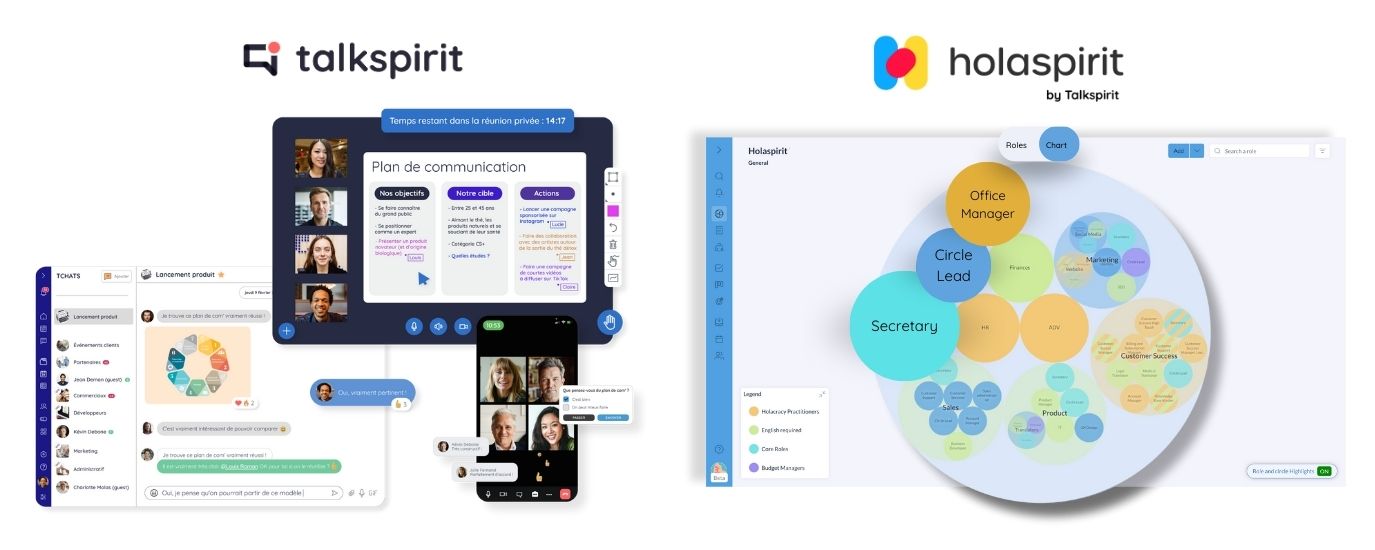
Discover Holaspirit
How to Measure Team Performance?
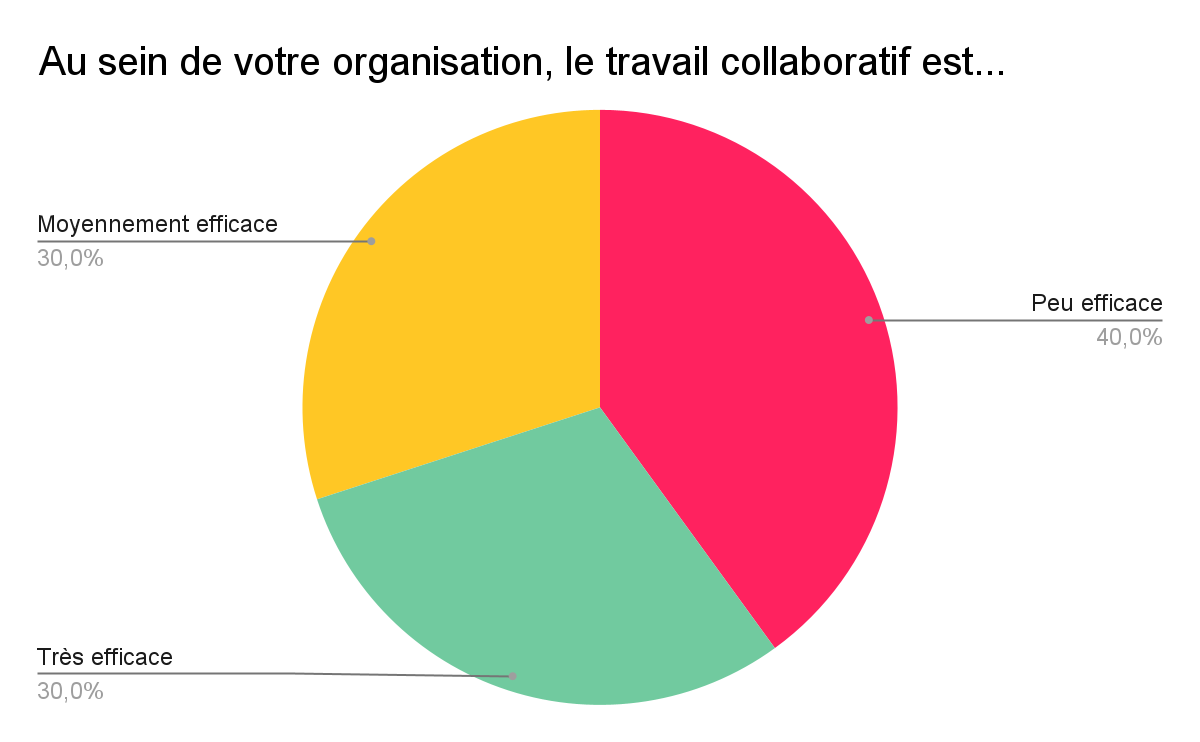
To optimize organizational performance, you also need to be able to track and measure team performance. This is a complex subject, as 40% of participants consider collaborative work to be ineffective within their organization.
What Research Tells Us
Drawing on 80 years of research in organizational behavior science, two main dimensions can be identified for analyzing team collective dynamics:
- “Factors of sustainable performance, meaning what enables teams to achieve their goals and maintain cohesion over time. These include autonomy, psychological safety, teamwork, etc.”
- “Team management and operating models.” These can include directive, participatory or collaborative models (such as Holacracy or Shared Governance). “Whatever model is chosen, it should not be imposed, but rather self-determined by the teams.”
Luc Bretones, meanwhile, highlights “a trend of teams progressively moving away from directive management models toward more participatory and collaborative approaches.” Of course, this trend can vary depending on the cultural specificities of each country. “For example, collaborative approaches are much more developed in the Netherlands, Switzerland and Germany than in the rest of Europe.”
PS: to learn more about these different models, check out our white paper “The Ultimate Guide to Organizational Models” 👇

The Role of OKRs
At Talkspirit, we use the OKR module (Objectives and Key Results) in our Holaspirit software to identify and track company and team objectives. This method involves associating ambitious key results with each objective, to be achieved within a set timeframe.
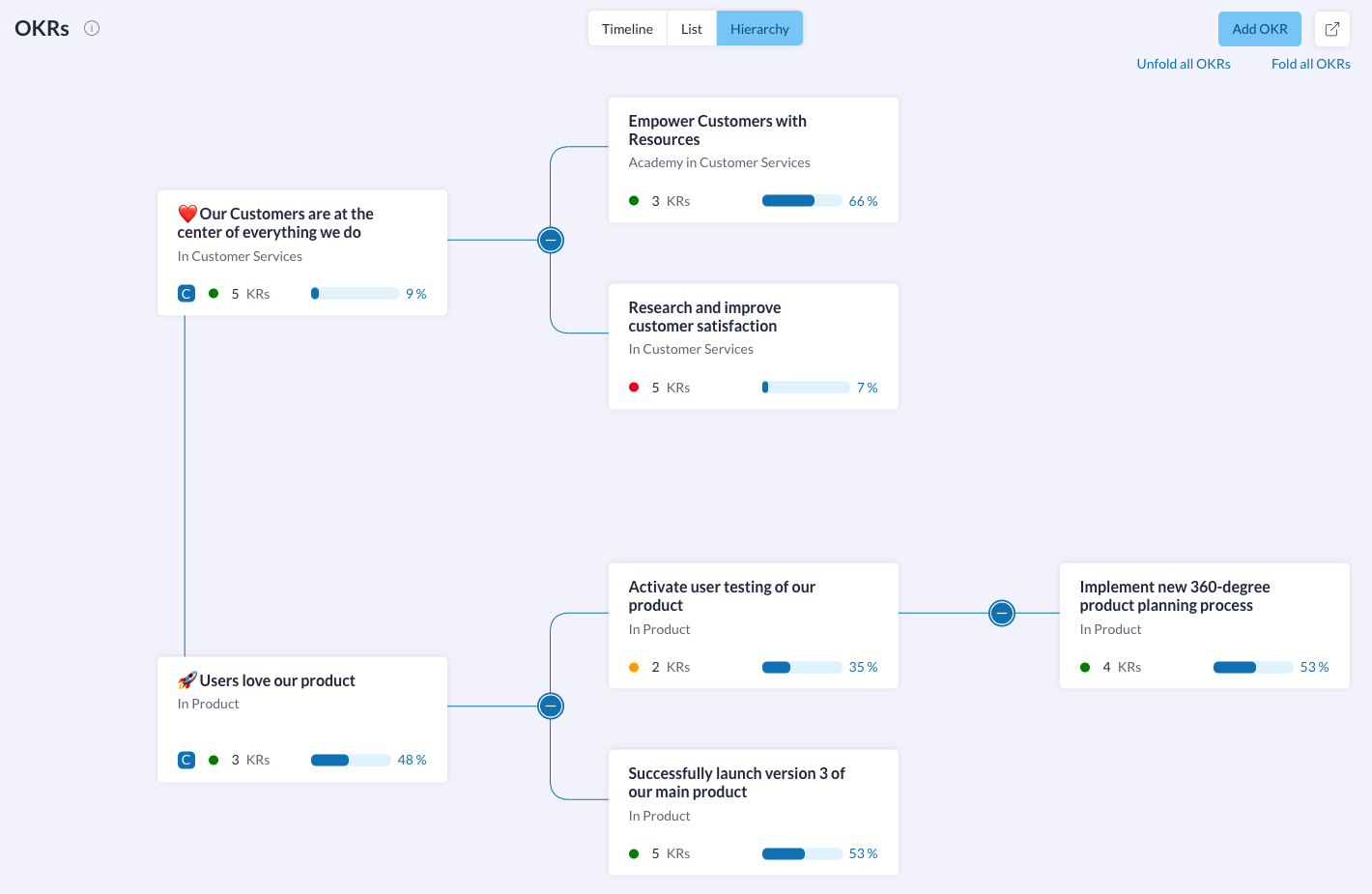
“Linking team OKRs to company OKRs helps create alignment around the organization’s purpose”, explains the CEO of NextGen. Moreover, “it builds a sense of satisfaction and pride in belonging to the company”, adds Philippe Pinault.
To measure organizational performance, ask each team to define its objectives using the OKR method. Be mindful, however, to keep the number of objectives minimal: fewer is better! And don’t forget to revisit and optimize them regularly — what is true today may no longer hold in six months.
To Conclude
To make your teams a driver of organizational performance, build diverse teams that share the same values and goals. Strengthen team cohesion, implement actions to foster a climate of trust and psychological safety. Then identify sources of frustration so your teams can sustainably achieve their objectives.
Also make sure to equip your employees well. Give them access to platforms like Talkspirit, Holaspirit or OpenDecide, which will help them gain in efficiency, transparency and agility. And don’t hesitate to seek support throughout the process, by reaching out to organizations like NextGen.
Watch the replay to (re)discover all the highlights of the roundtable:


.webp)
%252520(1)%252520(1).webp)