
How to Involve Managers in Internal Communication

.svg)
Managers play a key role in your internal communication strategy. Yet in practice, they do not always have the means or the information they need to take on this responsibility. The result: only 39 % of employees say they receive information through their manager, and 20 % report not having the information they need to do their job effectively.¹
So how can you get managers more involved in internal communication? What best practices and tools should you put in place to encourage them to lead by example? And how can you make sure these efforts actually pay off?
In this article, we share 6 tips for turning your managers into true communicators.
1. Clarify roles and objectives
For a manager to communicate effectively, they first need to understand what is expected of them. That is why it is important to clarify the communicator role they are expected to play within their team, and to spell out the objectives associated with that role.
Here are some example responsibilities to include in a manager’s job description (adjust as needed based on your organization’s size and needs):
- Relay news and updates from the company to their team
- Highlight their team’s work to other departments
- Maintain the connection within the team and ensure everyone communicates effectively
- Define objectives collaboratively with team members and support them in achieving those goals
- Give feedback to team members, recognize their achievements, and encourage them to give their best
Read also: The 7 Key Challenges of Internal Communication
The clearer managers’ roles are defined, the more likely they are to actively participate in your internal communications.
2. Involve managers in shaping your strategy
Getting managers involved in internal communication also means including them in the development of your strategy. From the moment you define your objectives, think about the key results you want your managers to achieve, and check with them whether these targets seem realistic.
For example, if you have just introduced a new internal communication tool, ask them to send at least 90 % of their internal messages through it. Or, if your managers have not yet developed the habit of showcasing their team’s projects, invite them to publish at least one post per week to share updates and acknowledge their team’s achievements.
When building your editorial calendar, you will also need to think about the types of communications managers will be expected to relay (the introduction of a new process, a new team member joining, the launch of a new product or service, etc.).
 end HubSpot Call-to-Action Code
 For each communication involving managers, clearly specify:
- who should communicate,
- to which audience (the whole team, or only certain employees),
- on which date(s),
- on which communication channels (intranet, enterprise social network, email, etc.).
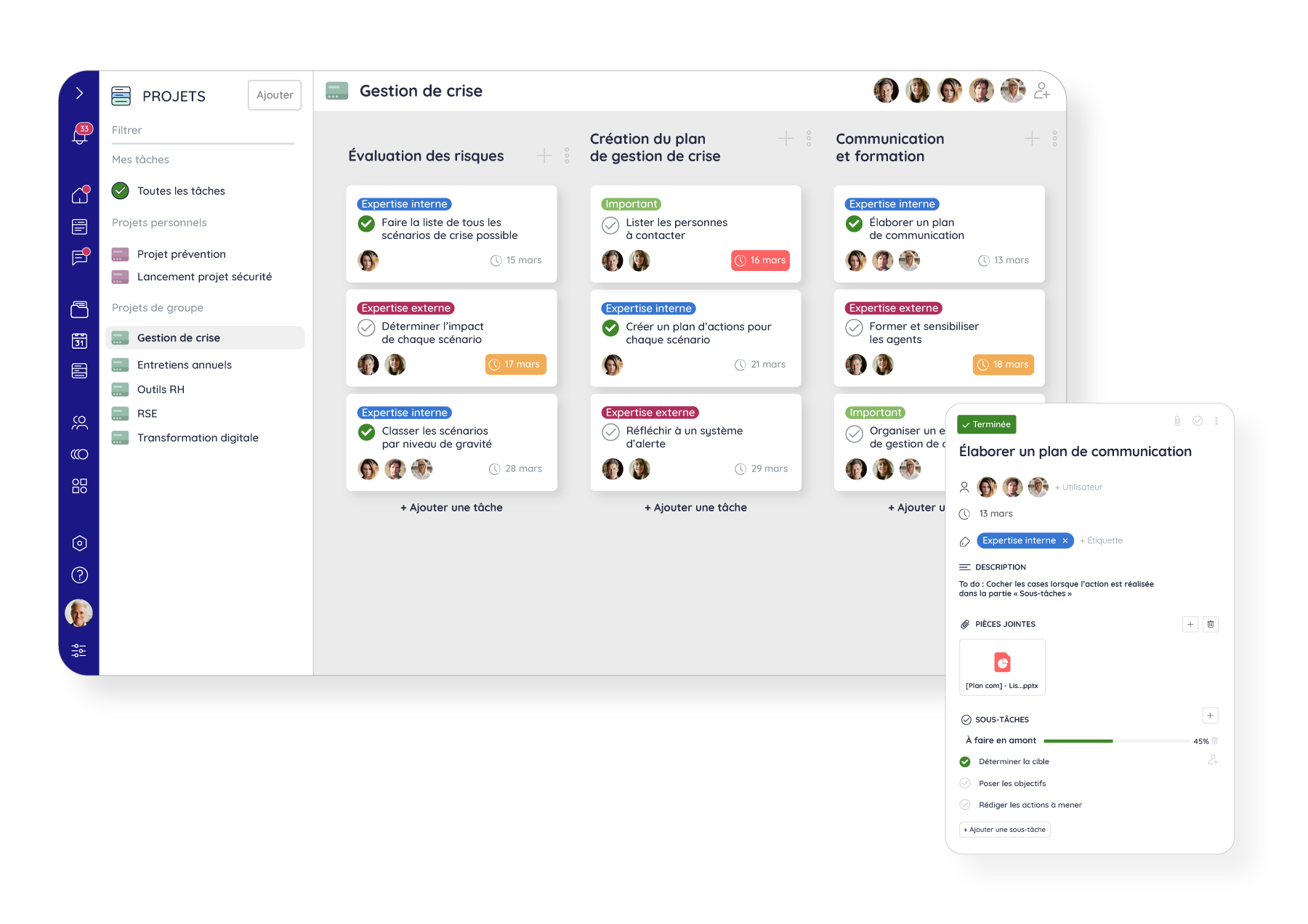
To manage these various communications, we recommend using a project management tool. Talkspirit, for instance, offers a Projects module that lets you assign tasks, set deadlines, and track who is doing what in real time.
3. Lead by example
One of the most important steps for winning managers over? Leading by example! According to a study by Afci, 43 % of managers feel their senior leadership sets a poor example when it comes to internal communication. Yet it is very difficult to ask managers to be more involved in internal communication if senior leadership itself communicates infrequently with employees.
Before launching your action plan, make sure your internal communication team and senior leadership are fully aligned on the information to share with employees, and that they model the right behaviors themselves.
The more regularly and transparently your leadership communicates, the more inclined your managers will be to actively participate.
4. Train and support managers
If you want to get managers more involved in internal communication, you also need to take the time to train them. Because — for many people — communicating well does not come naturally. It is a skill that can be learned!
We therefore recommend:
- Running training programs (in-house or with an external provider) to help managers develop their communication skills
- Organizing hands-on workshops to show them how to communicate with their team and the wider organization (both in writing, using the tools available, and verbally, during meetings and both formal and informal exchanges)
- Creating communities on your intranet or enterprise social network to encourage managers to share their best practices
Read also: How to Easily Build Your Intranet with Talkspirit
Through these groups and training workshops, you can show managers how to make the most of your internal communication tools. Instead of sending an email or organizing a meeting, they can post an update on your intranet, share a poll on your enterprise social network, or create a project to organize each person’s tasks in your project management tool.
5. Put the right internal communication tools in place
Of course, applying the best practices outlined above requires having the right internal communication tools in place. These include:
- the intranet, essential for sharing evergreen information,
- the enterprise social network, for energizing exchanges and showcasing company news,
- the video conferencing tool, for running internal remote meetings,
- the chat tool, for synchronous or asynchronous messaging,
- the all-in-one collaborative platform, for streamlining your teams’ work, wherever they are.
Read also: How to Choose Your Internal Communication Tool?
Whatever tool you are looking for, Talkspirit adapts to your needs. Thanks to its all-in-one nature, our platform can serve as an intranet, an enterprise social network, a project management tool, or a collaborative platform — all in one place. Discover it today!
Have you not yet identified which tool or tools you need? Download our methodology guide, "8 Key Steps to Choosing the Right Internal Communication Tool", and browse our comparison of the best internal communication software.
6. Carry out regular check-ins
Finally, remember to regularly monitor the progress of the various actions put in place, by organizing 1:1 or group check-ins with your managers. This will allow you to review the following points with them:
- Are they managing to communicate more regularly with their teams and the wider organization?
- Are they confident using the various internal communication tools provided by the company?
- Are their teams satisfied with the way they communicate? Do they feel they have the information they need to work effectively?
- What areas for improvement have they identified? And what has their team flagged to them?
The key is for your managers to be able to continuously evolve their practices and remain open to feedback from both you and their teams. Be patient and supportive, and avoid setting the bar too high from the start — you do not want to discourage them.
*
* *
With these best practices, you now have everything you need to get your managers engaged in internal communication and help them build their skills in this area.
Looking for more concrete examples to energize your internal communication and boost manager participation? Discover in this practical guide how 10 of our clients use Talkspirit to improve their internal communication: