HR: Burnout Symptoms to Watch for in Your Employees

.svg)
Offering a quality employee experience is not just about having cool offices, handing out gift vouchers and running after-work drinks every Thursday. If you want to keep your talent, above all you need to take care of their physical and mental health. Because a fulfilled employee is also an engaged, high-performing one.
For many people, though, the reality is very different. According to the 13th Empreinte Humaine barometer published in September 2024, 30 % of French employees are exposed to a risk of burnout. That is, a state of intense exhaustion that affects their physical, mental, emotional and cognitive capacities. The result: they lose their motivation and their self-confidence, struggle to be productive, and are more likely to resign.
So how do you prevent burnout? What are the symptoms of burnout, the triggers and the profiles to keep a close eye on? How do you raise awareness among your teams? HR managers: read on carefully, this could be very useful to you!
What Are the Symptoms of Burnout?
Recognising the symptoms of burnout is essential if you want to step in early and stop the situation from getting worse. Here are the main ones to watch for:
Physical Symptoms
Burnout often affects the body before showing up more visibly on a psychological level. The physical symptoms of burnout include:
- Sleep disorders: trouble falling asleep, insomnia, frequent waking, and so on.
- Intense fatigue: a feeling of exhaustion that persists, even after a period of rest.
- Pain : back pain, headaches, stomach aches, cramps or joint pain.
🛑 Common consequence: increased absenteeism, because employees experiencing burnout often have to take time off for health reasons.
Emotional and Behavioural Symptoms
Burnout also affects emotional state and behaviour, which can show up as the following symptoms:
- Isolation : 50 % of employees experiencing burnout tend to withdraw from others¹.
- Absence of emotion: detachment, loss of interest in what is going on around them.
- Mood disorders: irritability, anxiety, aggression, depression… 40 % also become more impatient¹.
- Loss of self-confidence: constantly questioning their own skills.
- Lack of motivation: the person does only the bare minimum, in other words: they are quietly quitting (or quiet quitting).
🛑 Common consequence: a drop in engagement, which directly affects team performance.
Read also: [Webinar] Quiet Quitting: How Do You Engage Frontline Employees?
Cognitive Symptoms
Finally, burnout impairs cognitive abilities, making everyday tasks harder and harder to get done.
- Concentration problems: inability to stay focused on a task, frequent distractions.
- Memory difficulties: trouble retaining information.
- Organisational difficulties: trouble planning, managing a schedule or learning new things.
- Loss of creativity: difficulty coming up with new ideas or finding solutions.
🛑 Common consequence: a drop in productivity, because the quality of the work declines.
Which Employees Are Most at Risk?
According to the 2024 Empreinte Humaine barometer², 42 % of French employees are in psychological distress, 15 % of them severely so. Some profiles are more at risk of developing symptoms of burnout, in particular:
- Employees over 60
- Young professionals
- Women
- Managers
- Remote workers
- Employees of very small and medium-sized businesses
So remember to keep a close eye on them. Also pay attention to symptoms appearing in understaffed teams, among parents (single parents in particular), among perfectionists, and among those who struggle to delegate and to say no.
And above all, take care of yourself! In 2022, 82 % of HR directors described themselves as “close to burnout”. So learn to recognise the symptoms of burnout in your employees and in yourself alike!
How to Prevent Burnout?
Before rolling out concrete measures, start by making your teams aware of the symptoms and triggers of burnout. The faster your people can spot them, the better placed you will be to step in on time!
Understanding Burnout Triggers
Burnout can have many causes, the most frequent being:
- Work overload: 55 % of employees do not have enough time to do their job properly, and 46 % say they cannot turn down extra tasks, even when they are already swamped².
- A lack of recognition: 50 % feel they do not get enough feedback on their work².
- Excessive oversight of their work, which often leads to a loss of autonomy.
- Vague, unrealistic goals that are meaningless and/or contradictory.
- Conflictual relationships with management and/or colleagues.
- A lack of support and mutual help, which often stems from an individualistic culture.
- Poor tooling : 49 % of employees have tools that are unsuitable or that do not work properly².
- Job insecurity, often caused by the fear of losing their job or of seeing their working conditions deteriorate.
- A lack of opportunities to progress.
Implementing Concrete Initiatives
Fighting burnout effectively takes more than raising awareness among teams. Leadership also has to get actively involved in putting concrete initiatives in place! And it has to be said that there is clear room for improvement here. Only 28 % of employees believe their leadership is genuinely involved in preventing psychosocial risks³. Worse still, 66 % think leadership does not grasp the scale of the problem.
Here are some initiatives to implement to improve the situation.
1. Assess and adjust workload
Work overload is one of the key drivers of burnout. So the first thing to do to avoid it is to analyse your employees’ workload.
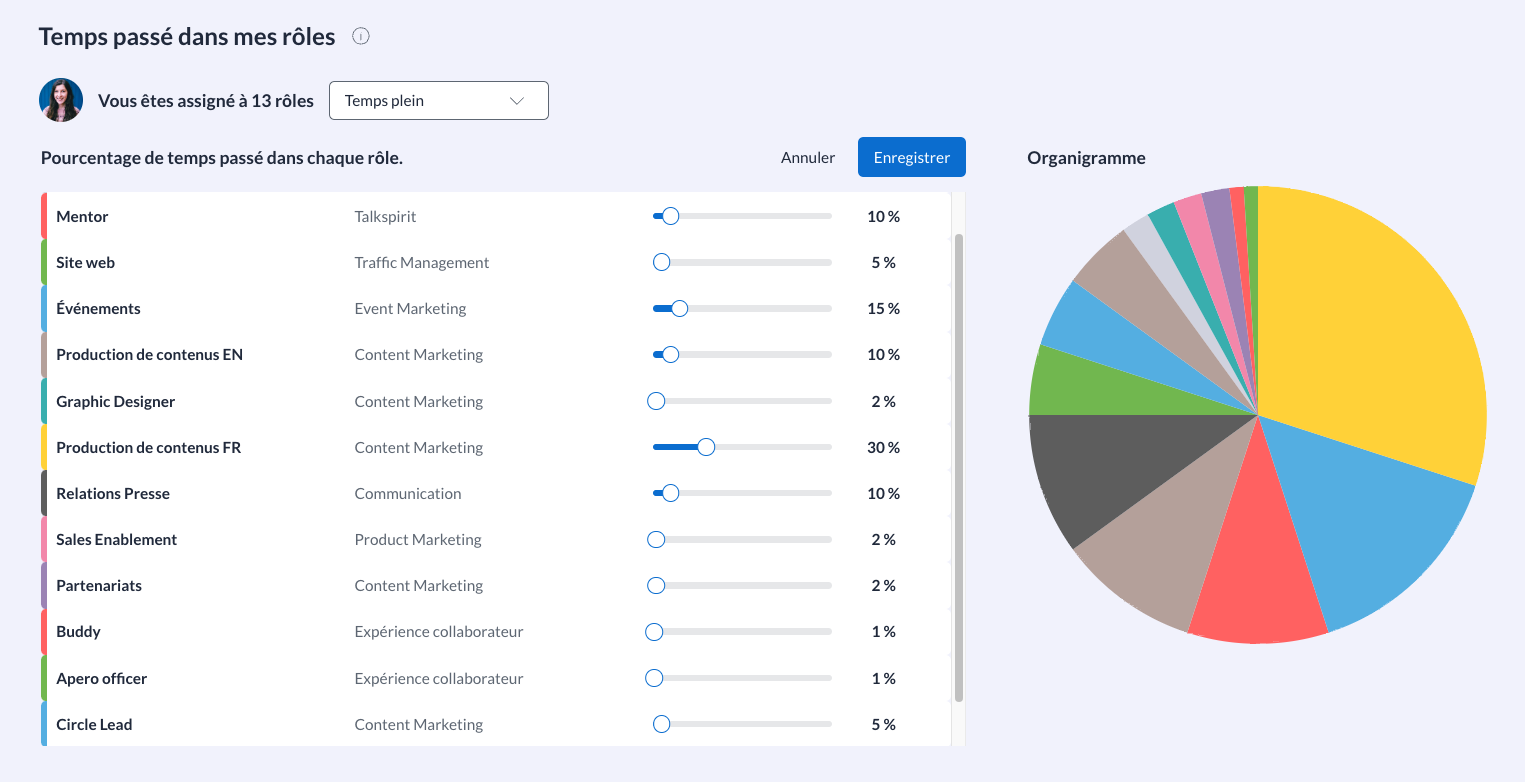
- Use tools like Holaspirit to track the time each employee spends on their various roles. This will help you identify whether their workload is appropriate, and make adjustments as needed.
- Reduce the number of active projects or deprioritise those that are less urgent.
- Review how tasks are shared out within your team, particularly if some members are more overloaded than others.
- Normalise saying “no” to certain requests, or negotiating deadlines on non-priority projects.
2. Clarify roles, goals and priorities
Vague or contradictory goals can quickly generate anxiety. Here is our advice for preventing that:
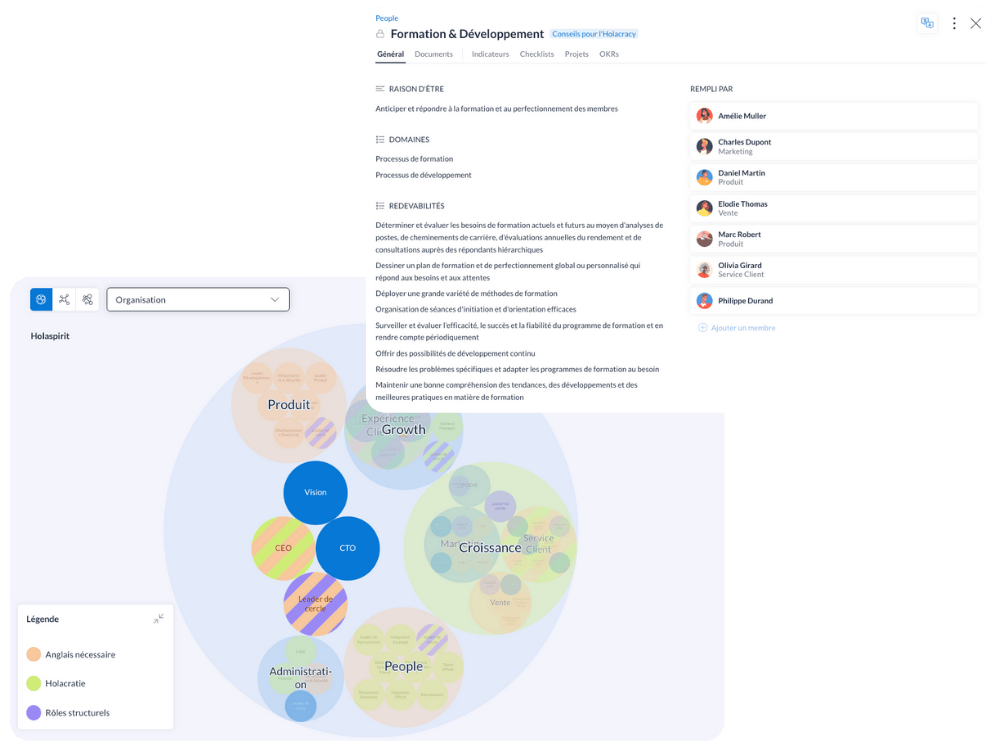
- Clearly define everyone’s roles and responsibilities, and make them accessible to all. That is exactly what you can do on the Holaspirit org chart!
- Use the OKR method (Objectives and Key Results) to create ambitious, easily measurable goals that every team is aligned on. Among other things, it lets you connect team goals to company goals, and so give meaning to everyone’s work. (PS: an OKR module is available in Holaspirit too 😉)
- Distinguish truly urgent projects from those that are not.
3. Support a healthy work-life balance
Supporting a healthy balance between working life and personal life is essential if you want to keep the symptoms of burnout from appearing. Here are a few effective initiatives:
- Implement a right-to-disconnect policy to prevent employees from being contacted outside working hours.
- Offer flexible working hours and/or remote working days.
- Experiment with a 4-day week or offer extra leave days to allow employees to rest more.
4. Promote supportive management
Do not underestimate how much management matters in preventing burnout. Taking a supportive approach can make all the difference. Here are a few ways to get there:
- Train managers to recognise signs of exhaustion and to listen to the difficulties their teams express.
- Encourage regular feedback and informal conversations, so you understand what each person needs.
- Build a culture of psychological safety where employees can take initiative and make mistakes without fear of negative consequences.
- Communicate about the prevention work you are doing, for example with a post on Talkspirit, to show employees that their wellbeing is your priority.
5. Improve physical and mental health
Initiatives that improve employees’ physical and mental health are an excellent way to prevent burnout. If you’re short on ideas, feel free to draw from the following:
- Organise meditation workshops or sports classes to help employees manage stress more effectively.
- Offer team-building activities to strengthen bonds within the team and prevent isolation, especially for remote workers.
- Provide psychological support services (for example, free consultations with a psychologist).
Read also: Tackling the Risks of Hybrid Work
When they are backed by involved leadership, these actions help create a healthy working environment and prevent burnout.
In Conclusion
To stop your employees from working themselves into the ground, it is essential to spot the symptoms of burnout early, such as persistent fatigue, loss of motivation or withdrawal. And above all: you have to act fast by putting targeted initiatives in place, so the situation does not deteriorate.
But be careful, HR managers are not immune to burnout either. Between managing teams and the pressure from leadership, they need to keep an eye on their own wellbeing and react at the first signs.
One of the major symptoms of burnout to watch for, for yourself as much as for your employees, is disengagement. Several good practices can help you avoid it. Download our white paper to find out how to keep your teams engaged and prevent quiet quitting 👇
Access the White Paper
In our white paper “How to Retain Employees and Prevent Quiet Quitting ”, you will discover: where the quiet quitting phenomenon comes from, the main causes of disengagement at work, and the levers to pull to improve engagement and talent retention.
¹ 9th Empreinte Humaine barometer, March 2022
² 13th Empreinte Humaine barometer, September 2024
³ 10th Empreinte Humaine barometer, June 2022