[Webinar] Improving Collaboration in an International Group

.svg)
Collaborating across a multi-site organisation is no small feat! It involves tackling several major challenges: working with a wide variety of profiles, navigating different cultures, adapting your internal communications, and more. Yet it is possible to overcome these challenges and turn international collaboration into a source of innovation and success. How? By adopting a collaboration tool!
How do you choose the right tool? What steps should you follow to successfully roll it out across all company sites? And how can you improve team collaboration with such a solution?
You will find the answers to these questions in this article which summarises the advice shared by our two speakers at the webinar on 19 October :
- Adèle Hošek, Head of Customer Experience at Talkspirit
- Mélanie Cohen-Crété, Group VP Transformation at our client Smart4 Engineering. An engineering specialist group, this international group brings together teams from 10 different entities across 8 countries worldwide.
PS: click the button below to access the replay 👇

The Challenges of International Collaboration
Working with teams spread across multiple sites always brings its share of challenges. To explore these, we asked webinar participants the following question: What are the main challenges you face when collaborating with stakeholders dispersed across multiple sites?
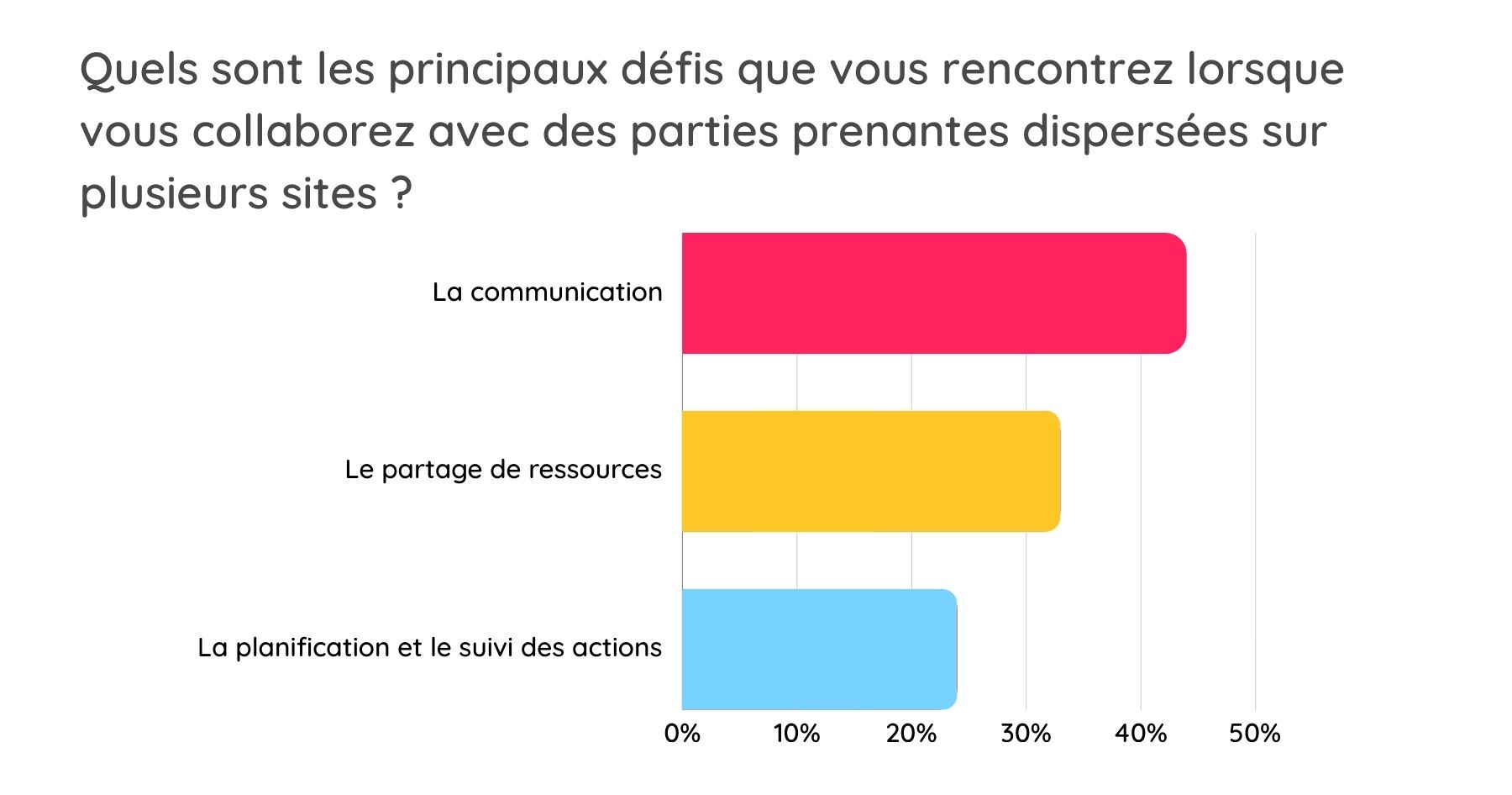
Unsurprisingly, communication-related challenges came top with 44% of the votes.
But other factors come into play! Adèle Hošek highlights in particular:
- Language and cultural differences, which represent one of the most significant barriers to communication.
- Distance and time zones, which can complicate real-time coordination.
- Work styles and management, which vary from one country to another.
- The motivation and engagement of remote employees, who can easily feel cut off from the rest of the group.
- Data security can slow down or even hinder the goal of improving international collaboration.
- And effective information distribution across the different sites and/or entities of the international group.

Best Practices: 5 Steps to Improve International Collaboration
Now let's turn to best practices, the speciality of our Head of Customer Experience, Adèle Hošek. Like the webinar participants, follow the steps and examples below. 🫵
1. Understand the international group
When planning to improve collaboration within an international group, the first step is to understand the challenges and objectives of the group. To do this, you need to analyse several key elements:
- The organisation's roles
- The relationship dynamics
- The risks and opportunities
- Potential barriers to change
To put these tips into practice, Adèle Hošek uses the example of the Holaspirit solution. Holaspirit is a SaaS platform that maps existing roles within an organisation, bringing greater transparency.
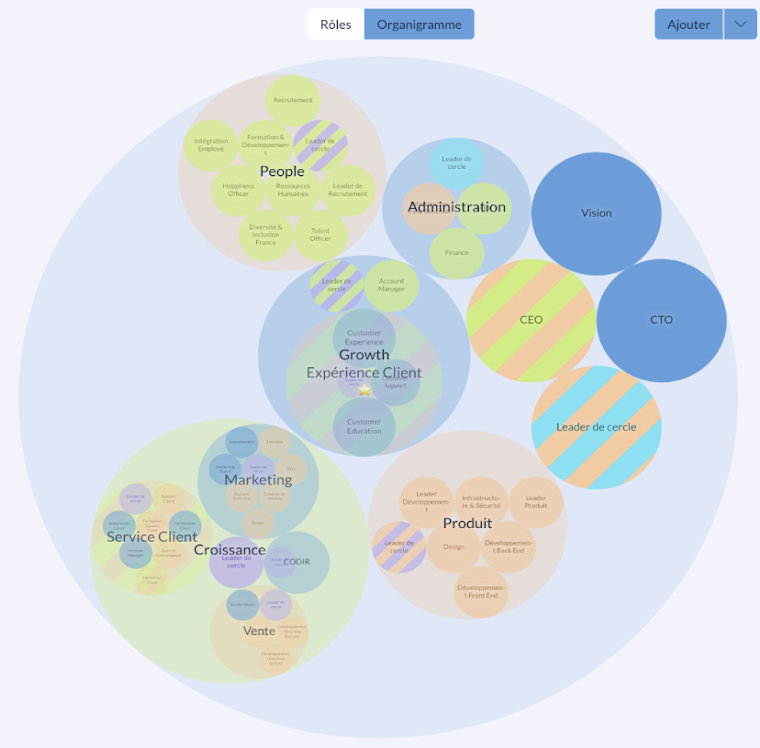
With this tool you can:
- Build an org chart to clarify everyone’s roles and responsibilities
- Use profile cards to identify at a glance each team member's expertise and/or location
- Document your policies and work processes
2. Build the project
Adèle Hošek recommends setting your project against a calendar with clear deadlines, then adding clear, measurable objectives. For instance, you can follow the OKR methodology (Objectives and Key Results), which gives you a vision of where you want to go and lets you assess whether the project is on the right track. Bonus: it also helps you anticipate obstacles ahead of time!

The Holaspirit solution features an OKR feature that lets you set objectives and key results, ensuring alignment across the organisation. Want to try it? Request a demo!
Request a Holaspirit demo
For example, our client Smart4 Engineering — an international multi-site company — aimed to implement common collaborative practices across its entities. Their deployment plan was as follows:
- In the first 3 months: the goal was for all team members to have access to the new collaborative spaces.
- After 6 months: these spaces were to be fully operational, with new projects up and running.
- At 1 year: the solution was expected to improve cross-functional collaboration and drive innovation.
3. Experiment
Experimentation is a testing phase that lets you see what works for your organisation and adapt your project to its needs.
Bear in mind that experimentation is not limited to software improvements! It also allows you to reassess your objectives and deadlines. For instance, if you identify barriers to change or specific needs, you can revise your objectives to account for them.
Adèle Hošek stresses the importance of “being ready to receive feedback”, as this feedback will enable you to make continuous improvements and better meet employee needs to improve collaboration.
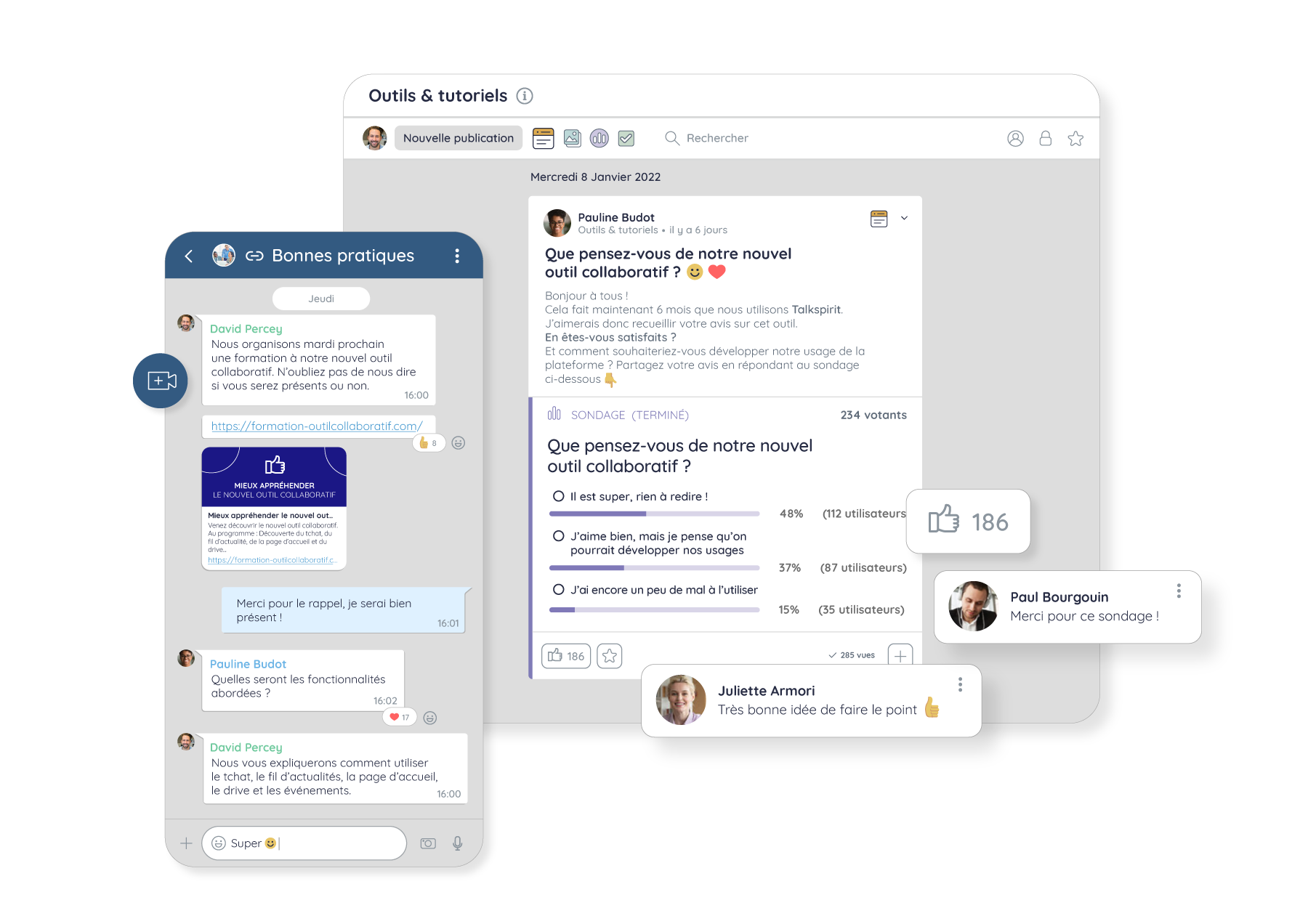
On the Talkspirit platform, experimentation can be put into practice through surveys or chat. Ask your teams, encourage them to share their opinions, concerns and suggestions. This flexibility will enable you to respond more nimbly to changing needs!
Request a demo
4. Deploy the project
Now is the time to put into practice everything you planned in the previous steps! A project management tool can be your best ally. You can include:
- The actions to launch;
- The deadlines;
- The people assigned or responsible.
To support this rollout, you can use the all-in-one Talkspirit platform! On one hand, the Projects module lets you track the progress of every action. On the other hand, you can use the news feed to bring together all information and documents related to the project.
Read also: A necessity: supporting change – Talkspirit
To discover the Talkspirit Digital Workplace, request a free demo!
5. Track and measure satisfaction
Once you have rolled out new collaborative practices and tools, make sure they are well received by your teams! Here is what our Head of Customer Experience recommends to ensure everything goes to plan:
- Regularly track your platform KPIs (e.g. number of chats sent, new files added to the drive, events organised, projects and tasks created, etc.)
- Ask users for feedback
- Highlight what is working as an example for others
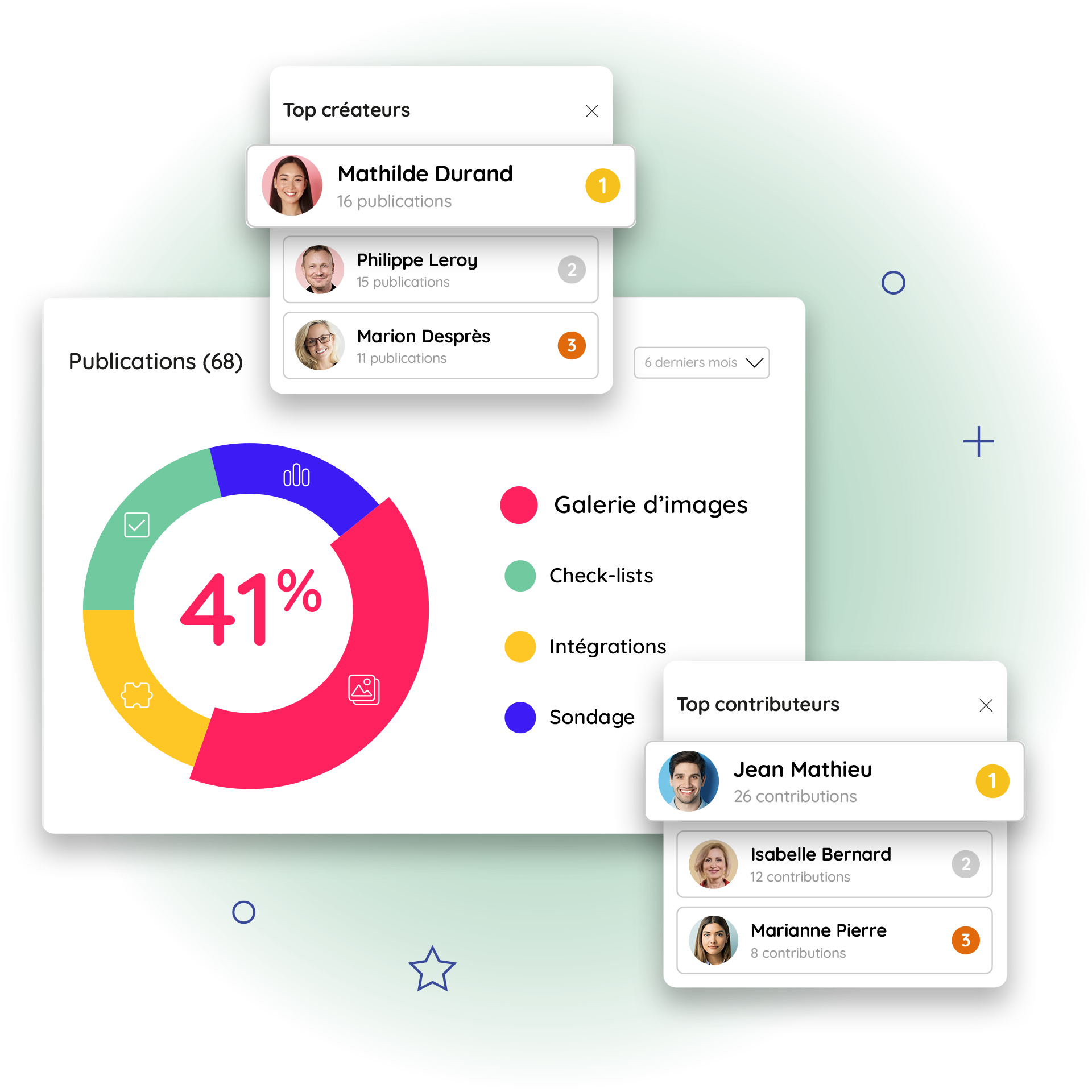
Wondering how to apply these recommendations on Talkspirit? Simply check the usage statistics of your groups! This lets you measure engagement and adoption on your platform.
You can also use the news feed to showcase successes and engaged employees — both as recognition and as inspiration for other teams.
Smart4 Engineering: Streamlining Collaboration Across 8 Countries
Let's see how this works in practice with one of our clients. Mélanie Cohen-Crété, Group VP Transformation at Smart4 Engineering, adopted Talkspirit nearly a year ago. Her goal? Improve collaboration across the group’s 10 brands, spread across 40 sites in 8 different countries 🌏.
Let’s take a closer look at how Smart4 Engineering employees use Talkspirit on a daily basis. 👀
Smart4 Engineering’s Challenges
Smart4 Engineering is a fast-growing network of engineering specialists with 3,200 employees today! But when your network spans 8 countries, one question arises: “how do we get these entities to collaborate?”
To address this challenge, Smart4 Engineering set out to implement a tool that would allow them to…
- Build communities of experts
- Facilitate the sharing of information and knowledge among those experts
- Encourage collective intelligence
- Build a strong company culture, striking the right balance between local identity and group identity
The Solution: Talkspirit
In this improvement journey, Talkspirit won over Smart4 Engineering! ❤️ For Mélanie Cohen-Crété, the key strengths were:
- The breadth of features, “which lets you do everything, and above all what we needed!”
- Data security, “a critical issue for us”.
- And ease of use.
Thanks to Talkspirit, Smart4 Engineering has been able to implement practical solutions to improve collaboration at an international scale:
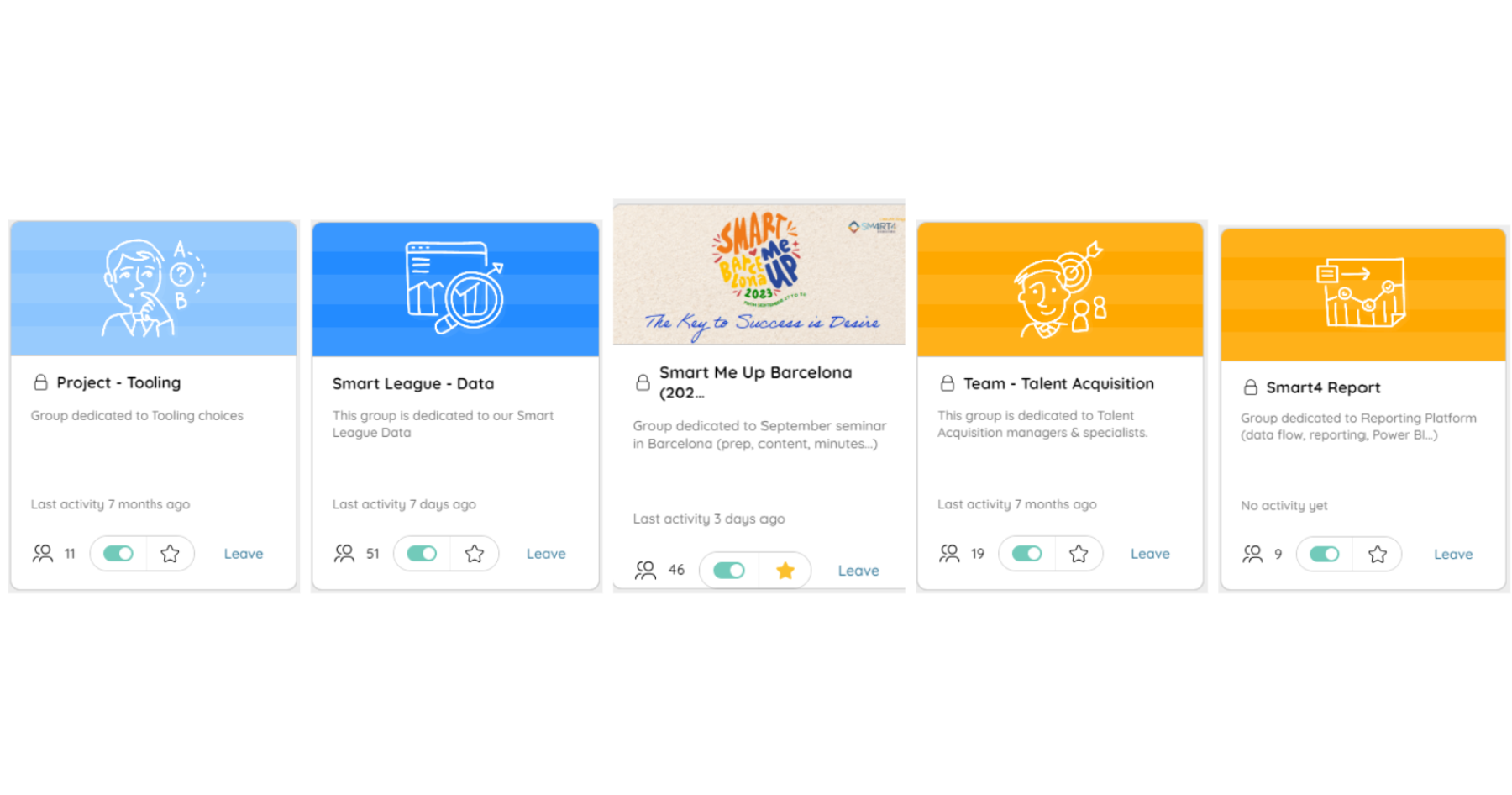
- To bring experts together, they created working groups called “smart leagues”. These groups are organised around different themes: tooling, transformation, client projects, etc. Employees working on a project are invited to join the dedicated group to collaborate more easily.
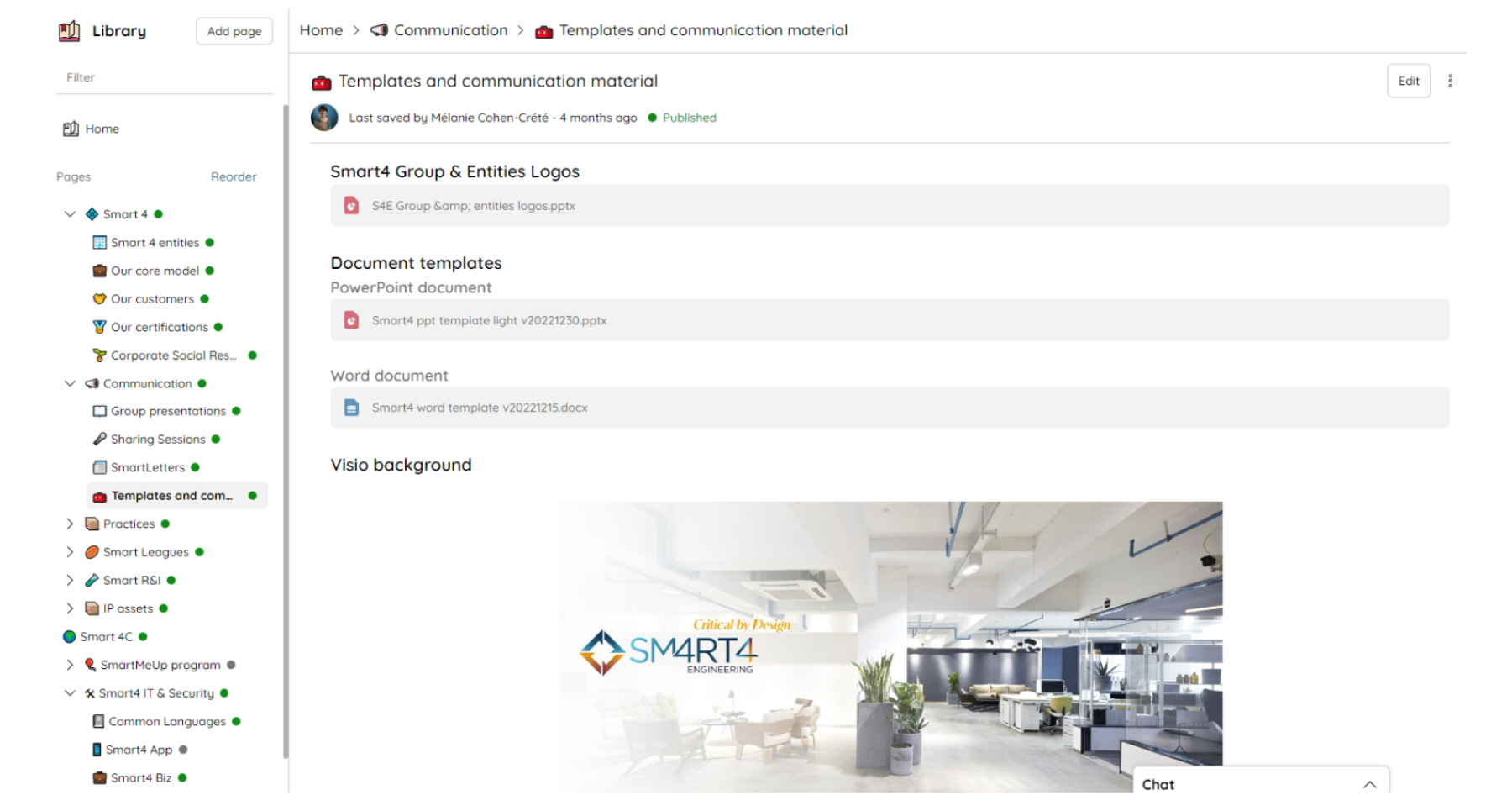
- To make static information easier to access, they centralised their processes in the Talkspirit library. For example, “we created a page describing how to connect to our new CRM. Each time we onboard someone, I tell them they can find the documentation in the library!”, explains Mélanie Cohen-Crété.
“Whenever someone needs information, I no longer send a document — I send a link to Talkspirit.”
Mélanie Cohen-Crété, Smart4 Engineering
- Finally, sharing news through posts and the welcome portal has strengthened communication across the group.
*
* *
To conclude
What are the key takeaways? By following the 5 steps outlined above and choosing the right collaborative tool, it is possible to turn the challenges of international collaboration into growth opportunities! Start by understanding the challenges and needs. Then clarify and build the project, and experiment through a series of tests. Once everything aligns with your initial objectives, deploy your platform and your project! For it to evolve optimally, remember to support change and continuously track, measure and refine your approach.