
The Ultimate Checklist to Engage Network Members

.svg)
- Six steps structure network facilitation: frame the project, roll out a platform, build a communication strategy, engage members, build connections, measure satisfaction.
- Before launching, look at what already exists. A network rarely starts from nothing: it makes existing ties visible, and those ties are where facilitation finds its first relays.
- If you have to invest somewhere, invest in community managers. They have the time to run the network that members, busy elsewhere, do not.
- What wears facilitation down after a few months is not a shortage of ideas, it is the absence of a decision maker. Roles, an engagement charter and a review rhythm are the thread running through all six steps.
- A usage charter and an engagement charter are not the same document: one explains the tool, the other says what the network expects from its members and what they can expect back.
- Four indicators are enough to track satisfaction: login rate, engagement, event attendance, and the feedback members give privately or through polls.
Facilitation is what makes people actually use a network, whatever kind you run: a retail network, a network of member companies, a nonprofit federation, a partner ecosystem. But facilitation takes time, organisation and real resources to carry the project and keep conversations moving.
So which steps should you follow when launching a community? And what belongs on your checklist if you want to engage network members effectively and lift their participation? That is what we walk through here.

1. Frame the facilitation project
Start by framing your network facilitation project, so you can clarify what is at stake and what you are aiming for, identify the resources available, and only then decide which tools you need.
Here is a checklist of questions to settle before you start:
- What is the purpose of your network? Why was it created in the first place?
- Who is it for? In other words, who is the audience?
- What are the needs and constraints of its members?
- What results do you want the network to produce, and by when?
- How much time and how many resources can you devote to facilitation?
- Who runs the project end to end? One person, or a dedicated team?
- Which tools and features do you need to run the network? Groups, a home portal, a directory, a library, a shared drive, and so on.
Answering these questions helps you understand what members actually need, and put in place a tool and a facilitation strategy that match those expectations.
One reflex is often skipped: look at what already exists before you launch anything. Who talks to whom today, on which channels, about which topics? Which informal groups have already formed? A network is almost never built from nothing. It makes existing ties visible and gives them tools, and those ties are where facilitation finds its first relays.
2. Roll out a community platform
Rolling out a community platform is essential to engage the members of your network. To get that rollout right, several steps matter:
- Choose a platform that fits your needs and your members' needs. Our top 10 solutions for running your network is a good starting point.
- Find a senior sponsor who will make the platform visible as a priority, along with ambassadors who can spread the word among members.
- Configure the platform, deciding in particular:
- which features you want to switch on,
- which types of groups should be created,
- what will be shared in those groups,
- and who administers the platform and keeps the groups supplied with content.
- Write a usage charter explaining to members and administrators how to make the most of the platform.
Read also: How to implement an enterprise social network in your company

3. Build a communication strategy for the platform
A successful rollout also needs a communication strategy. That plan should cover:
- the communications you plan before, during and after the launch,
- the dates, formats and audiences of those communications,
- the kinds of activities you want to offer throughout the rollout,
- the people accountable for communication and facilitation (ideally community managers dedicated to the project, but ambassadors and volunteer members can take part),
- the editorial strategy that will keep the network alive, on the platform and on other channels (events, social media, and so on).
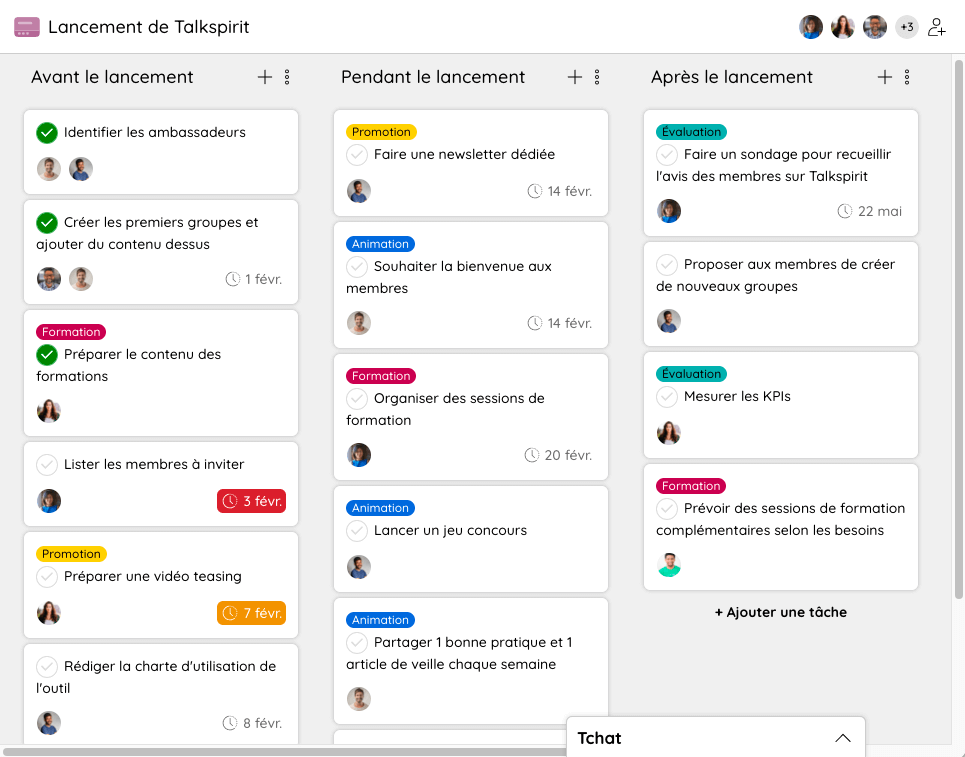
A communication plan built in the Talkspirit Projects module

4. Engage members
Your platform is ready. Your communication plan is written. Your ambassadors are briefed. All that is left is to invite your members onto the new platform.
Read also: 5 post ideas for your internal social network
A platform does not run itself. From day one, your facilitators play a decisive role. It is up to them to:
- welcome new members (with a message on the chat, for example),
- share content that is genuinely useful to members,
- highlight and support project leaders (with a post on the news feed, or a block on the home portal),
- congratulate members on their wins and their initiatives,
- keep the network playful, with quizzes, contests, challenges, even votes (to name the most engaged members of the month, for instance),
- involve members by inviting them to help run the network, and by asking for their opinion through polls.
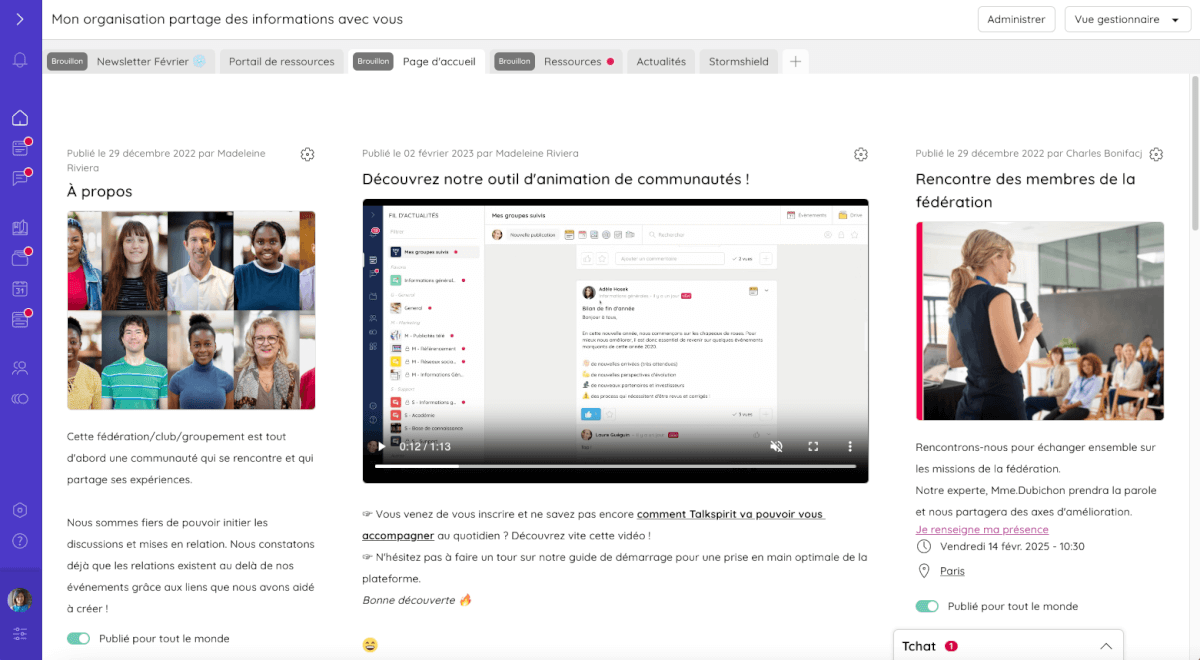
Content shared on the Talkspirit home portal
Read also: 9 best practices to facilitate and engage an internal community
The one thing to remember? If you have to invest somewhere, invest in community managers. The reason is simple: they have time to run the network, which most members, busy with other responsibilities, do not. Volunteer members can perfectly well look after one or two groups, but running the network as a whole is another matter.
5. Build connections
A network is more than a place to share content. It also exists to build connections between members, and through them to strengthen a sense of belonging.
Those connections form remotely as well as face to face. A few ways to encourage them:
- team building activities and events with real networking time built in,
- groups on lighter topics (food, sport, pets, culture) that members join freely,
- short tutorials showing how to fill in a profile and how to search the directory by expertise or interest,
- a series of video interviews with members, shared on the platform so people get to know each other.
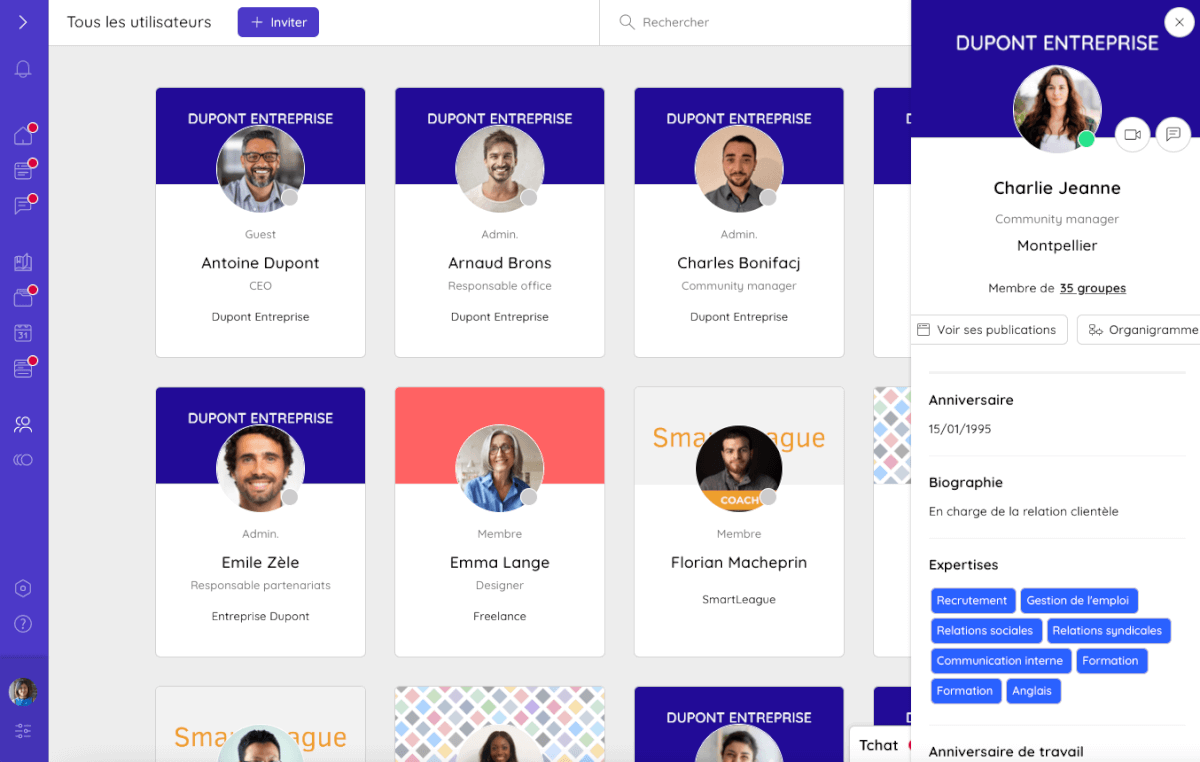
A member profile as seen from the Talkspirit directory
Read also: Networking the new generation: Place aux jeunes en region
6. Measure member satisfaction
What do members really think of all this? Are they satisfied, or do they see things that could be better? Time to measure it.
A few satisfaction indicators worth tracking regularly:
- the monthly and weekly login rate,
- member engagement (how many likes, how many comments, how many people speak up in chat or in a post?),
- attendance at the events you organise,
- the feedback members give privately or through polls.
If you have the time, the best option is to ask members to fill in a survey, or to share their views live in a 15 minute conversation. That is how you get to the bottom of what is not working.
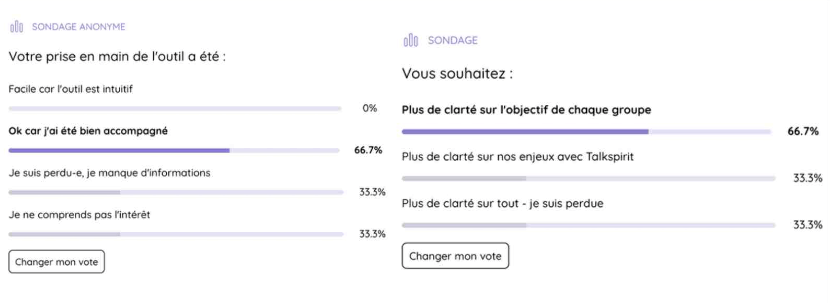
A Talkspirit poll used to measure member satisfaction
PS: three questions usually open the conversation better than a long questionnaire. What brings you back to the platform? What keeps you away from it? What is missing before you would post something yourself?
The thread running through all six steps: governance
The six steps above say what to do. They do not say who decides, and that is where facilitation usually runs out of steam after a few months. The network starts well, then nobody settles the everyday calls. Should this group be opened? Who moderates? What do we do with a space that has been idle for six months?
Setting up governance for facilitation means putting three things in writing:
- Roles and their decision scope: sponsor, community manager, group facilitators, ambassadors, members. For each one, what they can decide alone, and what goes up a level.
- An engagement charter, separate from the usage charter. The usage charter explains how to work the tool. The engagement charter says what the network expects from its members and what members can expect in return: response times, tone, confidentiality, and how much room disagreement gets.
- A review rhythm: a monthly point between facilitators on the indicators from step 6, and a wider review once or twice a year on the purpose of the network, the groups to open and the ones to close.
This is not paperwork. It is what lets a facilitator answer in two days instead of two weeks, and lets a member know who to ask when something is stuck.
| Role | What they decide | Sign the role is not being held |
|---|---|---|
| RoleSponsor | What they decideWhy the network exists, the resources it gets, the trade-offs that commit the organisation | Sign the role is not being heldLeadership never mentions the network, and its budget is reopened every year |
| RoleCommunity manager | What they decideThe editorial calendar, opening and closing groups, applying the charter | Sign the role is not being heldPosts become less frequent, and new members arrive without being welcomed |
| RoleGroup facilitator | What they decideThe life of their group: topics, invitations, follow-ups, first-line moderation | Sign the role is not being heldGroups get created, then sit empty because nobody dares close them |
| RoleAmbassador | What they decideNothing formal, but they carry the network's voice inside their own entity and report friction back | Sign the role is not being heldAdoption stays limited to the teams closest to the project |
| RoleMember | What they decideWhat they post, which groups they join, what they flag | Sign the role is not being heldReading dominates, and almost nobody speaks up |
Read also: Improving nonprofit governance with Talkspirit: the French Diabetes Federation story
*
* *
Gathering needs, launching a communication plan, hiring community managers, tracking the right KPIs. You now have the ultimate checklist to engage the members of your network and strengthen their sense of belonging.
As you have seen, the platform you choose will play a decisive part in whether the network works. Among the tools available on the market, Talkspirit stands out on several counts: ease of use, an all in one scope, and how close its teams stay to their customers.
Our practical guide shows how 10 of our customers use the platform to run their network or their internal community:
Access the practical guide
In our practical guide, 10 client initiatives for engaging their communities, you will find 10 examples of organisations using Talkspirit to run their communities, plus tips for bringing all your members together and growing their engagement.
FAQ
With framing: clarify what is at stake and what you are aiming for, identify the resources available, and only then decide which tools you need. That is what lets you understand what members actually need and build a facilitation strategy that matches.
Five roles, each with an explicit decision scope: a senior sponsor who owns the purpose and the resources, a community manager who holds the editorial calendar and applies the charter, group facilitators, ambassadors who relay inside their own entity, and the members themselves. When those scopes are not written down, everyday calls such as opening a group or closing an idle space stay unresolved.
Choose a platform that fits your needs and your members' needs, find a senior sponsor and a group of ambassadors, configure the platform (features switched on, types of groups, content shared, administrators), then write a usage charter.
The communications planned before, during and after launch, with their dates, formats and audiences; the activities offered throughout the rollout; the people accountable for communication and facilitation; and the editorial strategy for the platform and the other channels.
Yes. They have time to run the network that members, most of whom have other responsibilities, do not. Volunteer members can look after one or two groups, but running the network as a whole is another matter.
By tracking the monthly and weekly login rate, member engagement (likes, comments, people speaking up), attendance at events, and the feedback given privately or through polls. A short survey or a 15 minute conversation gets to the bottom of what is not working.



.jpeg)