Merete Buljo: "To Succeed at Digital Transmutation, You Must Be Ready to Question Everything"
.svg)
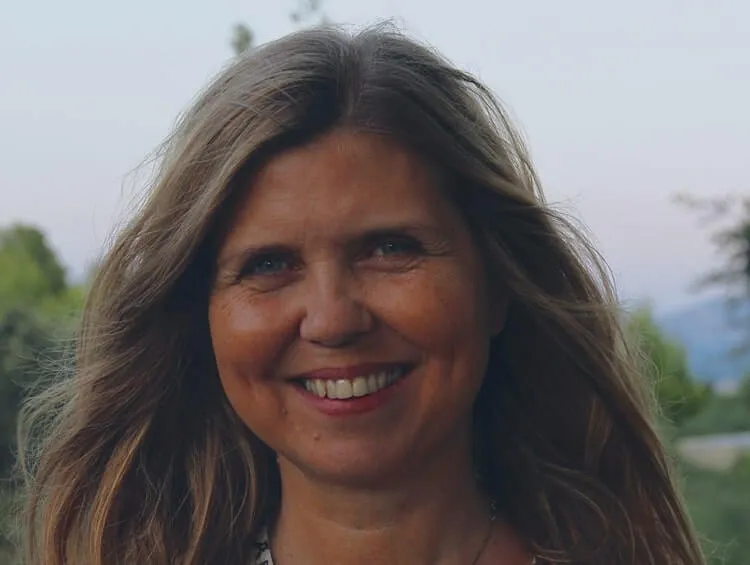
Merete Buljo is Chief Digital & Customer Experience Officer at EuroTitres (BPCE Group). She is our guest this month, and she is here to talk about digital transformation. Or rather digital transmutation! Putting forward a radical vision with plenty of room for innovation, experience, openness and empathy, this trained computer scientist and historian suggests concrete actions, particularly in the banking sector, to put an end to the "CDQO, Chief Don Quixote Officer" phenomenon. So, ready to transmute?

Hello Merete, you chose "transmutation": why does that word make sense to you today in the way you think about digital transformation?
Merete Buljo: I chose that word as a reference to Darwinism and to alchemy. The word "transformation" is not strong enough to describe the upheavals we are living through, which have kept accelerating since the arrival of the web and of digital habits. This is not a "modification" of the way we consume, communicate, learn and work, it is a genuine "mutation".

With mutation, it is the DNA that changes, either accidentally or deliberately. It is a key element of the theory of natural selection, where only the organisms best adapted to their environment, thanks to new mutations, survive and pass on their genes.
Read also: Jonathan Chan: "Agility Is the Skill of Tomorrow"
What is more, I like rounding out the scientific theory with a bit of mystical speculation: what are the ingredients needed for the miracle of mutation to happen? In alchemy, the word "transmutation " refers to the possibility of transforming one substance into another, and, what is more, of turning lead into gold...
Ultimately, is the digital transformation of companies not a kind of "Great Work", where all hopes are pinned on the "Chief Digital Officer " acting like an alchemist whose ultimate goal is to obtain the elixir of long life?
In its scientific definition, the word refers to a change of substance, of matter. So what you are proposing is a radical vision, a "before" and an intrinsically different "after". Is the term digital revolution too lightweight for you?
Merete Buljo: We equate revolution with a radical change towards a new order. Yet that has not always been the case in the history of humanity. After a period of revolt, many revolutions ended up restoring an earlier situation, certainly with new players, but without really changing the established order.
Yet we are living through a genuine paradigm shift comparable to that of the Neolithic period, marked by deep technical and social changes tied to the development of agriculture and to people settling in one place. Our current technological innovations, sharpened by an economic and geopolitical context, are blowing apart that 12,000-year-old model of attachment to land and property, offering new forms of nomadism in a more global world.
In concrete terms, what is "transmutation" in the banking sector?
Merete Buljo: Until the arrival of the Internet, banking had broadly stayed the same since Mesopotamia! It was a relationship model, where the customer was attached to one person who was unavoidable in their life: their banker. To be socially integrated and simply to live a normal life, it was extremely complicated to do without a bank account in a branch near your home or your workplace. The banker was often very close to the customer and their family, able to support them over time, a "life adviser" in the same way as the family doctor.
With the arrival of the internet and of the first online banks, banking became transactional. In that model, the customer gradually became emancipated and eventually took power. The phenomenon accelerated with the digital habits that came with smartphones. We are seeing a mutation in the way people inform themselves and consume, with new players seeking to place themselves between customers and the historical players.
Today, the bank no longer has a monopoly on the customer's heart. In a few clicks, a customer can open a bank account and get a means of payment. There are no longer any limits to distribution: you can even get a payment card in a tobacconist's, and soon on Facebook! What these players have in common is their remarkable ability to innovate by answering real customer problems, then to turn concepts quickly into concrete achievements. Their challenge lies in their ability to industrialize their solutions within a profitable model.
Read also: "Arnault Châtel: Absolutely everyone has to be trained in digital"
My conviction is that in this context, there is an urgent need to develop a hybrid banking model that is both transactional AND relational. Traditional banks have to bring in 100% digital services, mixing offerings designed in house with those proposed by more agile players. On the other hand, in this borderless world, customers have to be offered the possibility of continuing their journey with a human contact who can reassure and advise them at a few key moments in their life, for more complex financial operations. That contact can be an expert or a peer, a member of a community. The idea of a financial coach should not be a luxury, it should be one of the pillars of restored trust.
Our biggest challenge is the customer's heart. Before thinking technology, we have to think experience. We need to activate innovation in our DNA and imagine new experiences by getting into empathy with the customer. How? By meeting them "in the flesh" to understand their emotions and motivations, having them test concepts, co-create with them. And let me add that you need broad panels with diverse profiles, and more women, to break out of a certain stereotype of the banking persona.
As for technology, it offers us extraordinary opportunities, provided it is not used to slap a layer of digital onto what already exists, but as a real catalyst for innovation in the service of people.
In short, that is what our transmutation is!
Transformation versus Transmutation, spot the difference! What are the nuances between these two approaches?
Transformation Transmutation
Research & Development Innovation
Service Experience
Customer Member
Employee Member
Profit Empathy
Adviser Coach
Technology, solution Technology, catalyst
What advice would you give companies looking to accelerate their digital transformation?
Merete Buljo:To succeed at digital transformation, or digital transmutation, you have to be ready to question everything about yourself. That is true for people and it is true for organisations. Openness is a watchword: openness of mind and openness towards the internal ecosystem. It is an ambition that has to be carried at the very top of the company, to avoid the CDQO, Chief Don Quixote Officer, phenomenon, where someone wears themselves out on an evangelising mission with no transforming impact.
You have to take care of the inside and the outside. The inside deserves support that goes beyond digital acculturation, another buzzword emptied of meaning unless it comes with genuine, enlightened leadership. Enlightened, because it is competent on technology issues, and genuine because it is convinced by the human dimension. Digital transmutation requires simplifying organisations in order to develop the collaboration and the initiative that innovation cannot do without. It reveals internal talent, to be mixed with outside expertise. The company has to cultivate diversity, because you do not innovate with clones.
Read also:Aurélien Gohier: "Digital transformation, let's stop making people feel guilty"
On the outside, open innovation is absolutely essential. With customers of course, with startups (and FinTechs in finance), but also with any other player carrying nuggets of value, such as old and new competitors, other industries and research circles too. Doctors of technological and human sciences, women included, are alchemists who are still under-used today!
And finally, to accelerate and bring the inside together with the outside, intrapreneurship and startup incubation programmes make sense if leaders get involved beyond mere sponsorship. The most mature companies would do well to give employees carrying the most promising projects the chance to become independent, like real entrepreneurs, by creating spin-offs co-owned with the company.
People often talk about the platform company as the model for tomorrow. For my part I suggest the coral company: those "superorganisms" made up of colonies of interconnected individuals, with incredible longevity thanks to their perfect symbiosis with their ecosystem. Their only threat: pollution and climate change... Food for thought!
Photo credit: Christine Huet Morino @ckrisstyne