
[Gartner study] HR Trends to Track in 2024

.svg)
- This article summarises the 2024 edition of Gartner’s study on HR priorities, published on 7 November 2023: every figure quoted comes from that edition.
- The five HR trends selected for 2024: manager development, organizational culture, HR technology, change management, career management and internal mobility.
- Three out of four HR leaders say their managers feel overwhelmed, and managers carry on average 51% more responsibility than they can handle.
- 77% believe their employees are tired of change, while only half of large-scale organizational transformations succeed.
- 76% think their organization will fall behind without generative AI within 12 to 24 months, yet 60% are unsure what these technologies will do to HR.
- Gartner has since published a 2025 edition, then a 2026 edition released on 2 October 2025, in which AI moves to the top of the CHRO priority list.
The year 2024 promises to be full of challenges for human resources. Even with the COVID pandemic behind us, many companies are still struggling to re-engage their employees and get them to return to the office. The talent shortage also remains acute, making recruitment a complicated task for HR departments. By analyzing these various challenges, Gartner has identified five HR trends for 2024:
- Manager development
- Organizational culture
- HR technology
- Change management
- Career management and internal mobility
What are these HR trends? And why should you follow them in 2024? That’s what we cover in this summary of the Gartner study, in its 2024 edition, published on 7 November 2023.
A note on dates: this article summarises the 2024 edition of the study, the one Gartner published in November 2023. Gartner has since released a 2025 edition, which we have also summarised, and a 2026 edition, published on 2 October 2025. The figures below are therefore those of 2024, not those of the current year.
1. Leader and manager development
As in the previous year, professional development for managers remains the top priority for HR leaders. Three out of four believe their company’s managers are overwhelmed by their increased responsibilities. For the majority, this increased workload makes them feel unfit to effectively lead change.
Employees, too, are not that confident. Just half of them believe their company’s managers can lead their teams to success over the next couple of years.
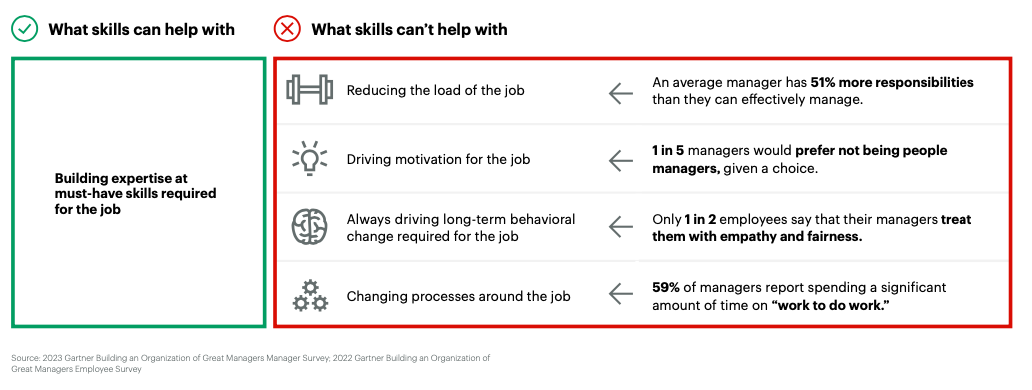
According to Gartner, investing in training is not the solution. Instead, changing managers’ roles is the better way. To achieve this, Gartner recommends the following four steps:
- Review manager expectations. On average, managers have 51% more responsibilities than they’re capable of handling. To reduce this workload, we need to enable them to concentrate on the tasks for which they are most apt (like coaching employees).
- Rebuild the manager’s career path. Given the choice, one in five managers would prefer to not have to manage a team. Rather than pushing employees into this role, let them discover instead for themselves whether they want to go down that road.
- Reinvent managerial practices. Over the years, managers tend to develop bad habits that can be detrimental to their teams. Our aim is to help them rebuild the good habits to get back on track.
- Eliminate unnecessary processes. A full 59% of managers spend a majority of their time on work about work: activities that have no tangible added value and just get in the way of real work. This holds particularly true with meetings, back-and-forth multitasking between apps, and other daily routines. Eliminating unnecessary processes is thus a good way of lightening managers’ workloads.
2. Organizational culture
Strengthening team cohesion is a real challenge in the age of hybrid work. That’s why in 2024, one of the main HR trends is to rally employees around a common organizational culture.
For 41% of HR managers, hybrid work tends to lead employees to disconnect from their company’s very culture. This culture is spread mostly in the office, and that tends to isolate remote employees. To boost your employees’ buy-in and avoid quiet quitting, companies need to alter their approach.
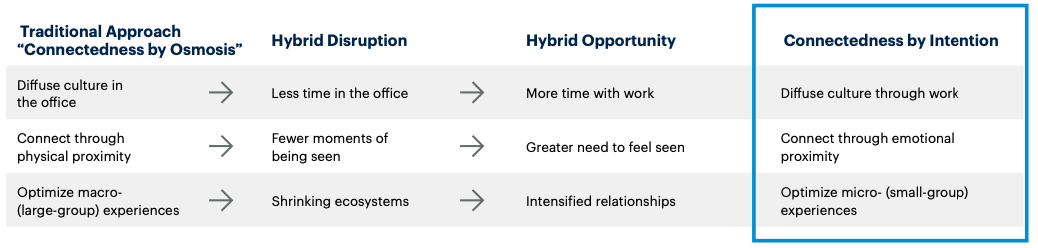
Rather than focusing on physical proximity, they need to spread company culture via channels accessible to all employees, no matter where they happen to work at. For example, you can use a collaborative platform like Talkspirit to:
- Convey your culture through the way you work and communicate internally
- Improve the sense of attachment among remote employees
- Encourage teamwork in small groups (think video calls and chat rooms)
All this contributes to making your employees more connected to your values and culture, and improving their sense of belonging within the company.
3. HR technology
Numerous digital solutions make modern life easier for human resources. However, HR managers still struggle to identify which types of technology can be of real use to them. 60% of them are unsure of the impact that technological trends such as generative AI can have on HR management.
Yet, there’s no doubt that artificial intelligence is one of the key HR trends of 2024. In fact, 76% of all HR managers believe their organization will fall behind if it doesn’t fully integrate generative AI in the next 12 to 24 months.
When used properly, artificial intelligence can bring significant gains in productivity and accelerate digitization of human resources. To this end, HR departments need to create a framework for identifying the technology to be implemented and assessing their level of adoption.
There are four key elements to consider here:
- Governance: who will manage and maintain the software?
- Employees’ level of digital maturity: how will technology affect their roles, skills, and work methods?
- Risks and ethical issues: can risks associated with using these kinds of technology (particularly in terms of data security) be tolerated?
- Vendor ecosystem: does existing technology meet your needs, or is it better to wait for new kinds to emerge?
Gartner ranks HR technology separately, too. Its Hype Cycle for HR Technology, dated 25 November 2024, puts AI in HR and AI-enabled skills management, internal talent marketplaces included, at the front of the field. Two years on, AI is no longer one trend among five: in the priorities Gartner sets for CHROs in 2026, it comes first.
4. Change management
Once again this year, change management remains one of the HR trends to watch in 2024. However, the success rate remains low. On average, only half of all large-scale organizational transformations are successful. There’s a valid reason: employees tend to play down the fatigue that major change can create.
The more changes there are, the more tired employees become. As a result, they are less willing to accept change. Change fatigue can also be detrimental to employee well-being and productivity, thereby increasing the turnover rate!
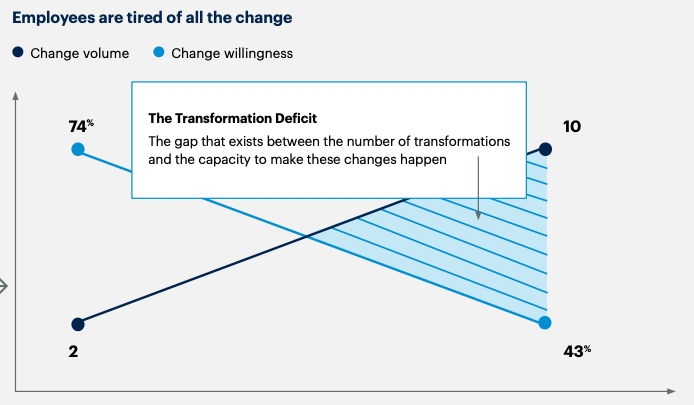
77% of HR managers believe that their employees are tired of change. Here are a few best practices to limit this phenomenon:
- Make teams aware of the factors that can generate fatigue
- Give managers the means to identify sources of fatigue
- Show a little empathy
- Encourage employees to discuss change openly
- Involve them in creating strategies and implementing the change
- Develop psychological safety at work
- Normalize timeouts for downtime
5. Career management and internal mobility
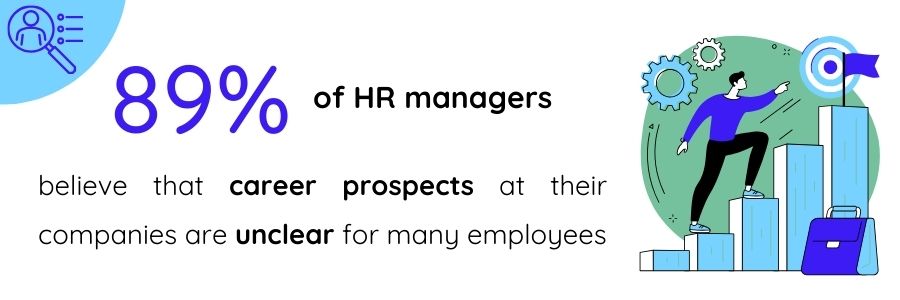
Faced with rapidly changing business needs, today’s employees find it too hard to project themselves into their company. Fewer than a third of all employees know how their career will progress over the next five years. And only one employee in four feels confident about their career development within the organization. In an ultra competitive market, this lack of clarity can push many employees to jump ship.
To retain employees, then, it’s important to communicate transparently about career development. Achieve this through the following steps:
- Stick to consistent career management processes
- Document these processes in a knowledge base
- Develop career plans that all employees can access, and back them up with concrete examples
- Create experience-based roles that enable employees to broaden and strengthen their skills
- Map all these roles and associated responsibilities, which you can do with a role-mapping tool such as the Talkspirit Structure module
| Edition of the study | What Gartner puts first |
|---|---|
| Edition of the studyHR trends 2024, published November 2023 | What Gartner puts firstManager development, organizational culture, HR technology, change management, career management and internal mobility |
| Edition of the studyHR leader priorities 2025 | What Gartner puts firstLeader and manager development, organizational culture, strategic workforce planning, change management, HR technology |
| Edition of the studyCHRO priorities 2026, published 2 October 2025 | What Gartner puts firstRealising AI value in HR, shaping work in the human-machine era, mobilising leaders amid uncertainty, addressing culture atrophy |
A final word
In its 2024 edition, Gartner recommends human resources focus on five trends. Specifically, they need to help managers’ roles evolve, develop a hybrid culture, implement new HR software, limit change fatigue, and communicate more about internal mobility opportunities.
So how do you turn these axes into a plan? Our HR strategy template walks you through it in eight steps, from budget to KPI tracking.
FAQ
Manager development, organizational culture, HR technology, change management, and career management and internal mobility.
Three out of four HR leaders believe their company's managers are overwhelmed by their increased responsibilities, and for the majority this workload makes them feel unfit to effectively lead change. Just half of employees believe their managers can lead their teams to success over the next couple of years.
On average, 51% more than they are capable of handling. Gartner recommends reducing that workload by letting managers concentrate on the tasks they are most apt at, such as coaching employees, and by eliminating unnecessary processes.
76% of all HR managers believe their organization will fall behind if it doesn't fully integrate generative AI in the next 12 to 24 months. At the same time, 60% are unsure of the impact that technological trends such as generative AI can have on HR management.
For 41% of HR managers, hybrid work tends to lead employees to disconnect from their company's culture, which is spread mostly in the office and tends to isolate remote employees. The advice is to spread company culture through channels accessible to all employees rather than focusing on physical proximity.
The success rate stays low: on average, only half of all large-scale organizational transformations are successful, and 77% of HR managers believe their employees are tired of change. The more changes there are, the more tired employees become and the less willing they are to accept change.


.webp)