Top 10 Technology Trends in 2026, According to Gartner

.svg)
On 20 October 2025, Gartner published its 10 strategic technology trends for 2026. The short version:
- Seven of the ten trends are about artificial intelligence: it is no longer a separate category, it runs through the whole list.
- Multiagent systems succeed isolated agents, and assume clear roles and decision rules before anything is automated.
- Confidential computing and digital provenance answer the same question: what is a piece of data worth when you control neither its processing nor its origin.
- Geopatriation, moving data out of global clouds, brings sovereignty into architecture decisions.
- Preemptive cybersecurity shifts the load on security teams, without removing the employee's role as the first line of defence.
Gartner's latest study, published on 20 October 2025, identifies 10 strategic technology trends set to profoundly transform the way we work in 2026. Seven of them bear directly on artificial intelligence: it is no longer one category among others, it is the thread running through the whole list.
Anticipating these trends matters for every CIO working on a solid IT strategy for 2026. So which investments should come first this year? What impact can they have on your organisation? And how do you prepare your teams for such changes?
Here is a recap of the 10 technology trends to follow in 2026.
PS: if you missed the 2024 technology trends, you can read about them here.
1. AI-Native Development Platforms
These platforms use generative AI to produce software faster, and by people who are not development specialists. The point of attention is not the speed of production: it is what happens next. Who reviews it, who maintains it, who answers when generated code causes a problem? That depends less on the tool than on how clearly roles and accountabilities are set in the team using it.
In practice, the question to settle before opening these tools beyond the technical team is review: software written fast but read by nobody becomes a debt someone pays later. The organisations that handle this well set the sign-off path first, then widen access.
2. AI Supercomputing Platforms
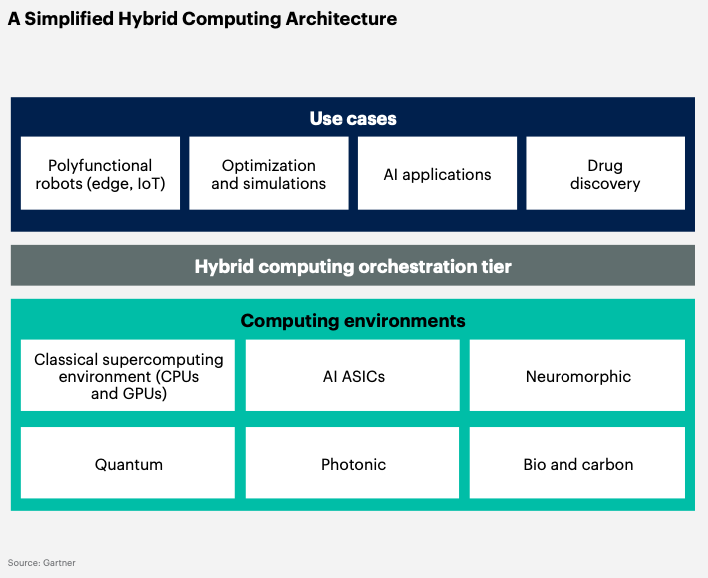
Gartner points here to systems combining conventional processors, graphics cards and dedicated AI chips, to orchestrate complex workloads and train increasingly heavy models. It is an infrastructure trend, and it concerns first the organisations training their own models. For everyone else, it mostly reads as a cost signal: compute is becoming a budget line of its own.
For most organisations the decision is not whether to buy a supercomputer, but whether to train or to consume. Renting compute means accepting a dependency and a variable bill; bringing it in-house assumes scarce skills. The subject belongs on the leadership agenda, not only in the IT department.
3. Confidential Computing
Confidential computing isolates workloads inside hardware-based trusted execution environments, so that data stays protected while it is in use, not only at rest or in transit. It is the missing brick for handling sensitive data in a shared cloud, and it speaks directly to the questions European organisations are asking about the sovereignty of their data.
This brick unlocks uses that were blocked until now: processing HR data, health data or contractual documents without taking them out of a controlled environment. If projects were shelved for confidentiality reasons, now is the moment to take them out again and check whether the obstacle still stands.
4. Multiagent Systems
Several specialised AI agents cooperate to reach a shared goal and automate a process end to end. It is the logical sequel to the isolated agents of 2025, and it is also where technology meets organisation: a poorly defined process stays poorly defined once agents run it, only faster. Before automating a chain of decisions, you need to know who decides what, which assumes explicit roles and written decision rules.
Before connecting agents to one another, you need answers to three questions: which steps make up the process, who decides at each step, and what happens when two agents reach opposite conclusions. An organisation that can already answer these for its human teams has done most of the work.
5. Domain-Specific Language Models
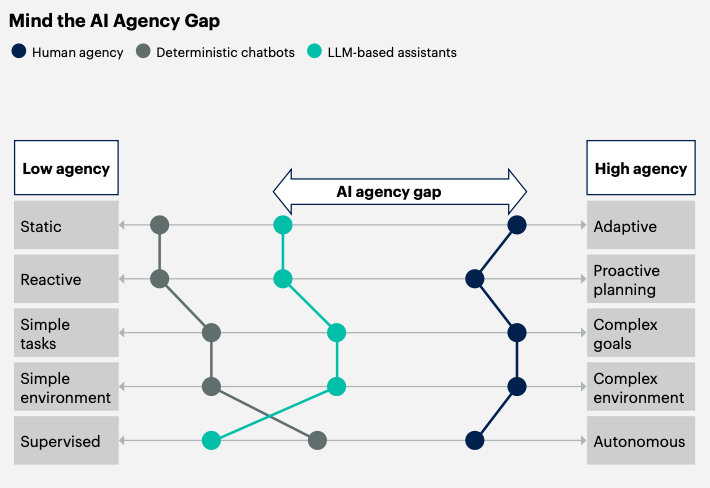
Rather than a general-purpose model, these are trained or fine-tuned on data from one industry, function or process. They answer better on their own ground, drift less, and often run on more modest resources. Their quality depends entirely on the corpus they are given, which puts knowledge management back at the centre of the subject.
These models serve those who documented their trade, and do nothing at all for the others. A corpus scattered across inboxes, shared drives and people's heads produces a mediocre model. The value is therefore built upstream, in how information flows and is kept.
6. AI Security Platforms
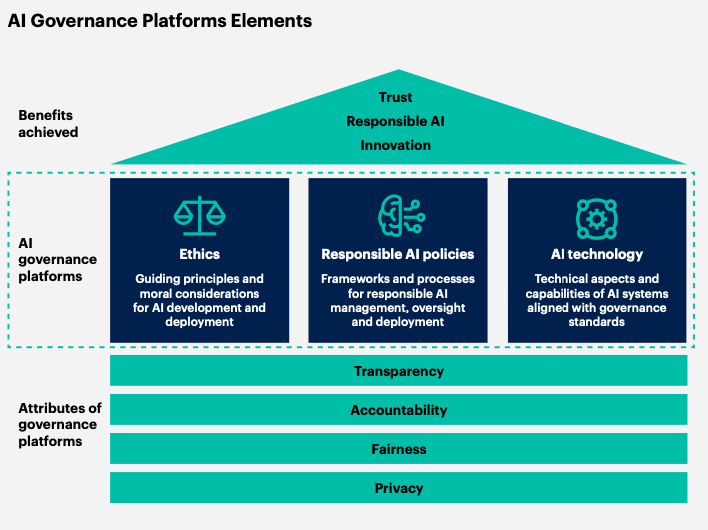
They offer a unified way to secure AI applications, whether built in-house or supplied by a third party. The question they address is easy to state and hard to answer: what is the AI we deployed actually doing, with which data, and under whose control? This is the tooled side of AI governance, which remains first a matter of decisions and accountabilities.
The prerequisite is an honest inventory: which AI tools are actually in use across the organisation, including the ones nobody approved. Many teams discover on this occasion uses that have been running for months. A clear usage policy beats a ban everyone works around.
7. Preemptive Cybersecurity
Proactive security, driven by AI and advanced machine learning, aiming to anticipate and neutralise attacks before they land rather than record them afterwards. The shift is real, but it does not replace the human link: most intrusions still come through an employee. Raising awareness across teams therefore remains the necessary complement to any tooling.
Preventive tooling changes the load on security teams, not the nature of the risk. A well-crafted lookalike message is still a well-crafted lookalike message, and employee vigilance keeps making the difference. The two reinforce each other: fewer background alerts to handle, so more time for what needs human judgement.
8. Digital Provenance
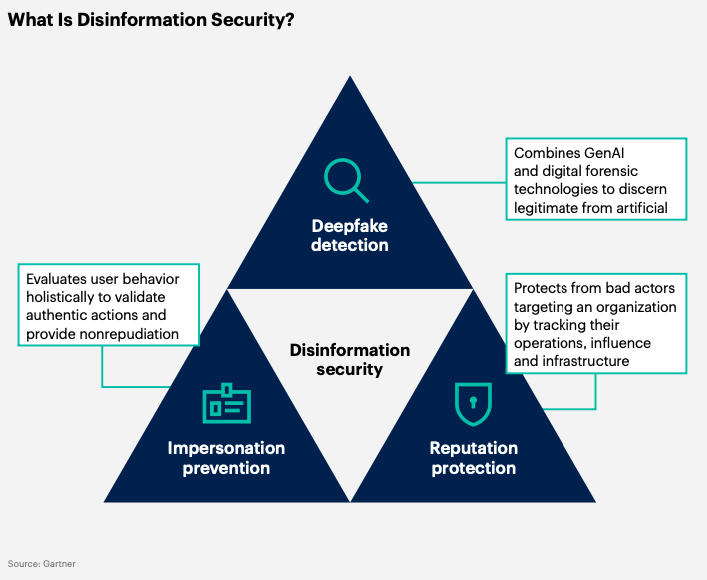
This is the ability to verify the origin, ownership and integrity of software, data, media and processes. In an environment where content is generated in seconds, knowing where a document comes from becomes a compliance requirement as much as a question of internal trust. Organisations that already document their sources and their sign-offs start with an advantage.
For an organisation that publishes, communicates or contracts, provenance becomes a daily practice: noting where a figure comes from, who approved a version, which source was used. These are editorial reflexes before they are tools, and they can be put in place without waiting for the technology.
9. Geopatriation
Gartner uses this term for moving corporate data and applications out of global public clouds and into local alternatives. It is the most political trend on the list, and the one that speaks most directly to European organisations: it overlaps the debate on digital sovereignty and the guarantees expected from a hosting provider. It is no longer a matter of principle, it is an architecture decision to be planned.
The question is not ideological, it is a matter of timing: by when must a given application be movable, and at what cost. Organisations that wrote reversibility into their contracts find the operation is feasible. The others find out what not doing so costs.
10. Physical AI
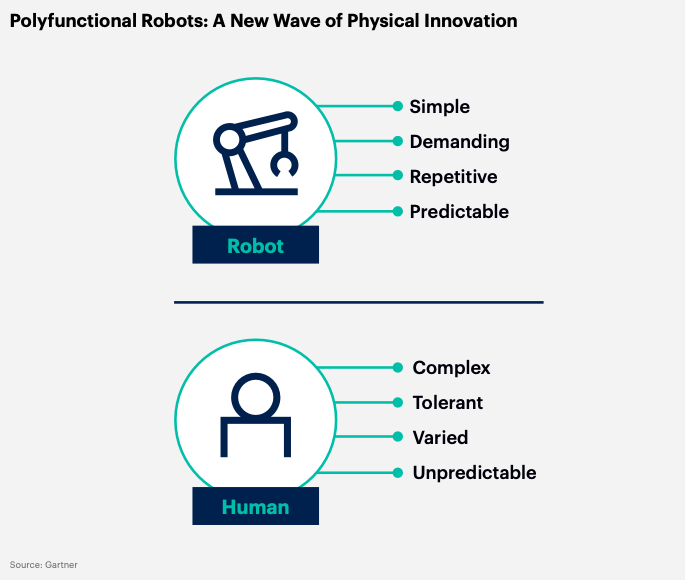
Intelligence brought into the real world, through machines and devices that sense, decide and act. Robots, sensors, industrial equipment: the line between software and the field is fading. For organisations whose teams work away from a desk, it is also a coordination question, and it meets the way artificial intelligence transforms how we work.
This trend concerns first the organisations where part of the workforce does not sit at a screen. When machines make decisions in the field, information has to travel both ways, and fast. It is a question of how work is organised as much as of equipment.
| Trend | What it asks of the organisation |
|---|---|
| TrendAI-native development platforms | What it asks of the organisationA review path agreed before the tools are opened up |
| TrendMultiagent systems | What it asks of the organisationWritten roles and decision rules before anything is automated |
| TrendDomain-specific models | What it asks of the organisationAn internal corpus that is documented rather than scattered |
| TrendAI security platforms | What it asks of the organisationAn honest inventory of the AI tools actually in use |
| TrendPreemptive cybersecurity | What it asks of the organisationSustained awareness, since tooling does not replace the employee |
| TrendGeopatriation | What it asks of the organisationA reversibility clause and a costed deadline |
A Final Word
Now you know the main technological trends that will disrupt your organization in 2026. All you have to do is identify the ones that are most relevant to your business and then integrate them into your IT roadmap for the short, medium, and long haul.
PS: Want to discover more best practices to help your IT teams meet the challenges of the future of work? Download our white paper on the new challenges facing CIOs. 👇
Access the White Paper
In our white paper “CIOs: Navigating the New Challenges of Hybrid Work” you’ll discover: the three major challenges for CIOs in the era of hybrid work; concrete advice to accelerate your digital transformation, secure your workstations, and improve the employee experience, as well as the testimonies of 10 CIOs of companies, government entities, and NGOs.

FAQ
AI-native development platforms, AI supercomputing platforms, confidential computing, multiagent systems, domain-specific language models, AI security platforms, preemptive cybersecurity, digital provenance, geopatriation and physical AI. Gartner published the list on 20 October 2025.
Several specialised AI agents cooperating to reach a shared goal and automate a process end to end. It follows the isolated agents that appeared in 2025. The prerequisite is organisational: you need to know which steps make up the process, who decides at each step, and what happens when two agents reach opposite conclusions.
Gartner uses this term for moving a company's data and applications out of global public clouds and into local alternatives. It is the most political trend on the 2026 list, and the one that meets the European debate on digital sovereignty most directly. The question it raises is one of timing: by when must a given application be movable, and at what cost.
It isolates workloads inside hardware-based trusted execution environments, so that data stays protected while it is in use, not only at rest or in transit. It unlocks uses that were blocked until now: processing HR data, health data or contractual documents without taking them out of a controlled environment.
It uses AI and advanced machine learning to anticipate and neutralise attacks before they land, rather than record them afterwards. It changes the load on security teams, not the nature of the risk: most intrusions still come through an employee, and awareness remains the necessary complement to any tooling.
Several trends matured rather than disappeared. The AI agents of 2025 became multiagent systems, and AI governance platforms shifted towards securing AI applications. The more distant subjects of 2025, such as spatial computing or neurological enhancement, leave the list in favour of trends that are operational sooner.