Talking Agile with the CEO of OCTO Technology
.svg)
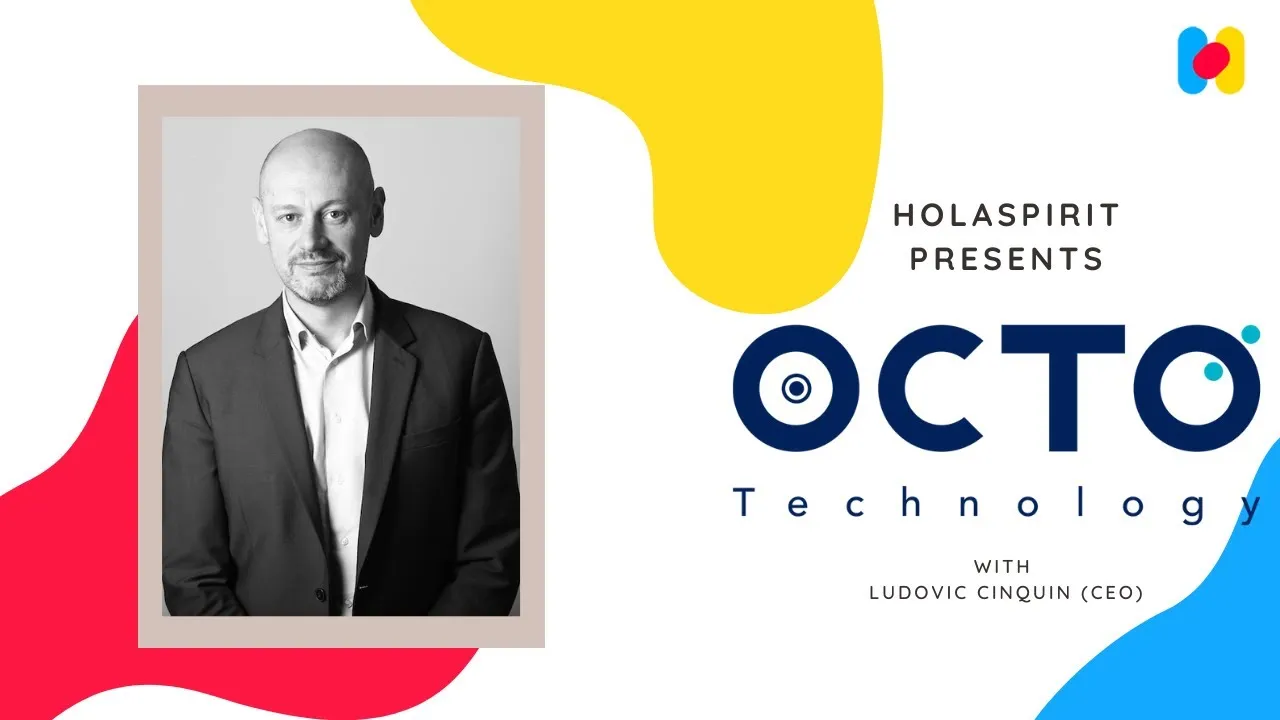
Ludovic Cinquin, CEO and co-founder of OCTO Technology and Managing Director at Accenture, explains how his IT consulting firm keeps people at the centre of its projects. He is wary of the loaded term liberated enterprise and prefers agile companies, names the values these next generation organisations share (the right to make mistakes, autonomy, trust and authenticity, short feedback cycles), and argues that trust emerges naturally once the walls come down.
Ludovic Cinquin is a Managing Director at Accenture and the CEO and Co-Founder of OCTO Technology.
OCTO Technology – the very proud recipient of the 2021 Great Place to Work award in France – is an IT consulting, design, and implementation company.
How do you do to keep the human element at the center of all your projects?
It starts with work habits where people collaborate together and meet frequently, which is difficult with lockdown.
We have this paradox that we put technology in place.
But the way in which it is implemented is through collaboration, through teamwork, through collective intelligence, which happens quite naturally.
What is a “Liberated Enterprise” to you ?
I don't know if it's a very good term because it is an extremely loaded term that conveys a strong philosophy.
I think in the working world, we can use terms that are less divisive.
So I like Agile companies.
Teal organizations are also mentioned in Frédéric Laloux's book.
There’s "NextGen Enterprise" now with the book just released, written by Luc and Philippe.
What I find interesting about all these movements is the values behind them.
No matter what you call them, the more companies there will be, whether they say they are liberated, Teal, NextGen or Agile, I think it will be great.
What are the values shared by these Next Generation Enterprises?
There are several commonalities that can be found in almost all of these organizations.
There is the right to make mistakes and be autonomous.
There is the fact that we rely on trust and authenticity.
In Agile companies specifically, short cycles are prominent. So getting quick feedback by doing short iterations.
How can we ensure that trust goes both ways in organizations, from managers to employees and employees to the top?
I think it’s the responsibility of culture and the management of a company.
As long as you put the right conditions in place, that is to say, you encourage people to work together and not compete.
I think human beings are wired to trust the people they work with on a day-to-day basis. If we get rid of walls, confidence is an emerging phenomenon that I think is very natural.
Typically, it means not encouraging silos, that is to say discouraging all behaviour aimed at defining territories.
I think that bonuses or the absence of bonuses, so the pay system, is a cornerstone of any trust system. If, for example, we promote local objectives, we won't have cooperation, we won't have trust.
It is encouraging all initiatives that aim to put several people in the same room to work together, to work and not just to host meetings because when we solve problems together, it builds a bond and it builds trust.
It’s a host of ultimately simple strategies that we experiment every day, all of us in our daily lives, and that we have to manage to find in the business environment.
The above interview was recorded during the 2020 edition of The NextGen Enterprise Summit.
FAQ
He is a Managing Director at Accenture and the CEO and co-founder of OCTO Technology, an IT consulting, design and implementation company that won the 2021 Great Place to Work award in France.
It ranked first among companies with 250 to 1,000 employees in France in 2021.
It starts with work habits where people collaborate together and meet frequently, which lockdown made difficult. The paradox is that technology is put in place, but the way it is implemented runs through collaboration, teamwork and collective intelligence.
Not really, according to Cinquin: it is an extremely loaded term that conveys a strong philosophy, and the working world can use less divisive words. He prefers agile companies, alongside teal organisations from Frédéric Laloux's book and the more recent NextGen Enterprise.
The right to make mistakes and be autonomous, and a reliance on trust and authenticity. In agile companies specifically, short cycles are prominent, which means getting quick feedback through short iterations.
By putting the right conditions in place, encouraging people to work together rather than compete. Human beings are wired to trust the people they work with day to day, so once the walls come down, confidence emerges naturally.