
5 Ways to Encourage Internal Knowledge Sharing and Why It Matters
%252520(1)%252520(3).webp)
.svg)
- Internal knowledge sharing is the transfer of information and ideas from one person to another, so everyone works from the same level of information.
- Five levers put it in place: a space where people speak freely, projects that mix departments, leaders who set the example, a dedicated platform, and recognition for those who take part.
- Email and file sharing are not enough: past a certain volume, information gets lost there instead of circulating.
- The benefits show up first in decisions, trust between colleagues and time saved: more than five hours a week go into locating or re-creating information a colleague already holds.
- The blockers are rarely technical: no time, knowledge treated as personal capital, no clear owner. They lift when sharing is written into roles and processes.
Are you trying to encourage an environment where employees are comfortable sharing knowledge and ideas? Or are you hoping to increase the innovation of your company by fostering an environment where your employees feel like they have a voice? As an entrepreneur, you've probably heard you need to encourage internal knowledge sharing to keep your company competitive. But what does this mean, exactly? And why should you care?
What is internal knowledge sharing?
Internal knowledge sharing has been an important topic in recent years as businesses have become increasingly flatter and more global. It can be defined as the process of transferring information and ideas from one person to another. The goal of a knowledge-sharing culture is to make sure that everyone in your organization has access to the same kinds of information and knowledge, thereby enabling them to do their jobs more effectively. Here are some steps you can take to help make that happen.
#1 Create a space where people can share information freely and openly
The best way for employees to grow is by collaborating on projects together, and when they do so, they'll naturally start sharing knowledge with each other. Not all employees are comfortable with accepting the concept of internal knowledge sharing. Create open office space where people can easily walk up and ask questions without feeling awkward or schedule regular meetings with your team where everyone is encouraged to share their expertise without being judged or criticized.
#2 Encourage employees to share their knowledge
Promote collaboration by encouraging employees from different departments to work together on projects. While this may require webinar software so that all employees can participate, knowledge sharing happens when people learn from each other, whether they're on the same team or not. It can be as simple as asking someone for advice. In these meetings, ask everyone on your team: What did you learn today? What questions do you have about [topic]? Who can answer these questions for me? Who knows something about this topic that could help me out?
#3 Bring your top management into the conversation
Encourage your top management to share their personal experiences, struggles and insights with others. If your CEO makes it a point to attend employee lunches and dinners, or hosts regular brown-bag lunches where employees can share their ideas and learn more about those of their colleagues, then other managers will be more inclined to do the same. It's also important that this kind of sharing knowledge happens regularly, if these events only happen once a year, people won't get much out of them.
🔥 Article pick: 5 Reasons Transformational Leaders Make Great Mentors
#4 Select the right knowledge-sharing platform for your organization
There are many ways to share information in a company, including email and file sharing systems like Dropbox or Google Drive. However, these options aren’t always ideal for sharing large amounts of content. There may be too much information for an email or it may be confidential and not suitable for emailing around the office.
An internal knowledge sharing portal is an online platform that allows you to store and organize your company's knowledge assets, making it easy for employees to find the information they need. But why do you need one?
→ It helps you create better products or services by allowing employees to share ideas and information with each other.
→ It reduces the amount of time that employees spend searching for answers.
→ It improves employee retention by encouraging collaboration among teams.
Such a portal only works with document housekeeping kept up over time, otherwise it turns into a repository nobody opens: see document management and centralization.
🔥 Article pick: Why Scale Ups Opt for a Self-Management Tool?
How can Talkspirit help?
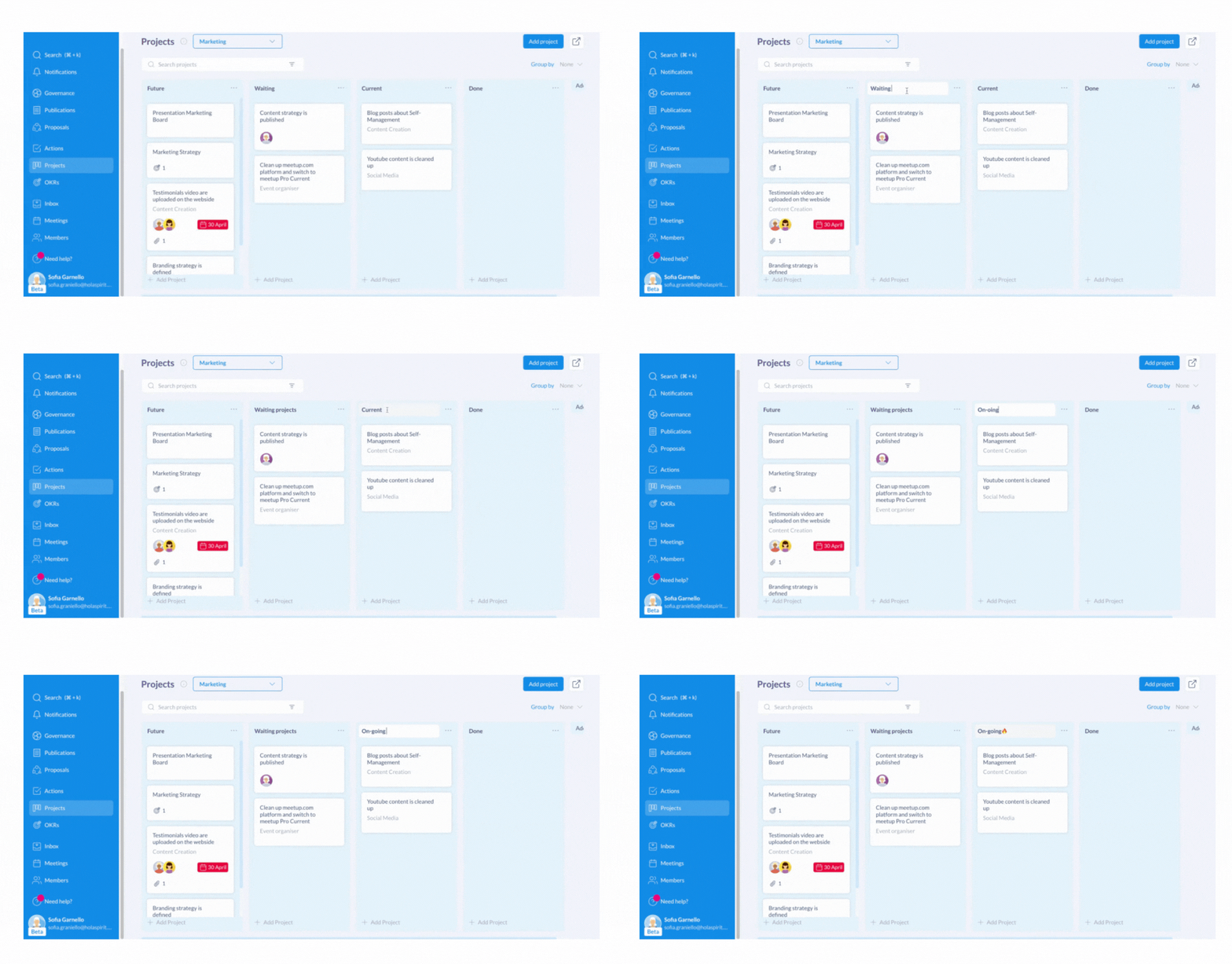
Talkspirit brings conversations, documents and projects together in one place, so nobody has to look for the same information in three different tools. Its knowledge and document management features centralize reference content and keep it searchable for everyone. Talkspirit also carries the governance and role clarity capabilities Holaspirit used to provide (the two products have merged).
→ Shared Kanban boards, where one team’s work stays visible to the others
→ A library of documents and reference content, findable through search
→ A dynamic org chart showing who does what, so people know who to ask
#5 Offer rewards for those who participate in knowledge sharing activities
You can reward people by giving them extra vacation time or by providing them with special perks such as lunches and dinners with colleagues. Make sure you acknowledge their contributions publicly, even if it's just a simple thank-you note after the meeting ends. You could also consider providing some sort of recognition for those who share their expertise on social media platforms like LinkedIn or Twitter, or get interviewed on top industry podcasts.
What are the benefits of a knowledge sharing culture?
→ Leads to better decision-making: When everyone on your team has access to the same information, they're more likely to make decisions based on facts and experience rather than assumptions or gut instinct. This means that decisions will be better informed and more likely to succeed.
→ Builds trust between employees: If every employee has access to all the data and information they need, they can trust each other's work, which means less rework and wasted time when someone else catches an error before it gets passed along to customers or clients.
→ Creates opportunities for promotion within your organization: One study found that 94 percent of employees have said they’ll stay at a company longer if there is a learning opportunity. If employees are constantly learning new things on their own time, they'll be more valuable as team members because they'll have all sorts of different skills and experiences under their belts. Plus, it reduces the risk of employee transition and churn rate.
→ Enhances efficiency: Did you know the average team member spends more than five hours each week locating key information from their co-workers or re-creating it themselves? Sharing knowledge helps employees find answers to questions quickly because they have access to relevant data and can share it with others on their team or across departments. This saves time when compared to having each person search for answers independently.
🔥 Article pick: 10 Tips to Enhance Employee Productivity Without Burning Them Out
→ Increases work quality: When people know what's going on throughout the organization and have access to relevant information, they're able to spot possible issues before they negatively affect customers or impact operations.
→ Generates new ideas for innovation and growth: Knowledge sharing enables your team to come up with new ways of doing things that may not have been possible before. This could include new products or services, new ways of working, or even just new ways of using existing resources more effectively to reduce costs or increase revenue.
→ Employees are more open to collaborating and providing feedback between departments: Increased collaboration between departments and teams within your company can help your employees more easily communicate, share files, and coordinate work.
What blocks knowledge sharing, and how to unblock it
The five levers above assume employees want to share in the first place. In practice, sharing runs into a handful of recurring obstacles, and none of them is solved by adding another tool.
| What blocks sharing | How it shows | What unblocks it |
|---|---|---|
| What blocks sharingKnowledge treated as personal capital | How it showsExperts answer in private messages, never in a shared space | What unblocks itRecognize the people who document publicly, and make sharing part of the job rather than a favor |
| What blocks sharingNo time for it | How it showsDocumentation is pushed to the end of the project, so it never happens | What unblocks itBook the time inside the process itself, for instance half an hour of write-up when a project closes |
| What blocks sharingNo obvious place to write | How it showsThe same answers travel by email and instant messaging | What unblocks itOne reference space, and one simple rule: anything needed twice gets filed |
| What blocks sharingNo clear owner | How it showsContent ages and nobody picks it up | What unblocks itName an owner per domain, with a periodic review written into their role |
These four answers have one thing in common: they write sharing into the structure of work, roles, processes, spaces, instead of leaving it to goodwill. That is what separates a sharing culture that lasts from an internal campaign that runs out of steam after a quarter.
Sharing moves what the organization knows to where it is needed. Keeping that knowledge when the people who hold it leave is a different, complementary discipline: knowledge capitalization.
Conclusion
Creating a culture of internal knowledge sharing is not an overnight process. It requires constant nurturing, emphasis, and top management buy-in. By implementing these steps, you can start the process and encourage your employees to help you along the way.
FAQ
It is the process of transferring information and ideas from one person to another, so that everyone in the organization has access to the same information and knowledge.
Have people collaborate on projects together: knowledge sharing tends to follow naturally. Open office space where anyone can walk up and ask a question, or regular team meetings, both help those who are not comfortable with the idea.
When leaders share their own experiences, struggles and insights (a CEO attending employee lunches, or hosting brown-bag sessions, for instance), other managers are more inclined to do the same.
Not really. Email and file sharing systems are not always suited to large amounts of content: there can be too much information for an email, or the content may be confidential and unsuitable for sending around the office.
Better decisions first: when everyone has the same information, decisions rest on facts and experience rather than assumptions or gut instinct. It also builds trust between employees, who get the data and information they need.
It is not an overnight process. It requires constant nurturing, sustained emphasis and buy-in from top management before employees start carrying it themselves.


%252520(1).webp)