[Expert Opinion] Overcoming Intercultural Communication Challenges in the Workplace

.svg)
- Intercultural communication is not only about language: it is about how you phrase a request, meet a deadline or voice a disagreement.
- Nathalie Lorrain, director of Itinéraires Interculturels, points to two core challenges: building a common frame of reference, and communicating extremely explicitly, even between people who speak the same language.
- Three cultural parameters are worth knowing: communication style (high-context or low-context), relationship with time (monochronic or polychronic cultures), and the way conflict is handled.
- Work processes (communication style, tools, acronyms, flexibility of deadlines) should be formalized in writing from the first days of the collaboration, before objectives are even set.
- English as a working language favors those who master it: anonymous feedback, asynchronous exchanges and speaking in one’s mother tongue rebalance who gets heard.
- The stakes are measurable: companies in the top quartile for gender diversity on their executive teams are 39% more likely to outperform their bottom-quartile peers financially (McKinsey, 2023).
Diversity is a key performance driver for today’s workplace. There’s proof: companies in the top quartile for gender diversity on their executive teams are 39% more likely to outperform their bottom-quartile peers financially, and that gap has widened since 2015 (McKinsey, 2023). However, diversity also brings with it a number of intercultural communication challenges.
When a team is made up of employees from different cultures and/or countries, communication can quickly turn complex, as everyone’s language, communication styles, and cultural backgrounds are different. So, how do you overcome such challenges in intercultural communication? And what best practices can you put in place as a manager or communications officer working in an international company?
To answer these questions, we interviewed Nathalie Lorrain, Director of Itinéraires Interculturels, a consulting and training company specializing in intercultural communication and management. She’s also director of the master’s degree program in intercultural management at ISIT (The Institute of Intercultural Management and Communication in Paris, France). Here’s what we learned from our interview.
Intercultural communication: what are we talking about?
Intercultural communication covers the exchanges between people who share neither the same culture nor the same unspoken rules, along with the practices that keep those exchanges running smoothly. It goes well beyond the language spoken: it is just as much about how you phrase a request, meet a deadline, voice a disagreement or read a silence.
At work, the stakes are concrete. In a team spread across several countries, a cultural misunderstanding is invisible: it surfaces as an instruction taken the wrong way, a meeting that drifts, or an employee who stops speaking up. It is also a matter of equity and inclusion: unspoken rules that are never stated always favor the same profiles.
The challenges of intercultural communication
For Nathalie Lorrain, intercultural teams face two major challenges.
Creating a common reference system
“The main challenge in intercultural communication is to take the time to create a common frame of reference. We may be under the illusion that teams from different cultures who speak the same language don’t encounter intercultural communication challenges. Well, that’s not true. Everyone has their own vision of the world and their own cultural frame of reference. That’s why it’s so important to work together on a unique communication framework, even when you speak the same language.”
Being explicit
“The second challenge is to have extremely explicit communication.” Some cultures (Asian, Latin, and African) tend to be fairly implicit, whereas Anglo-Saxon culture is rather explicit. When communicating with people from other cultures, “you need to encourage them to respectfully unload everything that’s on their mind, even if it seems pointless at first,” insists Nathalie Lorrain.
Of course, being explicit doesn’t necessarily mean adopting informal communication. “When in doubt about the culture of the person you’re dealing with, it’s best to favor formal communication so you don’t offend anyone.” Some cultures tend to communicate quite informally at work. Americans, for example, attach less importance to formalities. “They may send emails without so much as a “hello” in the greeting, and that end with no suggestion for a follow-up, just a first name. This can be perceived as impolite behavior by other cultures (French, for example).”
Best practices in intercultural communication
To meet these challenges, Nathalie Lorrain recommends adopting a number of good intercultural communication practices.
Understanding cultural differences
The first best practice is to find out about the cultural differences that might exist among your team members. You’ll need to consider a number of parameters, including communication style, relationship to time, and conflict management techniques.
Read also: Three Innovative Managerial Practices, Made in Colombia
Communication style
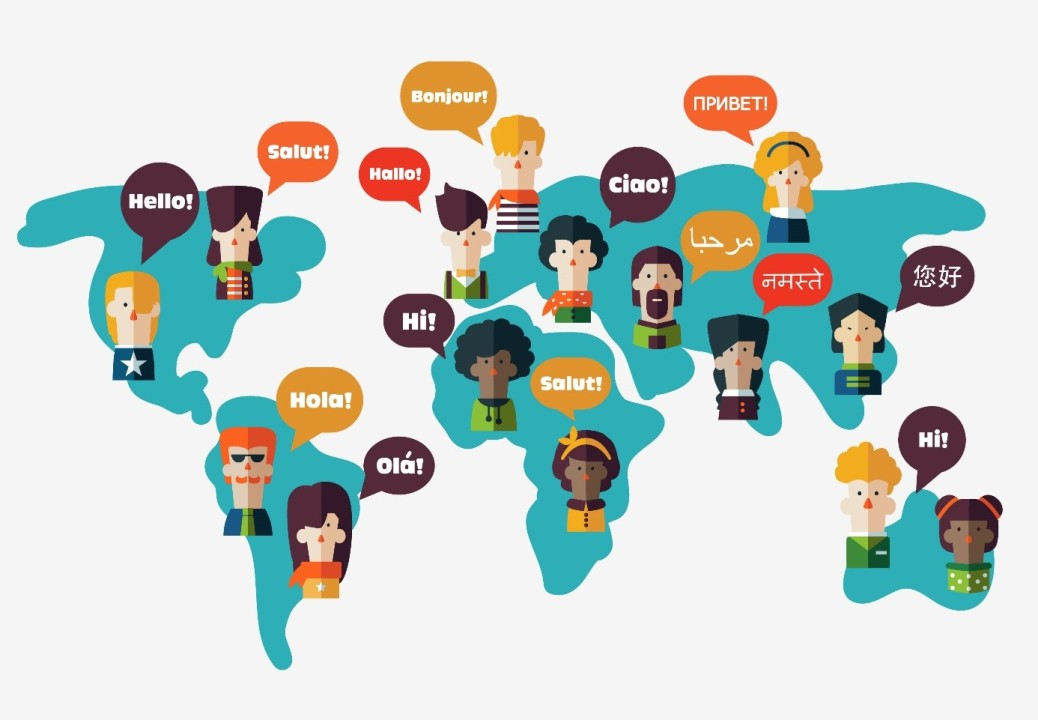
In intercultural communication, two different communication styles can be distinguished. In “high-context” cultures, employees need to exchange little information in order to work together. Whereas in “low-context” cultures, on the other hand, communication is based on the sharing of clear, precise information.¹
For example, “the Dutch and the Swedes have a very direct communication style compared with the French. When a Dutch person says ‘do this’ or ‘send me that document’ to make a request, a French person may hear it as an order, because they are used to formulations such as ‘could you please send me that document’.” It’s best to be aware of this to avoid misunderstandings!
| Communication style | Low-context cultures | High-context cultures |
|---|---|---|
| Communication styleWhat it looks like | Low-context culturesExplicit, direct communication, based on sharing clear and precise information | High-context culturesImplicit, indirect communication: little information is exchanged |
| Communication styleCountries most often cited | Low-context culturesUnited States, Canada, Australia, Northern Europe (Germany, Scandinavia, United Kingdom), Switzerland | High-context culturesAsia, Africa, Middle East, Latin America, Southern Europe (Spain, Greece, Italy, etc.), France |
Relationship with time
Edward T. Hall’s work also shows that our relationship with time depends on our culture.
- “In time-oriented cultures (called monochronic cultures), time is non-negotiable. Meetings must always start and finish on time, and deadlines must be respected and met.” There’s also a tendency to plan work rigorously and focus on one task at a time. This is particularly the case in Northern Europe, Anglo-Saxon countries, and Japan.
- “In fluid time-oriented cultures (or polychronic cultures), time is a more random concept. There’s no urgency to get one thing done since priority is given to managing the relationship.” Deadlines are flexible, and employees can work on several tasks at once. This is particularly the case in Southern Europe, the Middle East, Latin America, and parts of Asia.
| Relationship with time | Monochronic cultures (fixed time) | Polychronic cultures (fluid time) |
|---|---|---|
| Relationship with timeCharacteristics | Monochronic cultures (fixed time)Linear perception of time, punctuality is a must, rigorous planning, deadlines must be met, single-task work | Polychronic cultures (fluid time)Cyclical perception of time, focus on relationships, tolerable delays, flexible deadlines, multitasking |
| Relationship with timeCountries most often cited | Monochronic cultures (fixed time)United States, Canada, Australia, Northern Europe (Germany, Sweden, Netherlands, United Kingdom, etc.), Switzerland | Polychronic cultures (fluid time)Asia (excluding Japan, South Korea and Taiwan), Africa, Middle East, Latin America, France, Southern Europe, Eastern Europe, Russia |
Conflict management techniques
Finally, our culture influences the way we handle conflict. “In Germanic and Anglo-Saxon culture, confrontation isn’t so much a big deal. We believe that conflict revitalizes,” and that dealing with it openly is better for all. Conversely, “In Asian and Oriental cultures, we tend to avoid conflict and prefer to call on a mediator to settle differences.” So, if you’re working with different cultures, you need to identify a mediator before conflicts ever start to arise (and they most certainly will!)
Clarifying work processes
Clarity and transparency are your best allies in dealing with these cultural differences. “From the very first moments of collaboration, you should agree on the processes to implement to work well together, and formalize them in writing” (with a tool like Holaspirit, for example).
In particular, clarify:
- preferred communication styles (formal or informal, direct or indirect)
- preferred communication tools (and formats such as chat messages, publications, meetings, or email to use for all your various exchanges)
- commonly used terms and acronyms and their meanings
- notions of time you’re going to adopt (fixed time or fluid time), and the degree of flexibility with deadlines
“All these processes are essential for building a multicultural team and creating a relationship between members that’s built on trust. They must therefore be put in place even before you define your objectives.”

Remaining flexible about your working language
Without a doubt, English is the language most often used by multicultural teams. However, it has to be said that employees don’t always have the same level of proficiency.
“When we hold meetings in English, we often observe that the people who express themselves the most are those who are most at ease in the language. Those with a lower level of English, on the other hand, are less likely to dare express themselves, for fear of making a mistake,” stresses Nathalie Lorrain.
In addition to developing language skills, there are several initiatives that can help you make your intercultural communication more inclusive. “The first is to favor a form of anonymous feedback” (via a survey, for example). This creates a climate of psychological safety where everyone feels free to express their opinion without fear of negative repercussions.
“The second [initiative] is to give employees more time to express themselves through a more asynchronous format” (a publication on your enterprise social network, for example). Finally, whenever possible, “offer employees the opportunity to express themselves directly in their mother tongue.”
Creating moments of conviviality
“With the hybrid work revolution, we’re witnessing a globalization of communication.” Cultural differences are less visible than in face-to-face meetings, which can give the impression that everything is running smoothly, when the reality is quite different. “During videoconference meetings, schedules and speaking time are more respected. However, teams have less opportunity to exchange ideas, and this can create a lot of frustration.”
To prevent distance from affecting team collaboration, then, “It’s essential to organize regular social events.” Certain rituals can be carried out remotely using videoconferencing tools, but face-to-face meetings must not be neglected. Nathalie Lorrain is convinced that “for a relationship of trust to develop, teams need to meet in real life.”
Rolling out an internal communications tool
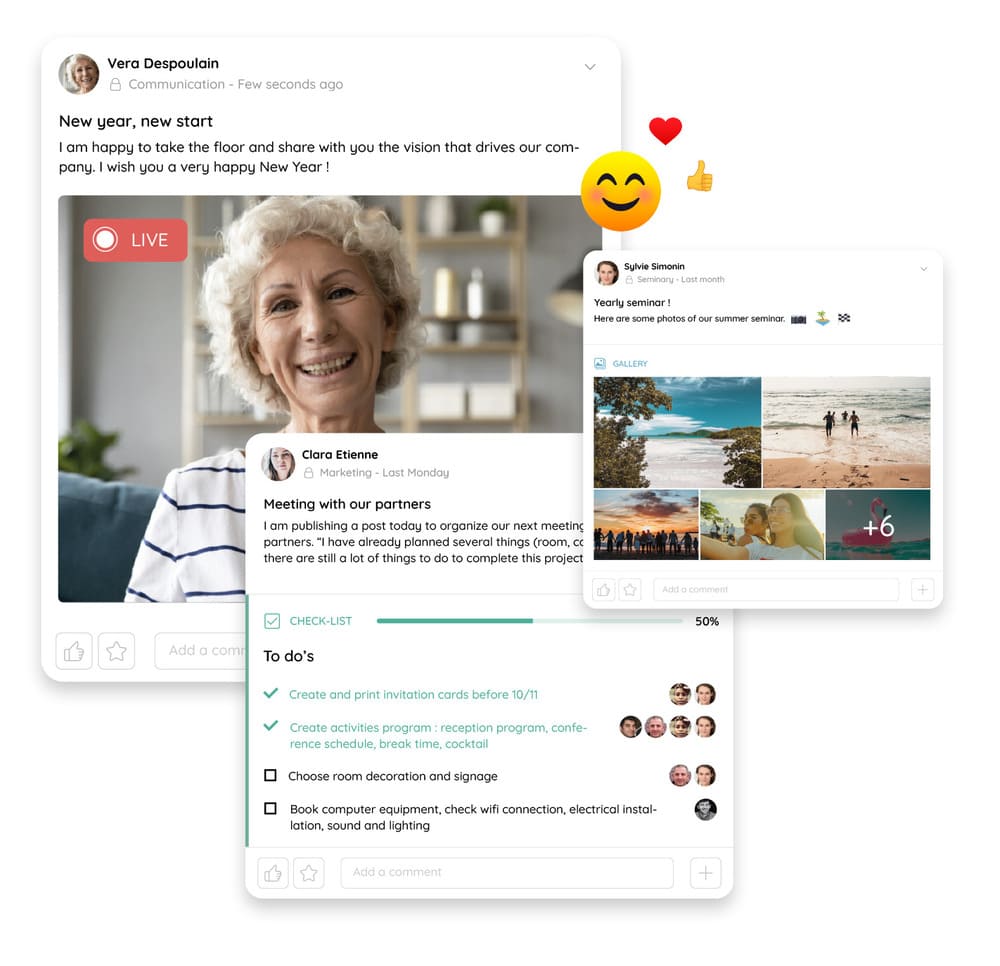
A number of digital tools are available to facilitate intercultural communication and organize social events. Talkspirit is one of them.
Our solution offers you all the tools you need to boost your internal communications and facilitate collaborative working between your hybrid teams. Talkspirit includes:
- chat and videoconferencing
- a customizable home portal that lets you to create pages adapted to the different roles and working languages of your employees
- publications organized by group so everyone shares the right information with the right people
- a shared agenda that simplifies the organization of meetings and team building activities
- a project management module to monitor your projects via kanban boards
I’ll take it all, you say? Talkspirit is available in 8 languages, and it features an automatic translation function that helps you quickly understand publications.
Key takeaways
To master intercultural communication, it’s not enough to know how to speak the other person’s language. It also requires an interest in the other’s culture, and the ability to adapt to it. This means “showing empathy, and accepting that each culture has its own truth“, and that no one culture is “better” than another.
“With globalization, we’re steering more and more towards Asia,” says Nathalie Lorrain. “So, it’s time to adjust our Western reflexes,” so that we can adapt to and integrate other cultures.
Would you like to discover more best practices for improving your internal intercultural communication in onsite and hybrid modes? Download our white paper, “The Future of Work: Make Way for Hybrid!” 👇
FAQ
Because diversity pays: companies in the top quartile for gender diversity on their executive teams are 39% more likely to outperform their bottom-quartile peers financially, a gap that has kept widening since 2015 (McKinsey, 2023). That same diversity brings communication challenges, which have to be addressed for the performance to follow.
Creating a common frame of reference, and being extremely explicit. Teams from different cultures who speak the same language still need a shared framework, because everyone has their own vision of the world and their own cultural frame of reference.
In high-context cultures, employees need to exchange little information in order to work together. In low-context cultures, communication is based on the sharing of clear, precise information. Knowing which one you are dealing with avoids misunderstandings.
In time-oriented, monochronic cultures, time is non-negotiable: meetings must start and finish on time, deadlines must be met, work is planned rigorously and people focus on one task at a time. In fluid time-oriented, polychronic cultures, time is a more random concept, priority is given to managing the relationship, deadlines are flexible and employees can work on several tasks at once.
Its work processes, formalized in writing from the very first moments of collaboration: preferred communication styles, preferred communication tools and formats, commonly used terms and acronyms, and the notion of time adopted along with the degree of flexibility on deadlines.
Three initiatives are recommended: favor a form of anonymous feedback, via a survey for example, to create a climate of psychological safety; give employees more time through a more asynchronous format such as a publication on the enterprise social network; and whenever possible, let them express themselves directly in their mother tongue.