Magali Noé: "Building trust is a prerequisite for any successful digital transformation project"
.svg)
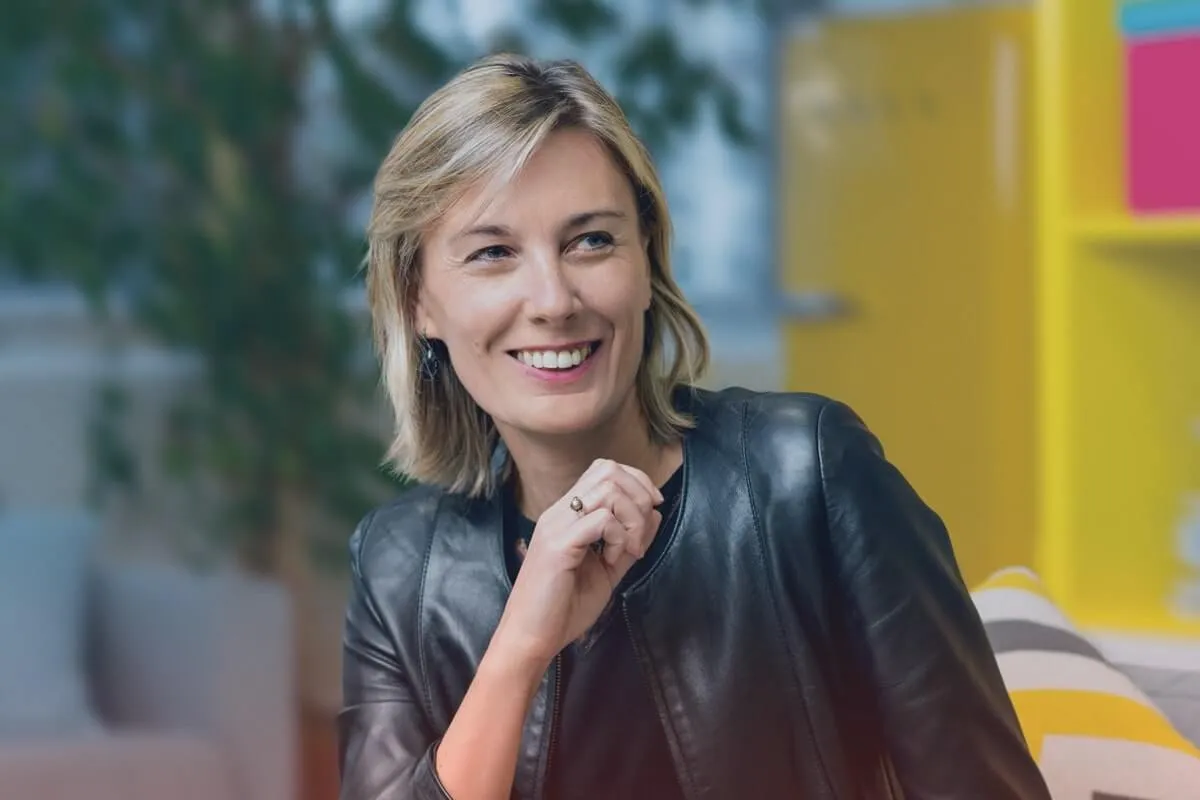
When we asked Magali Noé what her keyword for digital transformation was, the answer came as an obvious one: trust! The Chief Digital Officer of the CNP Assurances group knows a thing or two about it. Also head of the CNP Connected Clients Business Unit, she oversees Youse Europe, an entity that creates online solutions built on trust to give everyone the means to act freely. Over to her.

Your keyword for digital transformation is "trust". Why did you choose that word? Why does it make sense today in the way you think about transformation?
After three and a half years as a CDO, I can say that creating a climate of trust is a prerequisite and a necessary condition for the success of a company's digital transformation project. And that applies at every level: executives, employees, managers.
That trust has to be part of the digital culture of the company being transformed. You might tell me it was already an integral part of the culture of the traditional company, but its intensity and its impact are far broader in the digital era. Potential damage spreads faster, the effects can multiply on a very large scale, everything is more visible with digital.
Brands and companies have to cultivate that trust with their ecosystem: customer relationships, supplier relationships, relationships with start-ups, relationships with partners, relationships with your shareholders, and of course relationships within the company itself.
Given the disintermediation we are seeing today, how do you create the trust that lets individuals sell products to each other and exchange services?
The paradox of this collaborative economy is that it is based on community principles and on a form of solidarity, while being quite individual, since it automatically pushes aside anyone whose behaviour goes against the interests of the community...
Keywords, all in "CO": community, confidence, crowd or co... crowdfunding, co-riding, co-renting, Eco (ecology, ecosystem). The tone of the collaborative economy swings between two concepts: community, solidarity and Individualisation (not paying for the "reckless drivers", for people in poor health, who do not look after themselves... who are different...).

To create the climate that peer-to-peer needs, the platforms and the players in the collaborative economy have understood that men and women trust people who resemble them more. We trust people who come recommended to us more. And we like having power: giving our opinion by leaving a rating or a review is one of the new powers connected customers have.
Trust, is there a link with the GDPR? Isn't user trust undermined by digital technology and the use of our data?
In a digital world where hackers have become professionals, digital trust has become essential. The GDPR provides a framework for that, and it is a good thing that Europe is setting itself apart from the rest of the world on this subject. Of course there are constraints, and some absurd things, but on the whole the GDPR is pushing us in the right direction: towards everyone taking responsibility and towards respect for privacy. The GDPR has put on the table a subject nobody wanted to own, it gives us a way to say no to certain abusive practices, to talk about them, to ask ourselves questions, to become aware of our own contradictions.
As professionals, we have a part to play and we have to take into account these permanent contradictions our customers live with, which are becoming sharper, I find, in the digital environment. For example, when it comes to personal data, customers want to protect it, but then they subscribe to free apps, ticking boxes without reading them...
Read also: Arnault Chatel: "Absolutely everyone has to be trained in digital"
What about customer relationships? How do you build a relationship of trust in a context where data is being exploited?
In this digital world, there is little room for secrecy. Connected devices give access to increasingly personal customer data and, ultimately, to a greater potential for creating value. But conversely, consumers today have unprecedented visibility into what goes on inside companies.
The way companies manage, secure and share their data can become a distinctive feature of their relationship with their customers. The companies that crack the trust equation will be best placed to collect the most useful data, to nurture the relationship and therefore to get the most out of digital.
To win customers and earn their loyalty, you have to start by earning their trust. The company has to be aligned with its values. The company can no longer cheat. Consumers want brands that commit, and commit for real, with actions.
Trust and transparency, what are the differences?
Sincerity, transparency and humility are, for me, the trust equation. The company has to be authentic, aligned with its values. Complaints on social media, viral scandals, "fake news"... Companies have good reason to fear for their image. Being transparent then becomes a decisive asset for generating trust.
Better transparency can be a real competitive advantage. Companies whose information sharing is more responsive and better managed do stand out as trusted brands in the eyes of their customers and of their whole ecosystem.
To maximise your trust capital, your company has to instil these values of transparency into its processes and its relationships; nevertheless, it remains essential to keep a clear view of the risks the company is exposed to. That means protecting sensitive information, but also making sure it is passed on and processed quickly and well, by the right people.
Trust and open innovation, how are they connected? How do you put it in place in a large company? In a large company working with startups?
Cooperation demands trust. Creativity demands trust. Open innovation is cooperation and creativity. To get started, to dare, you need confidence in yourself and in others. Whether for the company employees who are going to take part in open innovation or for the start-ups, the key to success is trust. We are so far apart in terms of how we work, our pace, our organisation, our governance, our vocabulary... To meet in the middle, each side has to take a step towards the other and take a win-win approach.
You have to be aware that it is not easy! The difficulty for employees is stepping back within a professional environment geared towards production and immediate profitability. And on the start-up side, the difficulty is the fear of being crushed by the large group. That is what we pulled off with Open CNP, the investment and partnership fund of CNP Assurances. Six partner start-ups.
And between employees themselves, how do you create trust in the face of change? Is it through trust that a digital culture is created?
The speed of technological change, the aggressiveness of innovation, the need to learn and to look for new talent, organisational and cultural challenges: digital transformation is a source of upheaval and uncertainty. Only one value stands out as a precondition for any project: trust. Whether it is about deploying a new technology, cutting costs, changing processes or adopting a new business model, most observers of the digital transformation of organisations tend to say it rests on two pillars: tools and training. Both are certainly essential, yet they are of no use if they are not preceded by one crucial element: trust.
With trust you create a digital culture, but also businesses and new offerings: that is what we pulled off with Youse, a 100% entrepreneurial start-up founded by employees, which addresses the societal issues of today. Its first offering deals with property rental.