
6 Best Practices for Building Team Cohesion
.webp)
.svg)
- Team cohesion combines two levels: social cohesion (trust and the quality of the relationships) and task cohesion (commitment to a shared goal and coordinated effort).
- It weighs on retention: according to a Gusto survey, 54% of American employees have stayed with a company longer than their best interest because of its strong sense of belonging and community.
- Six practices strengthen it: an inspiring purpose, recruitment aligned with the culture, a climate of trust, empowerment, communication and feedback, and activities personalised to the people involved.
- Psychological safety is the foundation and transparency a lever: the 2024 study run with Ipsos shows it also affects performance, meaningfulness and autonomy.
- Team building on its own is not enough; it works once combined with the other five practices and tailored to the people involved.
We often think salaries are the most important argument for attracting and retaining top talent. Well, think again: team cohesion is just as crucial! According to a Gusto survey, 54% of American employees have stayed with a company longer than their best interest because of its strong sense of belonging and community.
In addition to reducing turnover, team unity can also boost employee engagement, autonomy, and performance, as well as teamwork efficiency and, of course, quality of work life.
Team-building activities such as company picnics can help to improve well-being and team cohesion. On their own, however, they’re simply not enough to bring your teams together. So, without further ado, here’s a list of concrete initiatives to strengthen ties between your employees. You can execute these from the C suite, as well as from human resources and down the chain. Yes, this includes everyone, 😉 so take good note of what’s to come!
What is team cohesion?
Team cohesion is what keeps a group together and moving in the same direction, instead of working as a sum of individuals. It plays out on two complementary levels:
- Social cohesion: the quality of the relationships, the trust, and the plain enjoyment of working together.
- Task cohesion: commitment to a shared goal and the ability to coordinate efforts to reach it.
Both are needed. A team that gets along but does not know where it is heading burns its energy in discussion; a team aligned on its goals but short on trust stalls at the first disagreement. That is why cohesion and teamwork efficiency are built together.
A few signs that cohesion is slipping:
- disagreements no longer surface in the meeting, but afterwards, in small groups;
- information travels through private messages rather than shared channels;
- decisions are made outside the team, then announced to it;
- wins go unnoticed while mistakes get discussed;
- the same few people carry every initiative, and the rest simply execute.
The six practices below act on both levels at once.
1. Build around purpose that inspires
The first step to improving team cohesion is to identify your purpose, i.e. WHY you’re doing what you’re doing. Otherwise put, what ideal do you want to achieve? This is what will help give meaning to everyone’s work, boost motivation and create better alignment among all the different teams.
From this purpose will then flow the vision, mission, ambition and values of your company. It must be inspiring, authentic, and translate into real social, societal and/or environmental impact (not just financial!).
This was the work carried out by our Swiss customer QoQa before implementing Holacracy, an organizational model that develops team autonomy through a decentralized decision-making system.
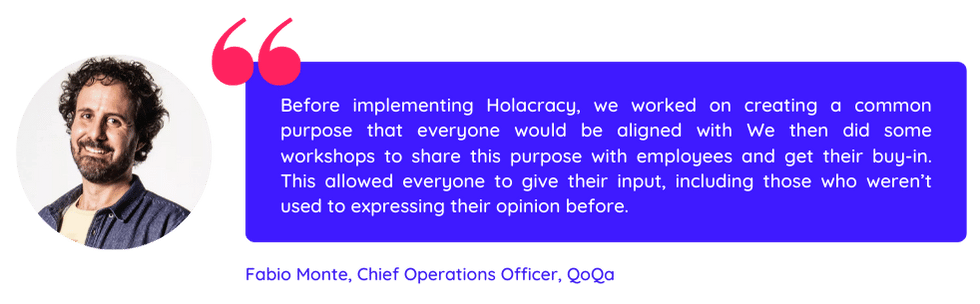
As the QoQa example shows, the hard work doesn’t end with finding your purpose. For it to be understood and applied, you also need to know how to explain it and share it with the rest of your teams!
2. Recruit the right people
Once you’ve clarified your purpose, you’ll also need to pay particular attention to the people you recruit. Are they aligned with your company’s purpose, culture, and values? Confirm this essential question during both your recruitment interviews and probation periods. Because to improve team cohesion, it’s not enough to recruit people with the right technical skills. Soft skills are just as (if not more!) important!
Of course, you don’t want to recruit robots who look exactly alike. Instead, look for diverse candidates with different degrees, experience, and personalities, yet all of whom share a common vision and values.

To assess the compatibility of candidates with your corporate culture (without recruiting clones), we advise you to incorporate these steps as part of your recruitment process:
- Make sure the candidate is the right fit for your business culture by conducting a culture-fit interview. Determining whether the candidate understands and shares the company’s values is essential.
- Include questions on corporate culture in your probationary evaluation forms (On a scale of 1 to 5, how closely aligned is the employee with the company’s [X] value.)
3. Build a climate of trust
Improving team cohesion also means creating a climate of trust where employees can communicate openly and take initiatives without fearing that their actions will be held against them. This is what we call psychological safety: a concept considered essential by 89% of U.S. employees polled!
Providing transparency is a good way to promote psychological security in the workplace. There’s more: in a study conducted in 2024 with Ipsos, we discovered that transparency also has an impact on performance, meaningfulness and autonomy.
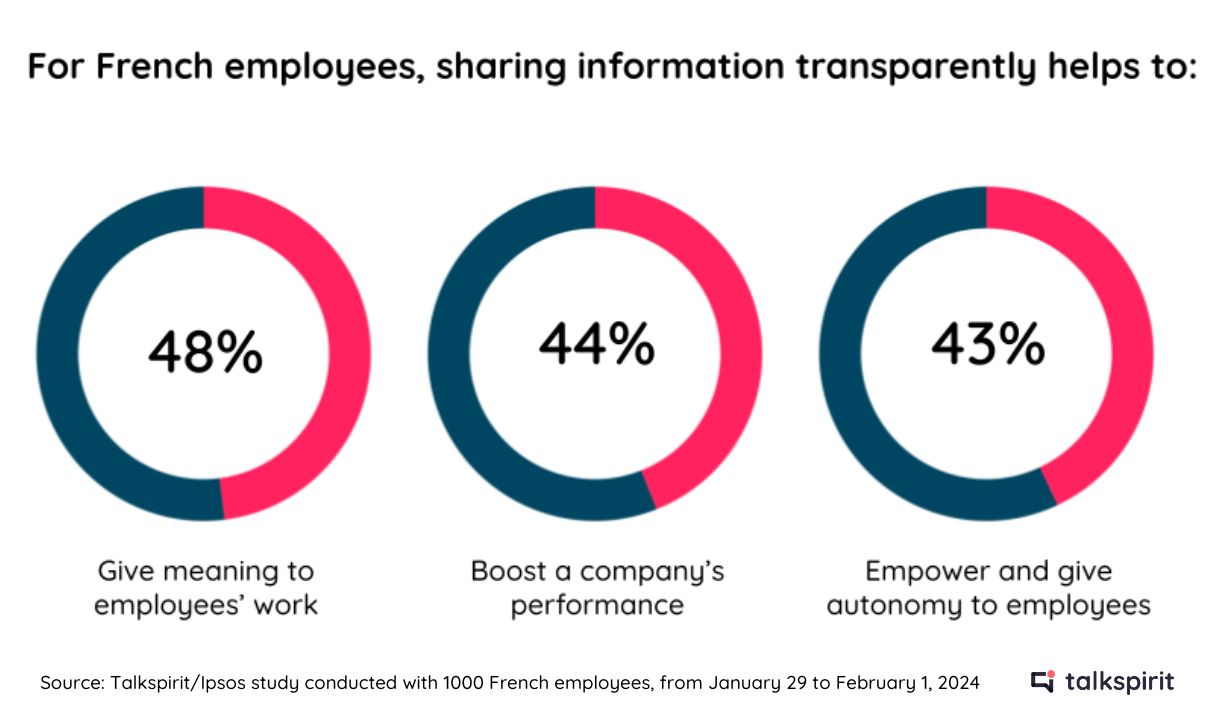
You need to clarify several issues to better develop this transparency, like:
- Who does what?
- Who makes which decisions?
- What are each team’s and the company’s goals?
- What processes and policies do all partners need to respect?
Don’t forget to equip yourself with a suitable tool to facilitate access to and visualization of all your information. With a tool like Holaspirit, you can document all your company’s roles, processes and goals visually. What a great way to improve clarity and team cohesion!
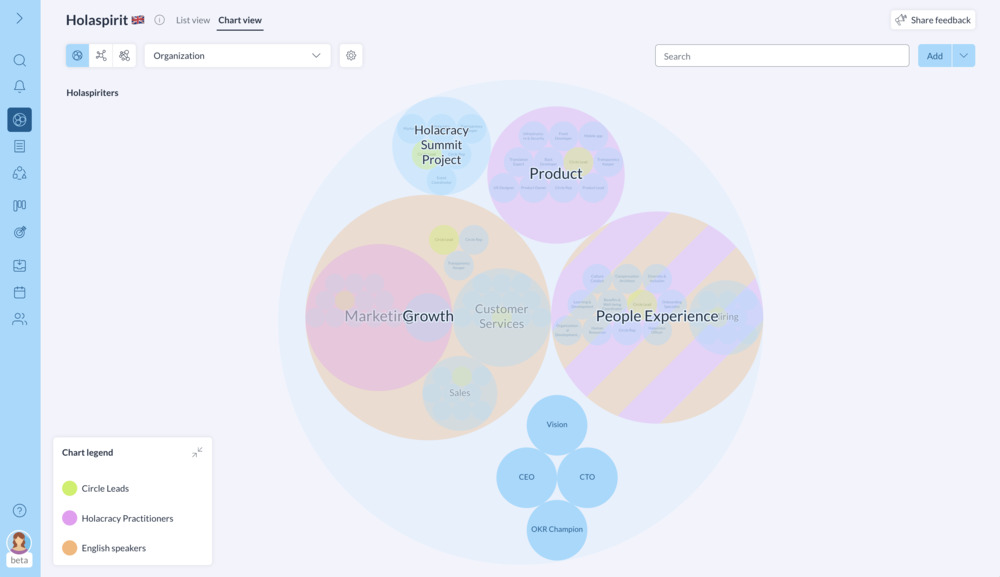
4. Empower employees
Tired of having to hold your employees’ hand at every step? Well, so are they! Instead of micro-managing, try empowering your employees. That way, they’ll be more committed, motivated, and inclined to help each other achieve their goals. That’s true team cohesion!
How do you empower your teams? Here are a few examples:
- Involve your employees in the decisions that affect them. Give them the opportunity to share their ideas and opinions.
- Delegate more strategic and project management tasks to your employees.
- Offer your employees training opportunities to help them develop the skills they need for their roles.
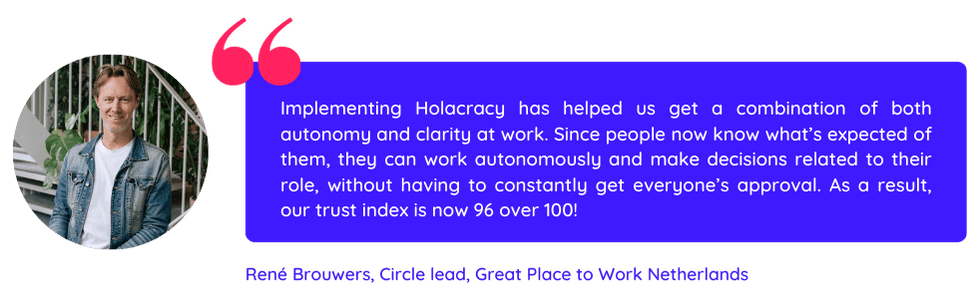
- Decentralize decision-making by creating autonomous teams capable of managing all aspects of their own roles and responsibilities. That’s literally what our client Great Place to Work™ Netherlands set for its goal when it implemented Holacracy. 👇
5. Communicate and give feedback
An autonomous, empowered team is also one that knows how to routinely communicate and share constructive feedback. And good communication fosters team cohesion just as well! Here are a few good communication practices to introduce your team to:
- Create weekly tactical meetings to discuss the progress of your projects, as well as any challenge you’re facing.
- Use the agenda to address potential tensions, so that together, you can find appropriate solutions.
- Clarify which types of information should be shared via which channels and with which people. For example, instant messaging works best for topics that need a quick, short response, while a news feed is best suited for asynchronous information sharing.
- Provide constructive feedback on a regular basis, both individually and collectively.
- Recognize and celebrate your team’s successes. For example, highlight their contributions on your enterprise social network.
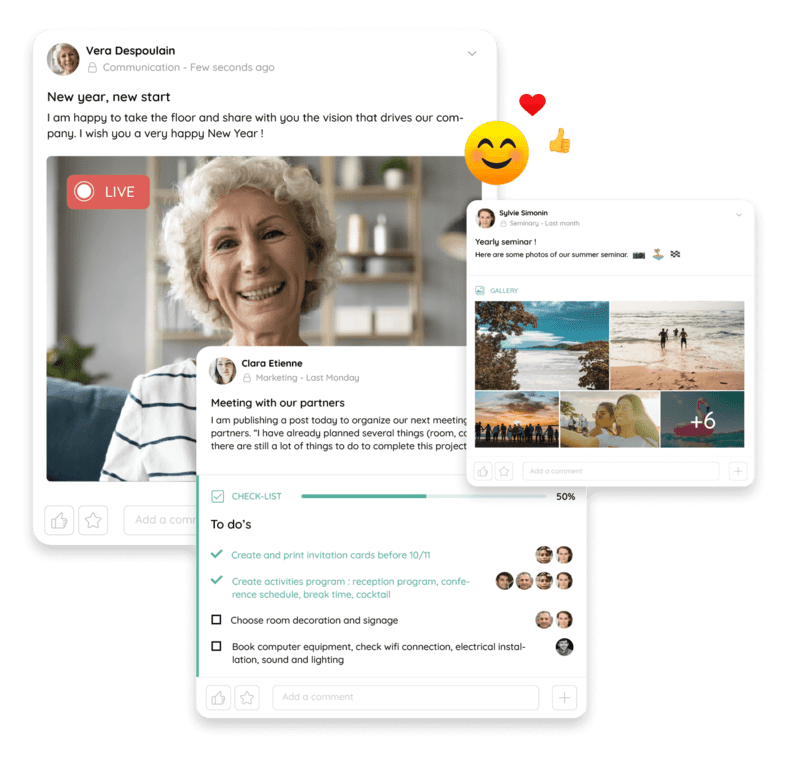
To make these exchanges as fluid as possible, you also need the right equipment! Easy to use and ergonomic, Talkspirit’s platform is ideal for boosting internal communication and improving team cohesion all at once. You can use it to chat, hold video conferences, share information in a targeted way, conduct surveys, organize events, and much more.
6. Offer your employees personalized activities
As we said earlier, team building alone is not enough to improve team cohesion. However, when combined with other actions, it can be particularly effective, even more so when you personalize the activities. So, before you organize anything, ask yourself whether your activities are in line with your corporate culture, and above all, whether they’ll appeal to your employees! Lastly, when in doubt, nothing beats a quick survey. 😉
If you’re coming up short on ideas, here are a few additional examples of team-building activities:
- foosball, ping pong, or even an esports tournament (depending on your skills)
- fitness or cooking classes
- a talent show
- quizzes to test your knowledge on a specific subject
- a “blind” music or film challenge
For the meetings themselves, a few icebreaker ideas are often enough to warm up the opening minutes and get the quieter voices talking.

Don’t hesitate to plug these activities into your company’s annual and other ongoing events (end-of-year celebrations, summer picnics, Easter, St Patrick’s Day, the back-to-school period, etc.).
Need to organize activities for hybrid or teleworking teams? Visit this article.
| Practice | Cohesion it strengthens | Sign that it is in place |
|---|---|---|
| Practice1. Build around a purpose that inspires | Cohesion it strengthensTask cohesion | Sign that it is in placeEvery team can connect its quarterly goal to the company purpose |
| Practice2. Recruit the right people | Cohesion it strengthensSocial cohesion | Sign that it is in placeNew joiners clear their probation without friction over values |
| Practice3. Build a climate of trust | Cohesion it strengthensBoth | Sign that it is in placeDisagreements surface in the meeting, not after it |
| Practice4. Empower employees | Cohesion it strengthensTask cohesion | Sign that it is in placeDecisions get made without escalating to the manager |
| Practice5. Communicate and give feedback | Cohesion it strengthensBoth | Sign that it is in placeEveryone knows where to find information, and when it will come |
| Practice6. Personalise activities | Cohesion it strengthensSocial cohesion | Sign that it is in placeTurnout no longer rests on the same few volunteers |
A final word
Improving team cohesion is essential for boosting employee engagement, performance, and well-being at work. And the happier and more committed your employees are, the more likely you are to retain them! So, remember that to unite your teams, you need to start by creating an inspiring purpose and recruiting people who are aligned with it. Developing communication, transparency, and psychological security also helps to improve team cohesion.
Finally, if you want your initiatives to bear fruit, you’ll need to think about implementing the right tools, such as Talkspirit for communication and collaboration, and Holaspirit to improve transparency and psychological safety.
PS: Would you like to discover more best practices for developing psychological safety in your team? Read our white paper to find out more 👇
Access White Paper
In this white paper, you’ll discover methods and tools for measuring your team’s level of psychological safety, an example of a participative workshop to involve your employees in the company strategy, as well as one testimonial from a company that has implemented this methodology.
FAQ
Yes, and it competes with salary. According to a Gusto survey, 54% of American employees have stayed with a company longer than their best interest because of its strong sense of belonging and community.
With purpose. The first step is to identify why you're doing what you're doing, the ideal you want to achieve. That is what gives meaning to everyone's work, boosts motivation and aligns the different teams. Vision, mission, ambition and values all flow from it.
Alignment. Are candidates aligned with your company's purpose, culture and values? Confirm it during interviews and probation periods, because recruiting people with the right technical skills is not enough, soft skills matter as much.
A climate where employees can communicate openly and take initiatives without fearing their actions will be held against them. It is considered essential by 89% of U.S. employees polled, and transparency is one of the ways to promote it.
No. Activities such as company picnics can improve well-being and cohesion, but on their own they're simply not enough to bring teams together. Combined with the other practices, and personalised to the people involved, they work much better.
It is what keeps a group together and moving in the same direction. It combines social cohesion, the trust and the quality of the relationships, and task cohesion, the commitment to a shared goal and the coordination of efforts. Both are needed: one without the other does not hold.


%252520(1).webp)