
How to Develop and Foster an Agile Workplace
.svg)
- Business agility is the ability to adapt quickly, innovate, and collaborate effectively. It is not the agile method, which is a set of working practices born in software development.
- Day to day it comes down to precise habits: showing unfinished work, settling what is yours to settle, writing where others can read, being willing to change your mind.
- The first obstacle is resistance to change. You clear it by involving teams from the start and training them in the new ways of working.
- Six practices move things forward: clear objectives (the OKR method), team training, a collaborative platform, collaborative rituals, experimentation, and tracking indicators.
- Three indicators are enough to measure progress: project success rate, project cycle time, and customer satisfaction (NPS).
- The manager level and the whole-organization level are covered elsewhere, in the articles on agile leadership and organizational agility.
The concept of agility in business refers to the ability to quickly adapt to change, innovate, and collaborate effectively. Achieving this can make all the difference in the world!
Ready to round the bend and transform your company into an agile workplace? Here you’ll find just what you need! To accomplish this, understanding how to develop this skill is essential.
In this article, we’ll explore the ins and outs of agility and the benefits it can bring to your organization. More importantly, we’ll share best practices and useful tips for companies looking to develop their agility and thrive in an agile workplace. Liftoff! 🚀
Understanding business agility
Definition
Business agility is an organizational strategy. ⚠️ Careful, don’t confuse it with the agile method, which represents a set of specific working practices in software development. Business agility enables you to remain competitive, flexible, and more responsive when opportunities present themselves. It’s the game changer that can seriously boost your performance!
Jonathan Chan, content creator and agility enthusiast, defines agility with this quote from the Chinese philosopher Lao Tzu:
“Life is a succession of natural changes. Don’t resist, this will only generate worries. Let reality be reality. Let things happen naturally.”
Adopting an agile approach is a whole philosophy! It means adopting new fundamental principles:
- Be more responsive and ready to adapt quickly to market fluctuations.
- Don’t be afraid of innovation and flexibility.
- Create a work environment that encourages collaboration between employees, with a dedicated tool that fosters an agile workplace.
- Support a more transparent governance model focused on collective success.
Once the preserve of software development, agility has now spread to all departments! From project management to human resources, it’s omnipresent, but it also brings its share of challenges…
Challenges
One of the major challenges when adopting agility in business is resistance to change. Many employees may be reluctant to abandon their usual ways of working for agility. To overcome this resistance, remember to involve all team members right from the start of the process. This starts with promoting transparent communication and the benefits of fostering an agile workplace. Then, support the change, with training in the new working methods.
The next challenge is usually to infuse agility right into the enterprise culture. This requires a change of mindset at all levels of the organization: from management to employees in the field. It may seem a daunting challenge, but there are ways of meeting it! Starting by encouraging a culture of collaboration and adaptability, it will already be easier to integrate agility into your corporate culture and agile workplace.
Finally, in an agile approach, there can be a tendency to keep one’s nose to the grindstone. Big mistake! Business agility is not a fixed process, but rather a continuous process of learning and improvement. Thus, it’s essential to regularly evaluate the agile practices in place and make any necessary adjustments.
The benefits of corporate agility
Adopting agility in business offers significant benefits that can contribute to organizational growth and success! What follows are just a few:
- Market changes become opportunities! By adopting an agile approach, you’ll be able to adapt to market changes more easily. A considerable perk if you want to stay ahead of the competition and be the first to seize opportunities with high added value.
- You develop an environment that’s conducive to innovative ideas and creativity. What better way to differentiate yourself in the marketplace than to develop innovative products and services? By encouraging collaboration, open communication, and experimentation, you can unleash your teams’ creative potential!
- You manage problems better. With agility, you’re better able to cope with difficulties and periods of declining performance or uncertainty. The transparency and flexibility of agile teams facilitate collaborative problem-solving. With agile practices, you can turn obstacles into opportunities for progress, all the while boosting solidarity!
- You get better customer satisfaction. If you can keep up with your customers’ needs and respond quickly, they’ll THANK YOU. ❤️ By focusing on agility, you can improve your support team’s responsiveness, demonstrate your reliability, and develop stronger long-term customer relationships.
What an agile workplace looks like day to day
Agility is not decided in a boardroom. It shows in how a team works on a Monday morning, in what it settles on its own, and in what it is willing to show before it is finished. These are the habits that separate an agile work environment from one that only calls itself agile.
What changes for each person
- Showing unfinished work. Asking for feedback halfway through costs a few minutes; asking after delivery costs a rewrite. It is the simplest agile habit to adopt, and the rarest.
- Settling what is yours to settle. A reversible, low-cost decision does not need to travel up the org chart. That only works when the scope of each role is written down rather than guessed at.
- Writing where others can read. A decision explained in a direct message does not exist for the rest of the team. Public by default is what makes a fast reaction possible at all.
- Being willing to change your mind. New information that never changes a plan is information nobody is really listening to.
What changes for the team
- Short cycles instead of one long project. Splitting work into two to four week stretches lets you correct course while the course can still be corrected.
- A regular meeting that clears obstacles. Not a meeting where everyone reports in, but one where the team names what is blocking and who picks it up.
- Information open by default. Open channels, accessible notes, shared objectives: nobody can react quickly to something they never saw.
- Mistakes told, not buried. A team that writes down what went wrong and what it learned moves faster than a team that never seems to have a problem.
These habits belong to the everyday life of a team. Two other levels exist and are covered elsewhere on this blog: how a manager leads a team, in agile leadership, and how a whole company structures itself for responsiveness, in organizational agility.
Best practices for developing business agility
Define clear objectives
Before embarking on your agile adventure, take the time to define clear and precise objectives. What are you seeking? Better collaboration? Or better overall performance? Maybe better understanding of the competitive marketplace?
These goals must be aligned with the organization’s overall strategy and serve as a compass to guide your efforts. By having a clear vision of what you want to achieve, you’ll be able to direct your agile initiatives towards the desired results.
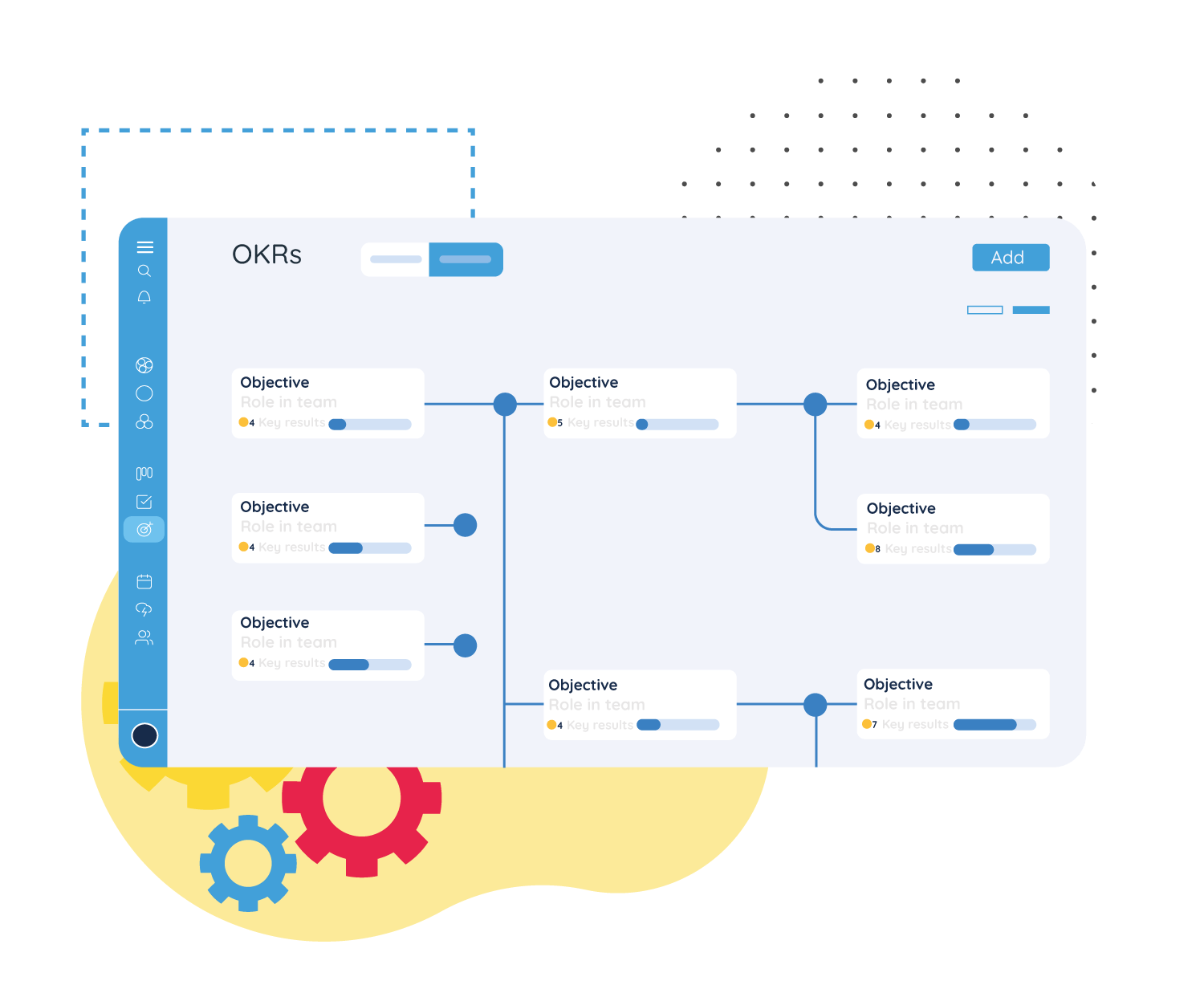
To set goals, we recommend the OKR method. Start by setting ambitious yet tangible and measurable goals for your team or organization. Break these down into key results and actions to achieve those goals. Involve the whole team in this process to foster commitment and create an agile workplace. Finally, use tools like Talkspirit to track and align your objectives throughout their achievement.
Find out how Talkspirit can help you implement the OKR method today! 🚀
Train and raise team awareness
Agility is like a philosophy. To adopt it, you need to understand it, so some management effort will be required. Organize training sessions to explain the principles of agility and the benefits it can bring to the organization. To raise awareness, involve them in the process by encouraging discussion and feedback.
Adopt a collaborative platform
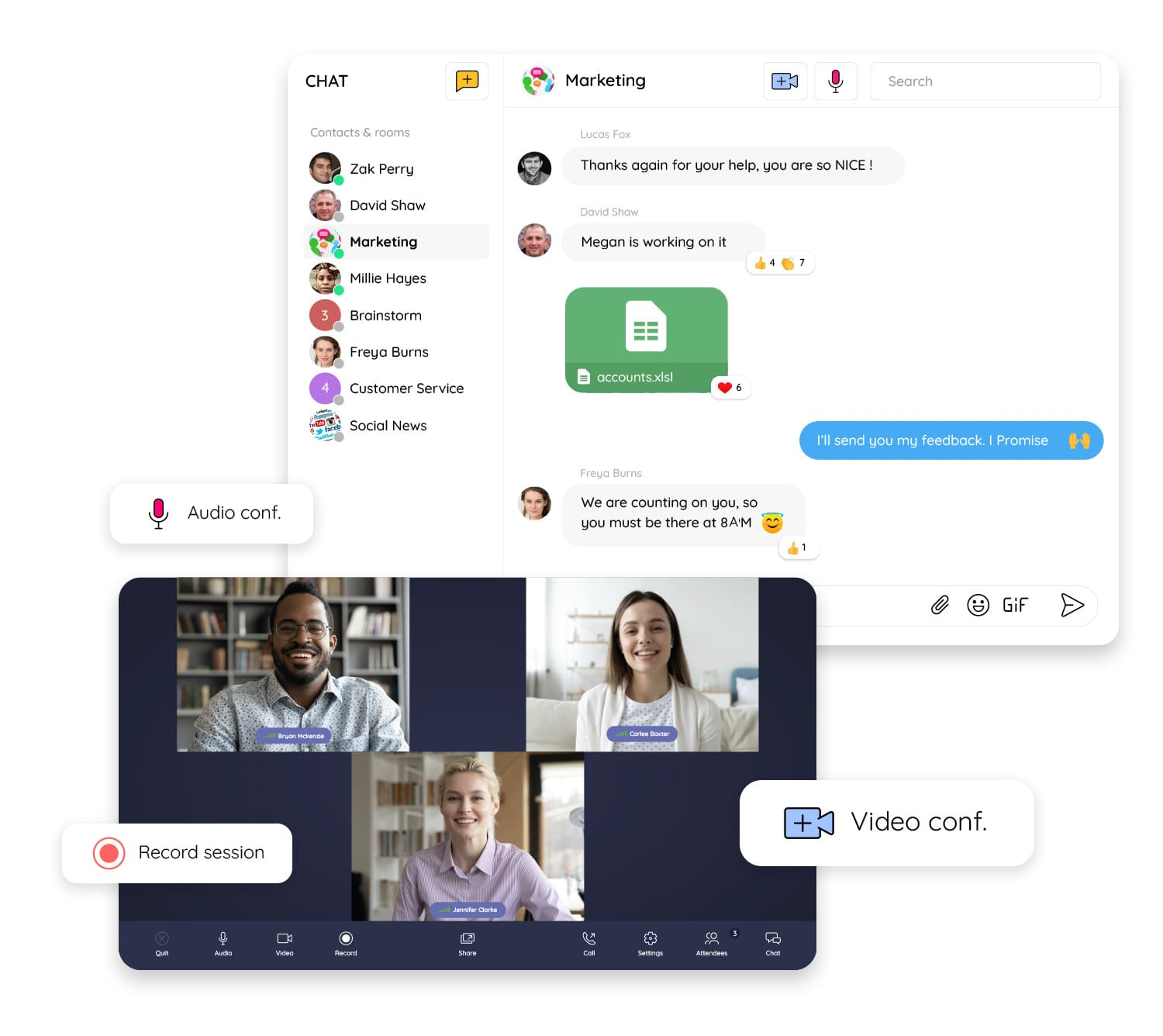
Agility relies on collaboration and effective communication between team members. To facilitate this crucial aspect, adopt a collaborative platform that will enable your teams to work together seamlessly and in sync. Whether for project management, document sharing or instant communication, a collaborative platform is the ideal medium for developing agility!
One platform in particular stands out for its all-in-one nature and high level of security: Talkspirit! To find out how Talkspirit can boost collaboration and agility within your company, request a demo below.
Implement collaborative practices
Encourage collaborative practices such as regular meetings and brainstorming sessions. There are also agile practices such as sprint reviews. These periodic meetings are specific to agile companies. During these meetings, agile teams present the features developed during the sprint and gather feedback from users and stakeholders to determine future adaptations.
Overall, create an environment where everyone has their place! A space where ideas are shared freely, where team members feel psychologically safe, and where decision-making is collective.
Encourage experimentation and collective intelligence
Encourage team members to step out of their comfort zone, test new ideas and share their learning with others. Stimulate creativity to create an environment where mistakes are seen as opportunities, and develop collective intelligence.
Set up KPIs to track
Finally, measure the effectiveness of your initiatives to develop business agility and adjust your strategy. To do this, you need to establish key performance indicators (KPIs) or key results to be achieved (if you use the OKR method). For example, you can track:
- Project success rate: Track the percentage of projects completed on schedule. An increase in the project success rate may indicate a greater ability to adapt to change.
- Project lifecycle: Measure the time it takes to complete a project from start to finish. A shorter duration may be a sign that your project team is working more efficiently thanks to your agile approach.
- Customer satisfaction rate: Assess customer satisfaction with the products or services delivered. The Net Promoter Score (NPS) can help you achieve this. An increase in your customer’s satisfaction rate may indicate that agile practices are more effective in meeting customer needs.
A final word
You now have the keys to understanding why and how to create an agile workplace. By putting the advice shared in this article into practice, you’ll be able to improve your organization’s flexibility, productivity, responsiveness, and collaborative practices.
Are you wishing to adopt an agile approach but don’t know what methodology and tools to adopt? Contact our team for personalized support:
FAQ
Business agility refers to the ability to quickly adapt to change, innovate, and collaborate effectively. It is an organizational strategy, and should not be confused with the agile method, which represents a set of specific working practices in software development.
Resistance to change: many employees may be reluctant to abandon their usual ways of working. Involve all team members right from the start of the process, promote transparent communication about the benefits, then support the change with training in the new working methods.
Market changes become opportunities you can seize first, the environment becomes conducive to innovative ideas and creativity, problems are handled better because the transparency and flexibility of agile teams facilitate collaborative problem-solving, and customer satisfaction improves through a more responsive support team.
The OKR method is recommended: set ambitious yet tangible and measurable goals for your team or organisation, break them down into key results and actions, involve the whole team to foster commitment, and use tools like Talkspirit to track and align your objectives throughout their achievement.
Project success rate, meaning the percentage of projects completed on schedule; project lifecycle, the time it takes to complete a project from start to finish; and customer satisfaction rate, which the Net Promoter Score can help you assess.
With one team and one short cycle. Pick a clear objective for the next four weeks, hold a weekly meeting devoted to obstacles rather than reporting, ask for feedback halfway through rather than at delivery, and write down what went wrong. After a quarter, measure project success rate and cycle time before extending the approach to other teams.



.webp)