


Transitioning your organizational from the common structure to a radical, Teal-like structure is no easy process.
While it is often much easier for startups that structure in such a way from the get-go, it is still a challenge with pros and cons at every turn.
We are here to provide you some insight into the process to help you be successful in creating the organization of your dreams.
How to Switch From a Traditional Organizational Design to a New One?
There is no easy answer for this question.
There are books, videos, podcasts, and all kinds of other resources which can certainly help provide you some clarity, insight, and direction.
However, every company will benefit from a different org chart design, whether that solution is mass-marketed or designed uniquely in-house.
So, whether you want to become a completely flat, Teal organization, or just be slightly more self-managed than you are today, here are the most important factors to consider.

1- You, as the business owner, need to want it
Of course you want the innovation, great PR, and better employee experience, but it's much more than that.
You have to want the idea of what you are trying to accomplish, even at the expense of the reality it entails.
Giving your employees autonomy means you need: to have less day-to-day control.
Giving your employees a voice means you need less decision-making power.
Giving your employees room to innovate means your organization could evolve in directions you never expected.
Unless you truly want the end-goal and are willing to do what is necessary to get there, it isn't worth trying.
2- The system and structure you go with needs to make sense to you
There are all kinds of methods of self-managing, from small processes to entire overhauls of how your company is structured. They all have their pros and cons.
However, none of them will work if you don't really understand and believe in how they work.
If you question what things mean or why they are the way they are, the answer should be clear to you. If the answer you get is, "It will make sense eventually ...", find a better method that you can actually understand.
3- Make sure your employees are on board
The hardest part of any large organizational change is ensuring every employee effectively makes the transition without pushing back against it.
The only way your company can successfully become self-managed is if the many individual people who help run your company every day also want that change.
There are lots of ways to go about this, from incentivizing early adopters, to making the change optional, to putting more time and effort into showing how it will be of benefit to each person.
If you don't do this, you will spend your whole time fighting and pushing away those who you need to support you the most during this lengthy process.
Where to Start When Designing a New Organization?
.jpeg)
This too is a tough question, as it's possible to successfully get there via a variety of different approaches. Still, this is what we recommend.
1- Get clear on what you do and don't want
Ignore all the systems, methods, fancy language, and awesome-sounding benefits out there. Think about what you really, truly want several years from now, and the things you absolutely are not willing to be flexible on. Finding your purpose helps a lot with this, but it goes even beyond the broad purpose.
Think about your ideal vision of how people work.
Do you want any individual to be able to do anything they can imagine if they have the drive to do so, or do you want everyone to have a say in every decision?
Do you want a company where every employee eagerly works there for life because it's that great of a job, or do you want a company that people often leave, but as better and more capable people than when they joined?
Do you want more face-to-face meetings that are productive and humane, or do you want to abolish the need for meetings entirely by being that efficient?
Do you want your company to stand loud and proud about political issues in your country, or do you want to remain a neutral party in all circumstances?
Do you want employees to have profound job security and psychological safety, or is it important that you be able to fire any employee in a heartbeat if you feel they have become a problem?
Do you want a flat, no-hierarchy structure, or do you want more structure than that?
Being transparent about what you want will help you determine how to get there.
Different systems are good at different things, and adopting one system when what you really want is something totally different will be a headache for everyone.
2- Consider your resources
In addition to what you want, what you have also matters.
If you have millions of dollars to spare, you can pay for expense, all-in-one solutions and have consultants on retainer to help you every step of the way.
If you are a startup, nonprofit, or don't have disposable profit yet, you may need to build something in-house, find a consultant who works for cheaper than the norm or has flexible and unique payment methods, or work out a deal to test an experimental new method just coming out.
In addition to money, you also want to consider the time investment.
Is this something you are comfortable implementing at a slow and steady pace over months or years, or would you like to do a massive overhaul over a few weeks?
Those take radically different approaches, and the latter will surely cost more money, energy, and dedication upfront for it to work.
Tips and Advice
Tip#1 – Define Where You Want To Go
Have a full understanding of what you want and how you'll get there before you start rolling anything out. Trying to implement a half-baked idea leads to confusion, uncertainty, and a host of other problems. You can't successfully implement a concept. Wait until you have something tangible and achievable.
Tip#2 – Communicate Clearly
Clearly, transparently communicate every step of the way. What people imagine is always going to be worse than the truth. If the transition will be hard, let your employees know. If you have no idea what you're doing, they will already know, so be honest and upfront about it. If you need help, ask for it - vulnerability creates trust. If things aren't working as intended, admit it so you can all work on resolutions together.
Tip#3 – Work At Your Own Pace
Implement at a pace that works for you. Even all-encompassing systems that will require you to adjust nearly every aspect of your current organization can be implemented bit-by-bit if you know how. Rather than a company-wide change, try implementing just the new meeting structures first. Once that is successful, work on another piece. This may feel like it takes longer, but by ensuring each piece is successful, you will have a successful end-result. If you implement an entire system all at once, you'll have to try to fix the plane midair while you are still learning to fly.
Tip #4 – Show Empathy
Remember that perception is reality. No matter how well you've explained it, if people are saying they are confused, your messaging is too confusing. Regardless of how patient you are being, if people feel rushed, you need to slow things down. Telling your employees their feelings are wrong will only create more problems, whereas trying to understand them while you both help one another work toward the goal will end better for everyone.
Tip #5 – Don’t Leave Anyone Behind
Don't leave anyone behind. Your current employees are your best resource and can make or break anything you strive for. If even one employee is confused, hesitant, or resistant, work with them to find the gaps and discover how you can improve your messaging or the system itself.
If someone is willing to speak up about the negative aspects of the change, it likely isn't that they are a bad employee, but rather they are one of the few who is confident enough to say what others are too scared to. If you leave that one person to fend for themselves, they may grow resentful or quit and everyone else who was looking to them as a saving grace will do the same.
On the other hand, if you help every individual who needs it, you will have understanding, loyal, appreciative employees who will help ensure the success of your organization.
How You Can Use Holaspirit To Design Your Organization

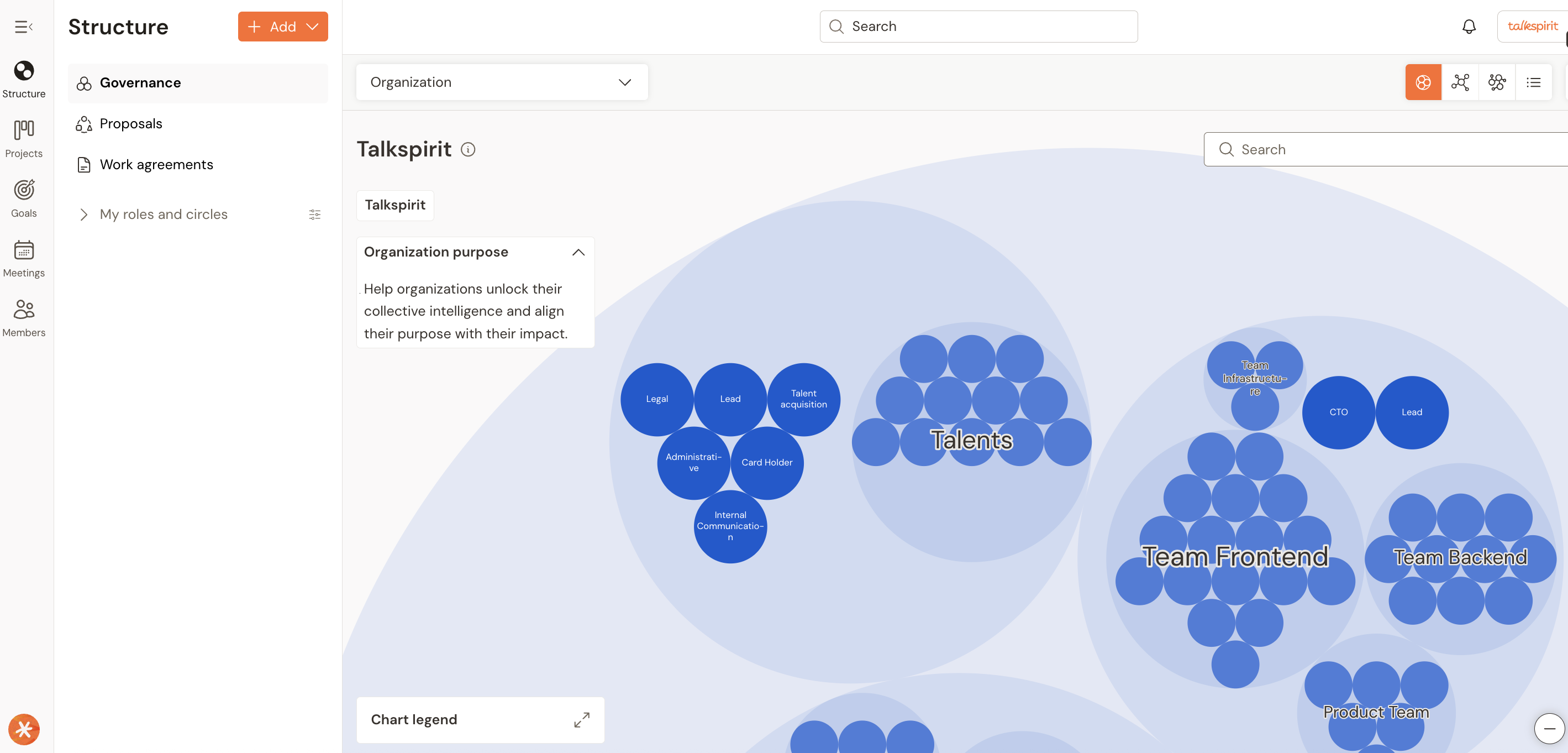
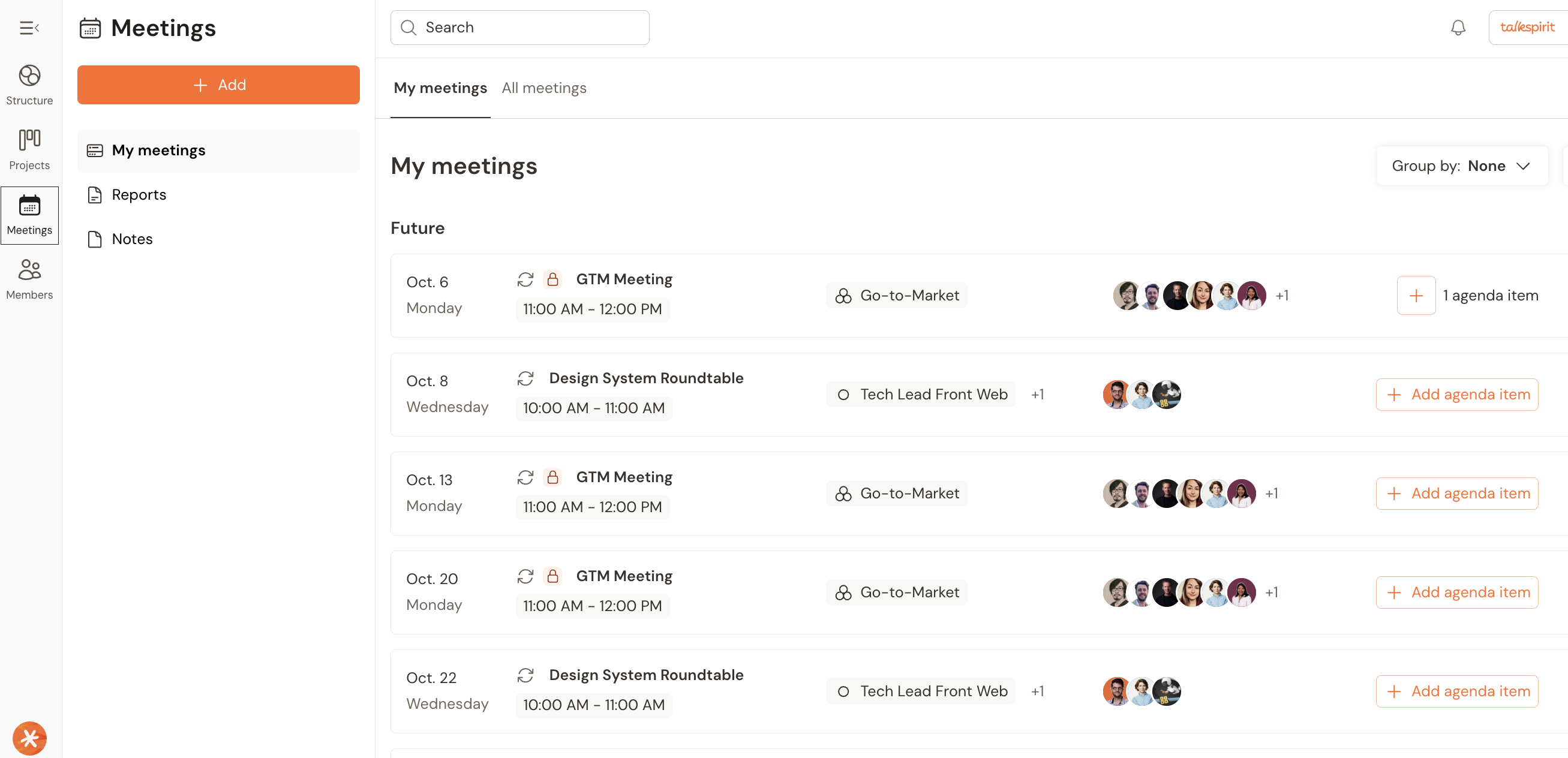
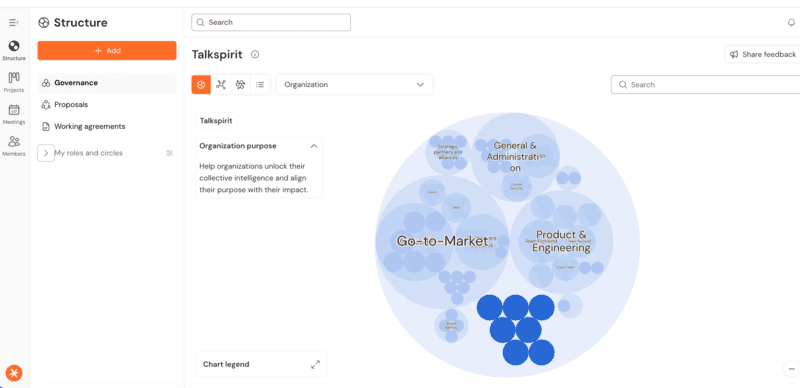
If you have just started using Holaspirit, we recommend checking out this article for a step-by-step process of how to get started. That will cover the technical bits, at least.
As for all the other more complex parts of transitioning to self-management, we are here to help!
Here are some of the ways we have your back throughout the entire process.
1- Holaspirit is Flexible and Customizable
Unlike some other platforms, Holaspirit isn't anchored to a particular model or method.
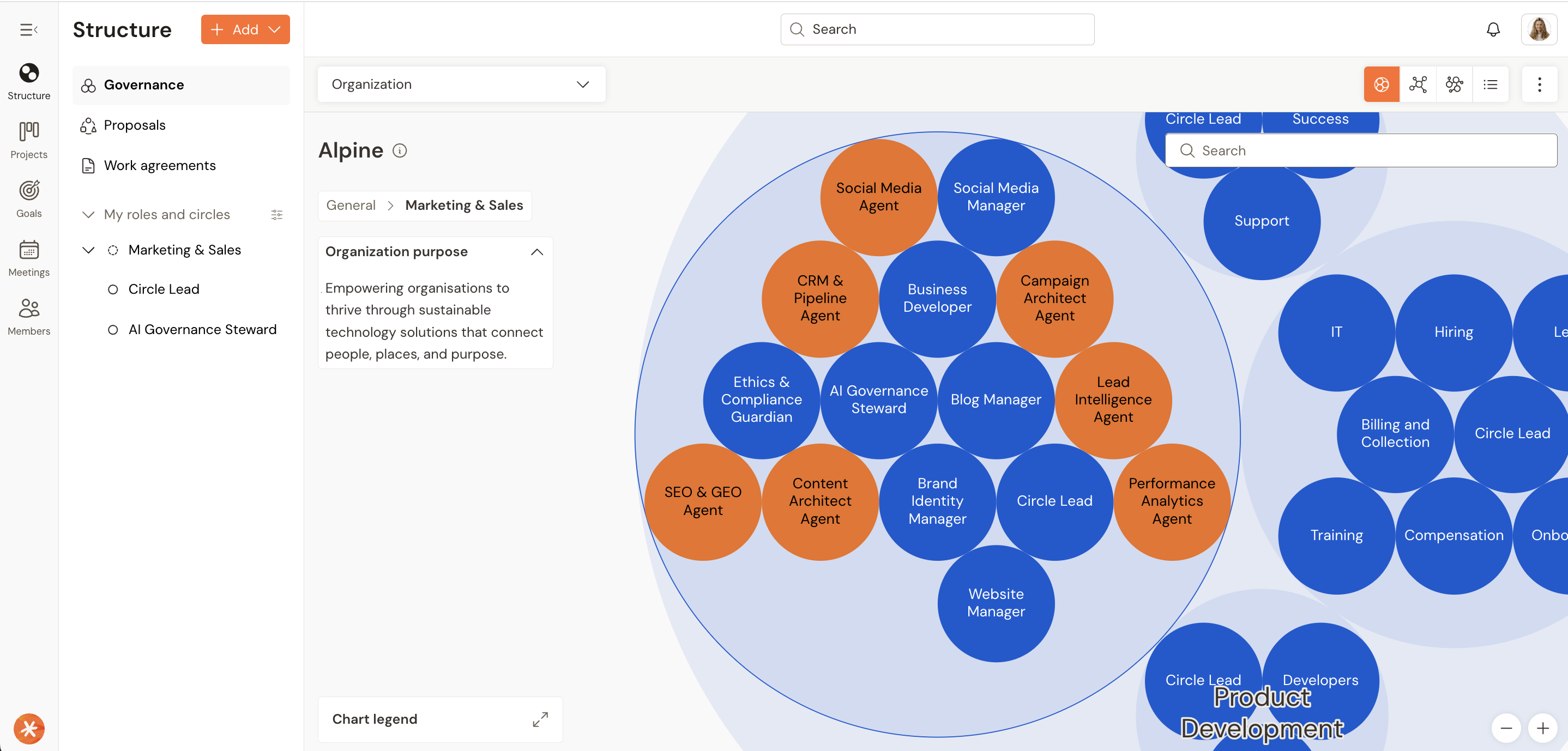
While the initial setup closely resembles Holacracy (due to the popularity of that method), virtually everything can be changed to accurately represent how your company decides to operate.
You can:
- change, remove, or add default roles that exist in every team,
- integrate your favorite app software so you can continue using the same tools you already know and love, and
- create custom fields for users so you can display as much information about each member of your organization as you'd like.
We will soon also have the ability to completely customize the format of the built-in meetings so that meeting structures also reflect how your teams currently collaborate.
In short - No matter how your organization chooses to operate, Holaspirit is flexible enough to help you do it more efficiently.
2- Dedicated Holaspirit partners
Holaspirit has partnered with numerous organizations who are experts in self-management implementation and have the understanding necessary to guide you through any of your needs with Holaspirit.
These partners are a great resource if you need help getting the most out of the platform or need some external guidance as you transition to self-management.
Not sure where to start?
The easiest thing to do is copy/paste every detail about how you are currently working into Holaspirit (please contact us if you would like help with that process). That way, you can continue working as normal without anything new or different to throw things off. You can then slowly make changes and explore all the functionalities of the platform at your own pace. Additionally, the transparent structure will serve as a way to get started, helping to highlight issues which may not have been as obvious before.
Additional Resources
There are tons of resources out there to help you with your transition, whether you're just pondering what to do or you are currently engaged in it.
Here are some of the ones we find valuable.
One Size Does Not Fit All
An article by Paul Walker, one of our partners who previously implemented Holacracy at Zappos. Here, he highlights the pros and cons of three of the most well-known methods of self-management and gives insights to consider.
Future of Work Periodic Table
This incredibly detailed software is a collection of nearly all aspects of the "future of work", from resources to companies who can help implement and different aspects to look into. It would take you a long time to look through everything in here, but that means it will stay valuable that much longer!


Révélez le potentiel de votre organisation.
Nous sommes là pour répondre à toutes vos questions et vous accompagner dans vos projets.














.jpg)















.jpg)




.jpg)
.jpg)




.jpg)
.jpg)


.jpg)

.jpg)


.jpg)


.jpg)


.jpg)


.jpg)

.jpg)
