
A thousand employees, 100% shared governance
"Having a strong intention to change wasn't enough. We needed a tool capable of supporting the concrete workings of this new organisational logic." — Talita Agudinho, Human and Organisational Development Specialist, EPPO

A thousand employees, 100% shared governance
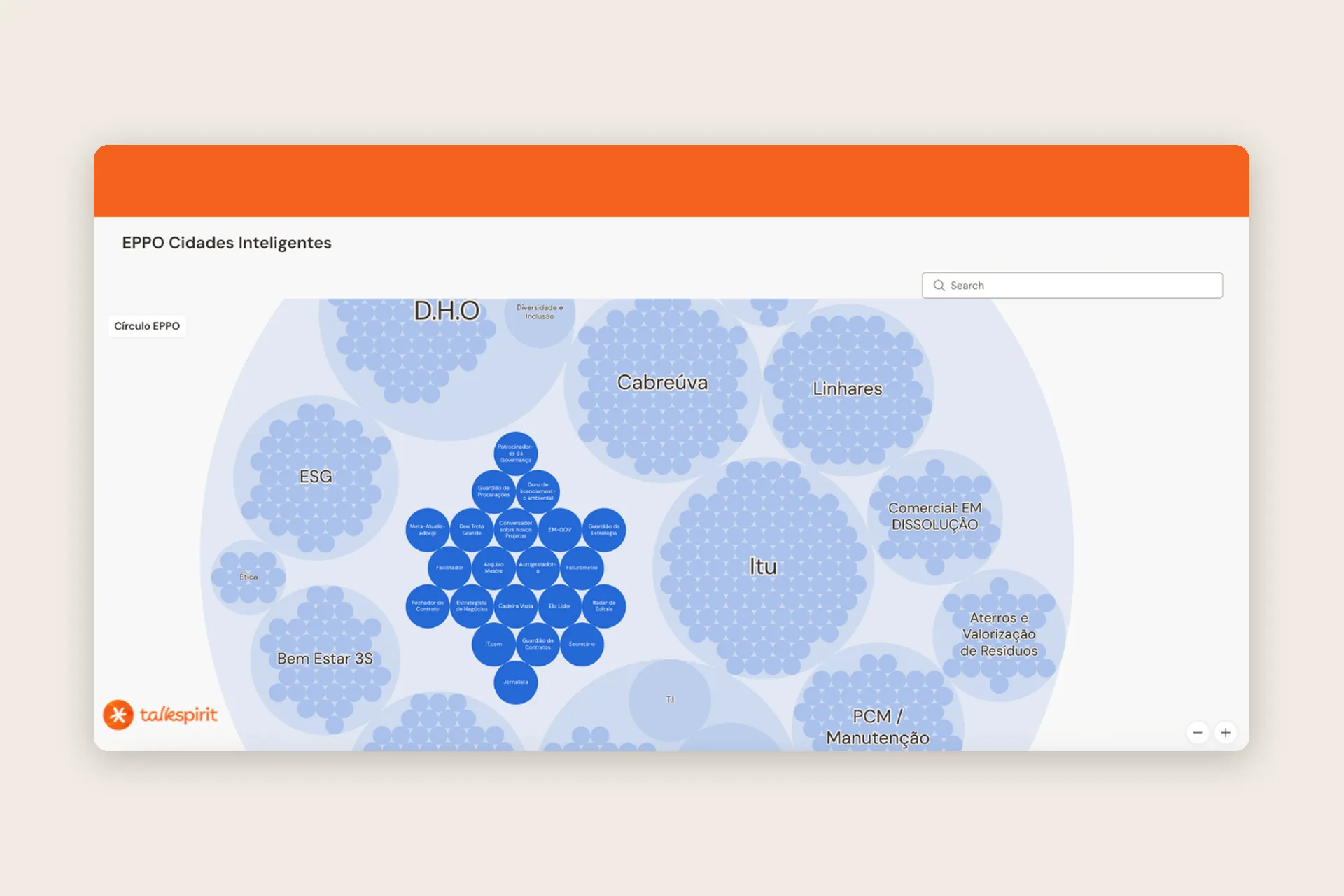
A Brazilian Smart Cities pioneer
Founded in 1995 by José Carlos Ventre and Daisy Ventre, EPPO is a Brazilian pioneer of Smart Cities solutions: solid waste treatment, urban cleaning, environmental education, smart water and sanitation management. Its services reach more than 700,000 residents. 1,000 employees, $40M in revenue.
In 2020, EPPO made a radical choice: abandoning the traditional hierarchical model for governance based on self-management — clear circles and roles — relying on the firm Target Teal and the O2 model (organic organisations), developed in Brazil.
"More than delivering services, we want to build solutions that create value for the business, for society, and for the environment. That mindset is reflected in how we organise ourselves: a distributed, collaborative structure, aligned with self-management." — Talita Agudinho, Human and Organisational Development Specialist
Self-management at 1,000, without losing rigor
The paradox: maintaining the rigor, traceability, and organisational memory required by audits and certifications, without falling back into static documentation — the opposite of the agility underpinning the new way of working.
A radical choice that needed the right tool
Traceability, organisational memory, certifications: rigor couldn't be sacrificed — nor could they fall back into static, procedural documentation.
A radical choice that needed the right tool
Traceability, organisational memory, certifications: rigor couldn't be sacrificed — nor could they fall back into static, procedural documentation.
A radical choice that needed the right tool
Traceability, organisational memory, certifications: rigor couldn't be sacrificed — nor could they fall back into static, procedural documentation.
From Miro to Talkspirit, in three steps
The transformation didn't happen overnight: it took three tools to find the right one.
The first circles on Miro
The first circles and roles are mapped out on Miro — a starting point, but not a governance system.
Migrating to GlassFrog
Better suited to Holacracy's logic. But as the structure grows, the tool hits its limits.
Adopting Talkspirit
On Target Teal's recommendation, EPPO adopts Holaspirit by Talkspirit — "HS," as the team affectionately calls it. A dedicated role is created to migrate the data. "It really was a turning point."
100% of the structure in Talkspirit
The platform has become the organisational memory, the traceability system, and the governance engine. No circle meeting happens without the Meetings module open: every role creation or change is logged live, in front of everyone — which speeds up learning by doing. And asynchronous governance lets proposals get approved without waiting for the next meeting.
Radical transparency, in practice
What Talkspirit made possible at the scale of 1,000 people.
of the organisational structure in Talkspirit
Hundreds of roles, circles, and policies managed within a structure that's constantly evolving — the platform keeps pace with the scale.
Hundreds of roles, circles, and policies managed within a structure that's constantly evolving — the platform keeps pace with the scale.
Every decision leaves a trace
A complete history of roles, tensions, and decisions: organisational memory is ready for audits, certifications, and structural changes.
A complete history of roles, tensions, and decisions: organisational memory is ready for audits, certifications, and structural changes.
Governance moves forward without meetings
Proposals are read and approved upstream, asynchronously — a practice that didn't exist before, and that improves the quality of synchronous decisions.
Proposals are read and approved upstream, asynchronously — a practice that didn't exist before, and that improves the quality of synchronous decisions.
Reports with no manual effort
Extracting reports on roles, policies, and organisational design makes it possible to analyse and evolve the structure, backed by data.
Extracting reports on roles, policies, and organisational design makes it possible to analyse and evolve the structure, backed by data.
We showed the auditors what we were already doing every day in Talkspirit. Living governance wasn't a side project: it was built into the way we work.

Thanks to the organisational map built in Talkspirit, everyone knows who does what and what their responsibilities are. This transparency helps each person better understand the direction the company is taking, and lets us align our efforts to fulfil our purpose.
Talkspirit played a key role in clarifying roles, responsibilities and cross-team collaboration within our hierarchical organisation. [...] The tool has also transformed the way we run our meetings. In the past, our meetings were often unproductive. Today, they are better structured, roles are clearly defined and decision-making is far more efficient.

Having a strong intention to change wasn't enough. We needed a tool capable of supporting the practical workings of this new organisational approach.

Organisational clarity and agility allow everyone to fully apply their skills and reach their full potential. It gives people wings. And every organisation needs that.
Adopting Holacracy has helped us gain autonomy and clarity. Employees know what's expected of them, so they can make decisions without constantly seeking everyone's approval. [...] The result: our trust index now stands at 89 out of 100!
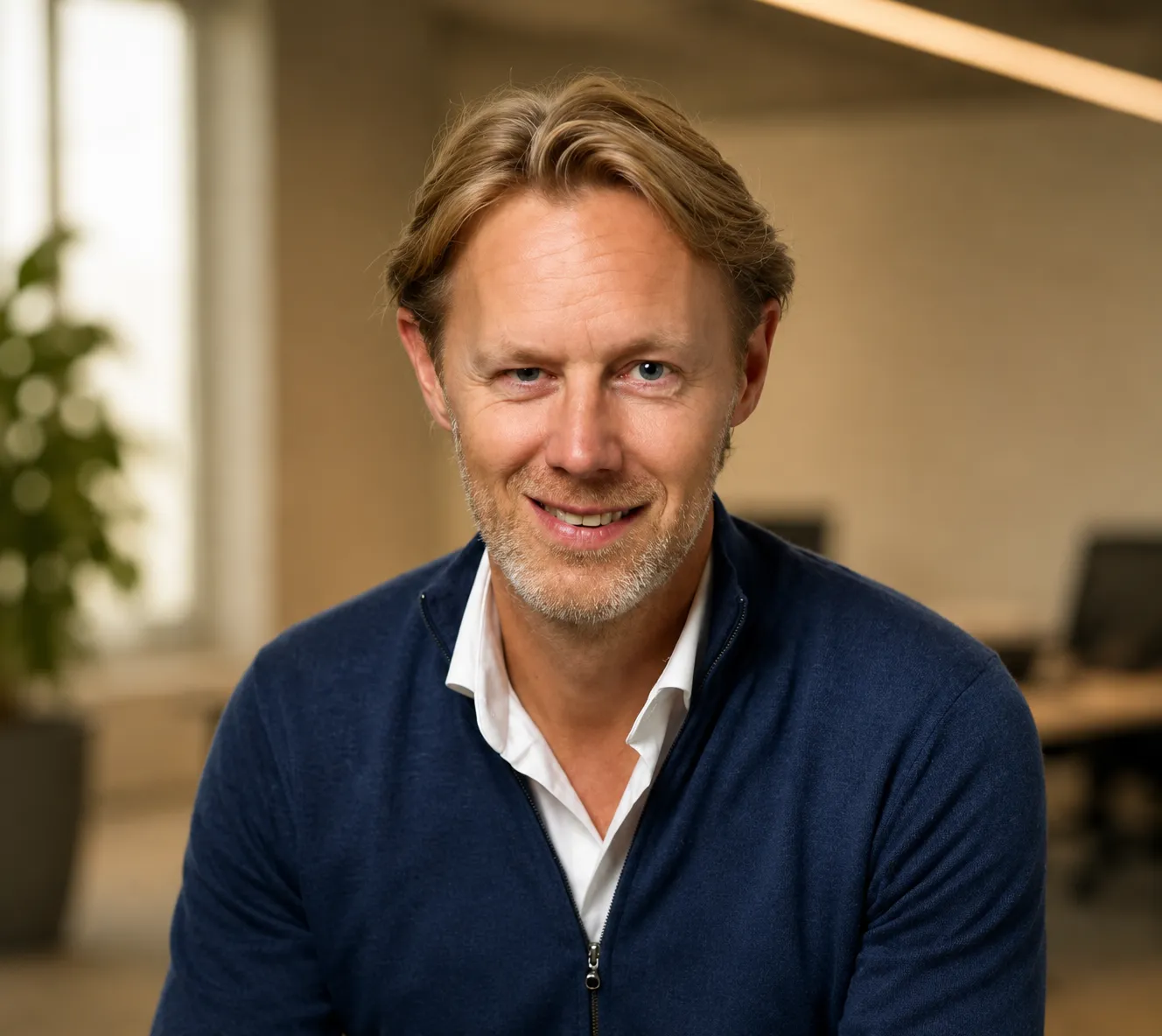
In the past, we would have managed with emails, but the documents would have ended up scattered all over the place. With Talkspirit, we share files directly in an organised, structured and centralised way. The latest updates are gathered in a single place, so we can discuss them in real time and act as quickly as possible.
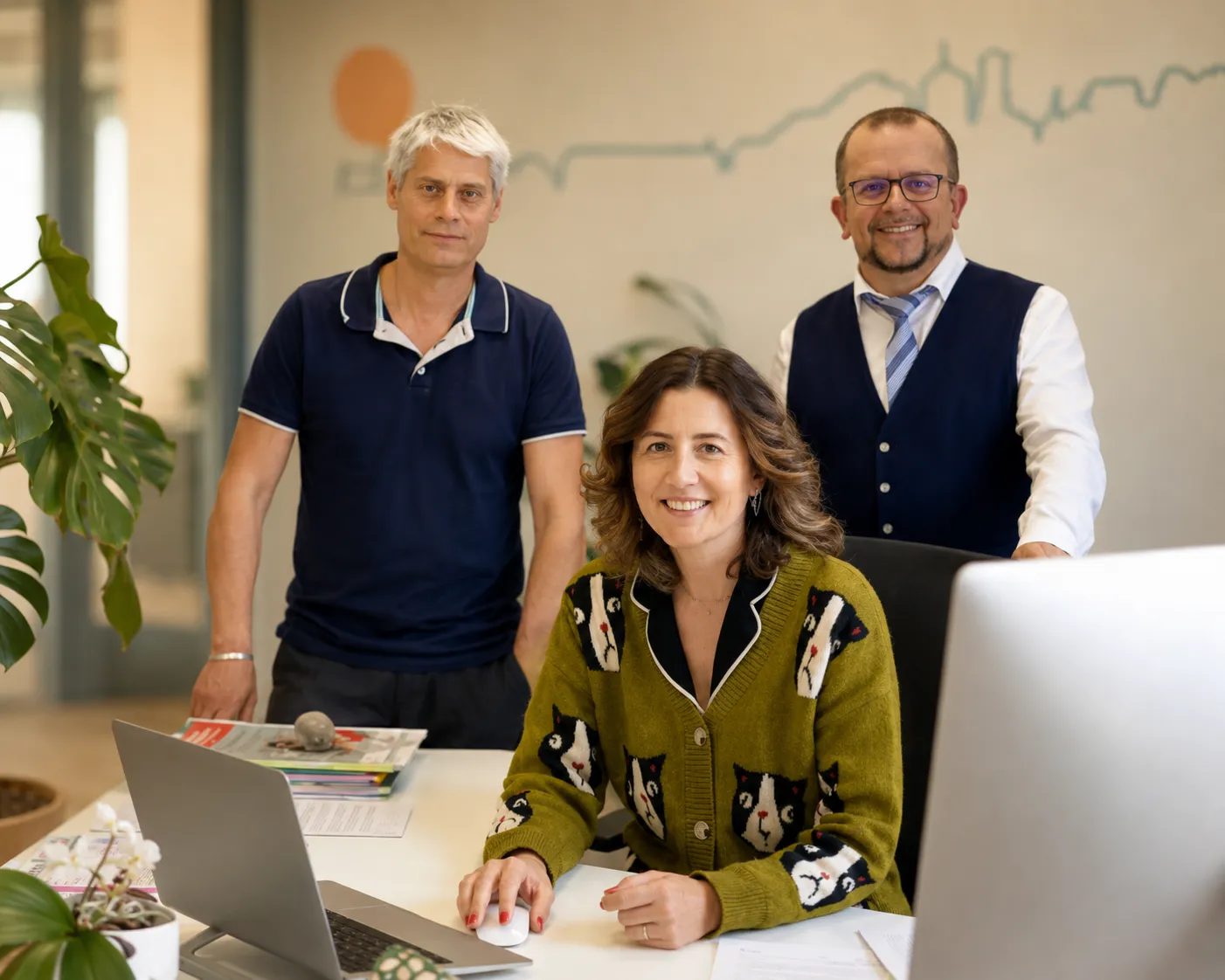
Talkspirit brings us closer to our teams, fuels collective intelligence and makes day-to-day information sharing far smoother.
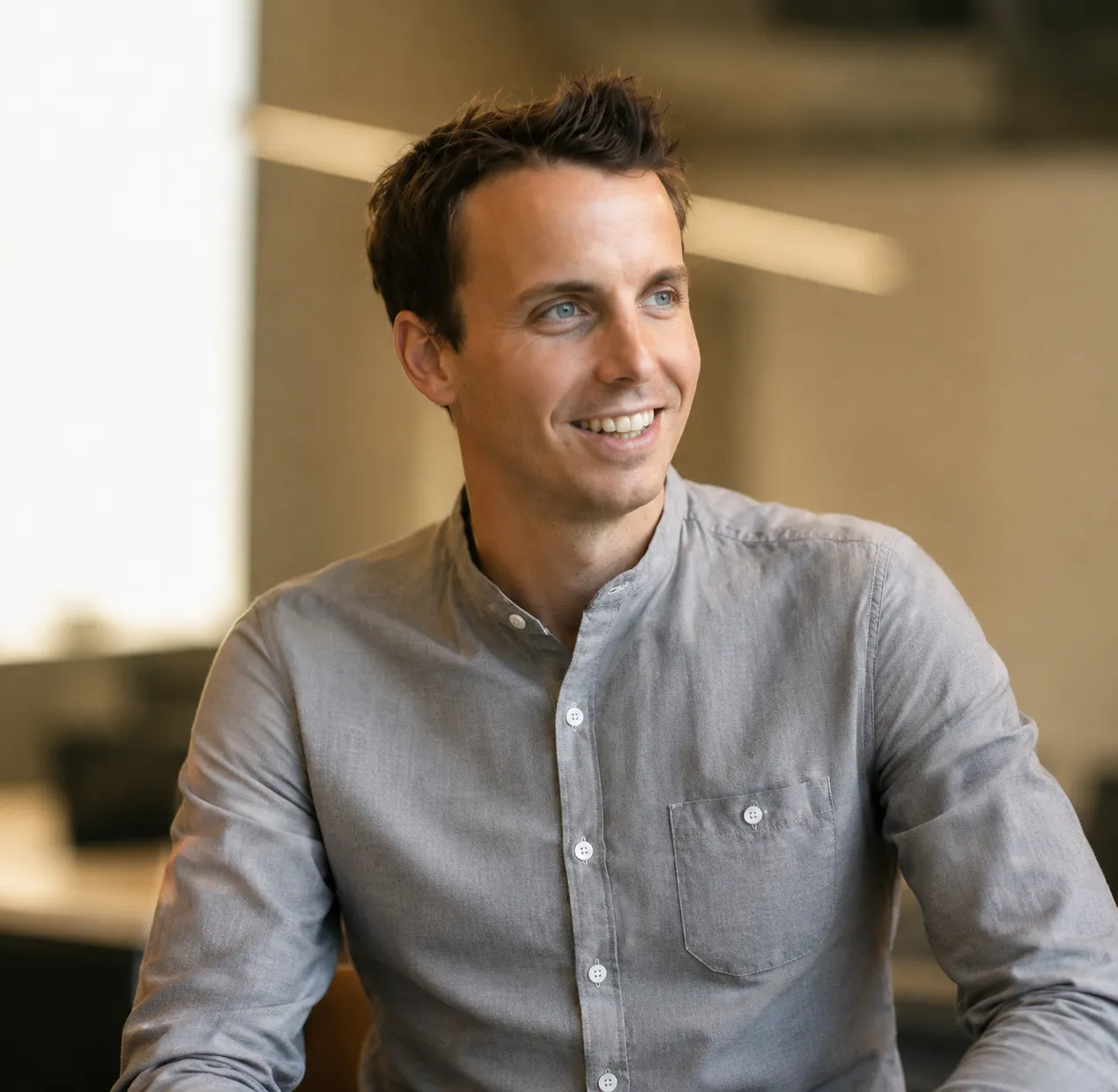
Pooling our strengths makes each of us stronger. Within our network of SMEs, Talkspirit is an essential driver of transformation and agility.
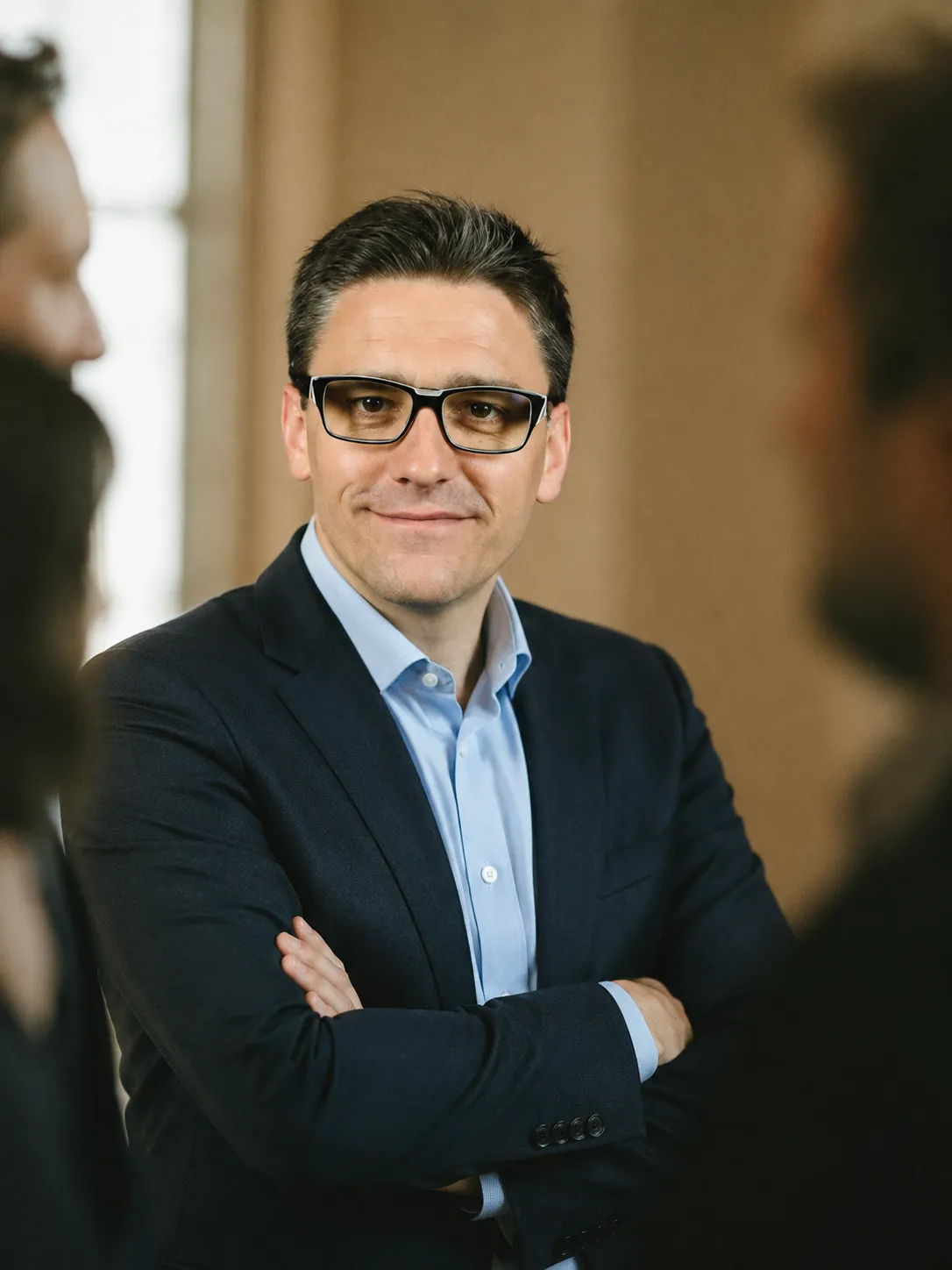
Talkspirit allows every employee to fully unlock their talents. If someone has skills in several areas, they can take on different roles without being boxed into a single job description. This flexibility in roles also strengthens our agility — an essential asset in today's VUCA world (Volatile, Uncertain, Complex, Ambiguous).

Ready to join us?
Request a security consultation
30 minutes with our security, compliance, or DPO team to review your current landscape: regulatory constraints, sovereignty requirements, and consolidation projects. No generic presentations.