
Toxic Management: Know What It Is, and How to Deal with It

.svg)
- Toxic management describes repeated practices, not a personality type: the first step is to name the behavior instead of labeling the person.
- The signals that come back most often: vague or shifting expectations, control over every detail, feedback that only ever comes as blame, unequal access to information, favoritism, and tensions that are raised and then buried.
- Emmanuel Levard, founder of Ivolve, traces the behavior to the organization before the manager, and sorts it into three families: structural, operational and interpersonal.
- Each family has its own lever: clarify roles and accountabilities, train and equip managers, set relational agreements.
- In Belgium and the Netherlands, preventing psychosocial risks at work is a legal duty of the employer, not something left to the individual manager.
- The lever that cuts across all three is transparency: make implicit rules explicit, write down what is expected of each manager, and actually deal with the tensions people raise.
In the workplace, we tend to talk about toxic management when a manager's behavior makes us feel uneasy. But where does this behavior really come from? Is it the manager alone, or part or all the organization as a whole who’s responsible for it? And how can we put an end to toxic leadership once and for all?
To find out more, we interviewed Emmanuel Levard, founder of Ivolve. Ivolve is a training organization and consultancy that helps organizations implement Holacracy, a governance model that clarifies roles, work processes, and the way authority is distributed throughout an organization.
In this article, Emmanuel Levard explains how to spot and deal with a toxic manager thanks to one key lever: transparency! These best practices are aimed at managers, top management teams (especially HR), and employees alike. No matter what part you play in your organization, read on: we guarantee you'll find it useful!

Toxic Management Is an Organizational Problem, Not an Individual One
"It's difficult to tag a neat definition on the term 'toxic management.' It can come in many forms, and everyone has their own vision of what a toxic manager is. Rather than talking about toxic management, I'd encourage you to name the managerial practices you consider toxic. This will enable you to be as objective as possible," explains Emmanuel Levard.
"These behaviors are often attributed solely to the manager. But most of the time, they’re due to the organization itself. So, the question to ask is not, 'How do I deal with a toxic manager?,' but rather, 'Why do these behaviors exist in my organization?'"
"As we saw with France Télécom (a French telecommunications company hit by a wave of suicides 15-20 years ago), psychosocial risks were generated throughout the organization, not just in isolated individuals."

How to Recognize Toxic Management: The Signals That Keep Coming Back
Before looking for causes, you need to be able to describe what you are seeing. These are the practices most often found behind the label "toxic management," written as behaviors rather than personality traits:
- Vague or shifting expectations: goals change without explanation, and nobody knows what they will be assessed on.
- Control over every detail: every task is checked, every decision has to go up the line, and autonomy shrinks to nothing.
- Feedback that only ever comes as blame: mistakes are pointed out in public, good work goes unmentioned.
- Humiliating remarks or raised voices, tolerated because "that is just the way he is."
- Unequal access to information: some people know, others find out once the decision has been made.
- Favoritism in how projects, schedules and promotions are handed out.
- An unmanageable workload, presented as the norm.
- Tensions that are raised and then buried: people listen, take notes, and nothing changes.
A single episode is not toxic management: what makes it a problem is the repetition and the absence of any recourse. Two things worth watching on the team side: silence in meetings, and the burnout signals that start showing up in employees.
Where Does Toxic Behavior in the Workplace Come From?
There can be three different issues that might cause toxic behavior in the workplace.
1. Structural Confusion
"First of all, toxic management can arise from structural difficulties, like those linked to the structure and functioning of the organization. These are often linked to a lack of clarity about the manager's and/or team members' roles, responsibilities, rights, and duties."
"For example, we often confuse managerial functions like team management with HR functions such as annual performance review and merit raises. This can give the impression that managers have the power to direct, whereas legally, only the employer has the capacity to do so via the employment contract," reveals the founder.
2. Operational Challenges
"Toxic leadership behaviors can also be due to operational difficulties, linked to activity steering and team management. These may stem from a lack of support and training for managers, or from a lack of clarity about operational expectations. To remedy this, the options are many: dynamic management practices, clear expectations for cooperation, transparency, and effective prioritization of workload.
3. Interpersonal Issues
"Once the structural and operational problems have been resolved, the remaining tensions are often interpersonal conflicts: misunderstandings, personality conflicts, or just poor communication. These often result from a lack of psychosocial skills (cognitive, emotional, and social), and can be addressed effectively through training and coaching.
Also read: [Expert Opinion] Why and How Can You Become a Benevolent Leader?
How Do You Deal With Toxic Behavior at Work?
If you're faced with a manager who behaves in a toxic way, do not panic: these tips should help you defuse the situation.
- "Identify and name the toxic behavior in question. How can you address behavior that no one has even identified? Before you try to change it, name it!" advises Emmanuel Levard.
- "Check if the behavior Is allowed by the law and adheres to company policy
- If it's illegal (for example, your manager asks you to work until 10pm), investigate existing legal protections.
- If it's legal, but not authorized by company policy (for example, your manager yells at you in a meeting), ask yourself why this framework gives way to toxic management, and what you can do to avoid it.
- If it's legal and authorized by the company framework (for example, a manager micro-managing his teams), think about how to clarify and strengthen internal rules to avoid such issues in the future
If the person behaving in this way is your own manager, I advise you to identify who in the organization is responsible for helping employees in this very situation. If it's an interpersonal problem, you can also submit proposals to your manager to resolve the situation directly," suggests Emmanuel Levard.
- "Think about your own protection. Questioning the company's framework is crucial, but so is questioning your own choices. "If you're in a toxic work environment where the organization isn't clear and no one can help you, ask yourself: what's keeping me here?"
Toxic Management and the Law: Where Does It Cross the Line?
The question comes up as soon as the situation drags on: is what I am living through simply unpleasant, or is it unlawful? Toxic management describes practices; the law works with different categories, and across the Benelux it puts the duty on the employer rather than on the individual manager.
In Belgium, the Act of 4 August 1996 on the well-being of workers requires employers to take the measures needed to prevent psychosocial risks at work, whose best known manifestations include stress, moral harassment and burnout. The Federal Public Service Employment notes that these risks originate in work organisation, job content, working conditions and interpersonal relations at work, and workers can turn to the prevention adviser of their internal or external prevention service.
In the Netherlands, article 2.15 of the Working Conditions Decree obliges employers to run a policy that prevents or limits psychosocial workload, a category that covers both work pressure and undesirable behavior such as bullying, aggression, discrimination and intimidation.
Both frameworks point the same way as Emmanuel Levard: the question is not who is toxic, but what the organization allows to settle in.
How Can I Establish Clear Boundaries?
So you see: a framework is essential for naming and transforming toxic workplace behaviors. But how do you go about it?
Make the Implicit Explicit
"A company is generally governed by a set of implicit and explicit rules. To address toxic leadership behaviors, we need to make these rules as visible as possible, before even creating new ones. Ideally, this should be done at a time when there is no tension," explains Emmanuel Levard.
Also read: What Does a Transparent Company Actually Look Like?
Clarify What’s Expected of Managers
"Organizations must stop expecting managers to excel simultaneously as operational leaders, coaches, strategists, and top performers. Few individuals possess all these competencies. Clearly defining managerial roles and responsibilities can significantly reduce toxic behaviors."
Establish Relational Agreements
"These agreements enable us to formalize the relational behaviors expected of each team member (including the manager), thereby ridding implicit or emotional expectations of others. They can be defined collaboratively within the team, or via a collective mediation process (which involves calling in an outsider)."
"I recall a time when we used these agreements with a customer to resolve collaboration problems with a team member. The person in question was having difficulty interacting with others because of her autism spectrum sensitivity, but had never told her colleagues about it. Thanks to the relational agreements, she was able to talk about it with her manager. This enabled the team to better understand the behaviors she was exhibiting, and to start afresh on a healthy footing."
Equip Your Teams With the Right Tools
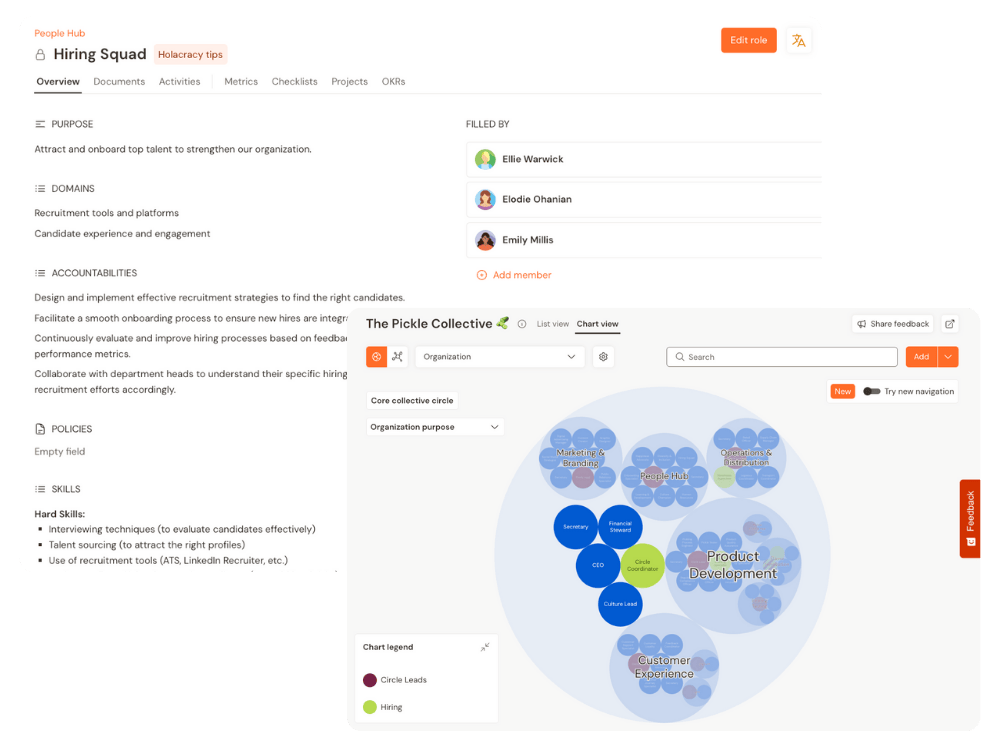
"Finally, to limit toxic management, you need to equip your teams. With tools like Talkspirit, you can clarify roles and structure decision-making processes. The result: tensions are dealt with more quickly, and toxic behavior becomes less common," observes Emmanuel Levard.
With Talkspirit, you can:
- Clearly visualize your organization's entire structure, and the responsibilities and accountabilities of each role.
- Document processes, policies, company and team objectives, making them clear to the whole organization.
- Implement consent-based decision-making processes to give each employee a voice.
- Structure your meetings clearly, and keep meeting notes concise and accessible to all.

Ivolve's Approach to Resolving Workplace Tensions
"At Ivolve, we offer different types of support to help organizations put an end to toxic management."
"If the conflicts are too great to be resolved internally, we intervene with one-day group supervision sessions. These sessions bring to light all the problems encountered by the teams, and then deal with them one by one. Rather than presuming solutions, we use these difficulties as a starting point for developing appropriate proposals. Some will find a structural path, while others will find an operational or relational path."
"When an organization wants to change its practices, but is not encountering major conflicts, it calls on us to support it in its organizational transformation. It's an opportunity to clarify roles, bring about lasting changes in behavior and deal with latent tensions that may have been present for a long time," asserts the founder.
Also read: [Expert Opinion] Steps for Achieving a Successful HR Transformation
The Importance of Establishing a Climate of Trust
"When change is announced, most people don't immediately believe it. To change practices, it's thus essential to create a climate of trust. This trust is built through concrete, positive experiences. For example, if I'm told that my tensions will be dealt with, I'll only believe it if the tensions raised (by me or others) are actually dealt with. Over time, this creates a level of psychological safety sufficient to tackle the real issues causing tension.”

"Trust must be rooted in organizational integrity, not on individuals. Organizations must follow words with actions and genuinely address raised issues."
"One of the major challenges faced by organizations that have adopted Holacracy, sociocracy or Teal models is that the initial promises are not always kept. For example, it is often claimed that there will be no more managers, whereas in practice, someone still has to supervise the work. This discrepancy between rhetoric and reality can fuel employees' distrust."
PS: to find out more about these governance models, we invite you to consult "The Ultimate Guide to Organizational Models.”
One last marker, so as not to mix up the three levels: what a clarification solves will not be solved by coaching, and the reverse holds too. It is the same conviction Frank Klinkhammer defends in "Working Differently: Clarity Over Control".
| Source of the difficulty | What you see in the team | The lever to pull |
|---|---|---|
| Source of the difficultyStructural | What you see in the teamUnclear roles, responsibilities and decision perimeters; managerial functions confused with HR functions | The lever to pullClarify the structure, write down who decides what, separate what belongs to the manager from what belongs to the employer |
| Source of the difficultyOperational | What you see in the teamManagers left to their own devices, steering expectations never spelled out, decisions taken case by case | The lever to pullTrain and support managers, make operational expectations explicit, structure how the work is steered |
| Source of the difficultyInterpersonal | What you see in the teamMisunderstandings, personality clashes and failing communication, once the first two levels have been dealt with | The lever to pullRelational agreements, collective mediation, and work on psychosocial skills |
A Final Word
"When faced with toxic workplace behaviors, ask yourself two questions:
- Do I believe that my organization can or will stop this kind of behavior?
- If so, where should I go for support? And if not, why would I want to stay in such a toxic environment?
If there's a bit of common sense in the organization, the simple fact of discovering that a manager is behaving in a toxic way will make it possible to address the situation," explains Emmanuel Levard. Naming the problem is the first step to solving it. Once you've made it explicit, you can provide appropriate solutions, such as clarifying roles, making relational agreements, and implementing tools like Talkspirit.
Want to go further? Download our e-book on next-generation leaderships to discover what makes a good manager and how to avoid toxic management 👇
Access White Paper
In our Next-Generation Leadership white paper, you will discover: the skills that every great leader should possess, the different possible management styles, as well as methods and best practices for implementing them within your organization.
FAQ
There is no neat definition: it comes in many forms and everyone has their own vision of what a toxic manager is. Emmanuel Levard suggests naming the specific managerial practices you consider toxic instead, which keeps the discussion as objective as possible.
From three different kinds of issue: structural confusion, operational challenges, and interpersonal problems that surface once the first two have been resolved.
By the behavior, not the personality: vague or shifting expectations, control over every detail, feedback that only ever comes as blame, humiliating remarks, unequal access to information, favoritism, an unmanageable workload, and tensions that are raised and then buried. What makes it toxic management is the repetition of those practices and the absence of any recourse.
Start by identifying and naming the behavior: you cannot address behavior no one has identified. Then check whether it is allowed by the law and adheres to company policy.
By making the implicit explicit. A company runs on a mix of implicit and explicit rules, and those rules need to be made as visible as possible before any new ones are created - ideally at a moment when there is no tension.
Toxic management is not a legal category in itself, but preventing it is a legal duty. In Belgium, the 1996 Act on the well-being of workers requires employers to prevent psychosocial risks at work, including moral harassment and burnout. In the Netherlands, the Working Conditions Decree obliges employers to run a policy that limits psychosocial workload, which covers bullying and intimidation. In both cases the responsibility sits with the employer.


Explore similar articles

HR: Watch Out for These Employee Burnout Signs
What are the telltale signs of employee burnout? · Physical signs · Emotional and behavioral signs · Cognitive signs · Which employees are most at risk for burnout? · How can I prevent employee burnout? · Understand factors of burnout · Set up concrete initiatives · 1. Assess and adjust workload · 2. Clarify roles, objectives, and priorities · 3. Promote work/life balance · 4. Promote benevolent management · 5. Improve physical and mental health · A final word · Access the white paper
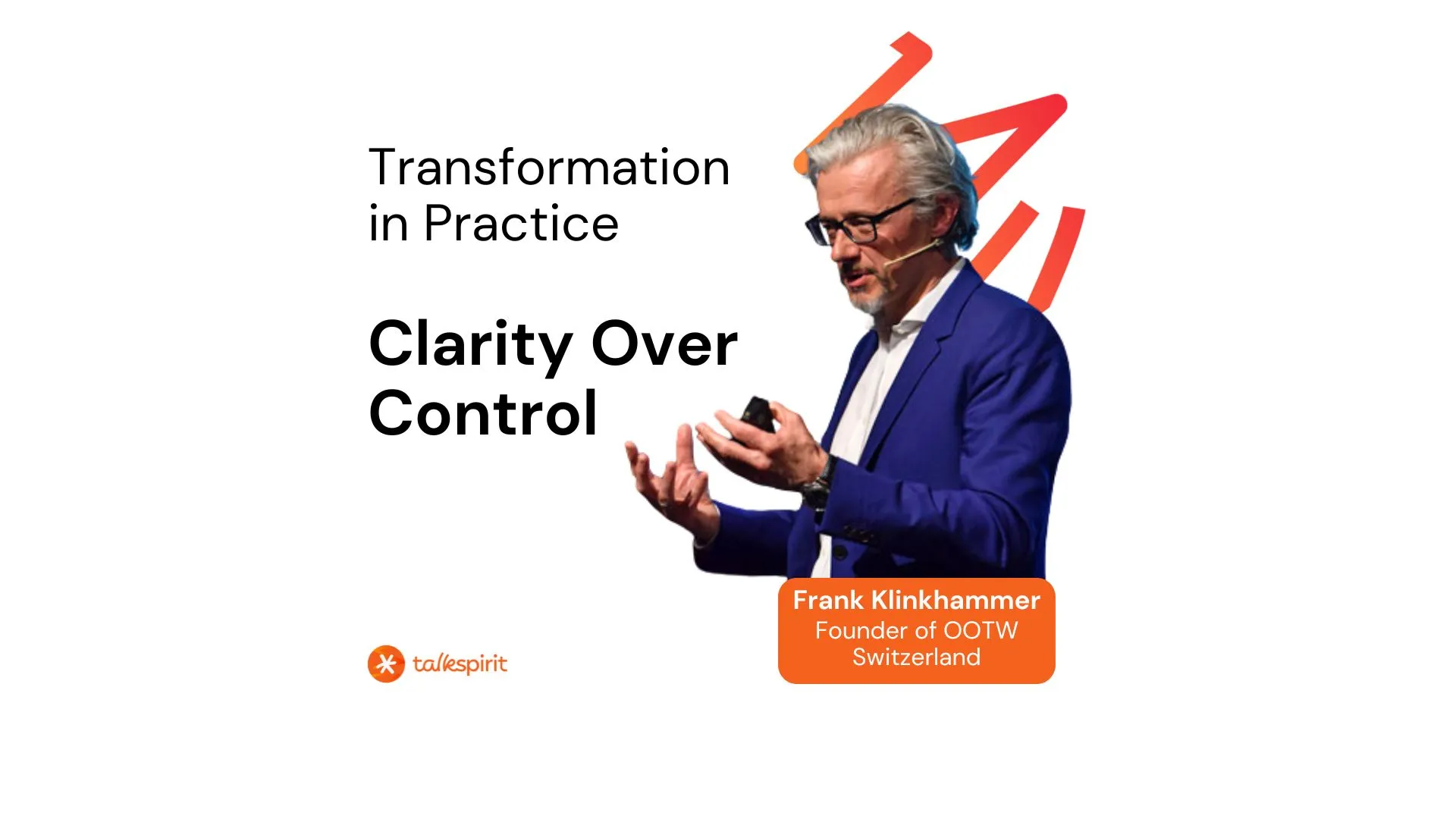
Working Differently: Clarity Over Control with Frank Klinkhammer, OOTW, Switzerland
In this Transformation in Practice interview, Frank Klinkhammer, founder and CEO of Out of This World, shares how role-based structures and co-creation help organisations evolve sustainably. Drawing on decades of leadership and transformation experience, he explains how clarity, trust, and flexibility, supported by technology, enable teams to adapt, collaborate, and thrive in an AI-driven world.