
Building Alignment in a Teal Organization

.svg)
Alignment in a Teal organisation starts before alignment itself: with a clear purpose that every circle and every role then contributes to. This article walks through four steps, defining the organisation's purpose, delegating it down through circles and roles, naming who is responsible for keeping everyone aligned, and setting clear expectations.
In a previous article, we mentioned how building alignment is a one of the necessary steps to successfully transition an organization to Teal. There are many methods to do this, but Holaspirit by Talkspirit helps make the process easier. In this article, we'll discuss how to build alignment in general and how to use this platform to do so.
Define The Organization's Purpose
The first step of getting everyone in your organization aligned isn't about alignment at all. Instead, it's about ensuring your organization has a clear purpose. It gives direction on all future decisions while showing how your organization plans to contribute something greater to the world. It is the purpose that everyone else in the organization will rally behind and use to inspire them to align with one another for the greater vision.
We discuss Finding Your Purpose in another article, and this is paramount in order for the rest of the alignment process to succeed. Holaspirit helps define the purpose by ensuring it's the first thing everyone sees.
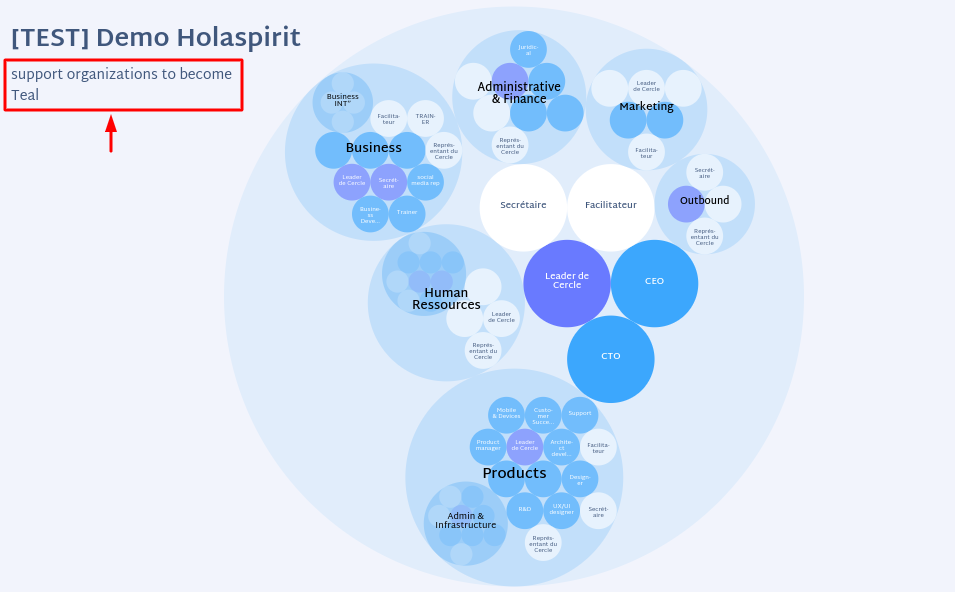
Delegate The Purpose
Now that the organization has a purpose, ensure all other departments, Circles, or teams have purposes that clearly play a role in the greater organization’s purpose, and that the expectations of those areas definitively help achieve that purpose. For example, Holaspirit's purpose is:
"Support organizations to become Teal"
Of course, a lot of different things need to be done in order to help organizations become Teal. To help us succeed, part of our purpose is handled by different Circles. Our "Products" team has the purpose of:
"Develop and enhance our software"
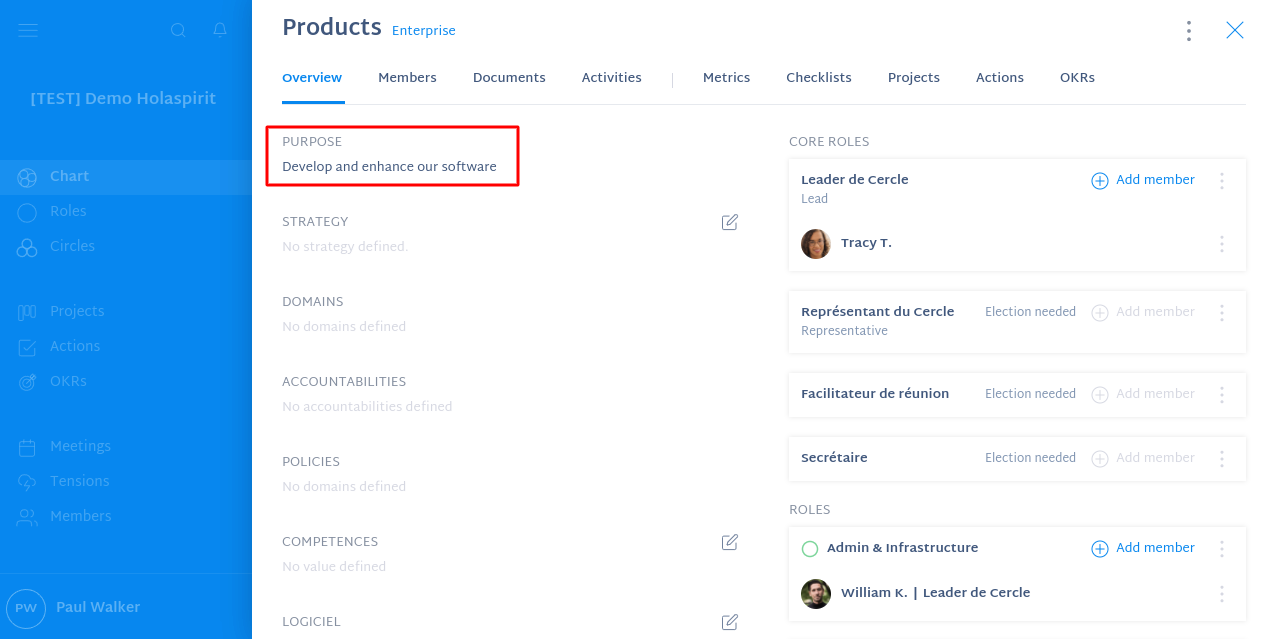
It's clear how the Products team helps the entire company, because the Holaspirit software is how we help organizations become Teal. Going further, a Role within the Products Circle is "BackEnd Web developper", with the purpose:
"Design and develop new web and API applications"
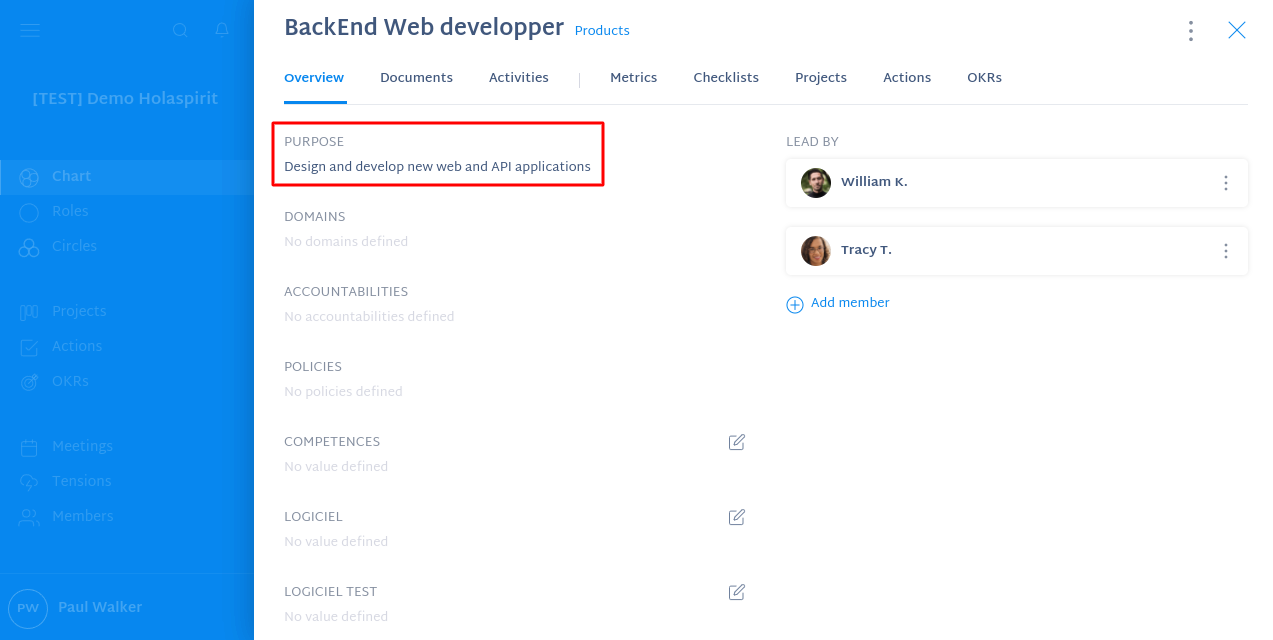
As this is an integral part of developing more benefits for the software, it ensures that this single Role is absolutely contributing to the organization's purpose.
Of course, this is just one example. This ideal state is to have every team moving toward the broader shared goal of the organization as a whole. Do this same thing at every level of your organization (all the way down to the purpose and expectations of individual team members) and you’ll have a wonderfully purpose-driven company!
Define Who Is Responsible For Ensuring Alignment
Whether every member of an organization has equal authority to hold one another accountable or if that task has to be done by a single position, it's important that there is responsibility for ensuring the company is aligned on its goals.
Traditionally, this responsibility falls on the manager, Team Lead, or Lead Link at each level of the company's hierarchy.
For example, the Lead Link at the top would define the purpose and expectations of the teams below, and make sure those expectations are being met. Then, the Lead Links of those lower circles would need to do the same for the team below them. Knowing who is responsible for what helps ensure consistency and makes it easier to address problems at the proper source.
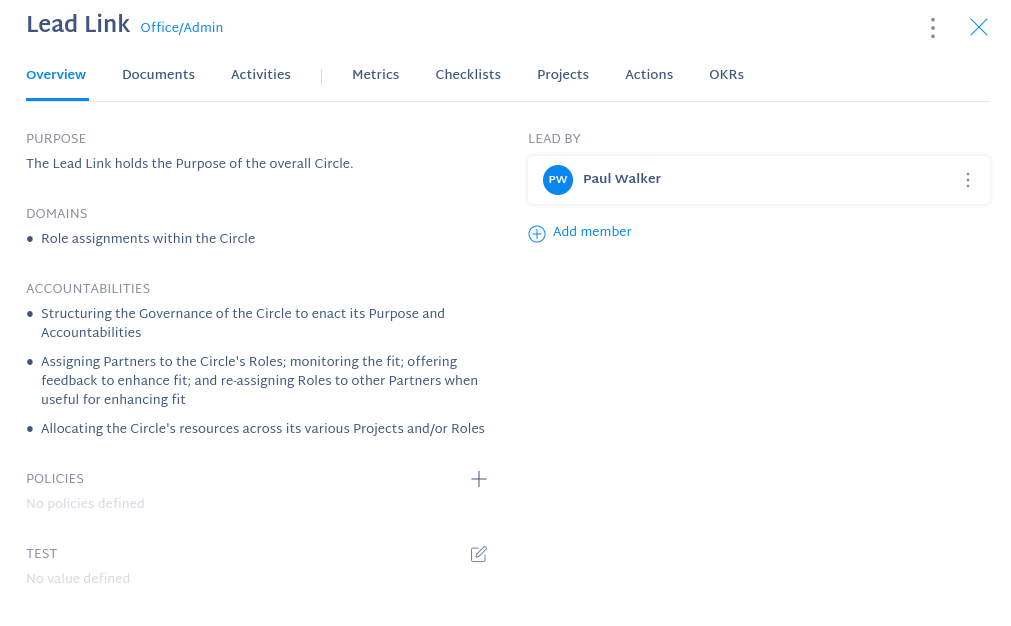
In Holaspirit, these expectations are easy to adjust for any role, including those responsible for aligning everyone else to the company's purpose. Roles can be tailored individually for the above Circle's needs by making governance changes. Additionally, you can also create a role template so that every Circle in the organization will have the same role with the same expectations.
Create Clear Expectations
In another article, we dive deep into what it means to have a "clear expectation" and the importance of doing so. Even if you have perfect purpose alignment, that doesn't guarantee the necessary day-to-day tasks will get completed. Having clear expectations throughout the organization will help ensure your people have more freedom AND more responsibility.
FAQ
Making sure the organisation has a clear purpose. It gives direction on all future decisions, shows how the organisation plans to contribute something greater to the world, and is what everyone rallies behind.
By making sure every department, circle or team has a purpose that clearly plays a role in the greater purpose. The article's example runs from a company purpose of supporting organisations to become Teal, to a Products team whose purpose is to develop and enhance the software, down to a back-end web developer role whose purpose is to design and develop new web and API applications.
Traditionally the manager, team lead or Lead Link at each level of the hierarchy. The Lead Link at the top defines the purpose and expectations of the teams below and checks they are being met, and the Lead Links of those lower circles do the same for the teams below them.
No. Even with perfect purpose alignment, there is no guarantee the necessary day-to-day tasks will get completed. Clear expectations throughout the organisation are what give people both more freedom and more responsibility.


.webp)