
How Does a Flat Organization Actually Work?
.webp)
.svg)
- A flat organization has few or no levels of middle management between staff and executives.
- Decisions are decentralized: they are taken by consent or by consensus, as close to the work as possible.
- Its strengths: more direct communication, agility, employee autonomy, faster innovation.
- Its limits: hard to scale, overloaded roles, unclear career paths, decision-making bottlenecks.
- Five factors to weigh before switching: company size, industry dynamics, culture, employee readiness and leadership style.
- The transition rests on written roles, a culture of trust, and a tool that makes the structure visible.
Navigating the complexities of hierarchical organizations can often feel like maneuvering through a maze without a clear exit. Decisions ascend and descend through multiple levels, causing momentum and innovation to frequently stall. Fortunately, there are now several ways to get out of this situation. And one of them is shifting toward a flat organization model.
This organizational structure is celebrated for its minimal hierarchy, which speeds up decision-making processes and fosters an agile work environment. A McKinsey global survey shows that when this agile transformation is highly successful, it can increase operational performance, customer satisfaction and employee engagement by 30%!
Whether you’re wondering what a flat organization is or how to set it up, this article should answer most of your questions. We’ll delve into the pros and cons of a flat organization, the best practices to make it work, and how Holaspirit can help you get started on this journey.

What is a flat organization?
A flat organization is a structure characterized by few or no levels of middle management between staff and executives.
This model aims to decentralize decision-making, granting employees greater autonomy and a more significant role in the direction of the organization.This not only helps make quicker decisions but also enhances transparency, communication and collaboration across the board.
How does it work?
Contrary to a tall organization, a flat organization relies heavily on self-management and the delegation of responsibilities rather than on strict oversight and control. The emphasis is on empowering employees to take initiative and make decisions, without the need for approval from multiple layers of management. These decisions can be made based on consent (if no one objects to it) or consensus (if everyone agrees to it), depending on the organization’s governance model.
Also read: Integrative Decision-Making VS Consensus

This setup encourages a culture of shared responsibility, and allows for a more straightforward exchange of feedback between team members. Since employees are more involved in what goes on, they also feel more connected to the organization's purpose, which results in higher engagement and productivity.
All of this helps create a more dynamic work culture, where innovation can thrive and decisions can be made quickly.
How is it different from a tall organization?
The primary difference between flat and tall organizations lies in their structural hierarchy and decision-making processes. Flat organizations are characterized by minimal hierarchical levels that promote open communication and efficient decision-making. In contrast, tall organizations have multiple layers of management, leading to a more defined chain of command but potentially slower decision-making processes.
One gap shows up straight away on the org chart: the span of control. In a flat business structure, each manager oversees a large number of people; in a tall one, managers are numerous and each looks after a small team. This comparison table sums up the other differences:
| Criteria | Flat organization | Tall organization |
|---|---|---|
| CriteriaHierarchy levels | Flat organizationFew or none, leading to a more egalitarian structure. | Tall organizationMultiple levels, creating a clear chain of command. |
| CriteriaDecision-making | Flat organizationDecentralized, with decisions often made collectively or by individuals close to the work. | Tall organizationCentralized, with decisions typically flowing through several layers of management. |
| CriteriaCommunication | Flat organizationDirect and open, with few barriers between staff and leadership. | Tall organizationCan be slower and more formal, as information must pass through many levels. |
| CriteriaEmployee autonomy | Flat organizationHigh, with employees encouraged to take initiative and make decisions. | Tall organizationLower, with decisions and initiatives often requiring approval from higher up. |
| CriteriaInnovation | Flat organizationEncouraged at all levels, with a fast implementation process due to the streamlined structure. | Tall organizationMay be more controlled and slower to implement, as ideas must be approved through several layers of hierarchy. |
| CriteriaResponsibility distribution | Flat organizationMore evenly spread across the organization, with a focus on teamwork and collective achievement. | Tall organizationMore likely to be concentrated in specific roles or departments, with defined responsibilities. |
What are the pros and cons of a flat organization?
Understanding the advantages and challenges of a flat organization is crucial for any business considering this structure. Here's a breakdown of the key pros and cons.
Pros
- Enhanced communication: With fewer hierarchical levels, communication across the organization can be more direct and transparent, leading to improved understanding and collaboration.
- Increased flexibility and agility: The streamlined structure allows for quicker decision-making and responsiveness to market changes, keeping the organization competitive.
- Greater employee empowerment: The clarity in roles and responsibility allows employees to become more autonomous and to take greater accountability for their work, leading to higher engagement and satisfaction.
- Better innovation: The open environment encourages sharing ideas and innovations, allowing for quicker implementation and development of ideas.
Cons
- Scalability challenges: As the organization grows, maintaining a flat structure can become difficult, potentially leading to confusion and inefficiencies.
- Overloaded roles: With fewer managers, responsibilities can become too concentrated in certain roles, leading to burnout and decreased performance.
- Lack of clear career pathways: The absence of traditional hierarchical levels can make it harder for employees to see clear paths for advancement within the organization.
- Decision-making bottlenecks: Despite the aim for decentralized decision-making, critical decisions can sometimes bottleneck at the top if not managed effectively, and the decision load that shifts onto teams can turn into decision fatigue.
Should you consider switching to a flat organizational structure?
Now that you’ve weighed the pros and cons, you may be considering: how do you switch to a flat organizational structure? Deciding on such a transition requires careful consideration of your company's current challenges, goals, and culture. Therefore, we recommend evaluating a few factors before actually making the change:
- Company size and scalability: Small to medium-sized companies often benefit more from flat structures due to easier communication and decision-making. Consider whether your company's size and growth projections align with the scalability of a flat structure.
- Industry and market dynamics: Industries that are rapidly evolving or highly competitive may require the agility that a flat structure provides. Assess whether your market environment demands the kind of responsiveness a flat organization can offer.
- Organizational culture: A flat structure thrives in a culture that values transparency, autonomy, and employee empowerment. Reflect on whether your current culture supports these values or if significant changes would be needed.
- Employee readiness: Consider whether your employees are ready and willing to take on the increased responsibility and autonomy that come with a flat structure. Employee engagement and willingness to adapt are crucial for a successful transition.
- Leadership style: Leaders in flat organizations often serve more as facilitators and coaches than traditional managers. Evaluate whether your current leadership team is prepared for this shift in roles.
Also read: How to Implement Self-Management in Consulting Firms
Ultimately, the decision should be based on a thorough assessment of your organization's unique circumstances and a clear vision for how a flat structure will support your long-term goals.
How do you get started?
Transitioning to a flat organizational structure isn’t something you can improvise. Here’s a step-by-step guide to help you get started.
Best Practices to Set Up a Flat Organization
- Evaluate your current structure: Analyze the existing hierarchies within your organization to understand the changes needed. Identify areas where decision-making processes can be decentralized, and start implementing these processes step by step.
- Foster a culture of trust and open communication: Create a psychologically safe environment where open dialogue is encouraged and employees can easily speak out about their problems.
- Define roles and responsibilities clearly: In the absence of a traditional hierarchy, clearly defined roles and responsibilities are crucial to avoid confusion and ensure accountability.
- Invest in leadership development: Equip your leaders with the skills to act as mentors and facilitators. Leadership in a flat organization focuses on empowering employees rather than directing them.
- Encourage autonomy: Foster a culture where employees are encouraged to take initiative. And empower them to make decisions relevant to their roles and projects.
- Implement a self-management tool: Find a platform that allows you to design your organizational structure and bring transparency to your organization.
Also read: How to Get Better at Flatter Designs
How Holaspirit can help you
Holaspirit is a self-management tool that is specifically designed to support flat organizations, as well as any organization seeking to implement self-management practices. Here's how it can help facilitate this transition:
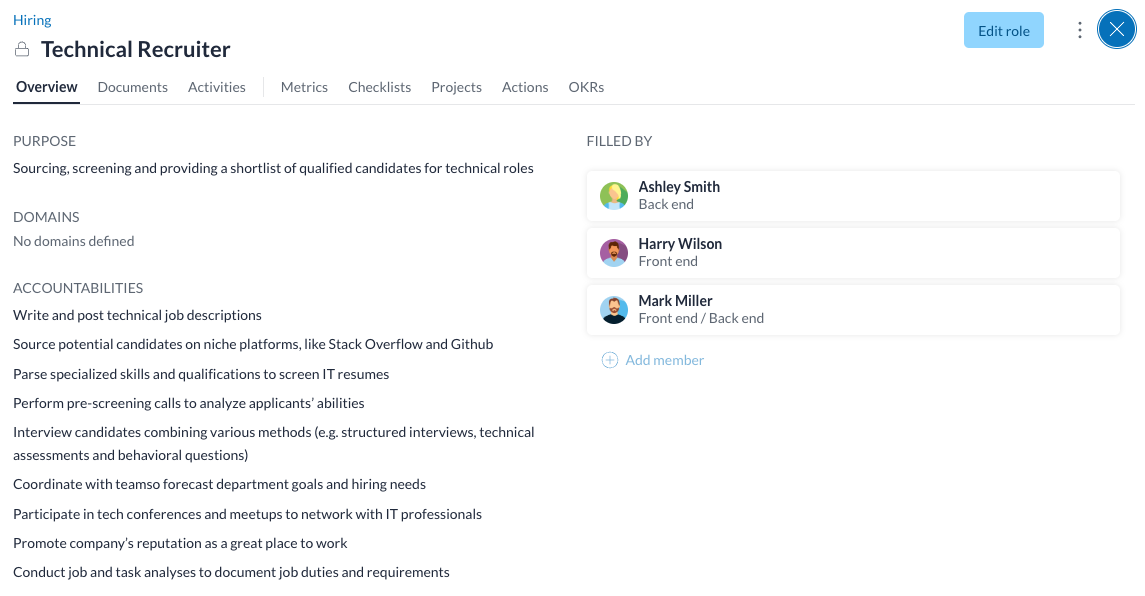
- Clear role definition: Holaspirit allows organizations to define roles and responsibilities clearly, in order to ensure everyone knows what is expected of them.
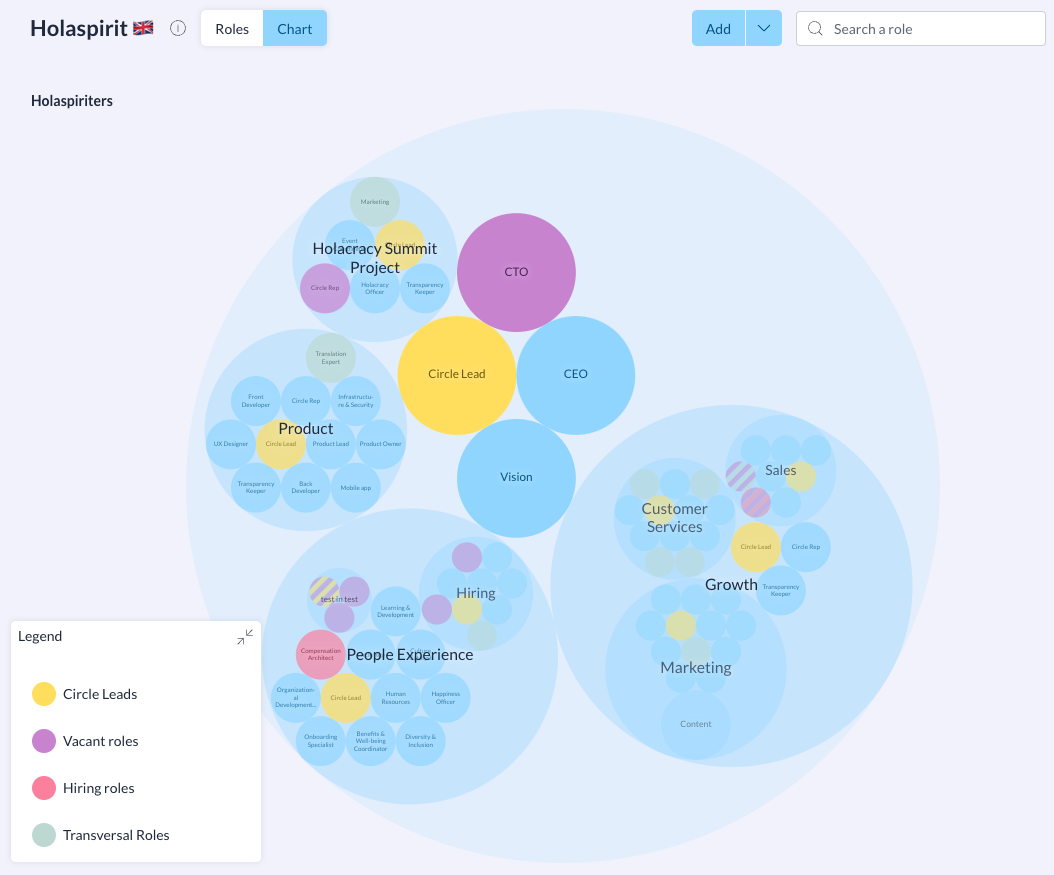
- Easy visualization: The organizational chart feature provides a clear visualization of your organizational structure. It helps visualize relationships and roles in a simplified manner, making the structure easy to understand at a glance.
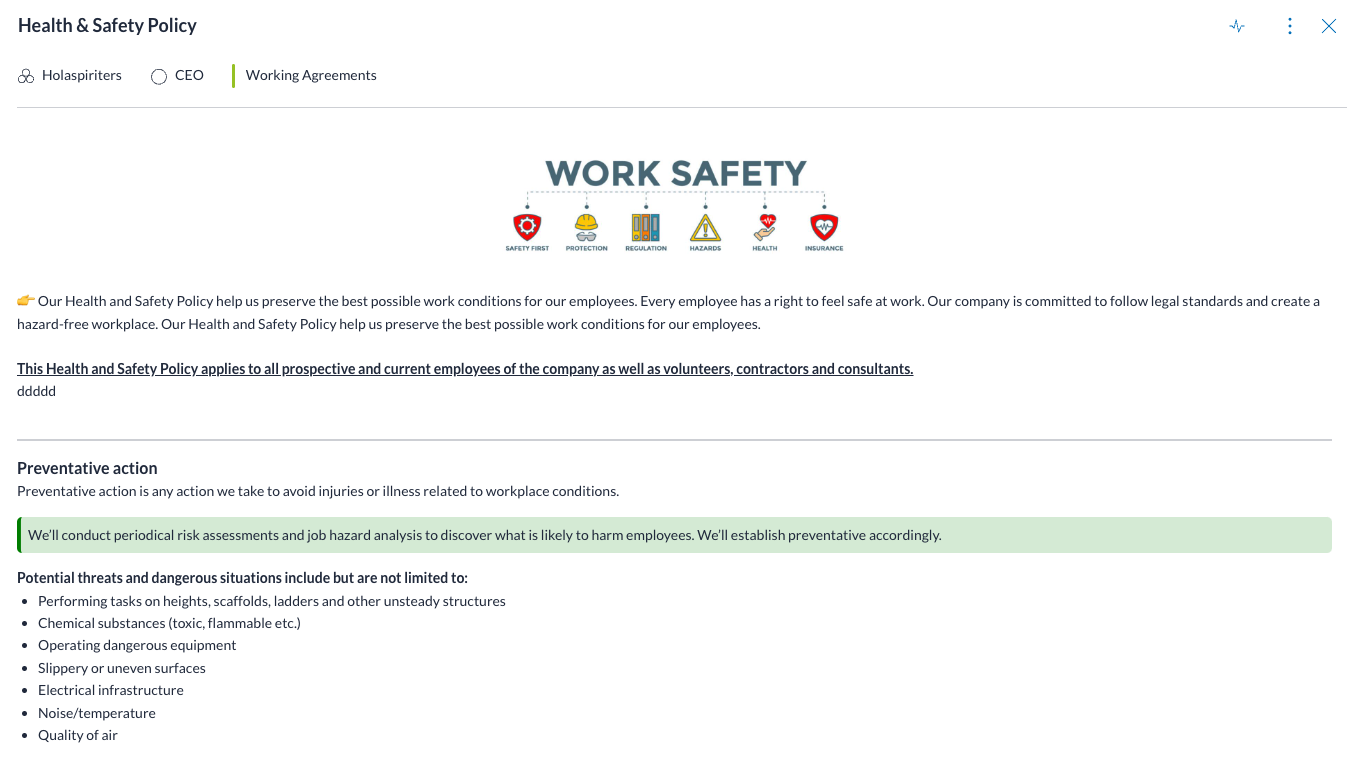
- Available documentation: On Holaspirit, each team can document its processes and policies, and make it available for everyone to see. This helps ensure consistency in how work is done in a flat organization.
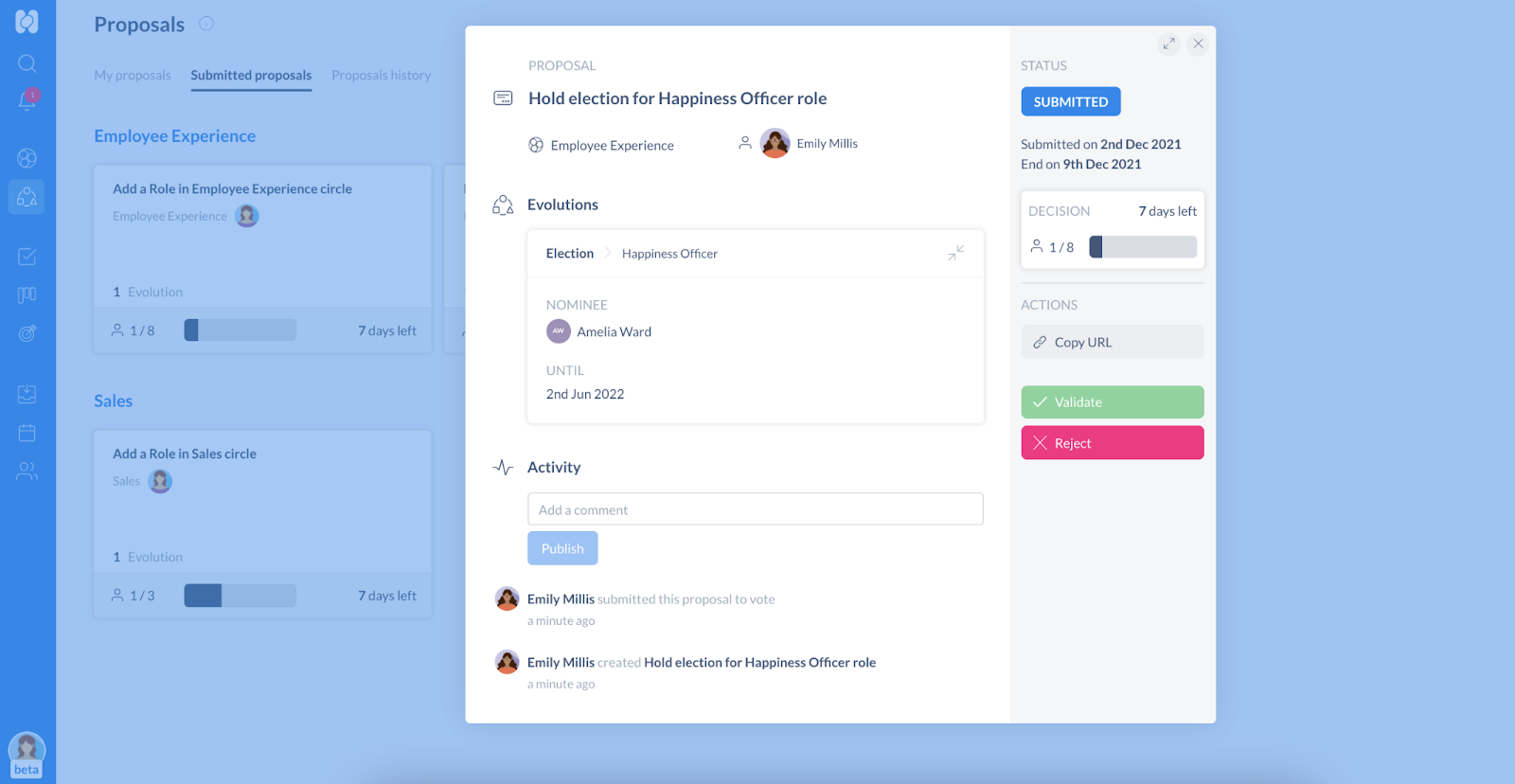
- Transparent decision-making: Our platform supports a transparent decision-making framework that empowers employees to participate in decisions that affect their work, enhancing engagement and satisfaction.
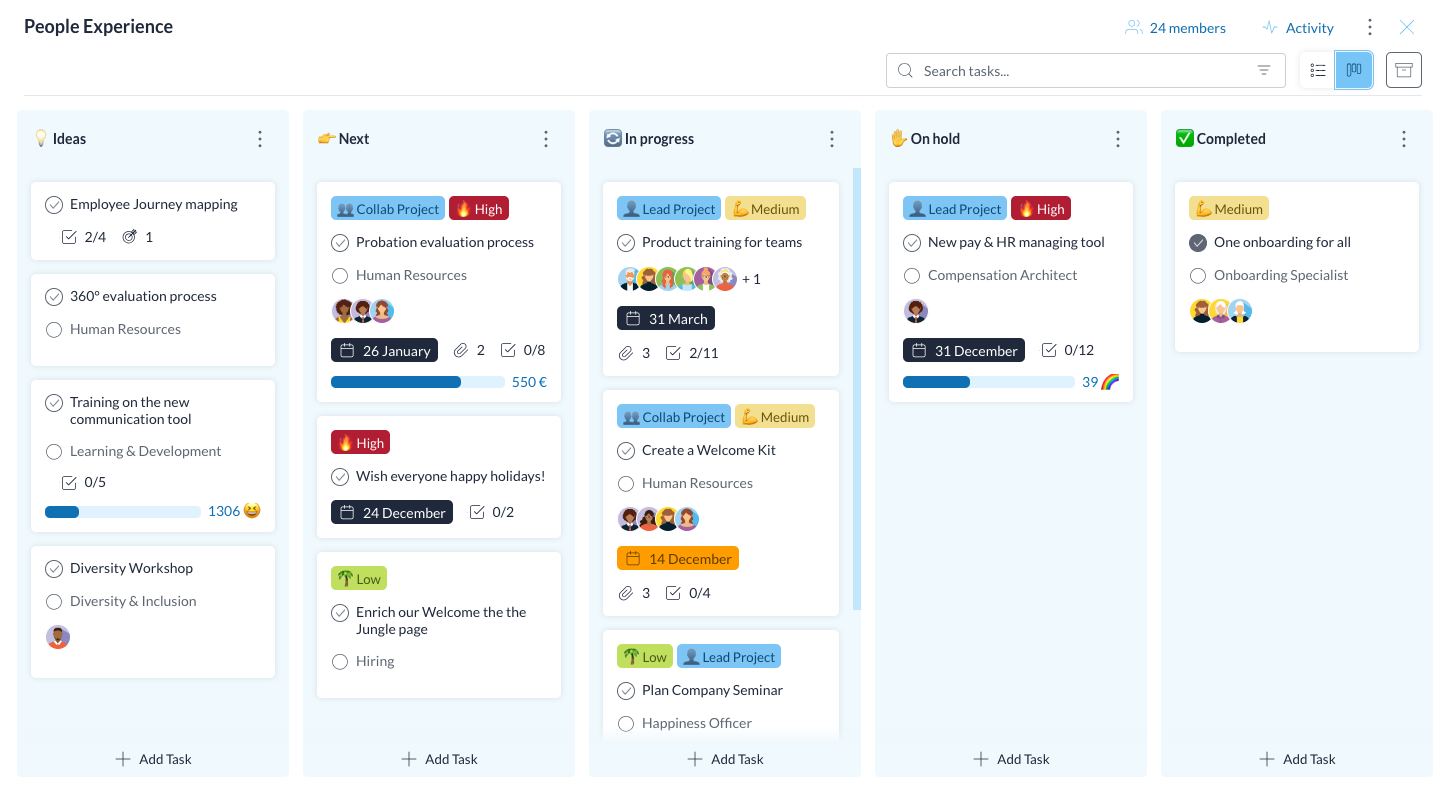
- Effective task management: With Holaspirit, teams can manage projects and tasks efficiently, while ensuring that all members are aligned with the organization’s goals.
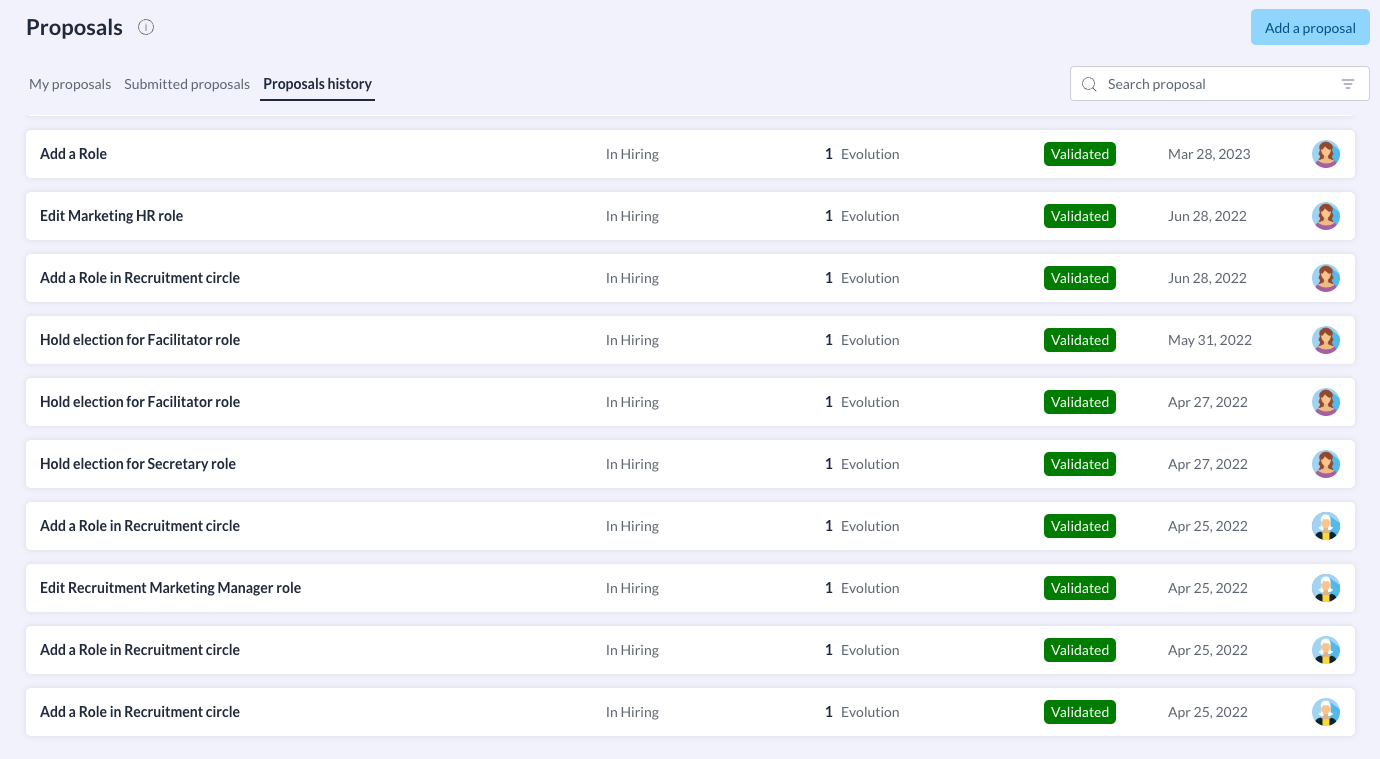
- Governance records: Keeping track of governance decisions and changes is simplified with Holaspirit. This feature allows team members to suggest evolutions and makes sure everyone is updated on organizational changes.

To conclude
Embracing a flat organizational structure can significantly enhance communication, agility, and employee empowerment. However, transitioning to such a structure requires clarity in roles, a culture of openness, and the right tools for seamless implementation.
Holaspirit stands as a vital tool in this transformative journey. With its ability to clearly define roles, facilitate transparent decision-making, and document processes and policies, Holaspirit ensures that the transition is not just manageable but also sustainable. Beyond the software that we offer, we also partner with experienced coaches that can help you implement a flat organization effectively. Reach out to our sales team to get to know our platform and the various services we offer.
Finally, if you're looking to implement a flat structure in your company, you'll also need an organizational model that can bring you the right framework. There are many innovative models out there (such as Holacracy, Sociocracy, Teal, etc.), so take the time to learn about it and explore! Want to know more about organizational models? Download our latest white paper packed with expert insights 👇
Access White Paper
In our white paper "The Ultimate Guide to Organizational Models", you'll get: a comprehensive overview of innovative organizational models (like Agile, Teal, Holacracy, Constitutional Management, and more), testimonials from pioneer organizations that have successfully adopted it, best practices for choosing, implementing and measuring the effectiveness of our model, as well as digital tools to facilitate the transition.

FAQ
A flat organization is a structure characterized by few or no levels of middle management between staff and executives. The model decentralizes decision-making, giving employees greater autonomy and a more significant role in the direction of the organization.
Contrary to a tall organization, it relies heavily on self-management and the delegation of responsibilities rather than on strict oversight and control. Employees take initiative and decide without approval from multiple layers of management: by consent if no one objects, or by consensus if everyone agrees, depending on the governance model.
The difference lies in the number of levels and in how decisions are made. A flat organization has minimal hierarchy, direct communication and decentralized decisions; a tall organization stacks layers of management, which gives a clear chain of command but slows decisions down. The span of control differs too: one manager oversees many people in a flat structure, a small team in a tall one.
Four, mainly. Scalability: as the organization grows, maintaining a flat structure becomes difficult. Overloaded roles: with fewer managers, responsibilities concentrate in a handful of roles, which leads to burnout. A lack of clear career pathways. And decision-making bottlenecks, when critical decisions still end up at the top.
Smaller ones, generally. Small to medium-sized companies often benefit more from flat structures because communication and decision-making are easier. Company size and growth trajectory are the first things to evaluate, alongside industry dynamics, culture, employee readiness and leadership style.
By evaluating your current structure: analyze the existing hierarchies to understand the changes needed, identify where decision-making can be decentralized, and implement those processes step by step. Then build a culture of trust and open communication, and define roles and responsibilities clearly.